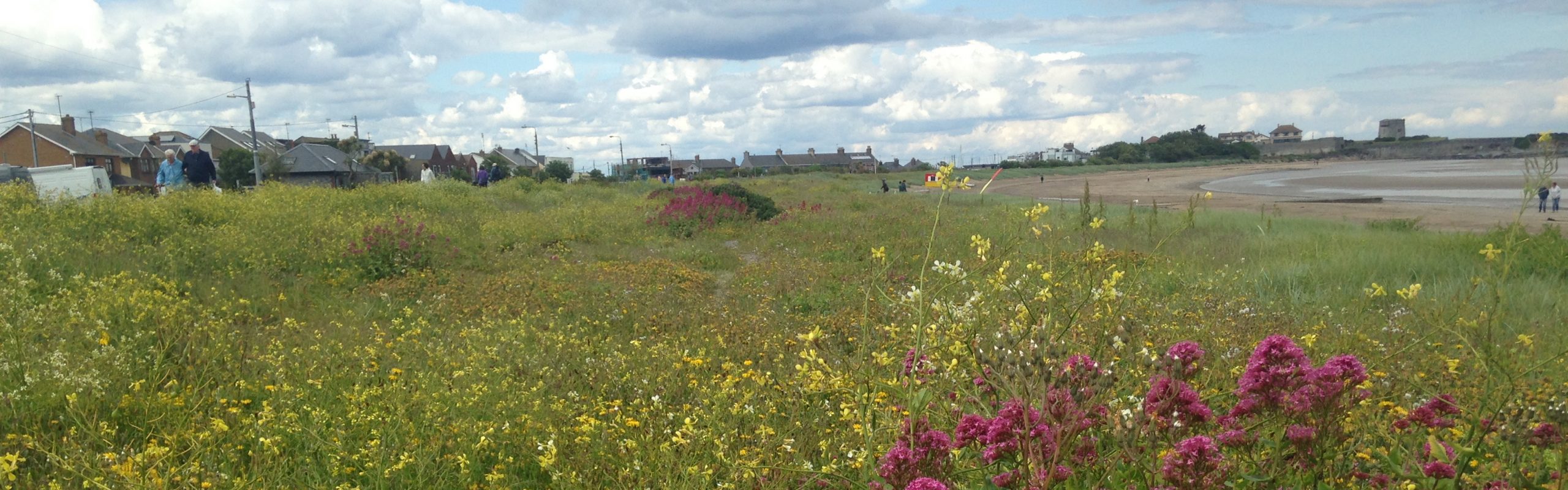
Songs of the Sea and the Sirens

When the sirens called, you did not want to hear it.
If their song caught your ear, it lured you to your doom. There was no way to avoid catastrophe once you heard those intoxicating strains. The sirens’ melodies rang out so beautifully as to drive the listener insane. Invariably, seafaring men were their target.
Unfortunately, sirens put an end to many the sailing voyage. We know the culprits thanks to those surviving boats that returned to shore unscathed. Local crews would witness their friends and relatives perish from a safe distance (out of earshot). Forever more, certain rocky shorelines were doomed and sailors took a wide berth.
These spots would trigger alarm bells and boats were warned not to approach in local stories, folklore and songs. These lessons were learned the hard way in port towns and fishing villages over many cruel centuries, after countless tragic deaths at sea.
To this day, our relationship with the sea remains complex. If we listen, we may still hear alarm bells ringing, but these are not due to supernatural melodies or mythic creatures. Rather, it is a cry for help.
The seas are suffering.
On our planet, water supports all life forms. Every human society needs clean water to survive. With an unprecedented global population of 8 billion people, we need more clean water than ever before.
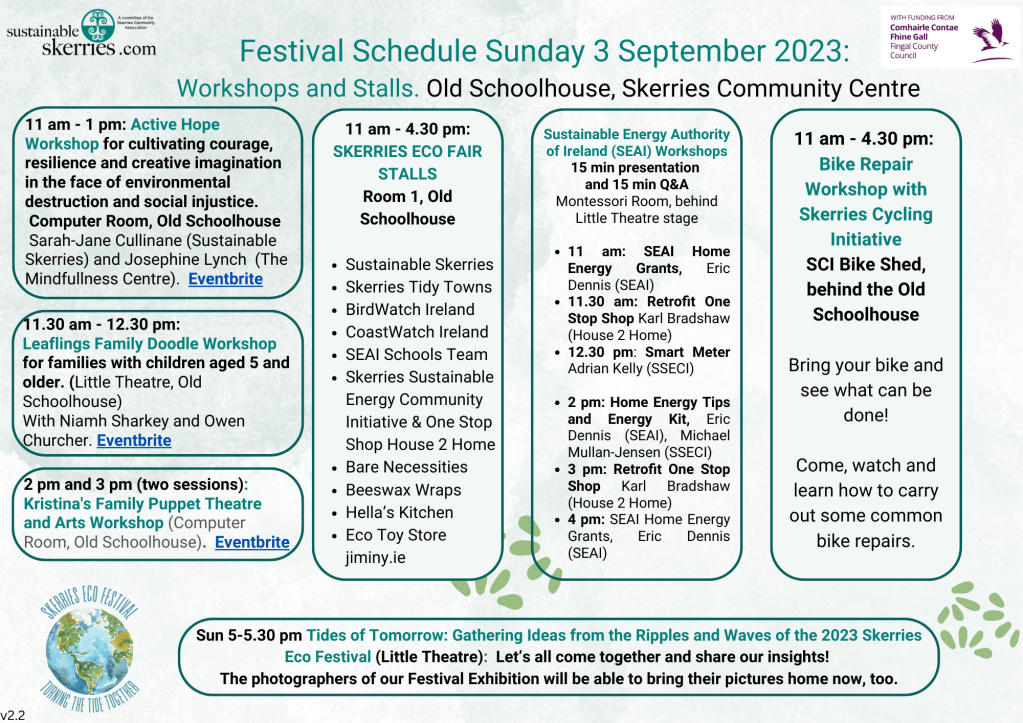
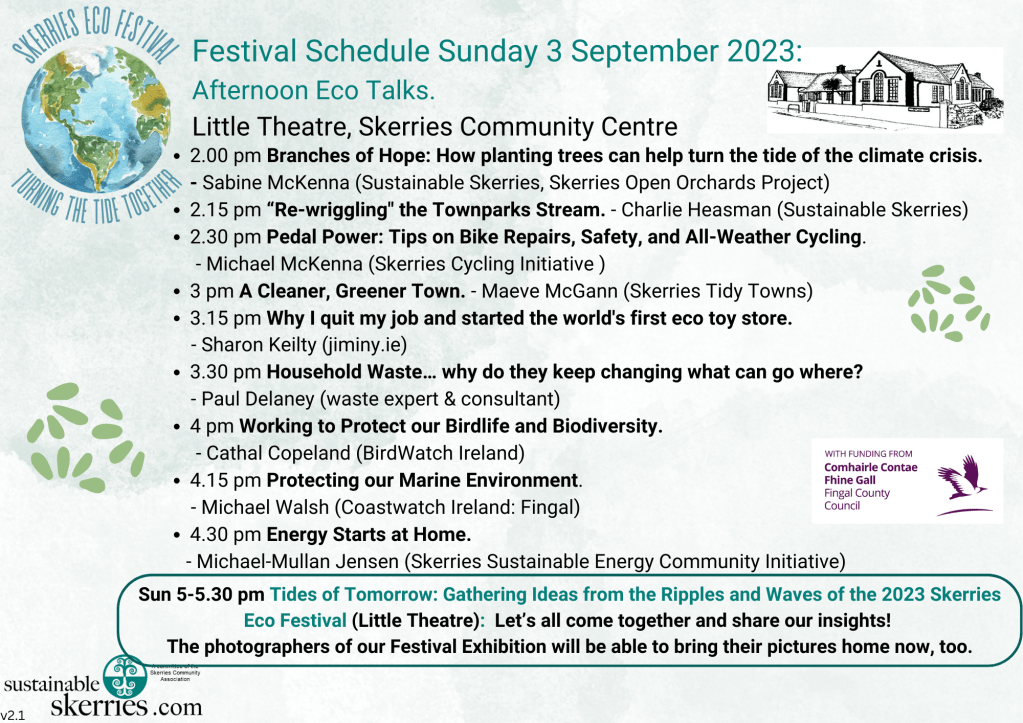
However, the impact of the climate crisis on our water sources today is concerning. As droughts become increasingly frequent across the world, the process of water conservation becomes more urgent. With extreme rainfall and storms leading to more frequent and devastating floods, we face increasingly difficult questions about our relationship with water. The amount of plastic in our seas is a well-documented crisis and affects the complex and delicate ecosystems that nurture our oceans and our coastlines – including coastal towns like Skerries.Inspired by the global climate action movement and icons like Greta Thunberg, local volunteers will host the inaugural Skerries Eco Festival on 1st – 3rd September 2023. This will involve environmental workshops, live music and family fun and together we will celebrate the fact that “Water is Life”. The intention of the festival is to bring together the local community, as voters, citizens, consumers “to give ourselves the space to see what is happening, to explore together where we could go.”
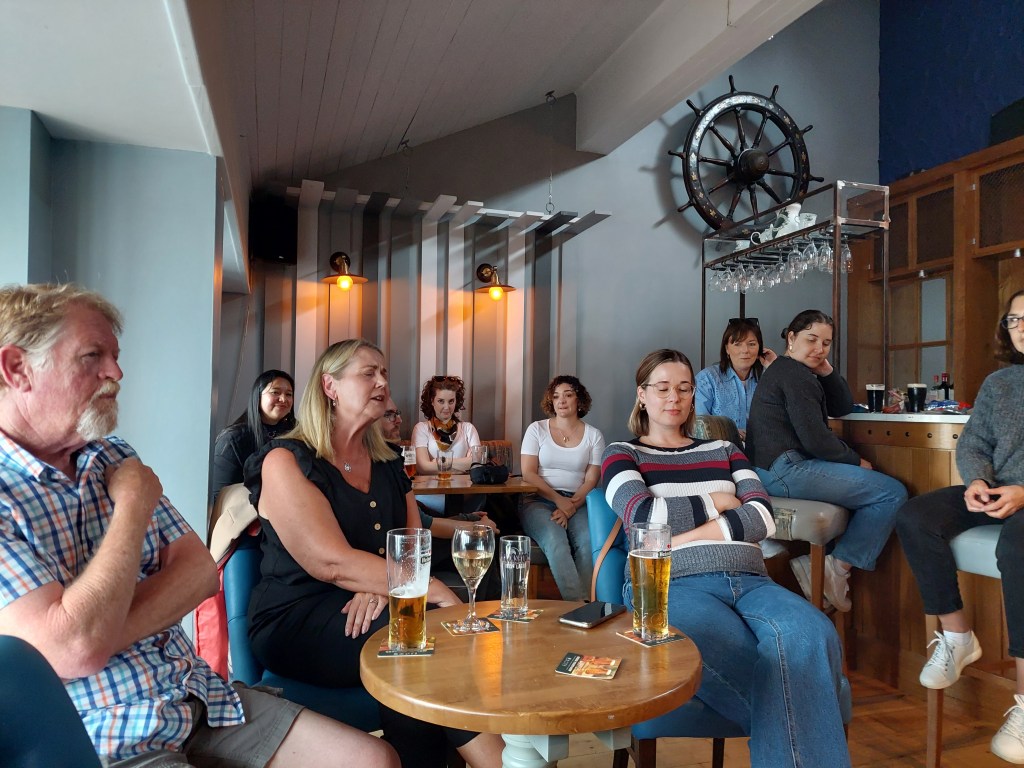
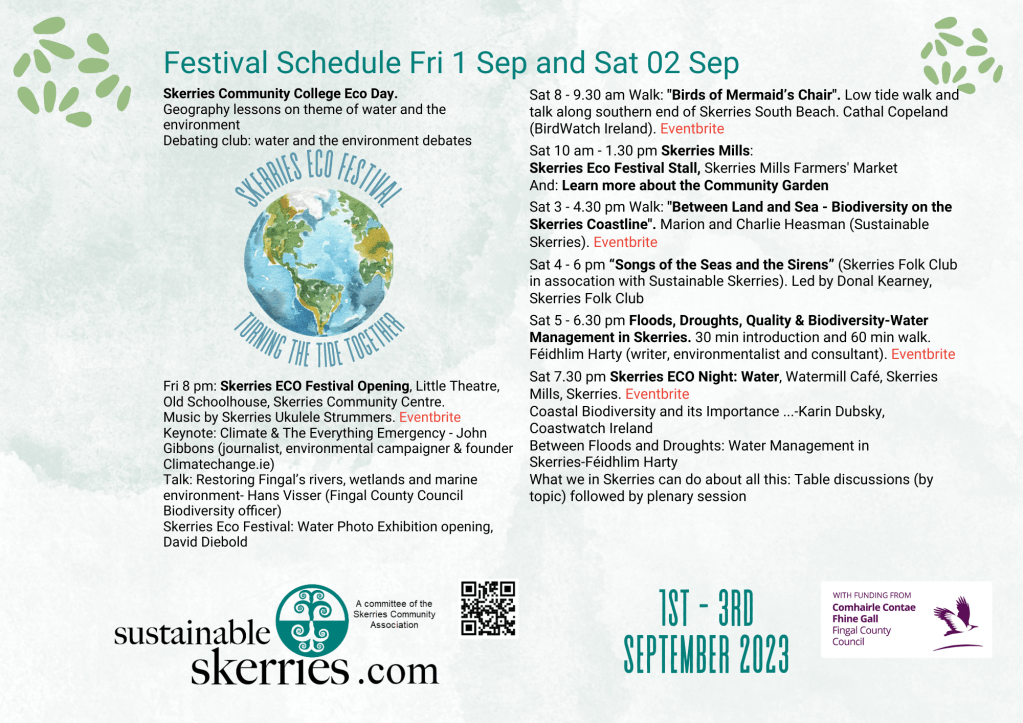
One of the groups getting involved in the festival is Skerries Folk Club, founded in 2022 by musicians Sarah May Rogers, Sara Dennedy and Dónal Kearney. They usually meet upstairs for a free singing session in Joe May’s on the last Sunday of the month, but they’re hosting a special session for the Eco Festival at 4pm-6pm, upstairs in Joe May’s, on Saturday 2nd September. Singers and listeners of all ages are welcome – please come prepared with a water-themed song!
Traditional Irish folk songs boast a wealth of sea lore about emigrant boats, war ships, fishing wreckages, and the various creatures that inhabit our coast lines; the maighdéan mara (mermaid), the selkie (half-seal, half-human), and the sirens of Greek mythology.
There is much to learn if we listen to the old songs. There is a reason folk songs survive for generations – they have something important to pass on. As we listen carefully to the songs of the sea during Skerries Eco Festival, there is no doubt we will hear the wisdom within.
You are invited to listen with us.
—
Skerries Folk Club will host “Songs of the Sea and the Sirens” at 4pm-6pm on Saturday 2nd September 2023. For more information about Skerries Eco Festival, visit sustainableskerries.com/skerriesecofestival
Guestpost written by Dónal Kearney, Director of Ecojustice Ireland – ecojusticeireland.org
 Sustainable Skerries