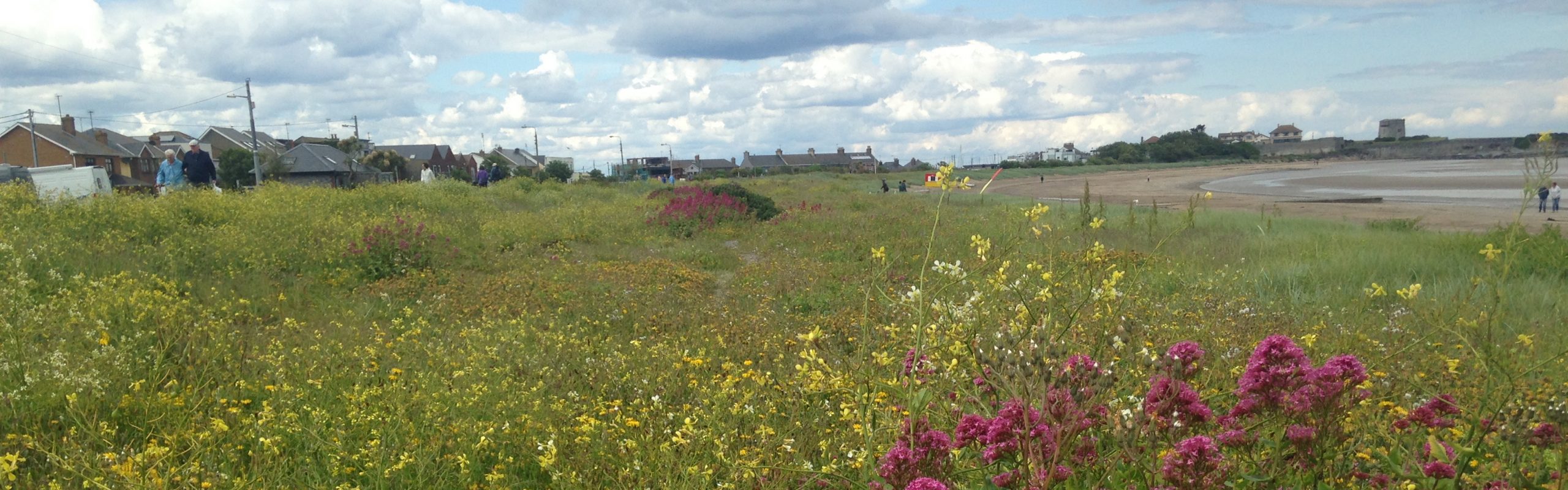
Festival Blog: Saturday: Birds of Mermaids Chair Walk and Talk
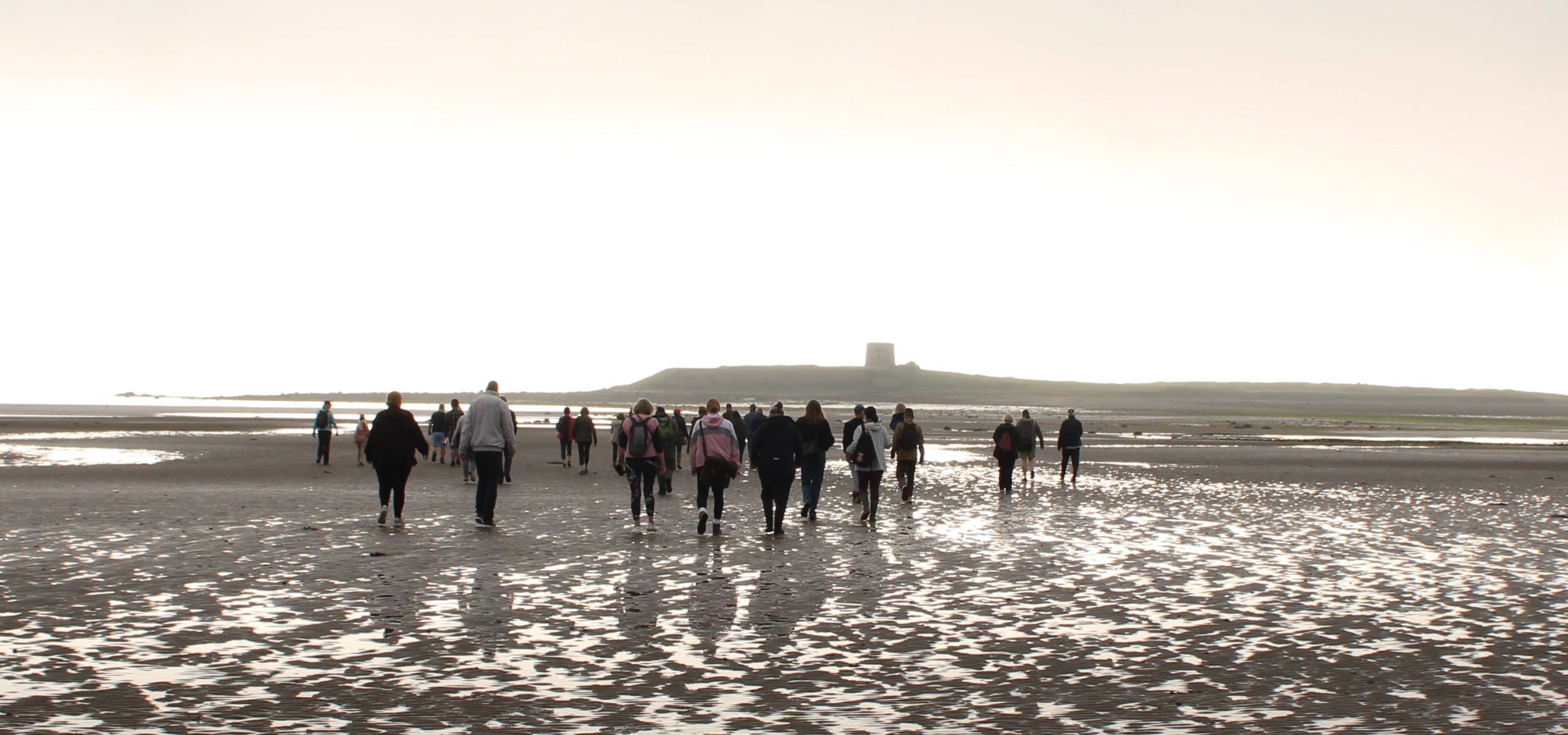
Low Tide Walk & Talk, Southern End of Skerries South Beach by Cathal Copeland (BirdWatch Ireland)
This report by Evelyn Cottell, Sustainable Skerries, continues our series of blog posts about our recent Skerries Eco Festival.
It was an early 8.00am start on 2nd September, for the first of 3 walks and talks, key outdoor events on the Saturday schedule for Skerries Eco Festival. In spite of the early start, a large gathering of 30+ people turned up for a coastal walk and talk, along the south end of Skerries South beach, led by expert BirdWatch Ireland guide Cathal Copeland. Cathal educated us on the sea birds and places of interest along the south beach, in a relaxed and engaging way. We were blessed with optimal conditions- a particularly low tide due to the moon phase, a clear blue sky, a knowledgeable local guide, telescope, binoculars, an enthusiastic bunch of people and a good turn-up of seabirds to match.
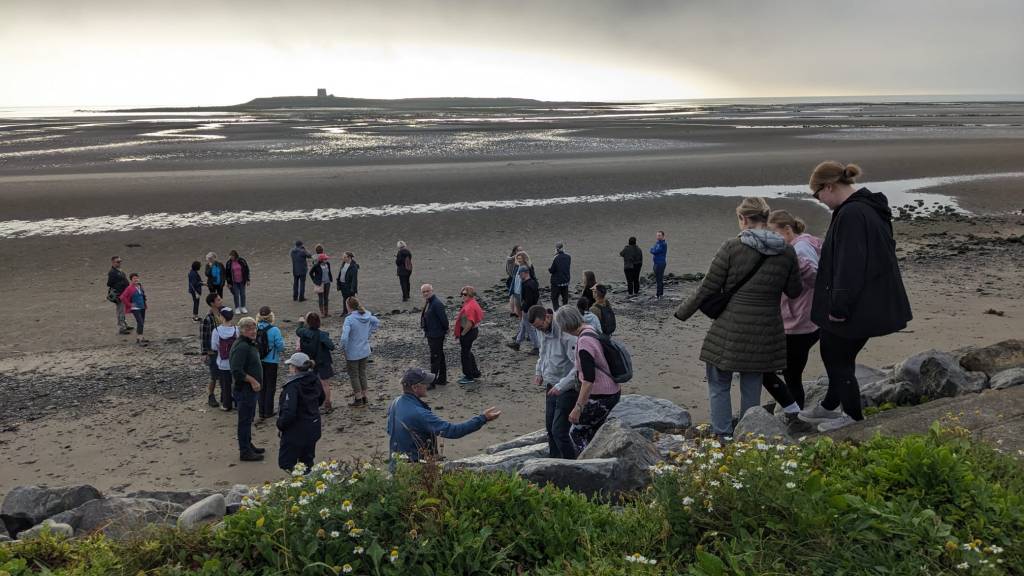

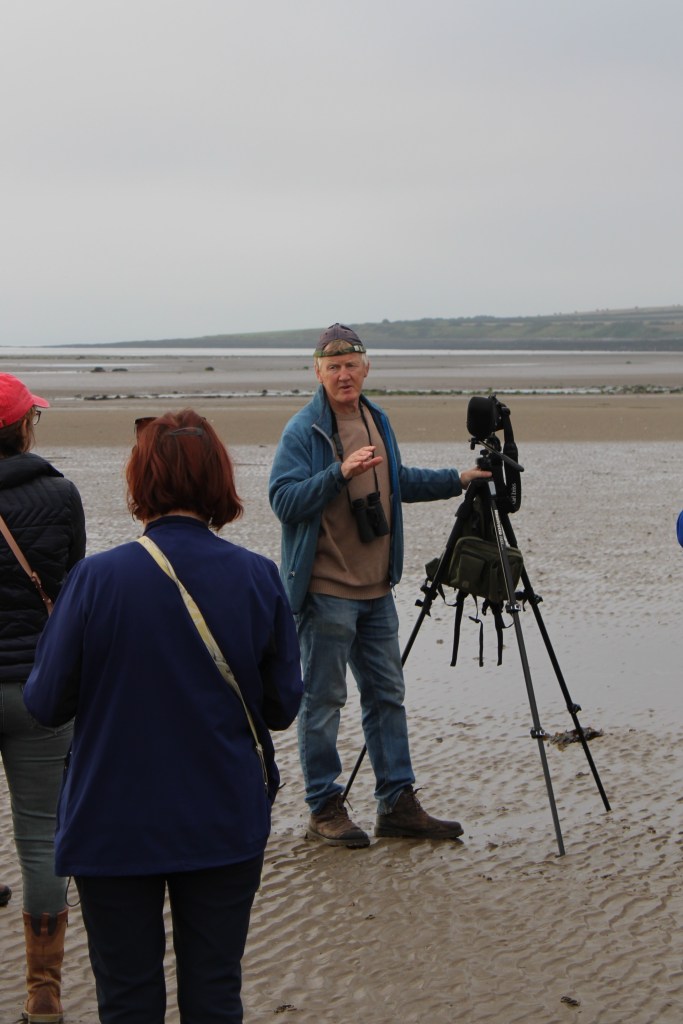
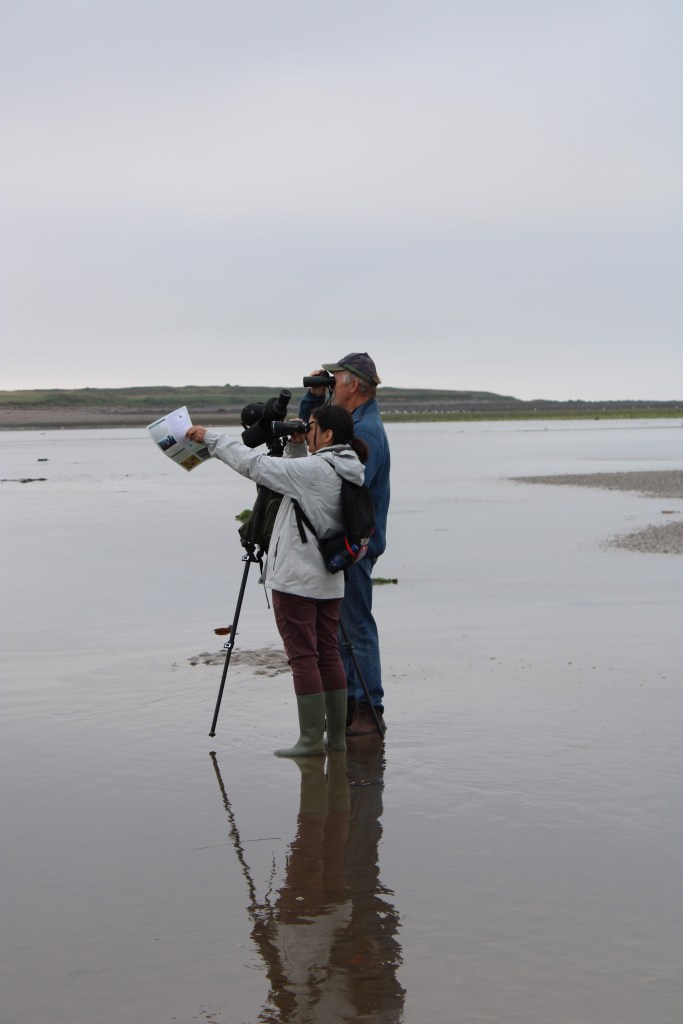
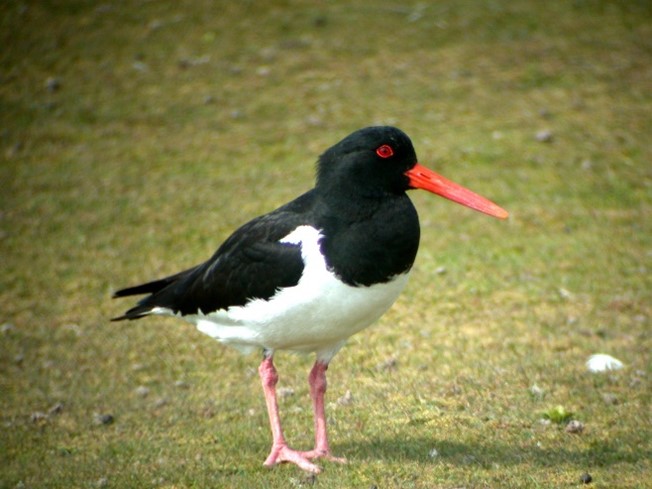
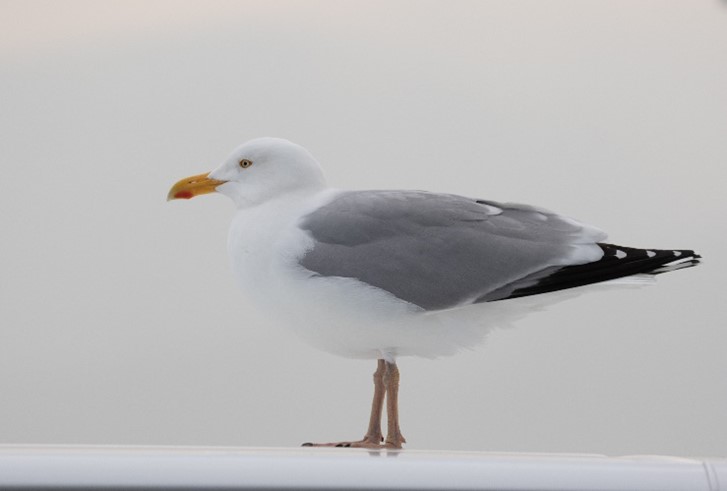
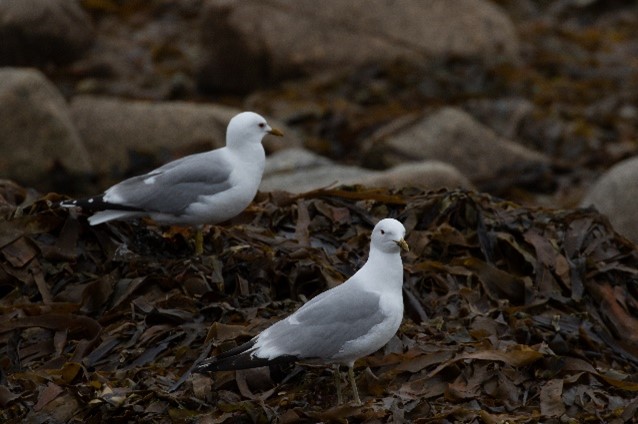
We identified some of the more familiar seabirds, included oystercatchers (Roilleach), the herring gull (Faoileán scadán), a large gull with silvery-grey wings, and the great black-backed gull (Droimneach mór), with jet black wings. It was interesting to have the less-common “common gull” (Faoileán bán) pointed out using the telescope- a much smaller gull to the herring, with a finer bill and without the red spot of the herring gull on its lower beak.
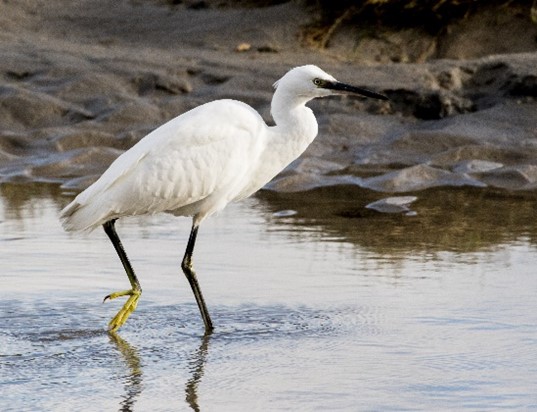
Down the south coast, towards Loughshinny, on a rocky formation, Cathal picked out three Little Egrets (Eigrit bheag) – tripod and telescope were positioned so we could all see these beautiful birds close-up. A medium sized white heron-like bird, with long black legs, a black bill and yellow feet, it was considered rare in Ireland until it first started breeding here in the late 1990s. Numbers have expanded now and little egrets can be found in almost every coastal county, as well as some inland sites.
Also noted down that end of the beach was a prominent rock formation in the shape of a chair -the Mermaids Chair. Folklore has it that mermaids used to come up out of the sea and sit upon this rock to comb their hair!
We spent a while observing a group of birds down from the Shennick steps and closer to the tidal edge. Expert eyes guided us again, picking out roseate terns (Geabhrog rosach), curlews (Crotach) and bar-tailed godwits (Guilbneach stríocearrach). Roseate terns, summer visitors from April to October, have two main breeding colonies in Ireland, Rockabill Island off Skerries (largest colony in Europe) and Lady’s Island, in Wexford. Cathal informed us of another breeding success story, with four breeding pairs of fulmars (Fulmaire) on Shenick Island this year. Fulmars spend most of their time at sea and only use the shoreline to breed, nesting on cliffs.

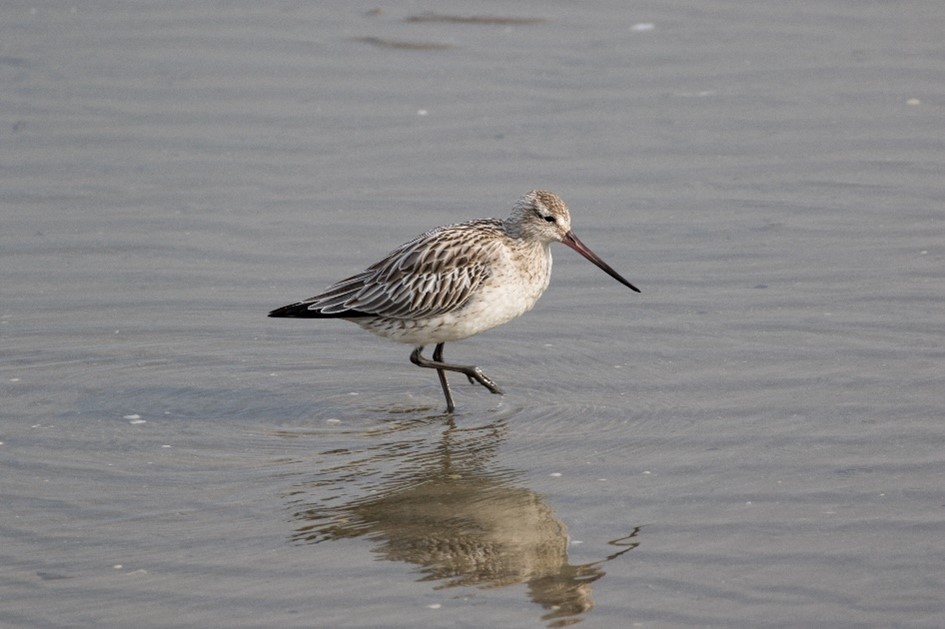
A highlight of the walk was seeing a bar-tailed godwit and learning about these amazing winter visitors, whose population is sadly decreasing. At first glance they look like small curlews, but have a long, straight and slightly upturned bill. They breed on Arctic coasts and tundra from Scandinavia to Alaska and migrate to coastal East and South Asia, Australia, New Zealand, Africa and Northwest Europe. The epic migration of a subspecies of bar-tailed godwit across the Pacific Ocean, from Alaska to New Zealand, is the longest non-stop flight of any bird and the longest journey without stopping to feed by any animal. Aided by strong tail-winds, the birds average 56km per hour and can complete an 11,000km journey in just over 8 days and nights. Their physiology has evolved and adapted for complete endurance, shrinking their internal organs to optimize their lung capacity before migration. Research is ongoing on these fascinating birds and their navigational abilities, including use of magnetic fields, internal compasses, the possibility of using the stars and sun to navigate and how they can fly and sleep at the same time, by possibly switching off one side of their brain. It was a wonderful experience to see and learn about these impressive record- breaking birds, on our local beach, and to contemplate their annual long-haul flights from summer breeding grounds to far-distance shores in search of food and warmth.
Indeed a marvellous experience all round to identify and learn about the amazing diversity of seabirds just beyond our door step.
BirdWatch Ireland is an independent conservation organization, whose primary objective is the protection of wild birds and their habitats in Ireland. They are looking for new members who can make a direct contribution to the protection of Ireland’s birds and biodiversity. www.birdwatchIreland.ie
 Sustainable Skerries