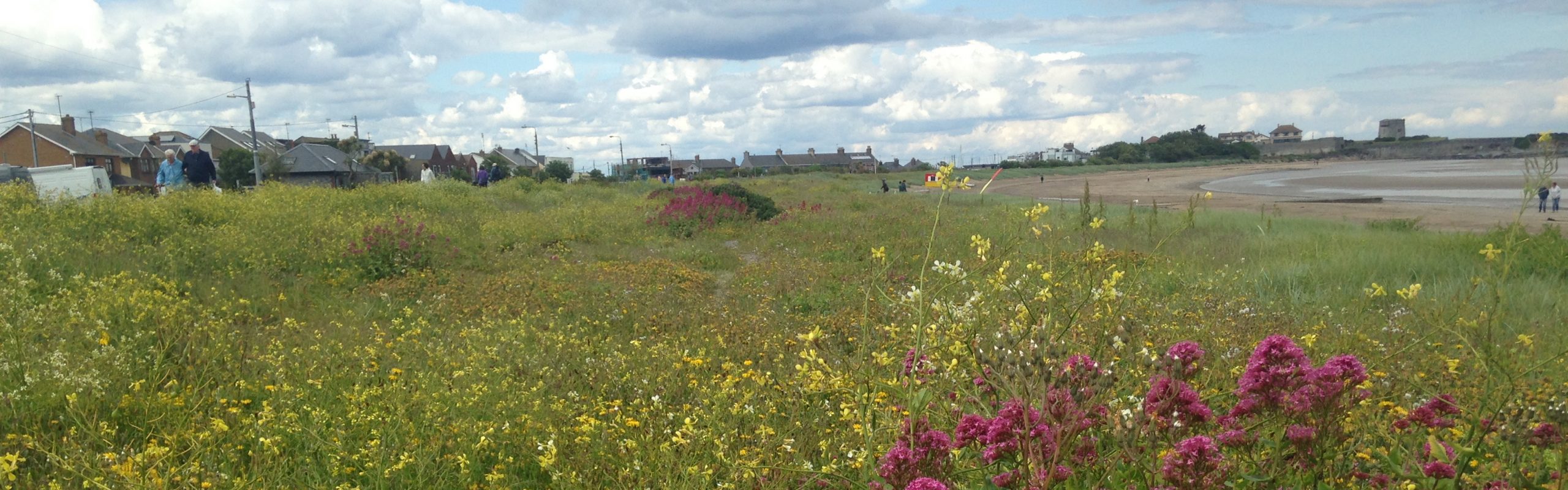
Please don’t cut the grass (but why we did) & Help the pollinators
Hans Zomer’s article on why the no-mow-people of Sustainable Skerries were actually out cutting the grass, and how to help the pollinators also appeared in the 11 November 2023 edition of Skerries News. (Online subscription highly recommended!)
Sustainable Skerries cut the grass, so they don’t have to do it again
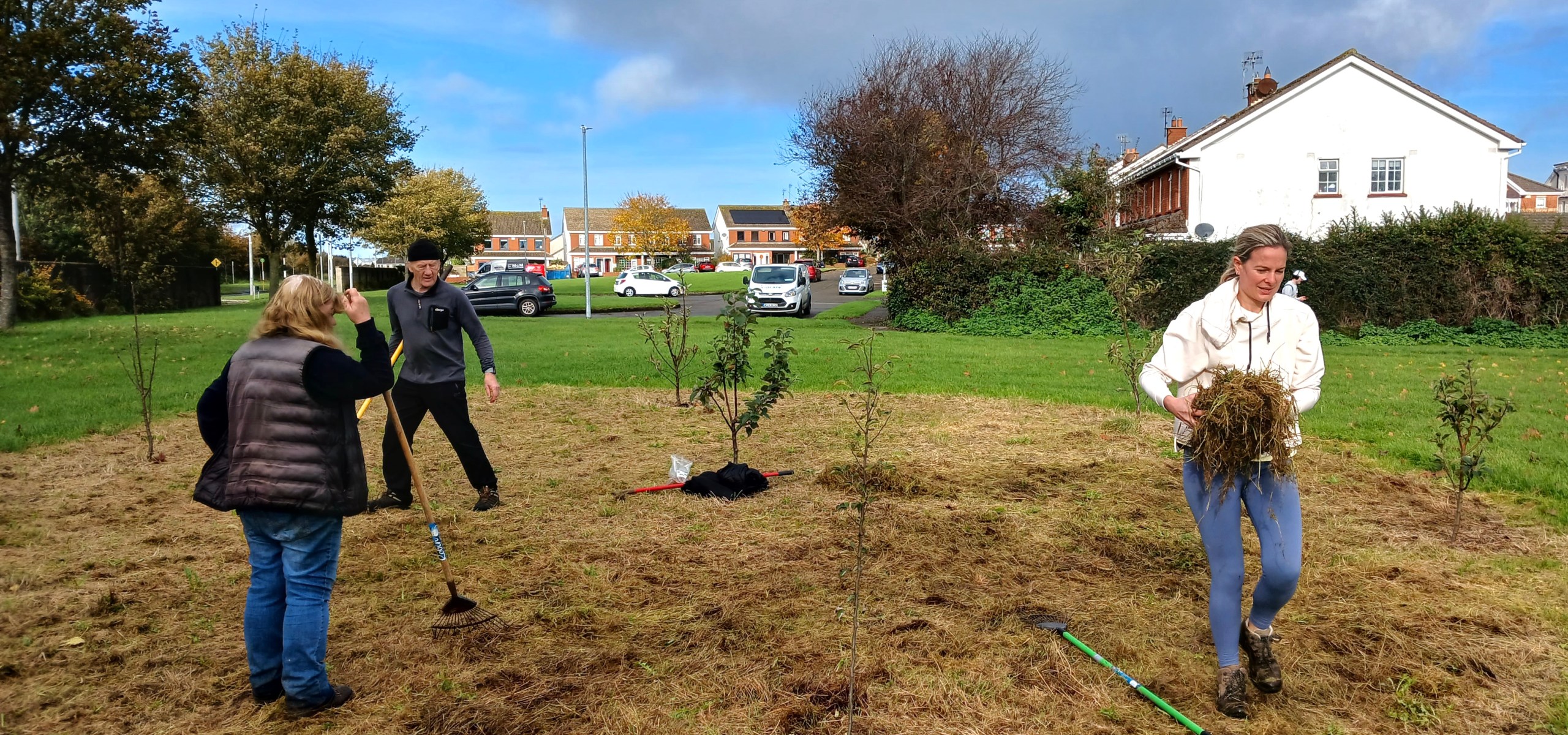
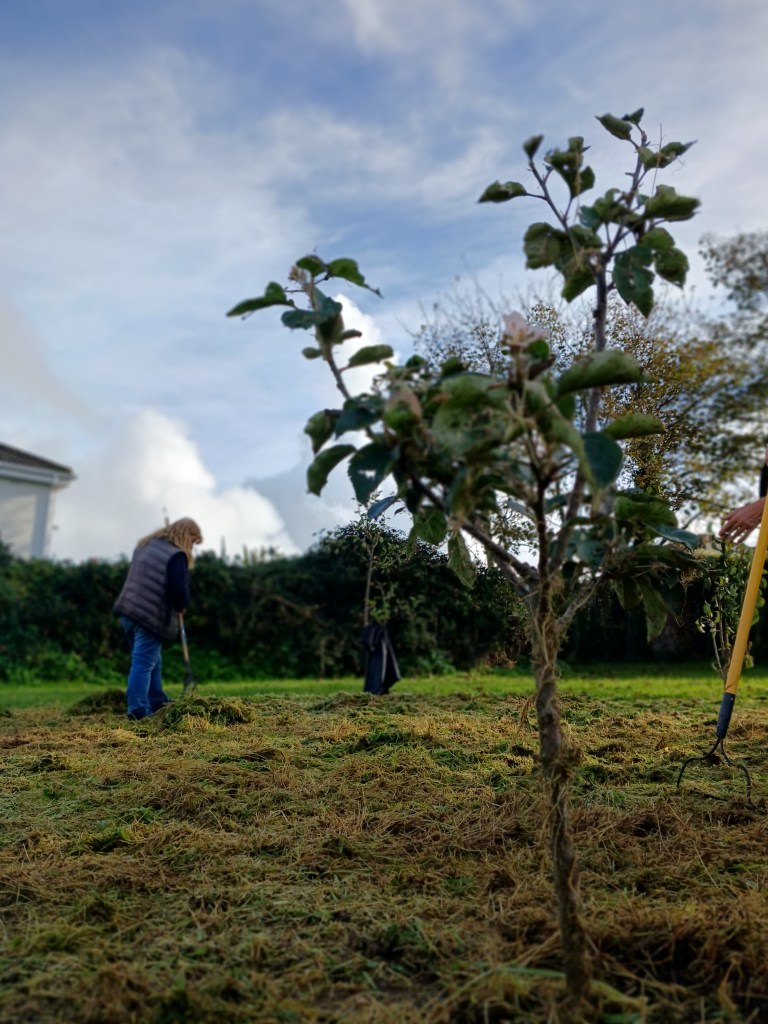
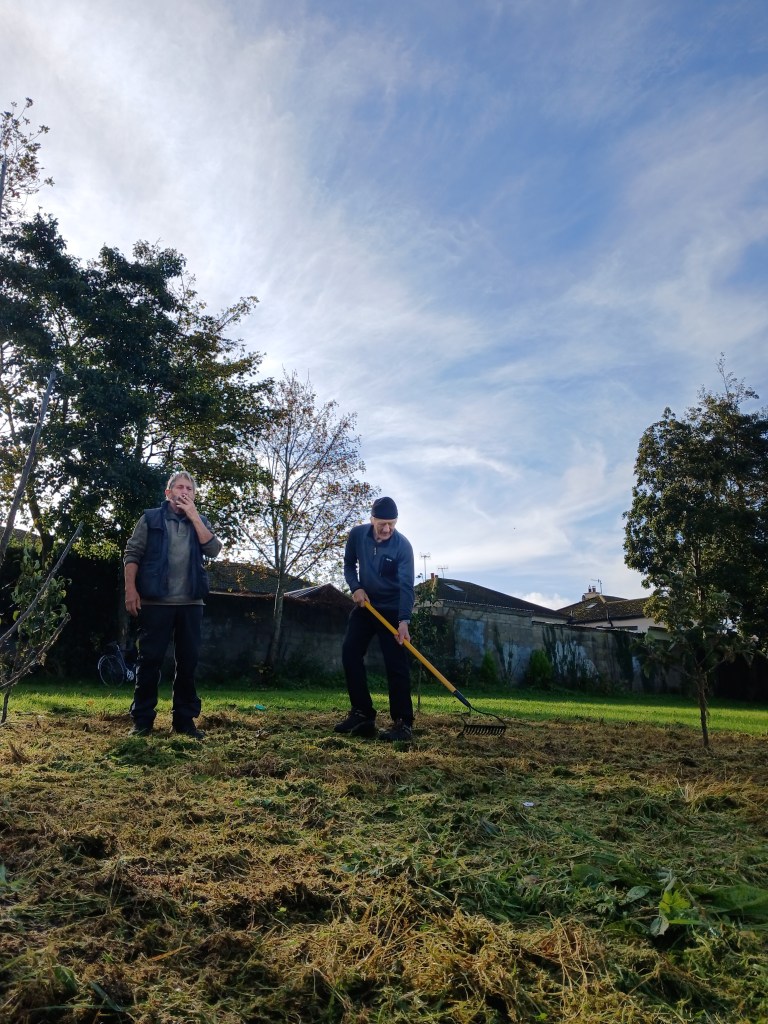
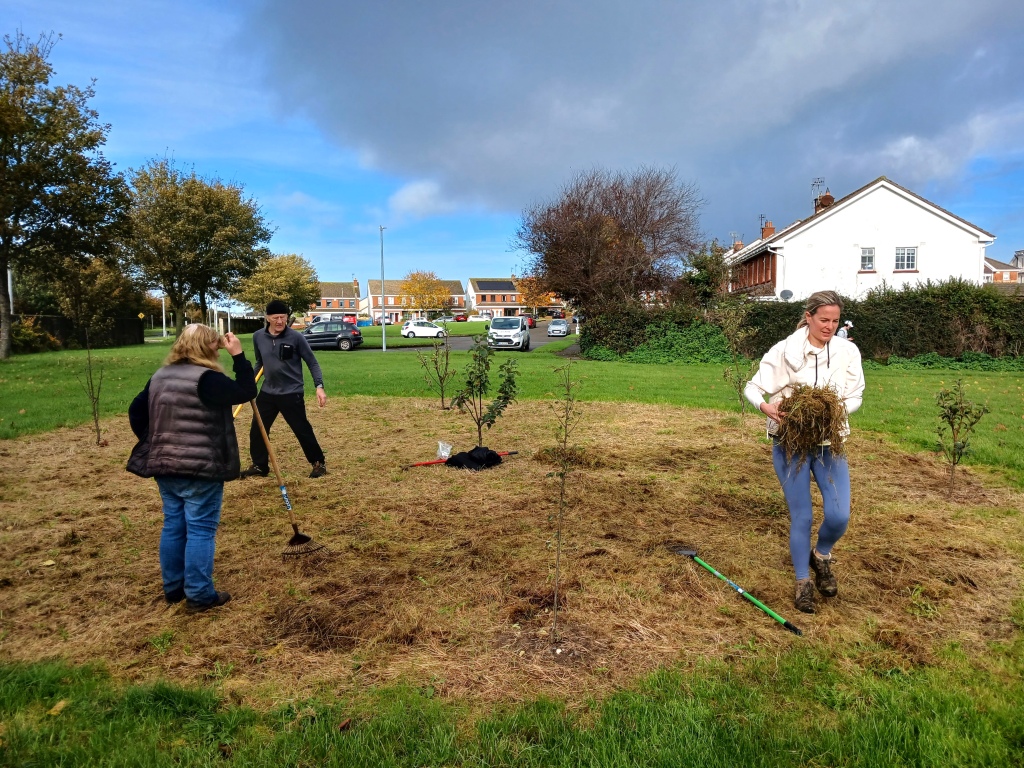
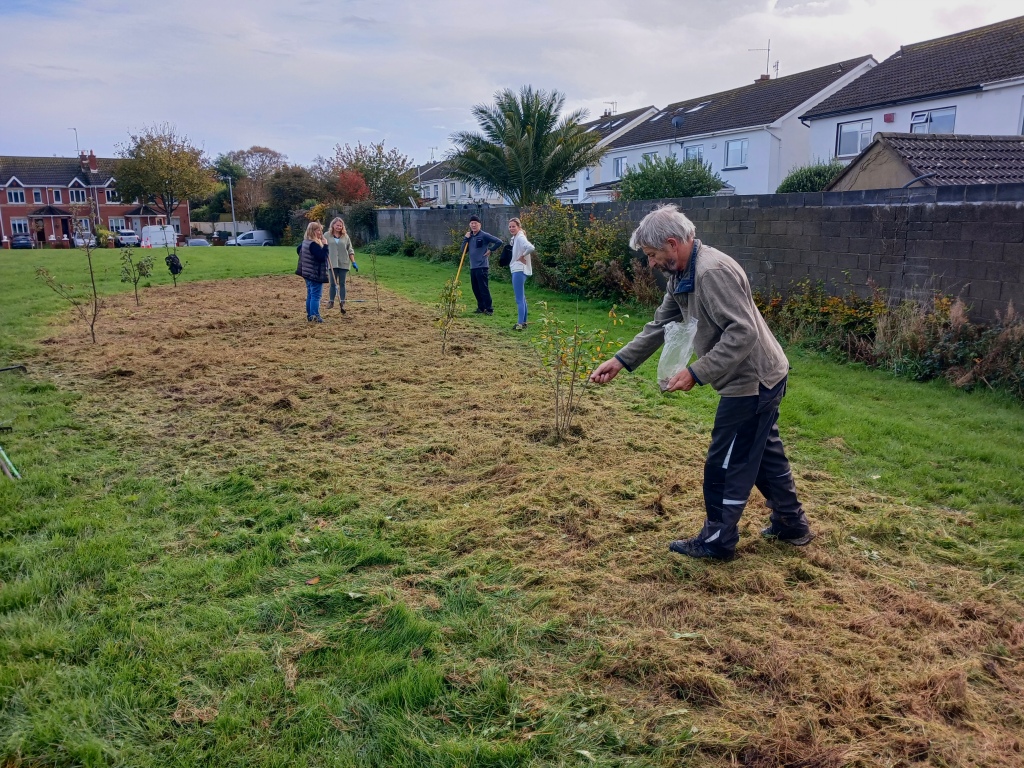
At the end of October members of Sustainable Skerries came out in force to cut and remove the grass cuttings from the Open Orchards that are dotted around the town.
As regular readers of our blogposts will know, we now have 8 mini orchards, with over 100 apple, plum, pear, damson and hazel trees, in Skerries. The trees are intended to provide food for our pollinators and for any passer-by in the town: by planting fruit trees in public spaces, the Skerries Open Orchards Project (SkOOP) hopes to encourage people to make greater use of our green spaces and provide opportunities for residents’ groups to work together to protect and nurture them.
Why we’re not cutting the grass
As part of the project, the land immediately surrounding the young trees is deliberately let grow wild. In line with Fingal’s Biodiversity Action Plan 2023-2030 and our own biodiversity plan for Skerries, the Open Orchards are managed in such a way that they provide opportunities for our local flora and fauna.
As noted on the Fingal website: “Not cutting grass short allows grasses and other plants such as Dandelions, Buttercups, Daisies and Knapweed to flower and set seed. Wildflowers provide nectar and pollen for insects such as bumblebees, hoverflies, butterflies and moths. Long grass areas also offer a safe refuge for insects such as grasshoppers, spiders and beetles. All these insects in turn provide food for birds, hedgehogs and bats.”
But this time we did!
Importantly, our no-mow policy doesn’t mean that we never cut the grass. In fact, we cut it once a year. We cut and remove the grass, to create space for wildflowers to take hold.
Without a bit of help, their seeds would be outcompeted by the grass, which has been so well established on our greens, and whose roots are strongly intertwined underground.
Having cleared some of the grass, the members of Sustainable Skerries sprinkled Yellow Rattle seeds on the soil. Yellow Rattle is an annual grassland plant that germinates in Spring and flowers in May to July. It is a native species that lives in many different types of grassland, and its parasitic nature reduces the vigour of grasses around it, opening up the grassland for itself and for other flowering plants.
So, next time you walk past any of the 8 Open Orchards in Skerries, have a look at the ground, as well as the trees! Who knows what you will find…

Help the pollinators
If you want to do your bit to help promote biodiversity in Skerries, here are the top 10 tips from the folks behind the All Ireland Pollinator Plan:
- Don’t mow, let it grow!
Reduce mowing to allow native wildflowers like Dandelions, Clover and Birds-foot Trefoil to naturally return over time. By reducing mowing – even to once a month – you will help them to slowly re-establish themselves, one pocket at a time - Let your hedgerow bloom
Native hedgerow plants such as Hawthorn and Blackthorn flower early in spring, providing vital food for wild bees when they emerge from hibernation, and birds and mammals eat their berries later in autumn. The more blossom your hedgerow has in spring, the better it is for biodiversity. Allow hedges to grow into a natural A-shape profile rather than a neat box shape.
Flowers grow on older wood, so avoid cutting annually – cut on a three-year rotation instead to allow them to flower in spring. - Plant pollinator friendly trees
Native trees and shrubs such as Willow,, Rowan, Crab Apple, and Holly support huge numbers of insects including pollinators. Trees that blossom in spring are a low-maintenance, vital source of food for pollinators. - Avoid using chemicals in your garden
Herbicides, fungicides and insecticides are potent chemical cocktails designed to kill various organisms. One of the best things you can do for pollinators is avoid using them. Insecticides have been found to kill, harm, and disorientate pollinators and herbicides kill the ‘weeds’ that provide them with important food.
And remember, all those chemicals you use eventually end up in our waterways and the sea! - Create nesting habitats for pollinators
Wild pollinators nest in hedgerows, wild areas, dry stone walls, and even in the ground. To make a nesting habitat for them, just scrape back some bare earth, leave some areas to grow wild, or simply drill holes 10cm deep in unvarnished wood for solitary bees. - Choose nectar and pollen-rich plants for your garden
There are plenty of beautiful plants you can choose for your garden that are rich in nectar and pollen. Bidens and Bacopa are great bedding plants for small containers and hanging baskets; and herbs such as Thyme and Rosemary provide food for you as well as for pollinators.
Make sure you keep these plants to your garden and don’t plant them in the wider landscape.
Outside your garden, the best action for pollinators is to create biodiversity meadows and margins by reducing mowing. - Think twice about getting a hive of honeybees
On the island of Ireland, we have some 100 wild bee species and most of them are under
threat. But the domesticated honey bee isn’t!
If we have too many honeybee hives in the landscape, they can compete for food with our struggling wild pollinators.
You should only get a honeybee hive if you want to start a new hobby, but it is not the best thing to do for biodiversity. - Be careful with wildflower seed mixes
You might be surprised to hear that sowing wildflower seed mixes can be detrimental to local biodiversity. Many wildflower seed mixes contain non-native species, and can inadvertently introduce invasive species. Please avoid using them where possible.
If you do decide to sow wildflower seed mixes, keep to garden settings, ensure they are native and of Irish origin, and never use in situations where natural habitat restoration is possible (Don’t mow, let it grow). - Don’t install a large bee or insect hotel
Large bee hotels are attractive to humans, but not great for pollinators. They can encourage the spread of disease and attract predators. Avoid anything bigger than an average-sized bird box. There are many other ways to provide nesting habitats for pollinators, such as providing wild areas of undisturbed long grass, and scraping back some bare earth. If you want to make a bee hotel, make sure it is small, and position it away from bird feeders so the insects aren’t easy targets. - Spread the word
Many people want to help pollinators and biodiversity, but it can be hard to know where to start. Tell your friends and family about these top ten ways to help pollinators; join a community group or Tidy Towns; talk to your council, school, college, workplace, or faith community.
Change happens when word spreads.
 Sustainable Skerries