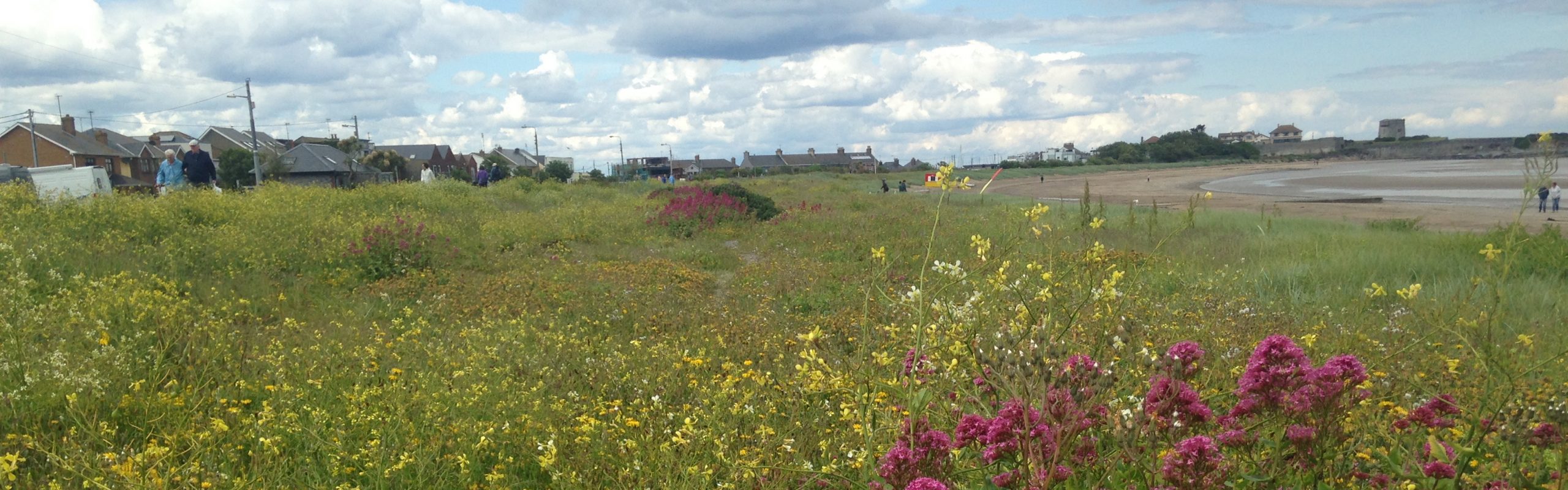
RE-IMAGINING 2 MILLION GARDENS AS IRELAND’S NEW NATIONAL PARK
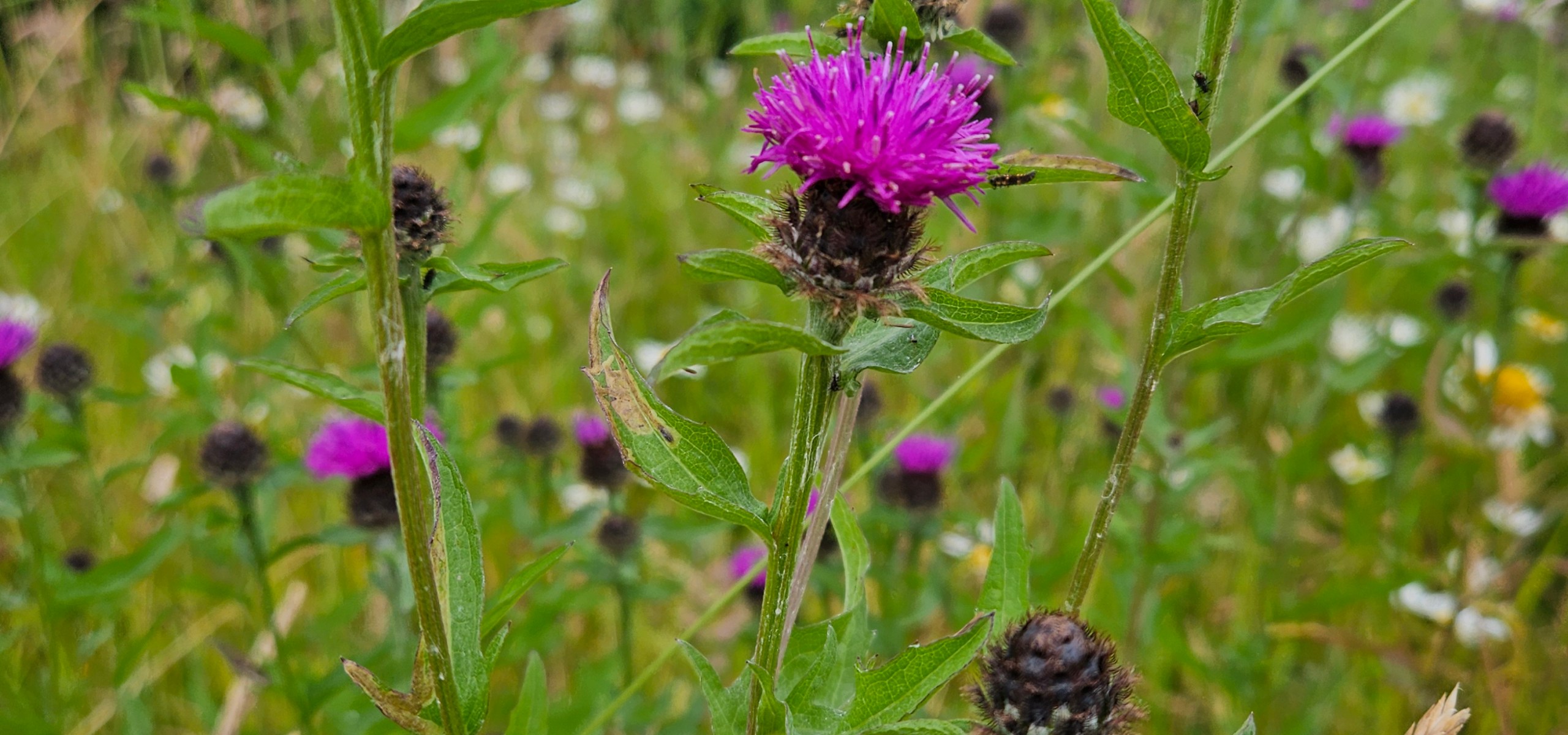
Sometimes, our events trigger thoughts that lead to bigger things. Christine Mullan-Jensen has some interesting ideas for your garden... She writes:
A few years ago I was sitting at a Skerries Eco Night and one of the topics was ‘what can we do in our front and back gardens to help with the climate and biodiversity crises?’. I immediately thought, now there’s a good research study! As a researcher who now specialises in environmental psychology, the topic was perfect. So, I set about creating a study to talk to people about their little piece of nature: their garden. I wanted to understand their potential pathways to more native nature and biodiversity in these semi-private spaces. I did 4 focus groups and a short survey to explore force fields for change by understanding
both the bridges to increasing biodiversity but also barriers.
One of the biggest barriers is the fear of being judged by others and shame of not having a tidy garden. This social judgement goes both ways: ‘wild’ gardeners judge conventional ones and conventional ones judge wild ones. Movements like Mary Reynold’s ‘We Are Ark’ and ‘No Mow May’ lessen this judgement or shame because they signal to others WHY nature is being approached differently in some gardens. Another big barrier is confusion about the ‘right’ thing to do even for biodiversity….as one participant said:
“Biodiversity was a term I had to learn because, when I was young and growing up, we lived it, so we didn’t have to be told about it. Whereas now, so many of the habits that we had are no longer practised. Our children, now, they have to learn it nearly in a book and then take it from the book out to the garden to see it. When we were small, it was at our fingertips, it was in our core”
The participants also talked about a second layer of shame when they learned about how our approach to conventional gardening has also been part of depleting our biodiversity.
Ireland, despite its ‘Green’ perception, is ranked 13th lowest in the world for its biodiversity.
Yet, we have 2 million gardens accounting for 359,000 acres of land which could be used as sites of nature and biodiversity restoration.
4 KEY TIPS FROM THE RESEARCH:
1) TAKE TIME TO BE IN YOUR GARDEN
Just sit in your garden or potter around-notice how it feels
Remember accessing nature is good for your health and wellbeing (it also lowers the stress hormone cortisol) Your garden is your private space to be yourself (particularly your back garden)
Let nature help you no matter your mood (it may even improve your mood)
In environmental psychology there is lots of research that spending time in your garden is good for you. Take a cup of tea and sit there and see if your garden is already welcoming any visitors like birds or bees or butterflies.
2) CHOOSE YOUR STYLE – AND MAKE SMALL (OR BIG) CHANGES
Every garden is different. There is not a one size fits all way to approach a more biodiverse garden. Have fun and get creative.
There are many ways to welcome nature in:
- Nudge yourself to be a bit less conventional – get curious about what could be done in your garden to embrace native nature or more biodiversity
- Remember shame is a barrier that can be overcome
- Worried what others think of your front garden? Pop out a sign to say you’re managing it for nature
- Your back garden is a great place to start – no-one will see and you can build up your own style
3) LEARN FROM OTHERS AND SHARE
Learn from others whose style you like – here are a few great websites/booklets:
- We Are The Ark – ARK = Acts of Restorative Kindness
http://www.wearetheark.org - The National Biodiversity Data Centre, http://www.biodiversityireland.ie
- Gardening for Biodiversity, a downloadable booklet (also available in print form from Sustainable Skerries) http://www.juanitabrowne.ie/gardening-for-biodiversity/
Join local initiatives or social media groups who share practical advice like:
- Introductory gardening courses
- Garden advice clinics
- Garden visits
- Community Gardens
- Plant swaps
- Seed collections
- Finding native nature suppliers
If you don’t have time or are not able to do this yourself, why not reach out to others who would love to help in your garden through initiatives like Community Roots: https://communityroots.ie/
As you build up your knowledge or approach, pass on your learning.
4) THINK OF YOUR GARDEN AS IRELAND’S BIGGEST NATIONAL PARK
Your garden is your choice. It doesn’t sit in isolation and is connected to the garden next to it and the next one and so on. Each connection creates corridors for insects and wildlife to move on to the countryside and coast.
Imagine the outcome if just 500k of Ireland’s 2million gardens embraced more native nature and biodiversity? Often, we feel that governments or farmers need to change land use, but there is much that every little garden patch can do.

Want to know more?
This blogpost by Christine Mullan-Jensen is based on the following research paper:
- Mullan-Jensen, C., MacIntyre, T., & Gallagher, E. (2024). “Two million gardens could be the biggest National Park in Ireland”: pathways to nature in domestic gardens. Cities & Health, 1–14. https://doi.org/10.1080/23748834.2024.2381968
- Read the full paper here: https://www.tandfonline.com/doi/full/10.1080/23748834.2024.2381968
- or for more information on Christine’s work access www.repsychable.com
 Sustainable Skerries