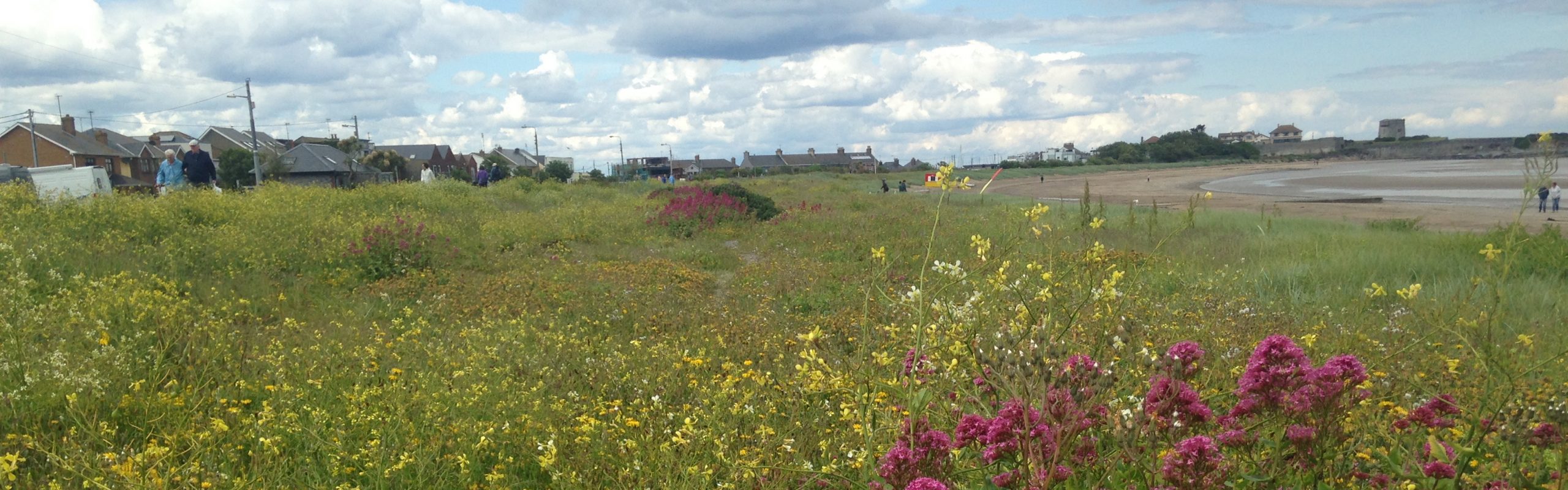
Red Island Improvements
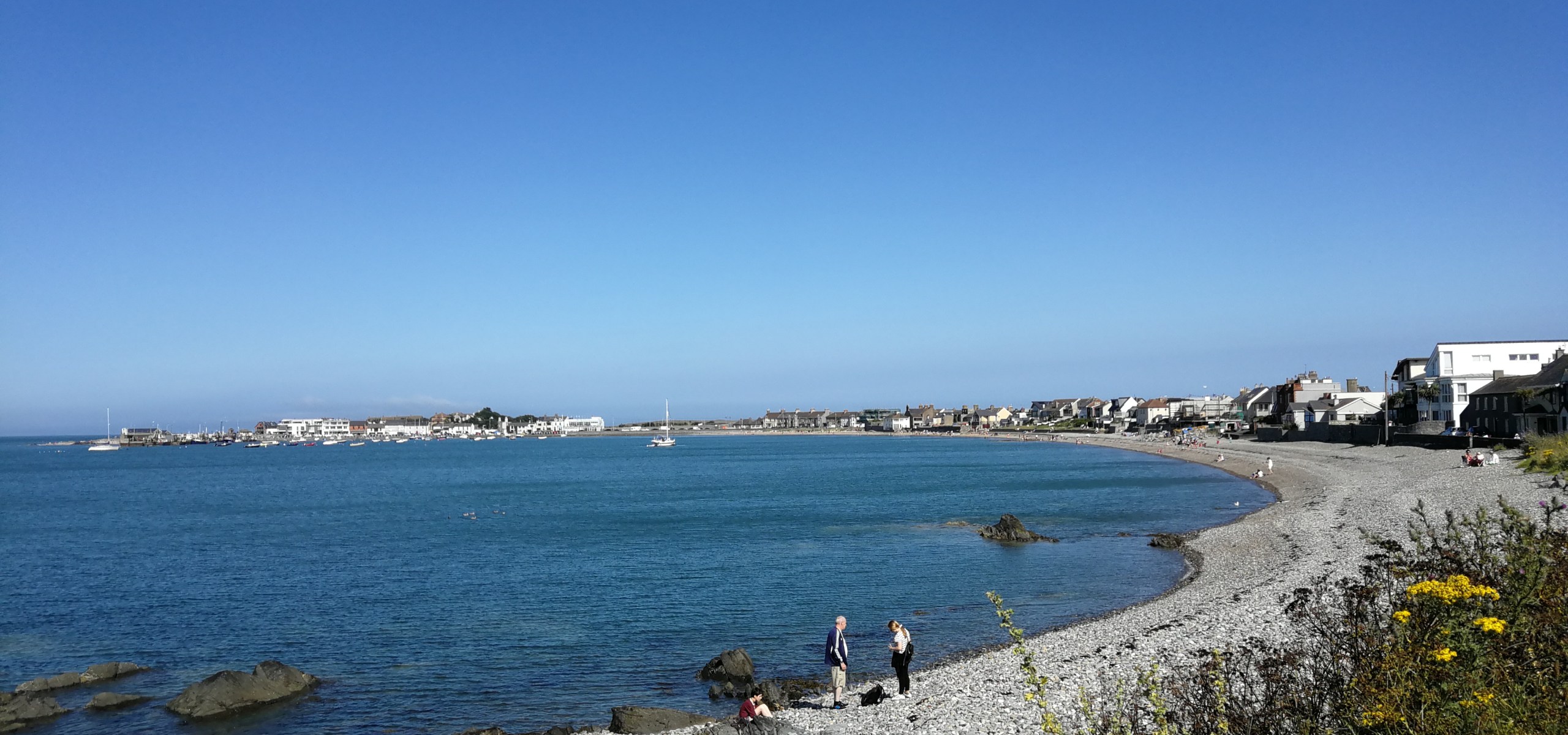
Too often, public consultations are dominated by negative feedback—and while it’s vital to raise concerns, it’s just as important to show support when something good is being proposed. At Sustainable Skerries, we believe in speaking up for the environment, active travel and (indeed) sustainability.
That’s why we made a submission in favour of Fingal County Council’s Harbour Road and Red Island Loop plans. We encourage others who welcome these improvements to say so, too—because positive voices can help make sure thoughtful, community-focused plans are actually carried out.
Below is the full text of our submission, which we understand should be listed as Submission 59 on the Fingal County Council consultation portal. Although it has not yet appeared online, we have received an official acknowledgement of receipt.
Sustainable Skerries welcomes the opportunity to comment on the Harbour Road Public Realm Enhancements and the Red Isla seend Loop proposals. Like our previous submission overall we strongly support these proposals.
The Skerries Harbour Road and Red Island Loop Scheme, proposed by Fingal County Council, will result in a positive transformation of the Red Island peninsula, turning the area into a pedestrian-friendly, accessible and safe space for everyone. We are particularly pleased with the proposed measures to improve walking and cycling infrastructure, and make the Harbour Road more pedestrian-friendly, and we note that all evidence shows that initiatives like this boost local economies, improve air quality and public health, and improve social interaction in the community.
Accessibility and Safety
We welcome the focus on improved accessibility for residents of Skerries with mobility issues including dedicated closer parking for accessible and age-friendly parking, in addition to drop-off points outside businesses and residential spots. We note the need to look at facilitating hidden disability parking within the scheme.
The delivery of proper segregated pedestrian/cycling where feasible is also welcome. We are pleased to see the significant ways in which the project will enhance safety where there is shared space between car users, pedestrians and other active travel users. Additional space for pedestrians on Harbour Road will make walking there a far safer and nicer experience for locals and visitors alike. Currently, people often need to step out onto the road to avoid the crowded footpath.
The addition of a footpath on the seaward side of Harbour Road and the proposed speed limit of 30 kph will make that area safer and more enjoyable for all. The traffic which was caused by people searching for one of the limited car parking spaces on Harbour Road often resulted in unsafe situations. Such situations should be avoided with the proposed changes as people will know to plan for drop offs rather than parking on that road.
Similarly, a pedestrianised area near Storm in a Teacup will make that area much safer for families and children. It is a pity that there is not enough space on the Harbour Road to allow for segregated cycle paths, but we accept that the shared-space solution can work, and welcome the segregated cycle paths on what is called the Red Island Loop. These cycle paths will also make the area safer and more attractive for cyclists, for whom there is currently little encouragement to use the area.
Segregated cycle paths on Red Island will also facilitate children learning to ride their bikes. We note that the plans will also enable access for emergency vehicles to reach the Captains and Springers swimming areas, which is again positive for safety. We welcome the effort to which the Council have gone to engage specific users of the public space to ensure the enhancements do not impede their ability to operate.
Biodiversity
We are strongly supportive of the biodiversity aspects within the plan such as native planting, wildflower beds and the use of environmentally friendly materials. We hope that the wildflower beds are going to be managed as per best practice (e.g. cutting the grass once a year and lifting what has been cut; see https://biodiversityireland.ie/practical-advice-on-managing-wildflower-meadows/ though this will have to be adapted for narrow strips).
We also like the planting plans for Harbour Road, which includes trees where at the moment there are none, and encourage Fingal County Council to select species that can best withstand the sometimes harsh conditions so close to the sea. It would be great if the public could be informed about the trees used, e.g. by small signs, so that those living near the coast could see real-life examples of trees and possibly shrubs that do well there, such as hawthorn, scots pine, etc.
We welcome the change in the lighting plans for Red Island since the previous consultation, which will leave it partly unlit to the benefit of wildlife and stargazers.
We also ask for strong litter controls including a net or mesh on the seaward side of the route near the harbour to prevent further sea pollution. Additional litter bins throughout the area and “leave no trace” type signage at the entry and exit points of the walking/cycle routes would also be helpful.
Water Management
We are very excited about the prospect of rainwater planting, which will minimise surface water run-off and improve our seawater quality and welcome the inclusion of Sustainable Urban Drainage, bioswales and rain gardens, including permeable parking. where feasible. We ask that the Council consider permeable parking in the spaces prone to flooding in the first car park on the left before the playground. This would have limited impact on the desire to colour code that car park for accessibility reasons etc.
Final Comment
Understandably there are concerns about some aspects of this proposal. We refer to the previous submission number c766 – 46 by Hans Zomer, Skerries Harbour Road | Fingal County Council Online Consultation Portal. He notes the research which shows that, whilst initially there may be resistance to infrastructure changes, acceptance typically increases after implementation when people start to see the benefits such as improved safety, cleaner environments, greater livability and economic benefits. He quotes several studies on this topic which are worth referencing.
 Sustainable Skerries