Water
One focus here at Sustainable Skerries is water. We are working on identifying nature-based solutions to run-off from hard surfaces like pavements and roads after heavy rain.
Water butts, raised beds, planters, and rain gardens in public areas and around people’s homes are part of the solution. Scroll down to see the video of the July 2024 online talk with Féidhlim Harty, as well as to a bit more background to the 2024 LAWPRO-funded water project. At the very bottom of this page, you will find a plethora of useful resources – including a super useful overview of planting suggestions for rainwater planters and rain gardens..

Why all the fuss about Water?
Conserving water is good for the environment and good for your garden. It’s good for the sea, stream & ponds in Skerries. There are lots of people working in Skerries to make it easier for you to conserve water, to help limit the impact of chemicals on our beaches, and to reduce local flooding after heavy rain. Read on to learn more.
Why does it matter in Skerries?
We’re lucky in Skerries to have beaches, a stream and ponds to enjoy, with all the wildlife & the fun that they bring. But living on the coast also means that we are (and will be) particularly affected by changes in climate, sea level and more extreme weather events. Some areas already flood after heavy rain or high tides. Pollution in the water can quickly curtail our seaside fun.

What are we doing about it?
Thanks to LAWPRO, two water projects are underway in Skerries. One led by the Stream Huggers group continues their work to clean up the Millstream, to clear it of rubbish, to find possible sources of pollution and ways to improve the water quality. This benefits the wildlife and Skerries folk alike. To contact Stream Huggers: daramacd@hotmail.com
The second project is led by Sustainable Skerries. Like the Stream Huggers, we’re working with water management expert Féidhlim Harty. We’re exploring nature-based solutions to the problems of flooding and water pollution. Our focus is on what we can do in the town, to ease flooding and ultimately help the stream and our bathing waters.
We recently held a webinar with Féidhlim, focussed on small things we can do to help. You can watch it here.
Why a water butt?

You may be wondering why Sustainable Skerries is encouraging people to use water butts in their gardens. Especially when tap water is free in Ireland!
This and other simple things can help make a big difference to water quality and to wildlife in Skerries.
You’re probably aware that after heavy rain, it’s common for “no swim” notices to be posted at our beaches. During heavy rain the drains are overwhelmed and sewage is released out to sea. This is better than the alternative, but it’s far from ideal!
If enough of us take relatively small measures to slow the water down during heavy rainfall, then this can be avoided, at least some of the time.
If you have a water butt on your downpipe, then that will collect the rain, and stop it going straight to the drains when it’s raining heavily. This can contribute to avoiding the system being overwhelmed.

There are other benefits to you of water butts:
- You can locate them where they’re convenient for watering your garden
- Rainwater contains nitrates & more oxygen than tap water, and doesn’t contain chlorine or sodium – your plants will thank you!

What is a rainwater planter?
There are a number of nature-based ways to slow down water from reaching the drains, and also the stream / ponds / sea. These have the added benefit of also helping wildlife and can clean the water of pollutants from things like litter & spilled petrol as well.
A rainwater planter is a simple planter which diverts water from a downpipe, releasing it more slowly back to the drains. That helps to alleviate the problems caused by the system being temporarily overwhelmed.
We’ve installed one at the Community Centre which you can take a look at. And we have a number of guides to show you how they work.
Lots of different plants are suitable for a rainwater planter. The ideal plant is happy enough in dry soil but also great at soaking up water when it’s wetter. Even better, lots of the same plants are also pollinator-friendly! We have compiled a list here, based on advice from water management expert Féidhlim Harty, local ecologist Kate Harrington & Charlie Heasman and a UK rainwater planter guide. We’ve used Yellow Flag, Bugle & Aquilegia in our planter at the Community Centre.

Rainwater planters…
- are attractive, colourful additions to your garden / premises
- bring pollinators and other wildlife into your space
- help reduce localised flooding
- keep the water which reaches the stream, ponds & sea clean
Permeable paving is preferable
Rain which falls on hard surfaces like roads, solid pavements and driveways runs off and reaches drains fast. This is a problem during heavy rain when the drains can be easily overloaded. The water also picks up pollutants like litter, microplastics and petrol along the way. When rain falls on grass, trees, other green spaces and more permeable surfaces it’s much more likely to soak in slowly, alleviating pressure on the drains. Which means flooding is less likely, and we’re more likely to be able to continue to enjoy our shoreline.
Committee member Hans Zomer recently wrote about the trend of depaving. Another big help can be retaining the green spaces we already have. Fingal’s award-winning Bloom garden showcased a number of measures like permeable parking.
Sourcing your butt or planter
Have you seen our demonstration water butt and rainwater planter at the Skerries Community Centre (Old School)? These pictures were taken a day before the plants arrived.

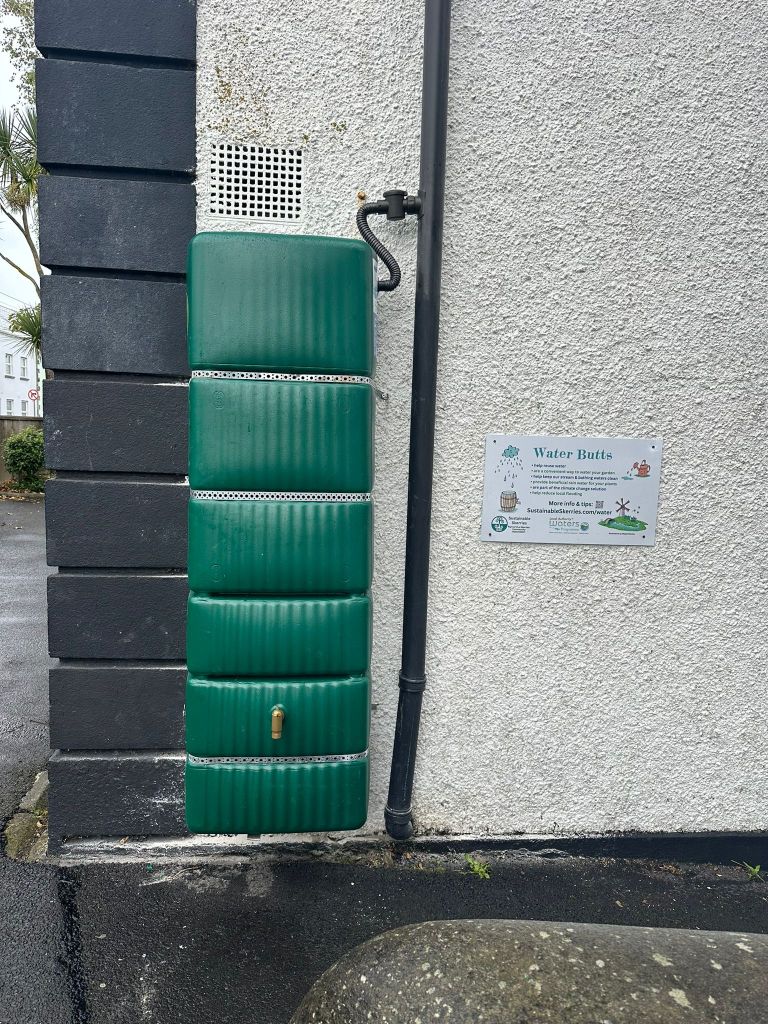
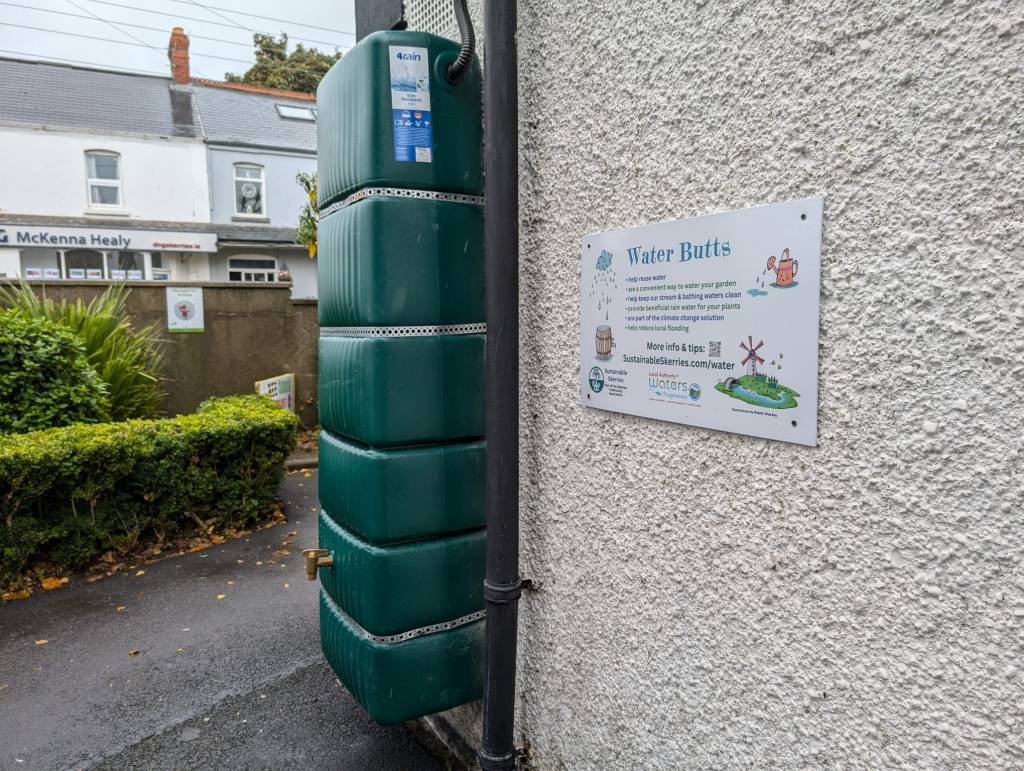
We got our water butt from tanks.ie. We needed a slimline one like this to maintain access along the path. The website also shows you options of taps and connectors, so you have everything you need.
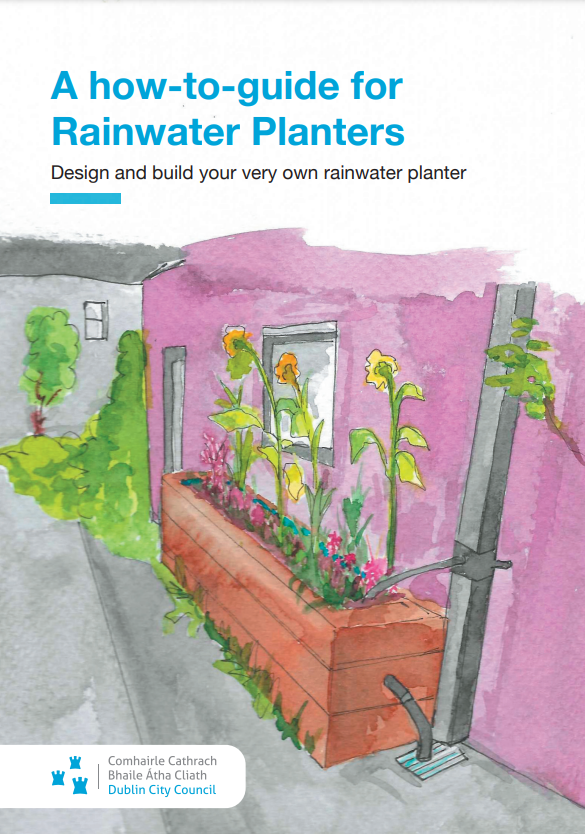
We were very lucky that the wonderful Community Centre staff built our rainwater planter for us. We used this how-to guide, which gives step-by-step instructions. It also tells you exactly what you need to buy. We bought the materials from J Browne & Sons in Lusk. You could also adapt an existing sturdy wooden planter using a tarpaulin liner, gravel, a length of hose and the right connector for your downpipe.
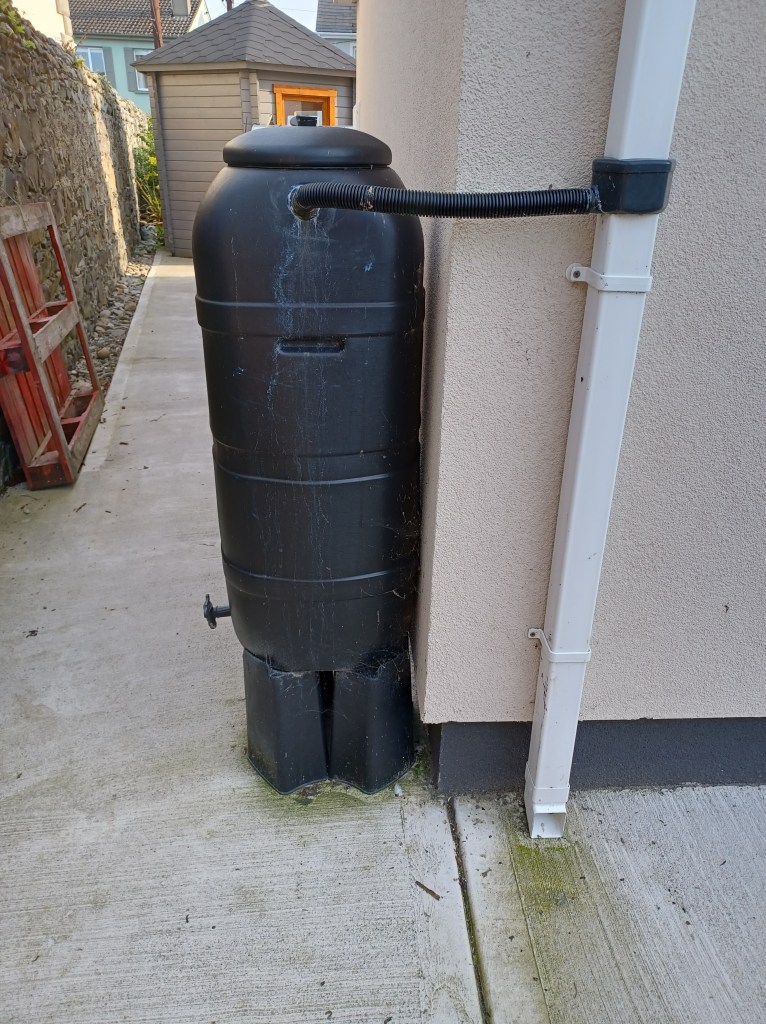
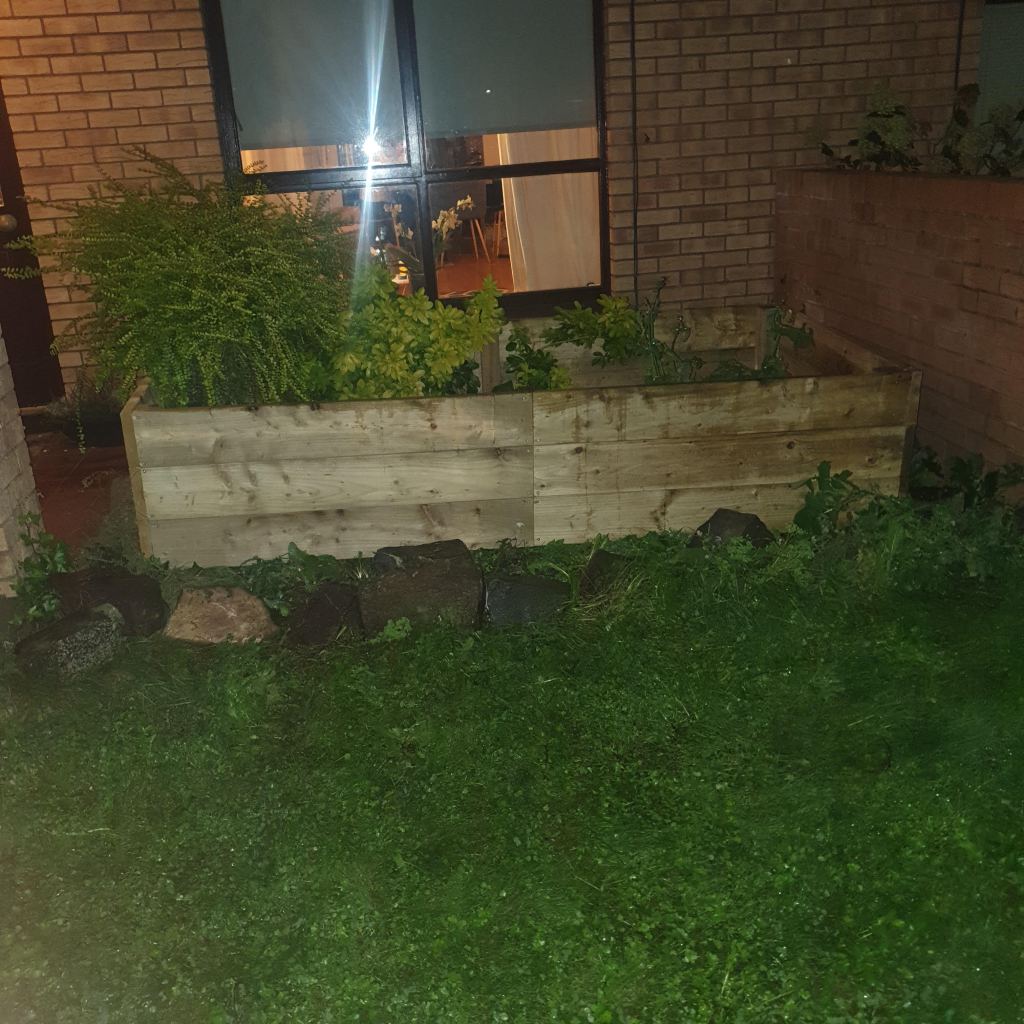
And here are some pictures we received from those who attended the Catch That Raindrop seminar:



A drop in the ocean…?
While one water butt, rainwater or permeable parking space won’t make a huge difference, together if we use these types of measures we can certainly help keep our bathing waters and our stream cleaner.
As we continue our water project, we’ll share more information & resources to make that as easy as possible for everyone. We’ll also be implementing some larger measures around the town, so watch this space!
- If you’d like to get involved, contact sustskerries@gmail.com.
Catch That Raindrop! Online Talk with Féidhlim Harty, Environmental Consultant: Video available now!
How and why to use water butts, raised beds, rain planters… See the video below for your answers!
Environmental consultant Féidhlim Harty gave us practical tips that help us slow down the water as it lands in our town. What happens when rain lands on the roofs and streets of Skerries? Where does it flow and how clean is it by the time it reaches streams or the sea? Féidhlim will guide us through town on an online exploration of stormwater flows; where they go and why it matters.
- See also below in the text under the heading “The Sustainable Skerries Water Project” for a number of resources!
The Sustainable Skerries Water Project
As of August 2024, we are in the middle of a Water project in Skerries, thanks to funding from the Local Authorities Water Programme (LAWPRO).
With the help of water-management expert Féidhlim Harty, we’ll identify nature-based solutions to run-off from hard surfaces like pavements and roads after heavy rain. These have multiple benefits in one. They help reduce localised flooding, and at the same time remove pollution from this water before it gets to our stream or bathing waters. Since the solutions are nature-based, they also increase biodiversity. So it’s win-win-win! We’ll also highlight in blogposts what we can all do to help.
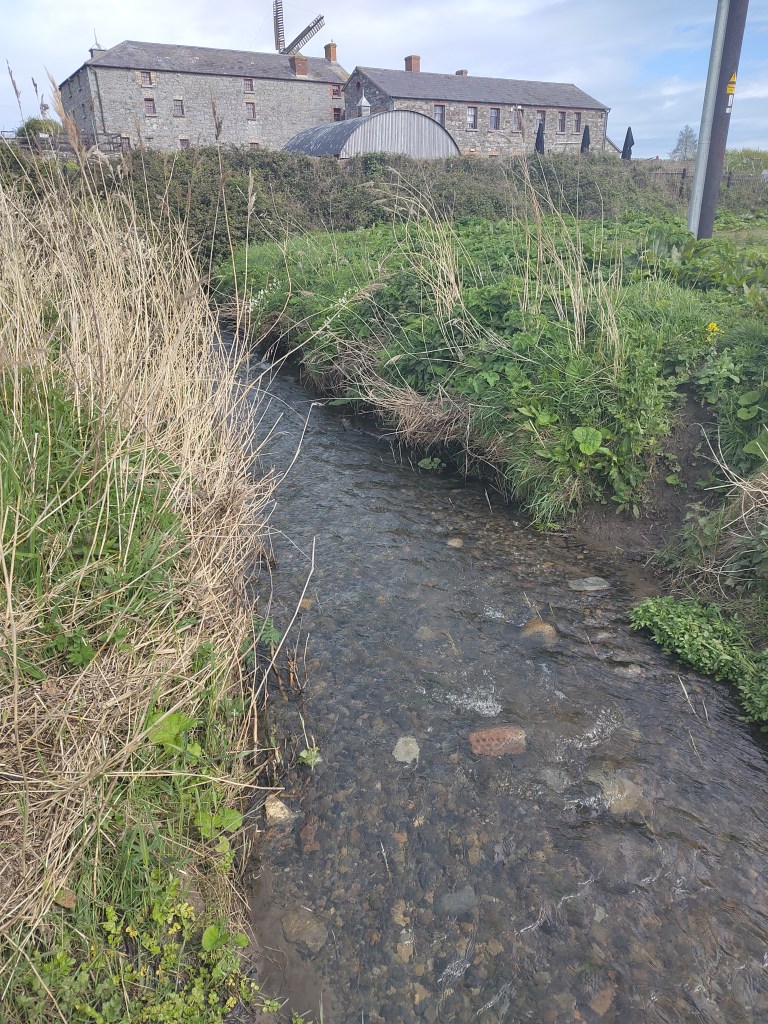
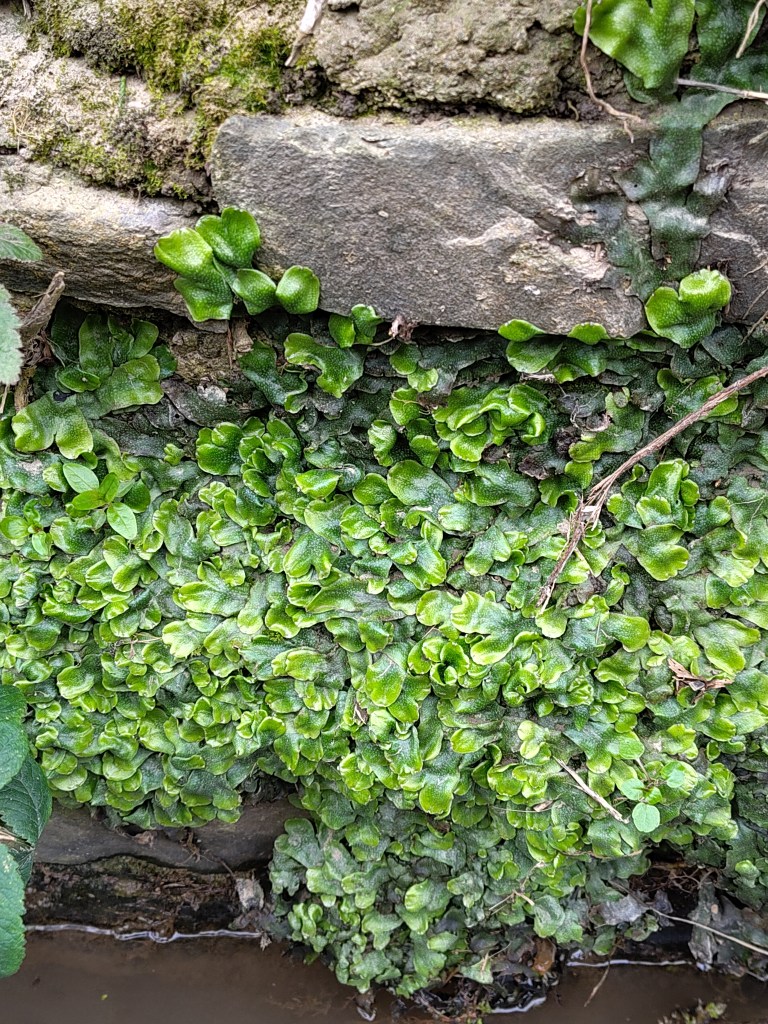
Féidhlim has already spotted a number of interesting and possibly effective projects on his visits to Skerries. Here are a few pictures he took:

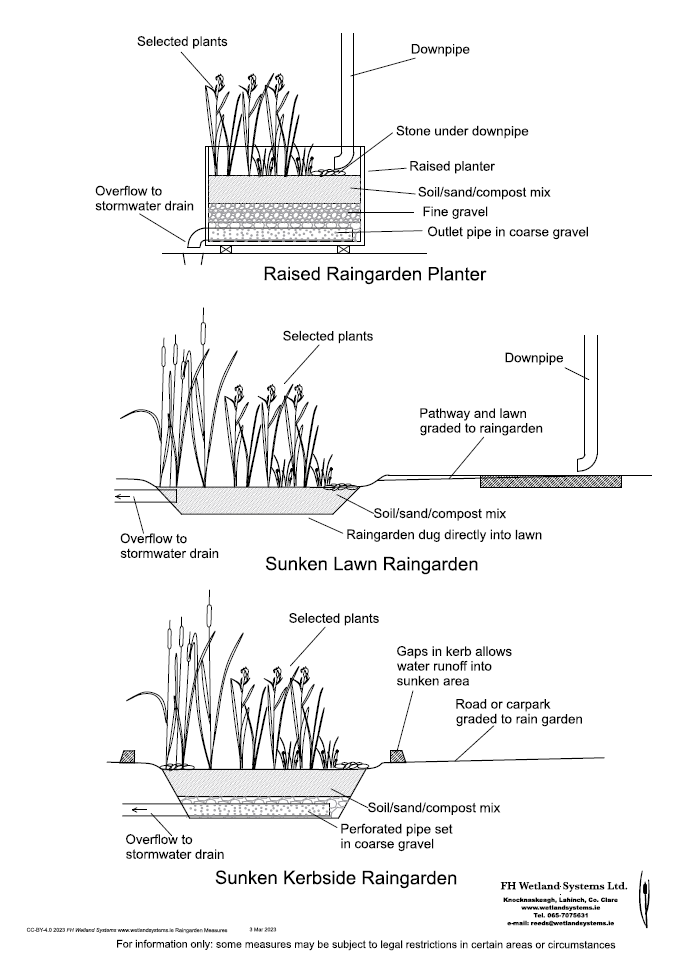
And he also shared the information on rain gardens below with us as well as a link to a document that shows you how to create your own rainwater planters. Let us know if you’re doing that, we’d love to feature your creation in a blogpost!
The inspiration for that project came from our first Skerries Eco Festival last autumn, where Féidhlim led a “walk and talk” around the topic, as well as giving a talk at the festival’s Eco Night with the theme Water.
You can access his presentations at the bottom of this page.
Plans are well underway for this year’s festival, which will include an update on the Water project. Keep 27-29 September 2024 free in your diaries and follow our blog for more info as it’s released.

Resources
A how-to-guide for Rainwater Planters
A Householder’s Guide to Sustainable Drainage (SuDS)

Planting suggestions for rainwater planters and rain gardens
A wide variety of plants are suitable for rainwater planters and rain gardens. Essentially, you want plants which will thrive during dry spells but also when the it becomes very wet.
You can select based on the location & size of your feature, how wet you expect it to be, as well as your preference for eg. native species / pollinator-friendly plants / edible properties. Plus of course, select plants which you’ll enjoy looking at! A mix of plants can give you a variety of properties, help different wildlife, have different flowering times and if some of the plants don’t thrive, others should.
*For our new rainwater planter at Skerries Community Centre, we’ve planted Yellow Flag, Bugle & Aquilegia.
The table below is based on the UK Rain Garden Guide, which you can download from https://raingardens.info/, as well as advice from our water management expert Féidhlim Harty, and local ecologist Kate Harrington and our pollinator expert, Charlie Heasman. We have adjusted Native/Non-native to Ireland in some cases, as far as possible, but if that’s important to you, you may wish to double check.
This table is best viewed on a larger screen, not ideal for phones unfortunately!
| Common name | Scientific name | Habit | Sunlight & Aspect | Origin | Pollinator- friendly? | Other features & benefits |
| Guelder rose | Viburnum opulus | Perennial shrub | Any | Native | Yes | Flowers attract insects and berries are eaten by birds. Large |
| Dogwood | Cornus sanguinea | Perennial shrub | Any | Native | Yes | Leaves are larval food for vase bearer moth and berries. For larger rain gardens. |
| Culvers root | Veronicastrum virginicum | Herbaceous perennial | Full sun or partialshade | Non- Native | Yes | Tall with long terminal blue flower spikes. On theRHS ‘plants for pollinators’ list. |
| Aster | Aster spp. | Herbaceous perennial | Full sun or partialshade | Non- Native | Yes | Often late flowering. Clump forming. Several specieson the RHS ‘plants for pollinators’ list. |
| Black eyed susan | Rudbeckia birta | Herbaceousannual orbiennial | Full sun or partial shade | Non- native | Yes | Spectacular yellow and black flowers. On RHS‘plants for pollinators’ list. |
| Stinking hellebore | Helleborus foetidus | Herbaceousperennial | Full sun or partialshade | Non- native | Yes | Winter flowers. |
| *Bugle | Ajuga reptans | Rhizomatous perennial | Partial shade | Native | Yes | Low growing and will form a mat. |
| *Columbine | Aquilegia spp. | Herbaceous perennial | Full sun or partialshade | Non- native | Yes | Clump forming with tall flower spikes. On RHS‘plants for pollinators’ list. |
| Inula | Inula hookeri | Herbaceous perennial | Partial shade | Non- native | Yes | Tall clump forming with yellow flowers. On RHS ‘plants for pol-linators’ list. |
| Hemp agrimony | Eupatorium cannabinum | Herbaceous perennial | Full sun or partialshade | Non-native | Yes | Sub-shrubs with pink flowers. |
| Bellflower | Campanula glomerata | Herbaceous perennial | Full sun or partialshade | Native | Yes | Clumps bearing violet-blue bell shaped flowers. |
| Sneezeweed | Helenium sp. | Herbaceous perennial | Full sun | Non- native | Clump forming with red flowers. On RHS ‘plants forpollinators’ list. | |
| Lesser periwinkle | Vinca minor | Perennialsub-shrub | Any | Non- native | Ground cover with blue flowers. | |
| Elephants ear | Bergenia sp. | Rhizomatousperennial | Full sun or partialshade | Non- native | Large leaves and pink flowers. | |
| Plantain lilies | Hosta spp. | Herbaceousperennial | Part shade | Non- native | Attractive light coloured flowers. | |
| *Yellow flag | Iris pseudocorus | Rhizomatousperennial | Full sun or partialshade | Native | Yes | Likely to prefer wetter areas near inlet. |
| Siberian flag | Iris sibirica | Rhizomatousperennial | Full sun or partialshade | Non- native | Prefers moist but well drained soil. | |
| Garlic and onions | Allium spp. | Bulbous perennials | Full sun | Non- Native | Garlic – yes | Edible |
| Soft rush | Juncus effusus | Evergreenperennial | Full sun or partialshade | Native | Form tussocks – likely to prefer wetter areas. | |
| Pendulous sedge | Carex pendula | Rhizomatous perennial | Full sun or partialshade | Native | Nodding flower spikes. Likely to prefer wetter areasnear inlet. | |
| Zebra grass | Miscanthis sinensis | Perennial,Deciduous grass | Full sun | Non- native | Tussock forming ornamental grass with silky flowers. | |
| Switch grass | Panicum virgatum | Deciduousperennialgrass | Full sun | Non- native | Tussock forming ornamental grass | |
| Royal fern | Osmunda regalis | Deciduous fern | Any | Native | Large clump-forming plants. | |
| Male fern | Dryopteris felix-mas | Deciduousor evergreenfern | Partial shade or fullshade | Native | Large shuttlecock-like form. | |
| Broad buckler fern | Dryopteris dilatata | Deciduousor evergreenfern | Partial shade or fullshade | Native | Large shuttlecock-like form. | |
| Water mint | Mentha aquatica | Perennial | Full sun or partialshade | Native | Yes | Prefers wetter soils. Attractive to wildlife |
| Bulrush | Typha latifiola | Herbaceousperennial | Full sun | Native | Prefers wetter soils. Large & invasive | |
| Wild angelica | Angelica sylvestris | Biennials or herbaceous perennials | Full sun or partialshade | Native | Yes | Tolerates varying conditions if sufficiently wet |
| Devil’s bit scabius | Succisa pratensis | Herbaceousperennial | Full sun or partialshade | Native | Yes | Tolerates varying conditions if sufficiently wet |
| Meadowsweet | Filipendula ulmaria | Rhizomatous perennial | Full sun or partialshade | Native | Yes | Tolerates varying conditions if sufficiently wet |
| Herb Robert | Geranium Robertianum | Annual / biennial / perennials | Full sun or partialshade | Native | Yes | Tolerates varying conditions if sufficiently wet |
| Willow | Salix | tree | Full sun | Native | Yes | Large areas! |
| Wild valerian | Valeriana officinalis | various | Full Sun or partial shade | Native | Yes | Recommended for coastal locations |
| Marsh Cinquefoil | Comarum palustre | rhizomatous, woody-based perennial | Full sun | Native | Yes | Fruit are ornamental – not to be eaten. Wear gloves and other protective equipment when handling |
| Ragged robin | Silene flos-cuculi | Perennials | Full Sun or partial shade | Native | Yes | Good for wildlife, various colours and types available. |
| Purple loosestrife | Lythrum salicaria | herbaceous perennial | Full Sun | Native | Yes | Propagate by division in spring. Grows up to 1.2m tall. |
| Water avens | Geum rivale | Full Sun or partial shade | Native | Yes | Divide every few years to avoid congestion | |
| Meadow Buttercup | Ranunculus acris | various | Full Sun or partial shade | Native | Yes | Harmful if eaten, skin irritant. |
| Greater bird’s-foot trefoil | Lotus pedunculatus | various | Full Sun or partial shade | Native | Yes | Best grown in damp, marshy habitats, in an open situation slightly acid soil with full sun or part shade |
 Sustainable Skerries