Or in full: How to Feel Less Guilty About Climate Change and Make Some Money
- Guest Post by Adrian Kelly, Skerries Sustainable Energy Community Initiative
Are you feeling guilty about the climate catastrophe and feeling powerless to do anything about it? Well did you know you’re not really “power”less and shock horror you can actually gain financially by taking more control of your “power” Society’s challenge of getting to net zero carbon emissions is almost entirely dependent on decarbonising the electricity grid and shifting the electricity grid to renewables. But all of this starts at home.
Here’s six steps to feeling less guilty about the state of the climate with the added benefit of making yourself some extra money for you and your family.
Step 1 – Reduce your Electricity Use in General
Feel less guilty: Burning less fossil fuel to power your lifestyle.
Make Money: Your electricity bills will reduce, important as electricity prices rise over time and financial supports from government for electricity bills may no longer be available.
Be conscious of how and when your family using electricity. But focus on the big electricity guzzlers such as appliances (use eco modes), electric showers (don’t stay too long), kettles (boil only what you need) ovens (use air fryers instead). Before next winter switch your lighting to LED. With a smart meter you can access your electricity data for every 30 minute period from ESB networks by signing up here: https://www.esbnetworks.ie/services/manage-my-meter/view-my-smart-meter-usage
If you are working on step 1 – well done! Feels good eh? Now let’s keep going, we can do much better!



Step 2 – Use Less Electricity at the Evening Peak
Feel less guilty: Peak electricity is almost entirely fossil fuelled, and you are helping reduce electricity prices.
Make Money: Get paid vouchers regularly by ESB Networks for reducing power when they ask you to.
Particularly in winter, the period between 5PM – 7PM is the most expensive for grid operators as this is the time everyone turns on lights, ovens. So, build on step 1, try to drastically reduce your use in this period. You almost certainly don’t your washing machine or dishwashers running at this time, although your air fryer is harder to avoid using! Can you delay a post work or exercise electric shower until after 7PM? Sure, you can! ESB offer an incentive scheme to periodically reduce your electricity use during stressed periods. They text you, you reduce your use, complete a one-question survey and they email you a voucher. So, you can get rewarded for conscientious electricity use.
https://www.esbnetworks.ie/services/manage-my-energy-use/beat-the-peak-programme/
Feeling less guilty and getting paid for it and we’re only at step 2!
Step 3 – Shift your Electricity Use to the Middle of the Night
Feel less guilty: Electricity in the middle of the night is much more likely to be renewable wind energy that would be wasted otherwise.
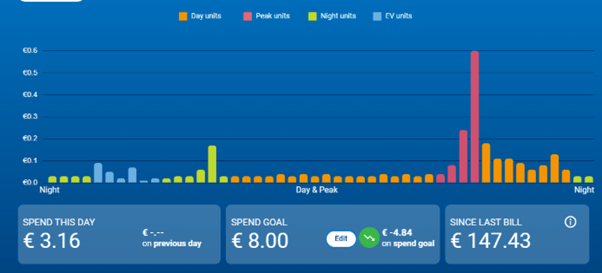
Make Money: With a time of use tariff electricity used in the middle of the night is about 25% of the cost of daytime electricity. Especially important for EV drivers.
Illustrative example of electricity uses in Ireland during a typical December day and April day. The more electricity used the more expensive it is for everybody so its best if we can sift evening peak load to the middle of the night Source for Data: EirGrid
Electricity (unfortunately) has to be consumed exactly when it’s produced (mostly) so the grid is always in a constant state of equilibrium. Luckily, people are habitual and generally use electricity at the same times every day. However, this poses a challenge for maximising use of renewable generation. The sun doesn’t always shine, and the wind doesn’t always blow hard when we need it (5-7 PM in winters remember?). It’s an open secret that we waste massive amounts of electricity at night when the wind is strong, and demand is low. You can help this situation by shifting your use of electricity from daytime to nighttime. Set appliance timers to come on between 2 AM-5AM. Electricity supply companies incentivise this shifting by offering tariffs that are expensive between 5-7 PM (about 40-50c) and cheap between 2-5 AM (5-10c).If you have an EV or hybrid car and do significant driving, you might want to consider a time-of-use tariff set to charge at night to avail of the cheaper rate. Even if you don’t use a time of use your charger to come on during the night to use this excess wind energy.
The cost of charging a 77 kWh EV (a VW ID4) from 0-100% over four nights (25% per night) at 7c per kWh is €5.88. Thats about €0.01 per km (assuming a 400-500 km range).
The equivalent spend for a patrol car is between €0.11 per km or €0.08 c for a diesel car, according to the SEAI statistics.
Example of a time of use tariff and energy use. Source Bord Gais Energy
Now you’re becoming an active electricity user, but you can do even better!
Step 4 – Use the Sun to Power your Home
Feel less guilty: Power your home directly from free, clean solar energy, becoming less dependent on fossil fuel powered grid electricity.
Make Money: While the initial outlay can be considerable, the cost savings period is reducing, when compared to continuously rising higher electricity prices.
You’ve probably seen black solar PV panels covering the roofs of Ireland in the past couple years and wondered what’s the deal? While we don’t get year-round sun we do get daylight for most waking hours for 6 months of the year. With reduced cost of PV technology and incentives and a range of very good installers, installing rooftop PV is economical with payback periods of less than 10-12 years typically (and lower depending on how you maximise the use of the panels). An 8-10 panel system will cover most electricity use for most houses, especially from March-October. The systems can also be configured to heat immersion hot water systems when over producing so you have always on hot water. Once installed you don’t need to think about it (except to use your heavy-duty appliances when it’s sunny) but you can track usage with cool phone apps.
At this stage you are using clean free energy to power your home but there’s also an added benefit.
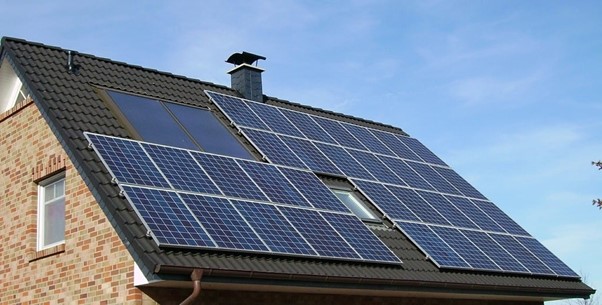
Solar PV panels on a rooftop Source CC
Step 5 – Get Paid for your Excess Solar Electricity
Feel less guilty: The excess solar power you produce is not wasted, sent back to the grid and likely to be used locally to power their homes and businesses.
Make Money: You get paid directly by your electricity supplier via credits on your bills every quarter. Handy when the winter bills arrive.
that electricity produced always has to be consumed instantaneously? Unlike the wind power at night which cannot be used if there is no demand, domestic solar production has no such issue as everybody is up and using electricity in the middle of the day. Any excess electricity you produce gets automatically sent back out to the grid and you now actually get paid for it. At the moment the price is somewhere between 15c-20c per kWh sent out, depending on your supplier. This is typically aggregated and paid as a credit on your electricity bill every quarter. So if you have 8 solar panels fully producing for an hour you get about €0.56 back. Not bad but scale that out over multiple hours, multiple days during summer and the savings add up to hundreds of euros. This will be useful in winter isn’t shining and your electricity use is higher. The more you can produce, the shorter your payback period for the installation will be!
Step 6 – Store your Energy
Feel less guilty: Become entirely self-sufficient and less reliant on fossil fuel grid, with your home powered by clean energy, even when the sun isn’t shining.
Make Money: Over the long run, your electricity bills will reduce, and you will be less exposed to electricity price hikes and reductions in the revenue from the excess production.
Your final step to becoming a true electricity prosumer (producer-consumer) is to put it all together with a domestic battery system. Most solar PV installers will offer the option to install a domestic battery system with your PV system. These systems allow you to use your excess solar energy to charge a battery in your home (before sent to the grid) and discharge it when the sun isn’t shining, or during expensive periods (5PM-7PM) if you use a smart . For example, if you have an EV and rooftop solar PV system with a battery you could charge up your battery with excess solar energy during the midday solar peak, and then when the sun goes down, discharge the battery to charge some of your car battery (if you do this in the middle of the night it’s likely you will charge your car from fully renewable sources). In winter if you are of-use tariff the battery can be set to charge in the middle of the night at a lower cost and to discharge between 5-7 PM which offsets the difference in electricity price, and maximises clean energy use. Battery systems will increase your revenue, as it will reduce the amount of money you spend on electricity, but they do cost more so will likely increase your payback period for the entire system. The precise revenue, costs and payback times are dependent on well you optimise your energy use in your home. Additionally, batteries can provide resilience your home. By installing a switch on the battery, it can be used to power your home during grid outage periods.
So, there you have it…6 steps to maximising your use of clean electricity in the home, reducing your electricity costs, and doing your bit for the environment and the next generations while feeling less dread. While your home might seem small, relative to the world, taking a stepwise approach harnesses the power of collective efficacy – where small steps taken by everybody add up to a sustainable, resilient energy system. An energy system we are not just a part of, but in control of.
So, which step are you on?
Be part of the community oin the SSECI WhatsApp chat for Q&A, advice and helpful hints: https://bit.ly/SSECI-Chat
Facebook: https://www.facebook.com/groups/skerriesseci/
Email: skerries.seci@gmail.com
Too often, public consultations are dominated by negative feedback—and while it’s vital to raise concerns, it’s just as important to show support when something good is being proposed. At Sustainable Skerries, we believe in speaking up for the environment, active travel and (indeed) sustainability.
That’s why we made a submission in favour of Fingal County Council’s Harbour Road and Red Island Loop plans. We encourage others who welcome these improvements to say so, too—because positive voices can help make sure thoughtful, community-focused plans are actually carried out.
Below is the full text of our submission, which we understand should be listed as Submission 59 on the Fingal County Council consultation portal. Although it has not yet appeared online, we have received an official acknowledgement of receipt.
Sustainable Skerries welcomes the opportunity to comment on the Harbour Road Public Realm Enhancements and the Red Isla seend Loop proposals. Like our previous submission overall we strongly support these proposals.
The Skerries Harbour Road and Red Island Loop Scheme, proposed by Fingal County Council, will result in a positive transformation of the Red Island peninsula, turning the area into a pedestrian-friendly, accessible and safe space for everyone. We are particularly pleased with the proposed measures to improve walking and cycling infrastructure, and make the Harbour Road more pedestrian-friendly, and we note that all evidence shows that initiatives like this boost local economies, improve air quality and public health, and improve social interaction in the community.
Accessibility and Safety
We welcome the focus on improved accessibility for residents of Skerries with mobility issues including dedicated closer parking for accessible and age-friendly parking, in addition to drop-off points outside businesses and residential spots. We note the need to look at facilitating hidden disability parking within the scheme.
The delivery of proper segregated pedestrian/cycling where feasible is also welcome. We are pleased to see the significant ways in which the project will enhance safety where there is shared space between car users, pedestrians and other active travel users. Additional space for pedestrians on Harbour Road will make walking there a far safer and nicer experience for locals and visitors alike. Currently, people often need to step out onto the road to avoid the crowded footpath.
The addition of a footpath on the seaward side of Harbour Road and the proposed speed limit of 30 kph will make that area safer and more enjoyable for all. The traffic which was caused by people searching for one of the limited car parking spaces on Harbour Road often resulted in unsafe situations. Such situations should be avoided with the proposed changes as people will know to plan for drop offs rather than parking on that road.
Similarly, a pedestrianised area near Storm in a Teacup will make that area much safer for families and children. It is a pity that there is not enough space on the Harbour Road to allow for segregated cycle paths, but we accept that the shared-space solution can work, and welcome the segregated cycle paths on what is called the Red Island Loop. These cycle paths will also make the area safer and more attractive for cyclists, for whom there is currently little encouragement to use the area.
Segregated cycle paths on Red Island will also facilitate children learning to ride their bikes. We note that the plans will also enable access for emergency vehicles to reach the Captains and Springers swimming areas, which is again positive for safety. We welcome the effort to which the Council have gone to engage specific users of the public space to ensure the enhancements do not impede their ability to operate.
Biodiversity
We are strongly supportive of the biodiversity aspects within the plan such as native planting, wildflower beds and the use of environmentally friendly materials. We hope that the wildflower beds are going to be managed as per best practice (e.g. cutting the grass once a year and lifting what has been cut; see https://biodiversityireland.ie/practical-advice-on-managing-wildflower-meadows/ though this will have to be adapted for narrow strips).
We also like the planting plans for Harbour Road, which includes trees where at the moment there are none, and encourage Fingal County Council to select species that can best withstand the sometimes harsh conditions so close to the sea. It would be great if the public could be informed about the trees used, e.g. by small signs, so that those living near the coast could see real-life examples of trees and possibly shrubs that do well there, such as hawthorn, scots pine, etc.
We welcome the change in the lighting plans for Red Island since the previous consultation, which will leave it partly unlit to the benefit of wildlife and stargazers.
We also ask for strong litter controls including a net or mesh on the seaward side of the route near the harbour to prevent further sea pollution. Additional litter bins throughout the area and “leave no trace” type signage at the entry and exit points of the walking/cycle routes would also be helpful.
Water Management
We are very excited about the prospect of rainwater planting, which will minimise surface water run-off and improve our seawater quality and welcome the inclusion of Sustainable Urban Drainage, bioswales and rain gardens, including permeable parking. where feasible. We ask that the Council consider permeable parking in the spaces prone to flooding in the first car park on the left before the playground. This would have limited impact on the desire to colour code that car park for accessibility reasons etc.
Final Comment
Understandably there are concerns about some aspects of this proposal. We refer to the previous submission number c766 – 46 by Hans Zomer, Skerries Harbour Road | Fingal County Council Online Consultation Portal. He notes the research which shows that, whilst initially there may be resistance to infrastructure changes, acceptance typically increases after implementation when people start to see the benefits such as improved safety, cleaner environments, greater livability and economic benefits. He quotes several studies on this topic which are worth referencing.

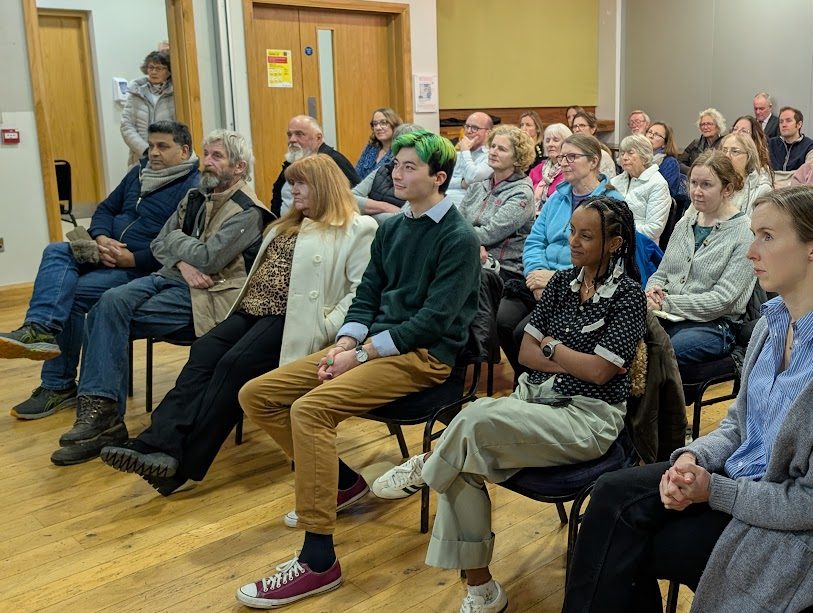
We were so encouraged by the turnout for our 2025 Annual Meeting! All seats were filled that night. Our various team leads reported on a very busy year, and gave some tasters for the year ahead: Biodiversity projects, walks and talks, our open orchards project, the beach toy box, summer camp, submissions made to Fingal County Council and at national level, the Skerries Eco Festival and and and… (Subscribe to our newsletter to stay in the loop with what’s going on!)
Skerries Eco Town Booklet Launch
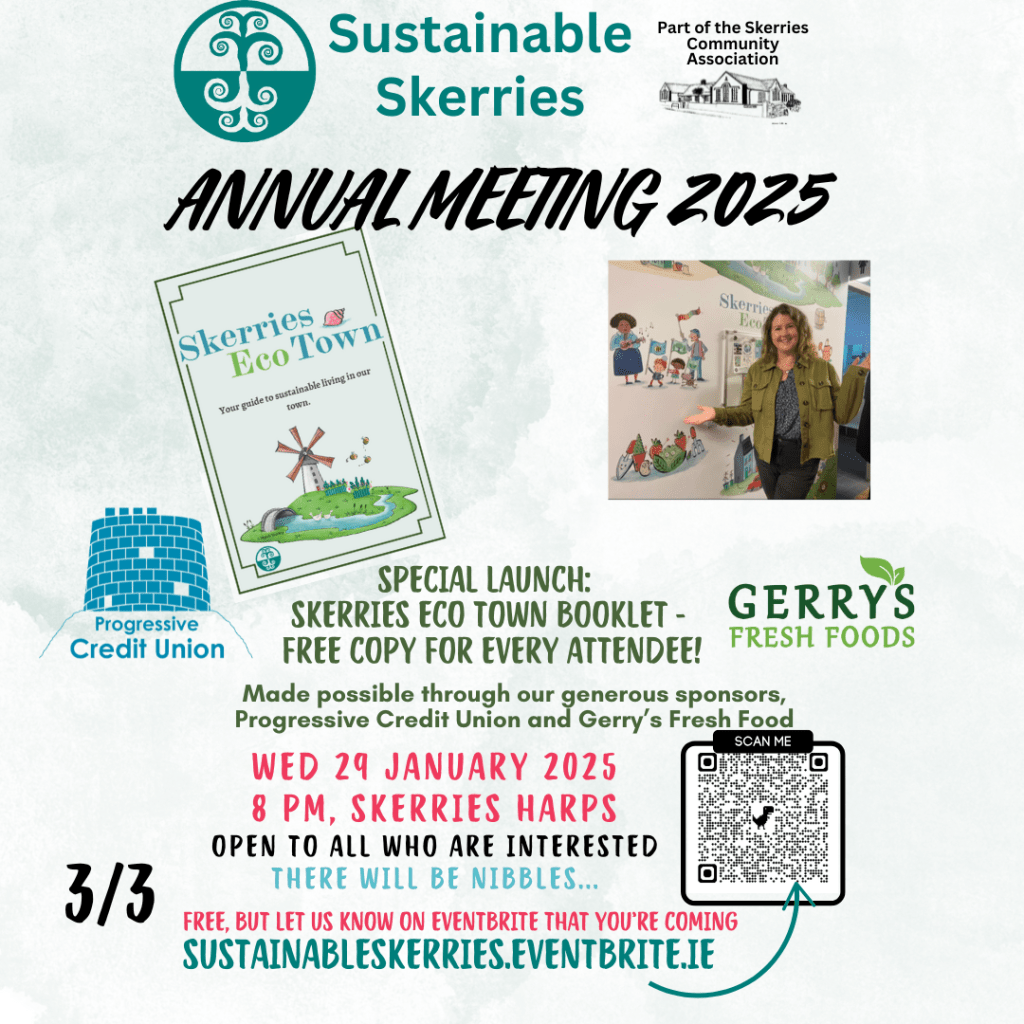
The Skerries Eco Town Booklet was launched on the night as well. It was made possible through the support of the Progressive Credit Union and Gerry’s Fresh Food. The booklet has lots of tips for individuals, families, householders including information from many local groups such as Skerries Tidy Towns, Skerries Cycling Initiative, Skerries Sustainable Energy Community, Skerries Community Centre and of course our umbrella organisation, the Skerries Community Association – SCA, as well as BirdWatch Ireland Fingal, the Stream Huggers and the Skerries Mills Community Garden.
And it looks beautiful, with illustrations by Niamh Sharkey throughout. Edited by committee member Sara Reddy. If you haven’t been lucky enough to receive one through the letterbox (we were able to cover about 900 Skerries households this way), you can pick up a copy at Skerries Community Centre (reception) and at the Skerries library.
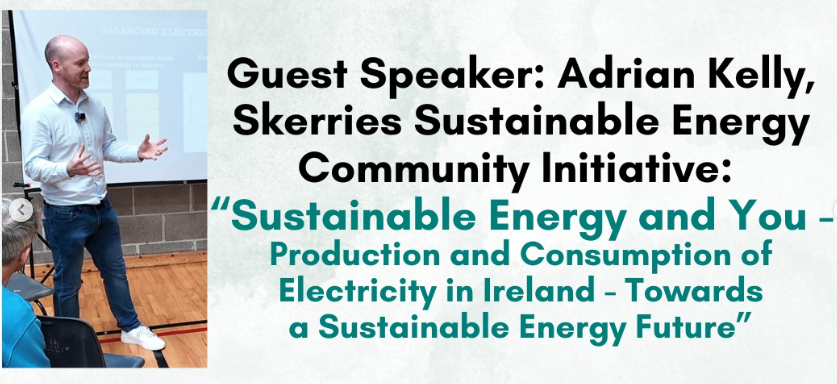
What an energising guest speaker!
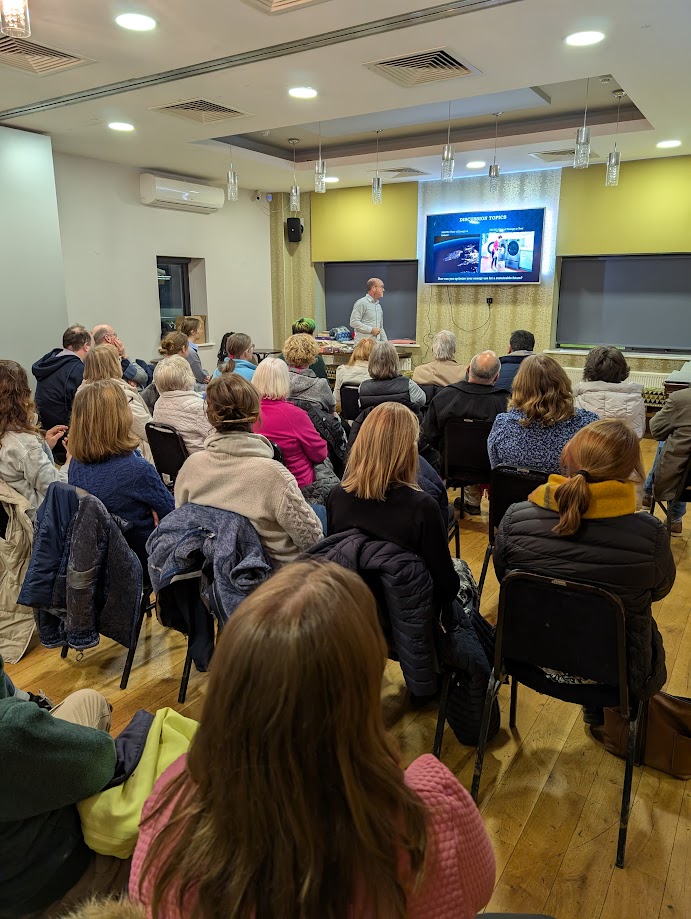
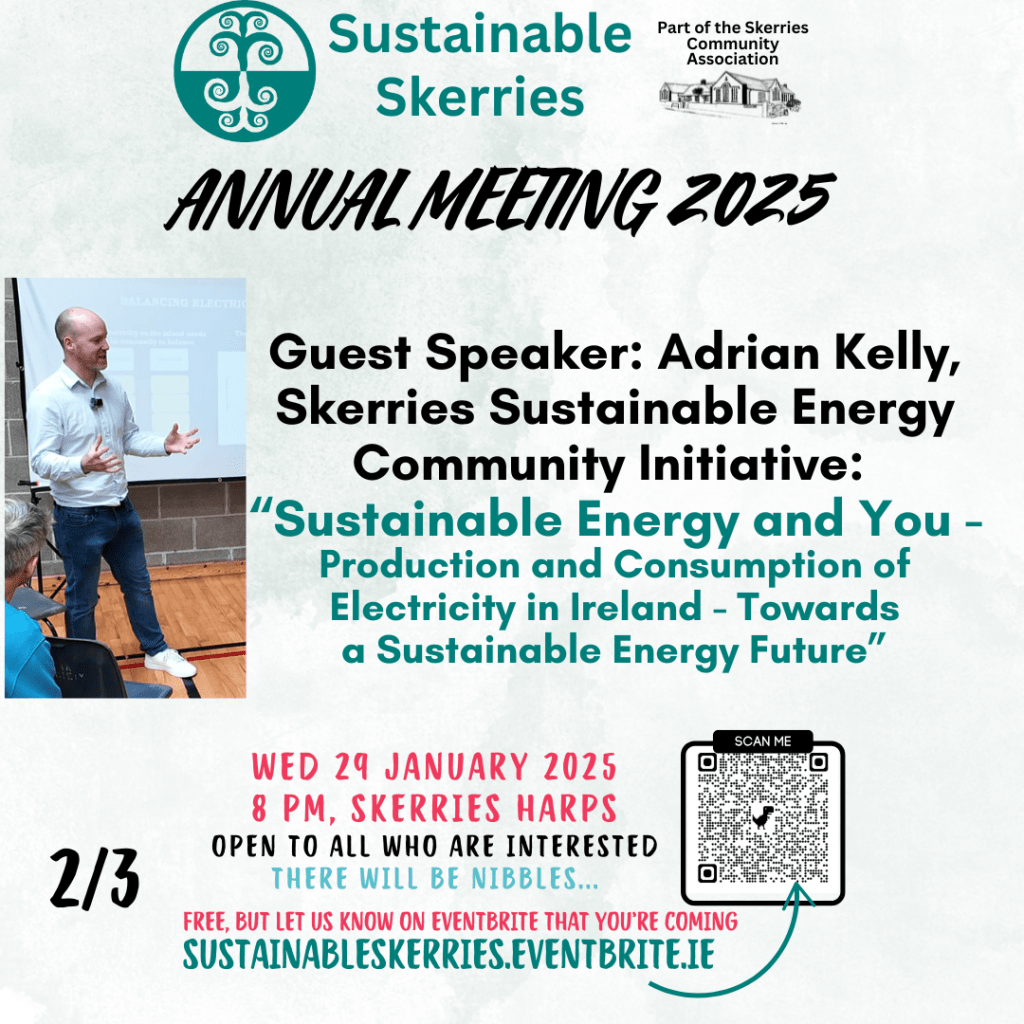
Adrian Kelly, part of the Skerries Sustainable Energy Community Initiative, held the full attention of his audience during his talk on “Sustainable Energy and You: Production and Consumption of Electricity in Ireland – Towards a Sustainable Energy Future.”
There was such good feedback, and there were so many interested questions following his talk that he promised us a written version, which we will publish on our website as soon as we get it. Thank you, Adrian!
Our new chair, Katie Lattimore
We are delighted to introduce our new chair, Katie Lattimore, at the Annual Meeting. Katie took over the reins from Sabine McKenna, who had been chair for the previous 4.5 years, in early February. Katie writes:
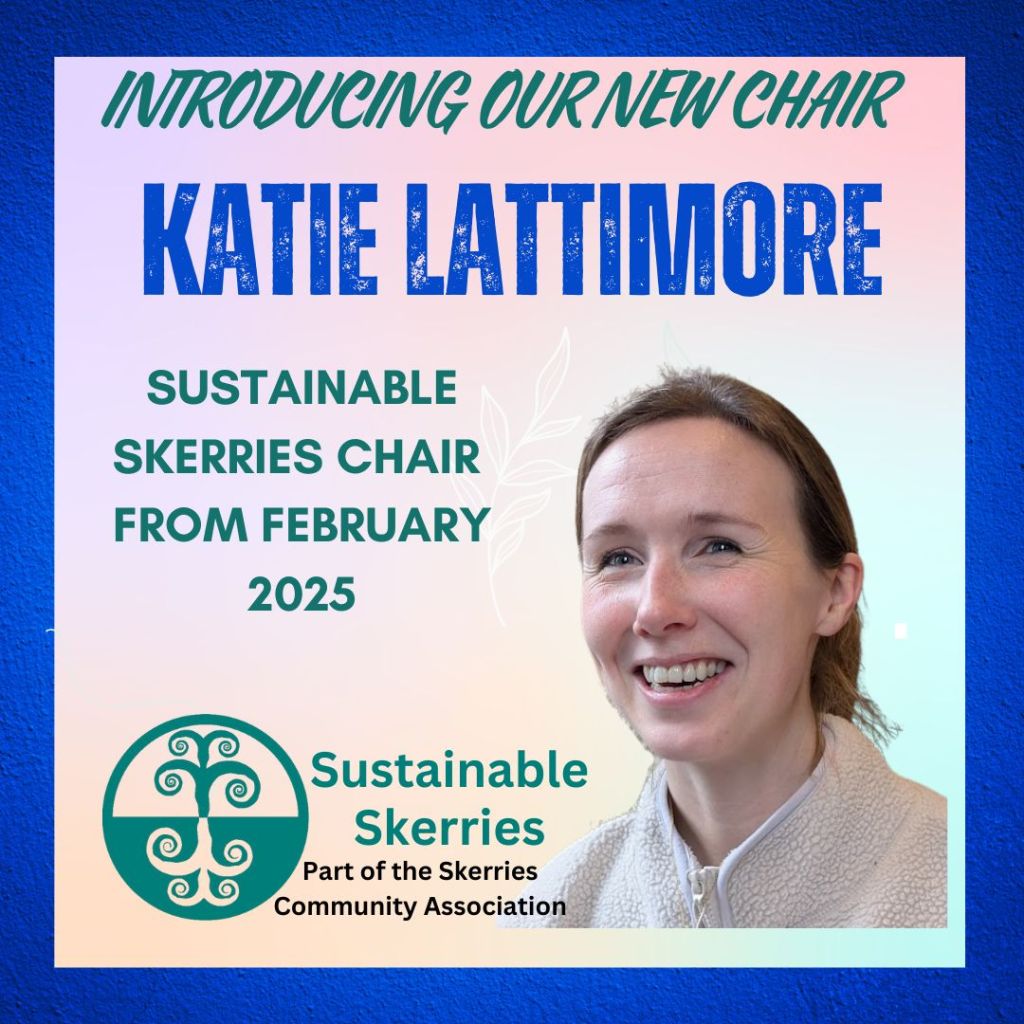
I’m excited to introduce myself as the new chair of Sustainable Skerries. As I step into this role, I am filled with enthusiasm and a deep sense of responsibility to support the continuation of the exemplary work already completed by the committee and its supporters.
A little about me: I grew up in Loughshinny and now live in Skerries with my husband and son. I am currently on maternity leave from my job as a paediatric physiotherapist. I’ve always had a passion for the environment and for the outdoors, and I have a keen interest in exploring ways to minimize my negative impact on the planet. This passion has led me here, where I have the privilege of contributing to our efforts to make a meaningful difference in our community.
I look forward to working alongside such a passionate group of individuals, and I’m excited to see what we can achieve together. I want to sincerely thank the outgoing chair, Sabine, for all the wonderful work she has done while holding the position and for her words of encouragement in my volunteering for the role. We are so lucky that Sabine will be continuing work on her other ongoing projects on the committee.
Please feel free to reach out if you have any ideas or questions – I’m always open to hearing from you.
Here’s to a green and sustainable Skerries!
Katie
Katie, as well as the Sustainable Skerries committee as such, can be reached at sustainableskerries@gmail.com
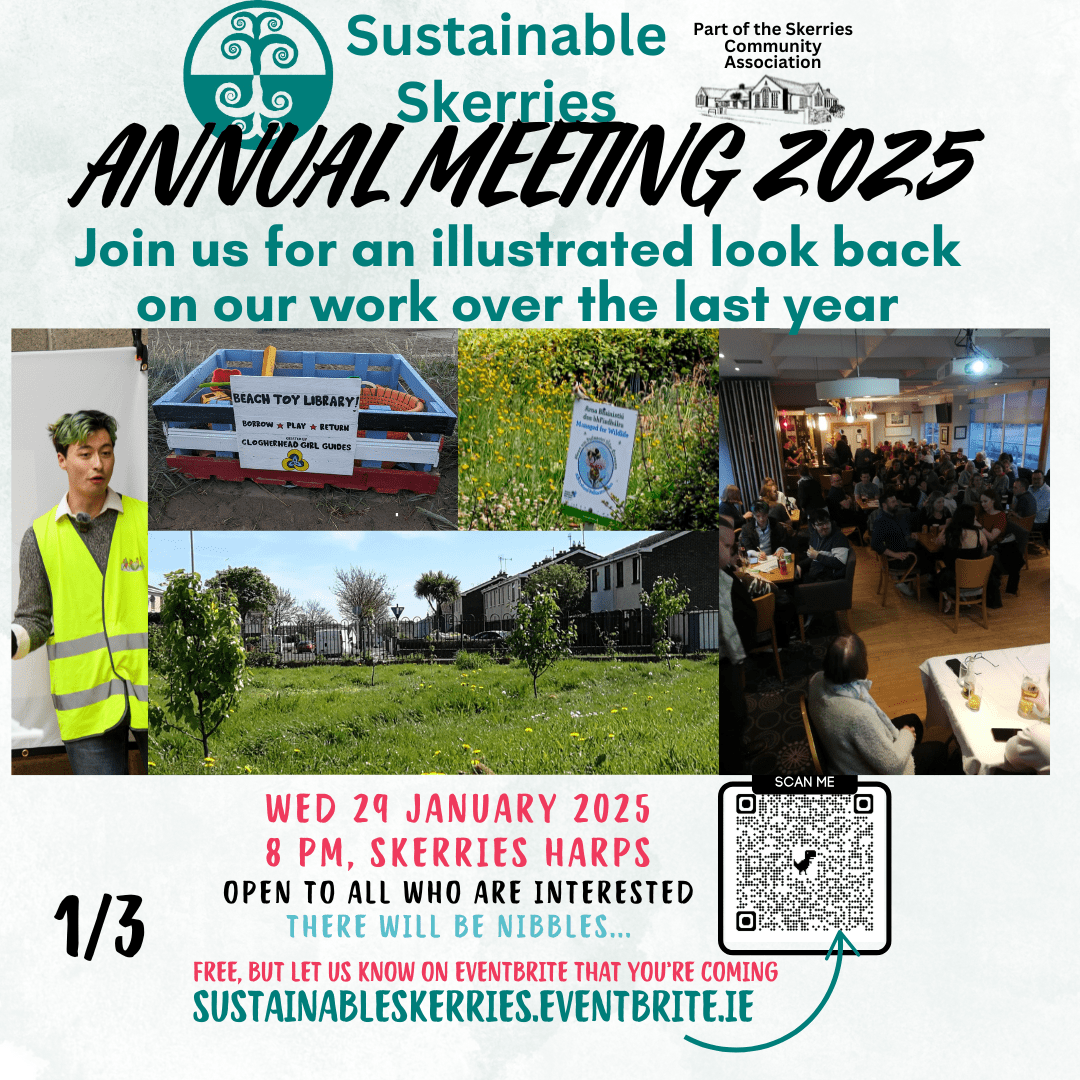
Sustainable Skerries Annual Meeting 2025 & talk: Sustainable Energy and You PLUS Launch of the Skerries Eco Town Booklet
Date and time: 29 Jan 2025, 8 pm
Location: Skerries Harps GAA Club
Come join us at the Sustainable Skerries Annual Meeting 2025 where we will be looking back on the previous year. Adrian Kelly of Skerries Sustainable Energy Community Initiative will give a guest talk with the title “Sustainable Energy and You: Production and Consumption of Electricity in Ireland – Towards a Sustainable Energy Future”.
And we are delighted to announce the Launch of the Skerries Eco Town Booklet, a 32-page postcard-sized, beautifully illustrated publication which is packed with ideas on how to live lightly in our town, and with information on all relevant local groups. There will be one for everyone in the audience. Our warm thanks to our sponsors, Progressive Credit Union and Gerry’s Fresh Food. 🙏
This in-person event will be held at the Skerries GAA Club, so mark your calendars and be ready to dive into exciting conversations about how we can create a more sustainable future together. See you there!
The event is free, and there will be nibbles, so please let us know you’re coming via Eventbrite so that we know how many to expect!
https://www.eventbrite.ie/e/1146097712109?aff=oddtdtcreator

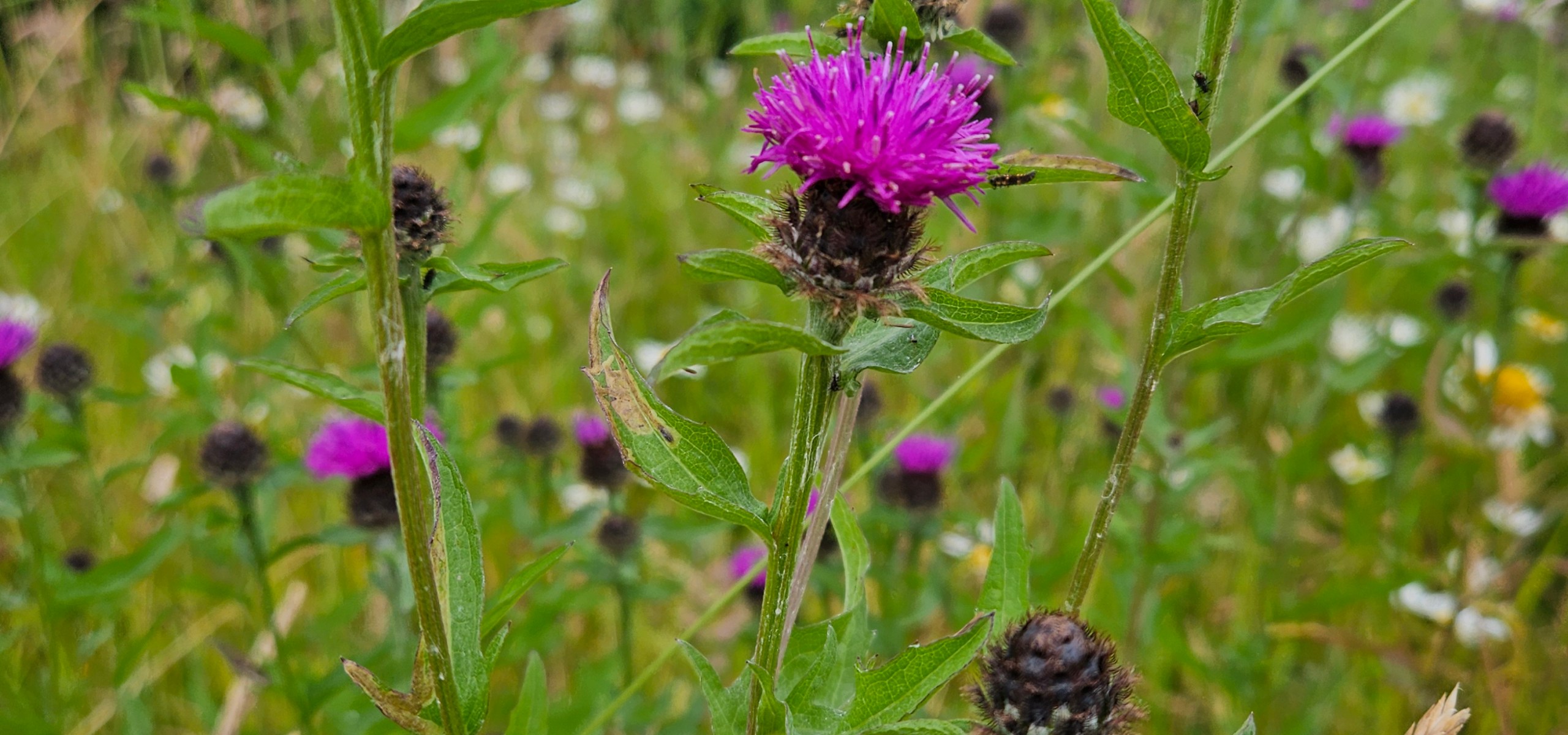
Sometimes, our events trigger thoughts that lead to bigger things. Christine Mullan-Jensen has some interesting ideas for your garden... She writes:
A few years ago I was sitting at a Skerries Eco Night and one of the topics was ‘what can we do in our front and back gardens to help with the climate and biodiversity crises?’. I immediately thought, now there’s a good research study! As a researcher who now specialises in environmental psychology, the topic was perfect. So, I set about creating a study to talk to people about their little piece of nature: their garden. I wanted to understand their potential pathways to more native nature and biodiversity in these semi-private spaces. I did 4 focus groups and a short survey to explore force fields for change by understanding
both the bridges to increasing biodiversity but also barriers.
One of the biggest barriers is the fear of being judged by others and shame of not having a tidy garden. This social judgement goes both ways: ‘wild’ gardeners judge conventional ones and conventional ones judge wild ones. Movements like Mary Reynold’s ‘We Are Ark’ and ‘No Mow May’ lessen this judgement or shame because they signal to others WHY nature is being approached differently in some gardens. Another big barrier is confusion about the ‘right’ thing to do even for biodiversity….as one participant said:
“Biodiversity was a term I had to learn because, when I was young and growing up, we lived it, so we didn’t have to be told about it. Whereas now, so many of the habits that we had are no longer practised. Our children, now, they have to learn it nearly in a book and then take it from the book out to the garden to see it. When we were small, it was at our fingertips, it was in our core”
The participants also talked about a second layer of shame when they learned about how our approach to conventional gardening has also been part of depleting our biodiversity.
Ireland, despite its ‘Green’ perception, is ranked 13th lowest in the world for its biodiversity.
Yet, we have 2 million gardens accounting for 359,000 acres of land which could be used as sites of nature and biodiversity restoration.
4 KEY TIPS FROM THE RESEARCH:
1) TAKE TIME TO BE IN YOUR GARDEN
Just sit in your garden or potter around-notice how it feels
Remember accessing nature is good for your health and wellbeing (it also lowers the stress hormone cortisol) Your garden is your private space to be yourself (particularly your back garden)
Let nature help you no matter your mood (it may even improve your mood)
In environmental psychology there is lots of research that spending time in your garden is good for you. Take a cup of tea and sit there and see if your garden is already welcoming any visitors like birds or bees or butterflies.
2) CHOOSE YOUR STYLE – AND MAKE SMALL (OR BIG) CHANGES
Every garden is different. There is not a one size fits all way to approach a more biodiverse garden. Have fun and get creative.
There are many ways to welcome nature in:
- Nudge yourself to be a bit less conventional – get curious about what could be done in your garden to embrace native nature or more biodiversity
- Remember shame is a barrier that can be overcome
- Worried what others think of your front garden? Pop out a sign to say you’re managing it for nature
- Your back garden is a great place to start – no-one will see and you can build up your own style
3) LEARN FROM OTHERS AND SHARE
Learn from others whose style you like – here are a few great websites/booklets:
- We Are The Ark – ARK = Acts of Restorative Kindness
http://www.wearetheark.org - The National Biodiversity Data Centre, http://www.biodiversityireland.ie
- Gardening for Biodiversity, a downloadable booklet (also available in print form from Sustainable Skerries) http://www.juanitabrowne.ie/gardening-for-biodiversity/
Join local initiatives or social media groups who share practical advice like:
- Introductory gardening courses
- Garden advice clinics
- Garden visits
- Community Gardens
- Plant swaps
- Seed collections
- Finding native nature suppliers
If you don’t have time or are not able to do this yourself, why not reach out to others who would love to help in your garden through initiatives like Community Roots: https://communityroots.ie/
As you build up your knowledge or approach, pass on your learning.
4) THINK OF YOUR GARDEN AS IRELAND’S BIGGEST NATIONAL PARK
Your garden is your choice. It doesn’t sit in isolation and is connected to the garden next to it and the next one and so on. Each connection creates corridors for insects and wildlife to move on to the countryside and coast.
Imagine the outcome if just 500k of Ireland’s 2million gardens embraced more native nature and biodiversity? Often, we feel that governments or farmers need to change land use, but there is much that every little garden patch can do.

Want to know more?
This blogpost by Christine Mullan-Jensen is based on the following research paper:
- Mullan-Jensen, C., MacIntyre, T., & Gallagher, E. (2024). “Two million gardens could be the biggest National Park in Ireland”: pathways to nature in domestic gardens. Cities & Health, 1–14. https://doi.org/10.1080/23748834.2024.2381968
- Read the full paper here: https://www.tandfonline.com/doi/full/10.1080/23748834.2024.2381968
- or for more information on Christine’s work access www.repsychable.com
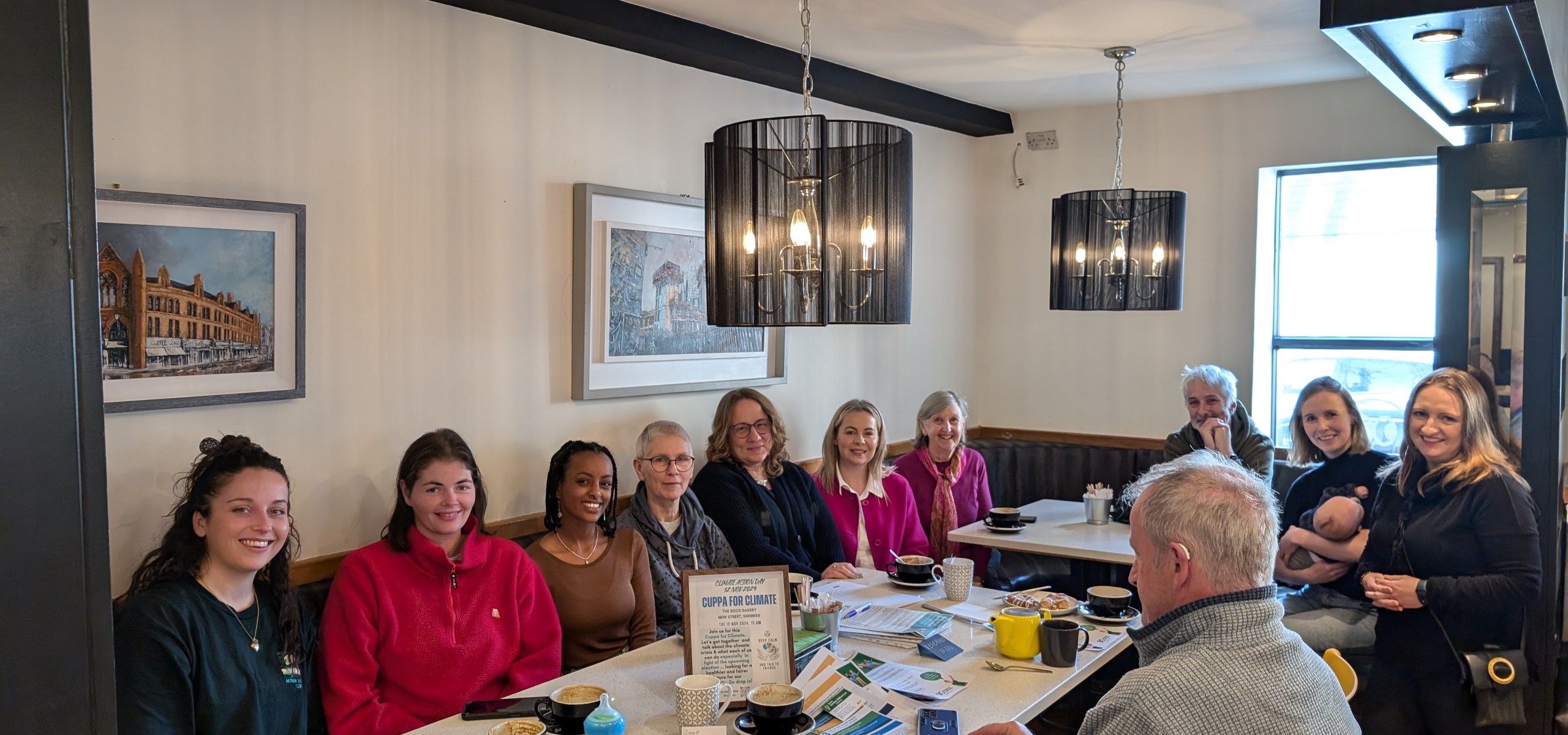
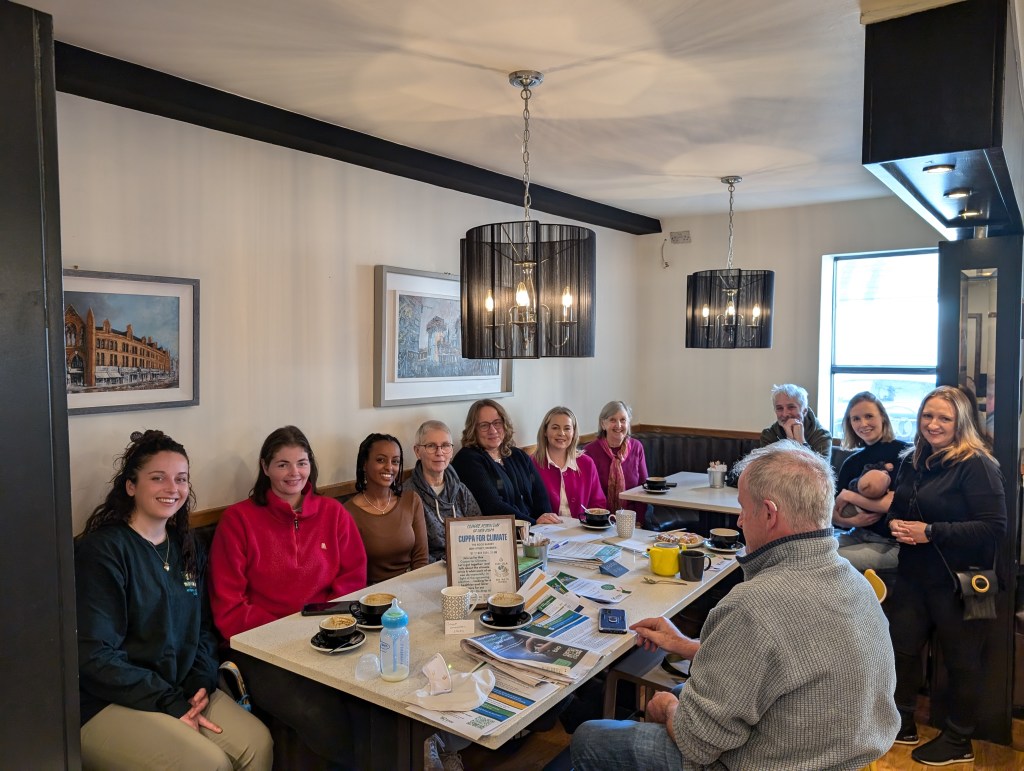
A reflection on our Cuppa for Climate event on 12th November, The Rock Bakery
Katie Lattimore joined our committee this autumn and brought with her the idea and energy to organise this wonderful and meaningful get-together. She writes:
The climate crisis is not a distant issue—it affects all of us, our communities, and our future generations. On November 12th, Friends of the Earth led the charge for a nationwide Climate Justice Day of Action, urging local groups and individuals to join forces in highlighting the importance of urgent, equitable climate action.
This event focused on raising awareness of climate issues, building solidarity, and demanding accountability from those in power and those seeking our votes in the upcoming election. As events unfolded across the nation, the global stage was set for COP29, where world leaders gathered to address climate injustice on a broader scale. Among the key goals was the establishment of funds provided by developed nations to underdeveloped countries.
These funds aim to help vulnerable nations adapt to worsening climate impacts, recover from damages, and transition to green energy systems. As of the day of our Cuppa for Climate, an agreement had not yet been made by world leaders. In the end, the amount of funds agreed at the summit has been said to not come close to the required amount for developing nations to address the effects of the climate crisis they are experiencing…

Why Climate Justice Matters to Everyone
The climate emergency is not just an environmental issue; it’s a deeply personal one. The crisis touches us all, from extreme weather events affecting our neighbourhoods to systemic inequalities that make it harder for vulnerable communities to adapt. But the burden is not shared equally.
Our Contribution vs. Their Cost:
Countries in the developed world are the largest contributors to climate change, yet people in the developing world pay the highest price. Rising sea levels, droughts, and floods devastate nations with the fewest resources to recover.
Meanwhile, wealthy nations continue to consume at unsustainable rates. This injustice—caused by the gap between responsibility and impact—demands global and local solutions.
Climate injustice isn’t only a global issue. Within developed countries, systemic inequalities mean that many cannot afford to retrofit their homes for energy efficiency or access reliable, clean public transport. Addressing climate change requires addressing these disparities, ensuring that no one is left behind.
Individual and Collective Action:
Tackling the climate crisis can feel overwhelming, but each of us has a role to play. Discussions that took place during our Cuppa for Climate event highlighted the power of individual and collective actions we can take. Talking with friends, neighbours, and coworkers is a great way to spread awareness and find common ground.
We highlighted the need to express to politicians that the climate crisis matters to us and that we ask them how they will enact policies to improve this. Politicians have the power to implement systemic changes, but they need to know that climate action is a priority for voters.
When canvassers came knocking in the run up to the election, we tried to ask them: “What are you doing to make climate justice central to your policies?” or to tell them: “I am a climate voter”
Small individual changes matter
We also discussed how small changes in our daily lives can contribute to wider positive impacts e.g. reducing waste, conserving energy, and supporting local sustainable initiatives—can add up, especially when communities adopt them together.
As a Collective:
Linking with local climate groups can help contribute to wider actions and it is important to find solidarity with others. We can also ensure we hold our leaders to account.
Make your voice heard. Attend public meetings, write to your representatives, and join campaigns demanding climate action.
We can push for policies that address inequality, such as subsidies for retrofitting homes, accessible public transport, and affordable clean energy solutions.
Take home message
We can all make a difference in reducing our contributions to the climate crisis, in both individual and collective actions. Whether by joining a local group, speaking with your elected representatives, or simply starting a conversation, there’s a way for everyone to contribute.
Thank you!
I would like to sincerely thank The Rock Bakery in Skerries for hosting this event. I would also like to sincerely thank Friends of the Earth for the idea to arrange this event, for the resources they provided and for the excellent work they are doing on a larger scale to help the climate crisis.
Here’s the full list of all our videos of the 2024 Skerries Eco Festival.
- Adrian Kelly on Smart Electricity and Smart Meters (one of the clearest explanations we have seen)
https://youtu.be/uDN50sukVgY - Máire Jones on Gardening (very hands-on!)
https://youtu.be/o6c9RuOgFVI - Philip Boucher-Hayes on Climate Change
https://youtu.be/rt2-eVHQvQo - Féidhlim Harty’s full Walk & Talk on water management in Skerries (he shows us exactly where what can be done)
https://youtu.be/YfXP2zFkgkM - Niamh Butler’s talk on the wonderful nature in Skerries Town Parks & what could be done to build on it
https://youtu.be/0erLxqC6v0Y - Sharon Keilthy (founder of online eco toy store jiminy.ie) on building a playfully sustainable future, one toy at a time (includes her views on Lego and a shocking insight into biodegradable toys)
https://youtu.be/9br1rkd2GFk - Féidhlim Harty (environmental consultant) on how, looking back from 2030, we will have solved the crises we’re facing into: “Nurturing the Miracle” (one of the audience favourites at the festival)
https://youtu.be/LKzPMnFdCdY - Our very own Charlie Heasman on The Other Crisis: Biodiversity
https://youtu.be/nqmBV_PNoxI - And our Leo Carroll on Bugs and how they clean up after us
https://youtu.be/NBa1Y3I7LAw
If you’d like just a bit of music with the Skerries Ukulele Strummers and a visual taste of the festival in under four minutes, here’s the link for you: https://youtu.be/q7IY-WvHwJM
And don’t forget to subscribe to our channel!
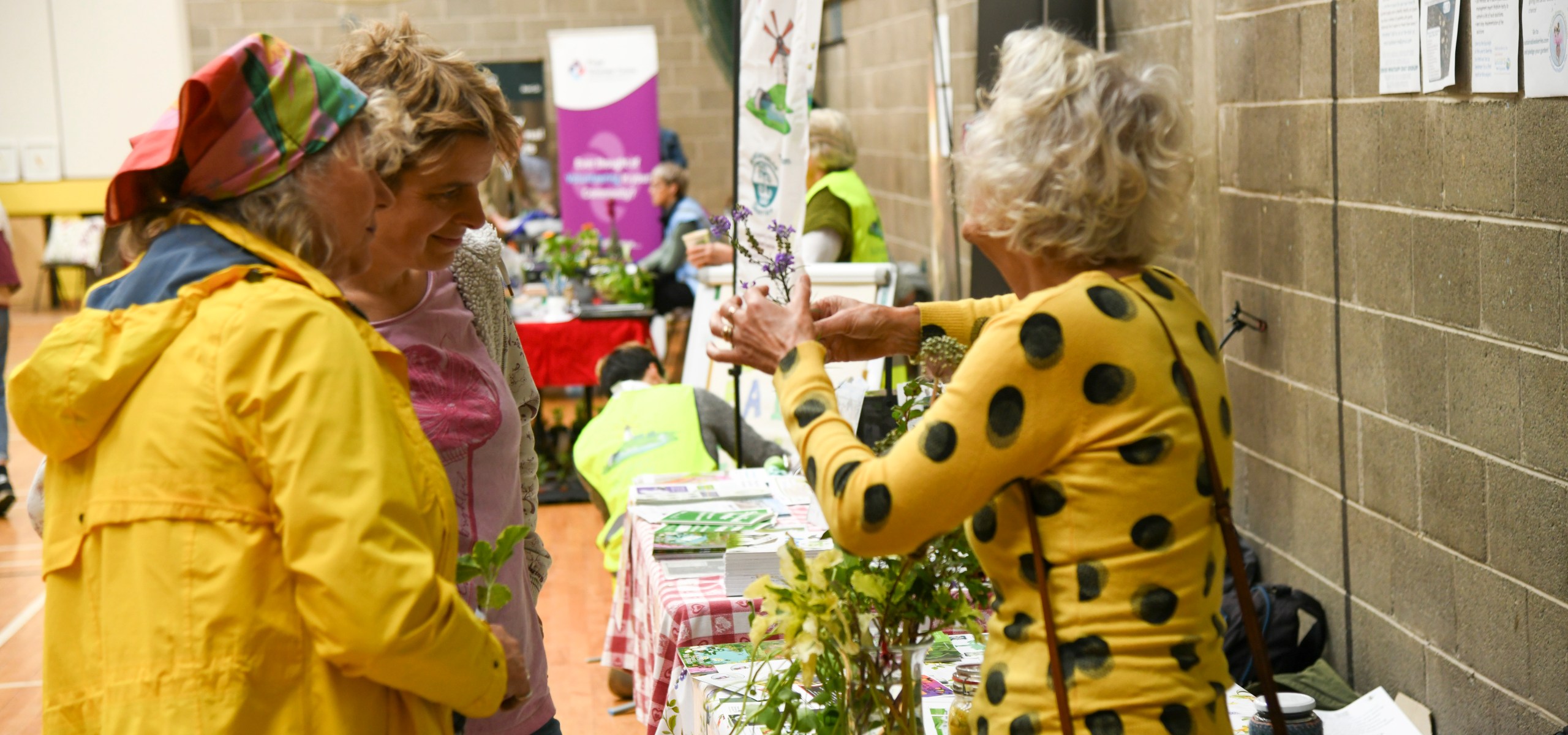
The 2024 Skerries Eco Festival buzzed through Skerries Mills and the Skerries Community Centre last weekend, bringing together the local community, environmental experts, and eco-curious visitors for a weekend packed with activities aimed at highlighting how we can protect and celebrate our planet. Under the theme Turning the Tide TOGETHER, the festival highlighted how simple changes in our everyday lives can make a big impact on nature, and our planet.
There was something for everyone. After the official opening by Minister Joe O’Brien TD at the Launch Night on Friday, Sharon Keilthy, founder of the online eco toy store jiminy.ie, gave us some very useful insights. Who knew that “biodegradable” is actually BAD when it comes to children’s toys… It’s so logical once you think of it. Niamh Burke, author of the Skerries Townpark Biodiversity Action Plan, was our second speaker, and music was once more provided by the fabulous Skerries Ukulele Strummers.
Photos by Kevin McFeely, Fly Media:
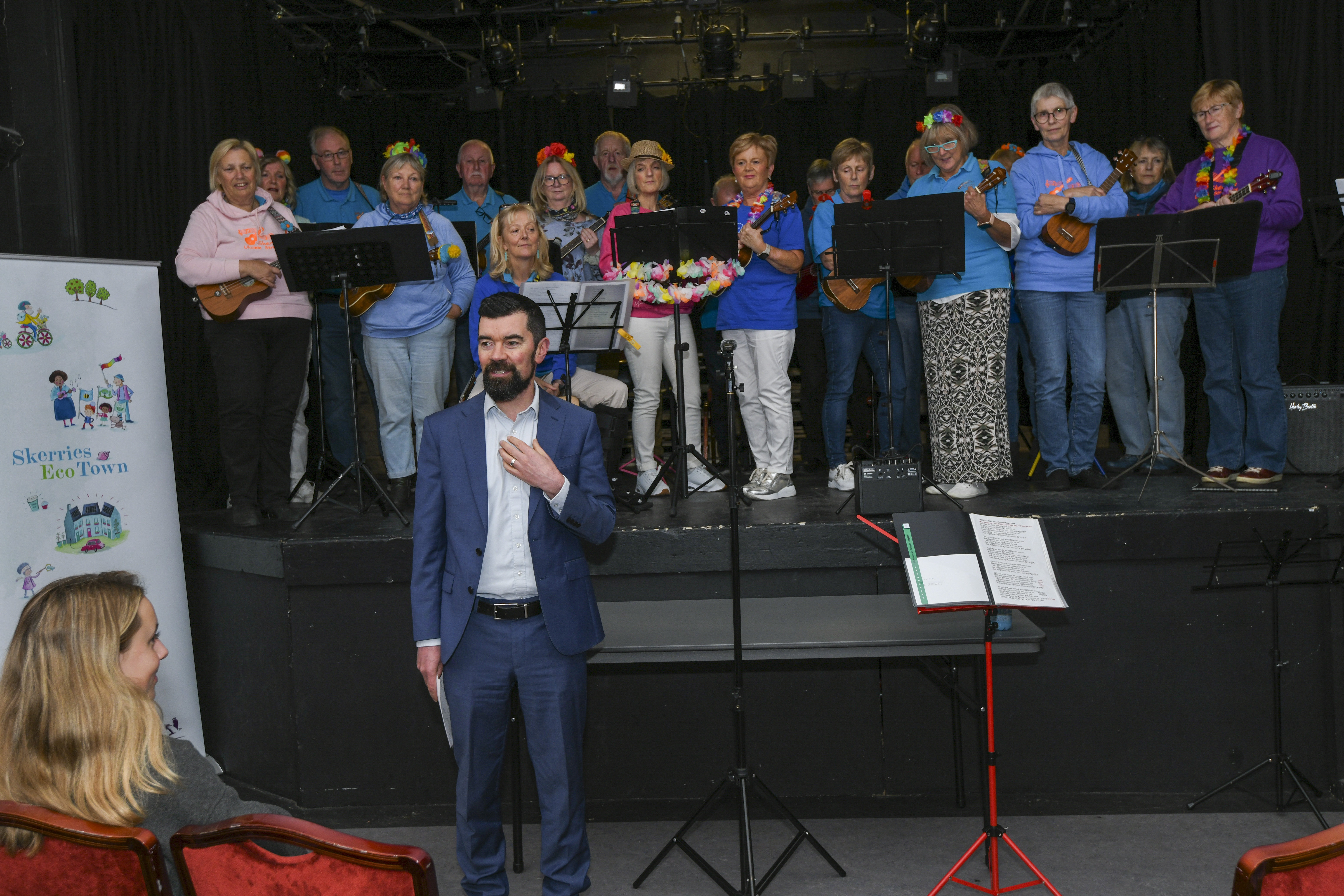
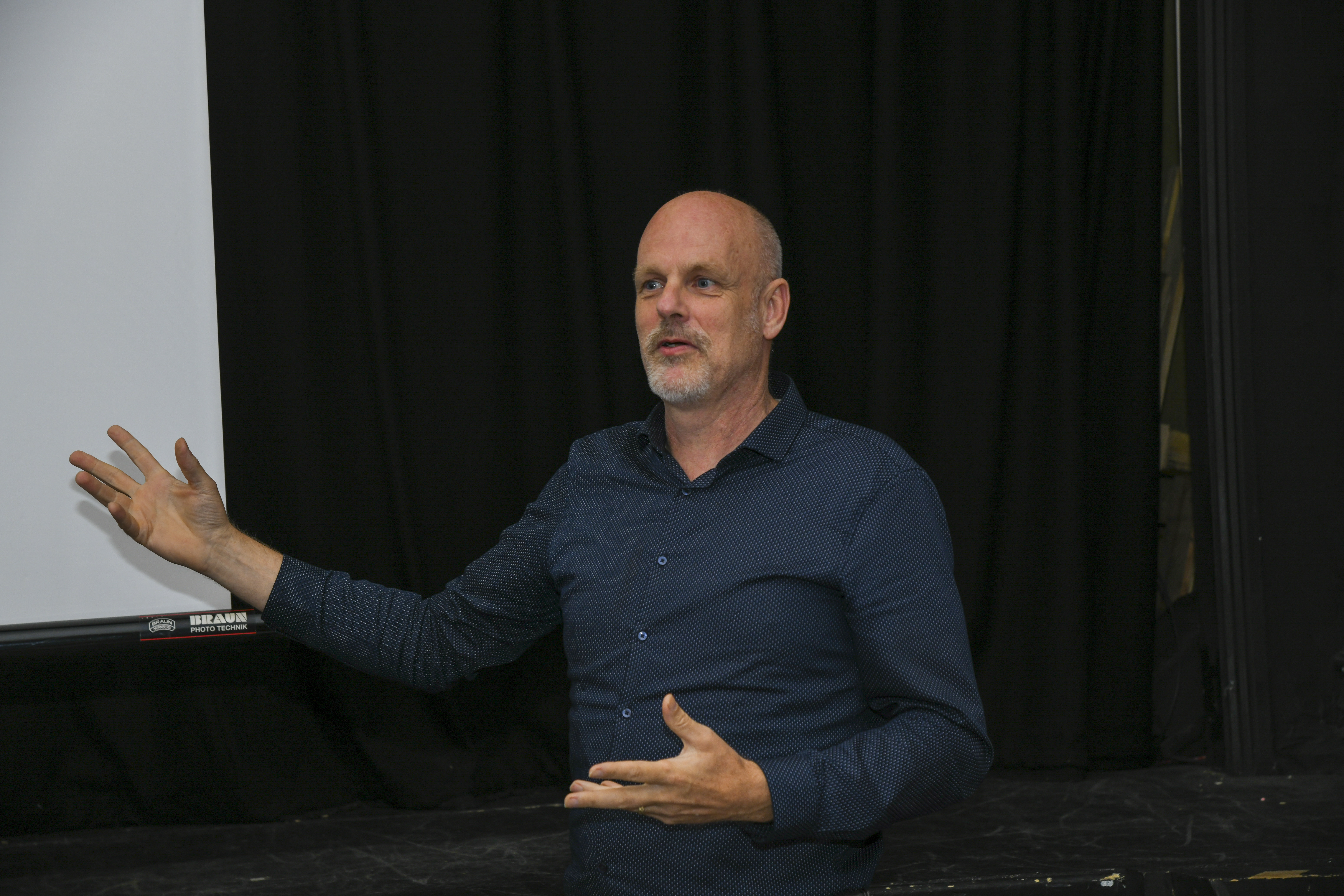


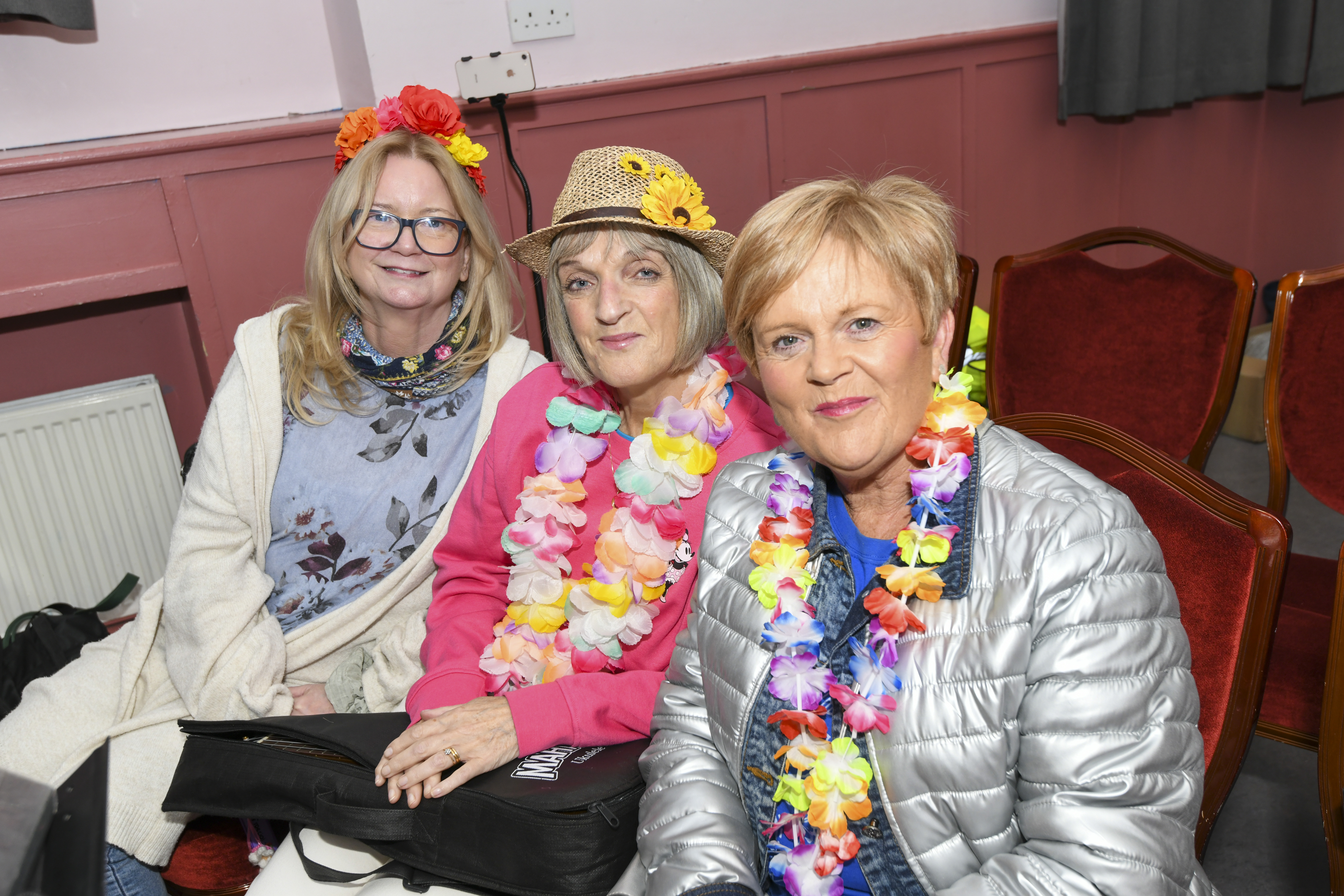
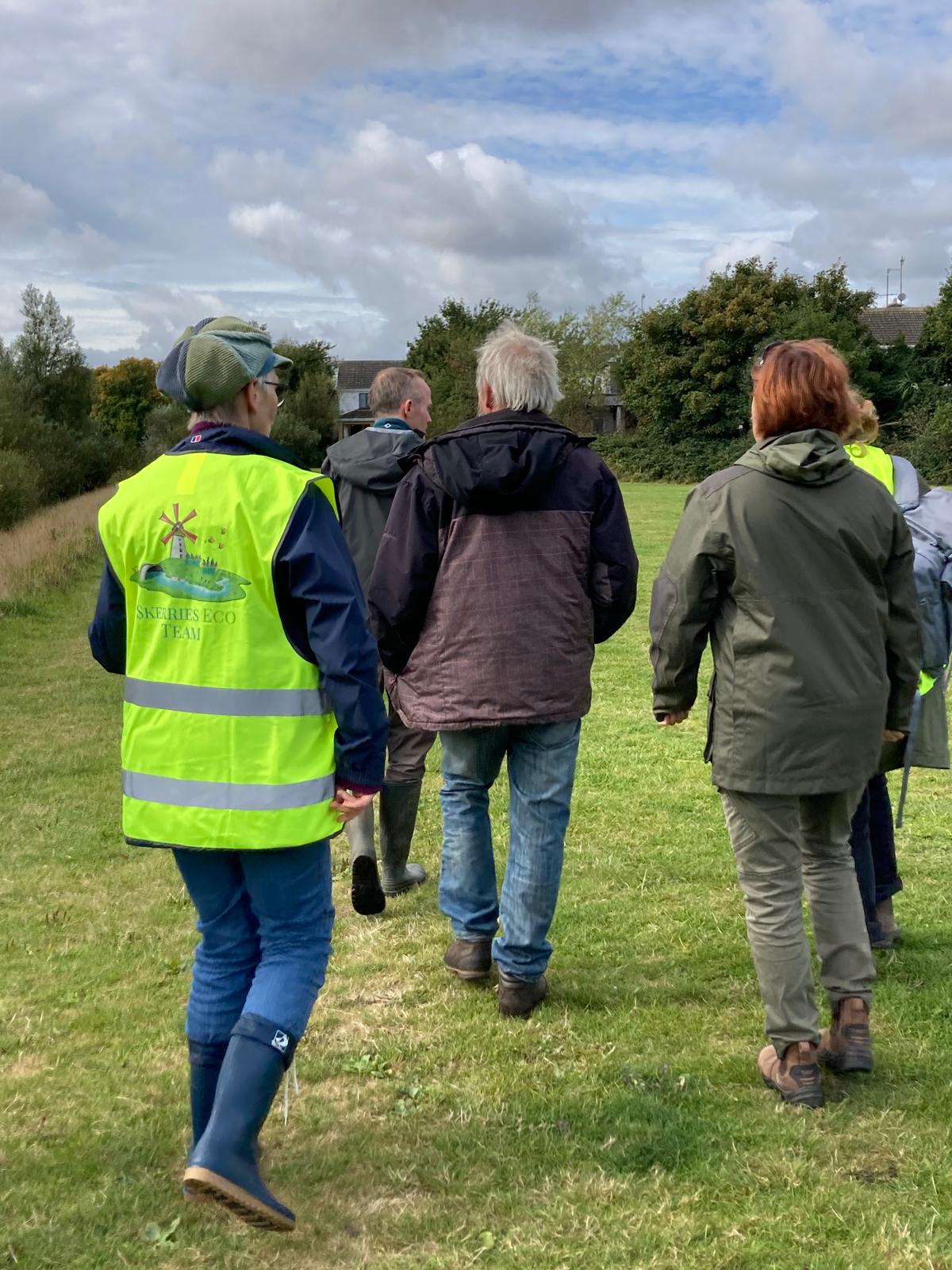
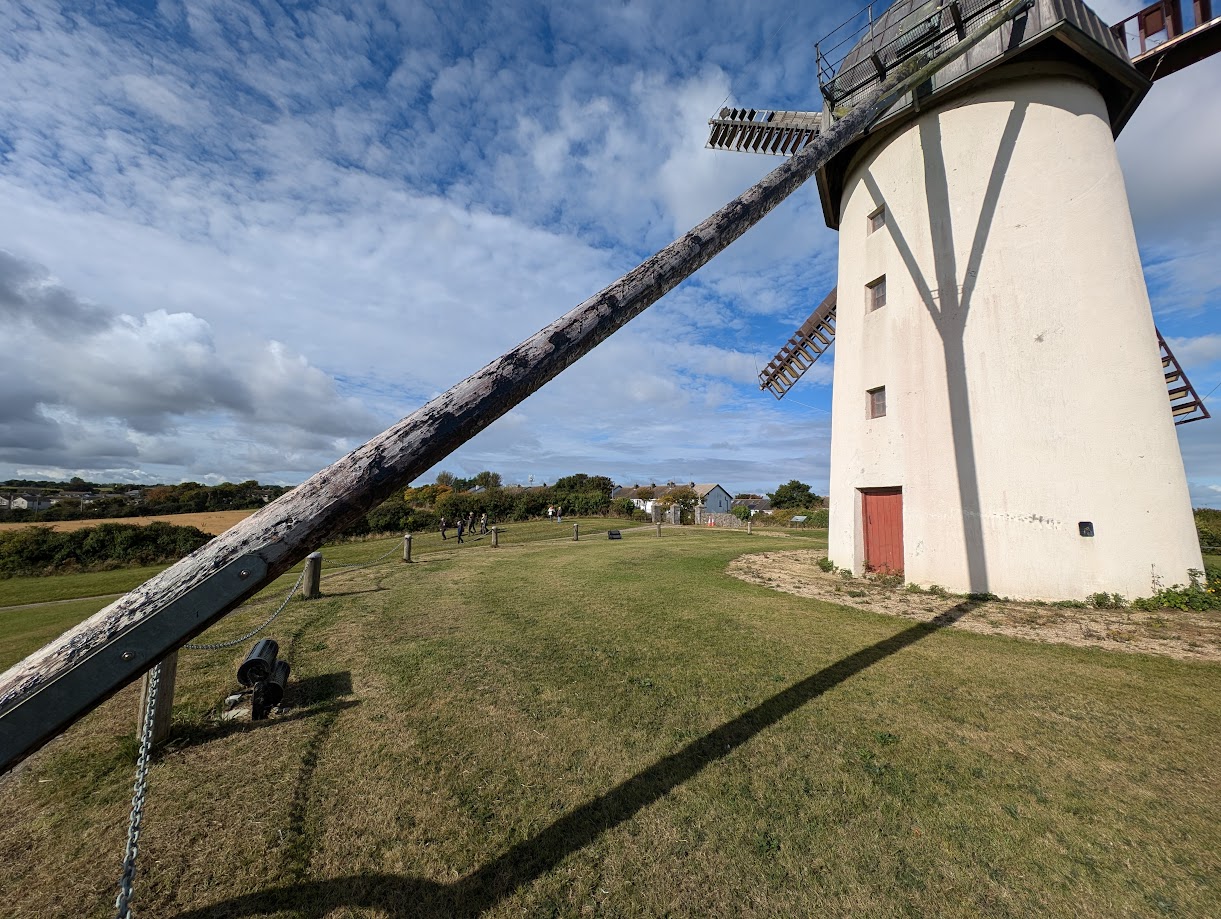
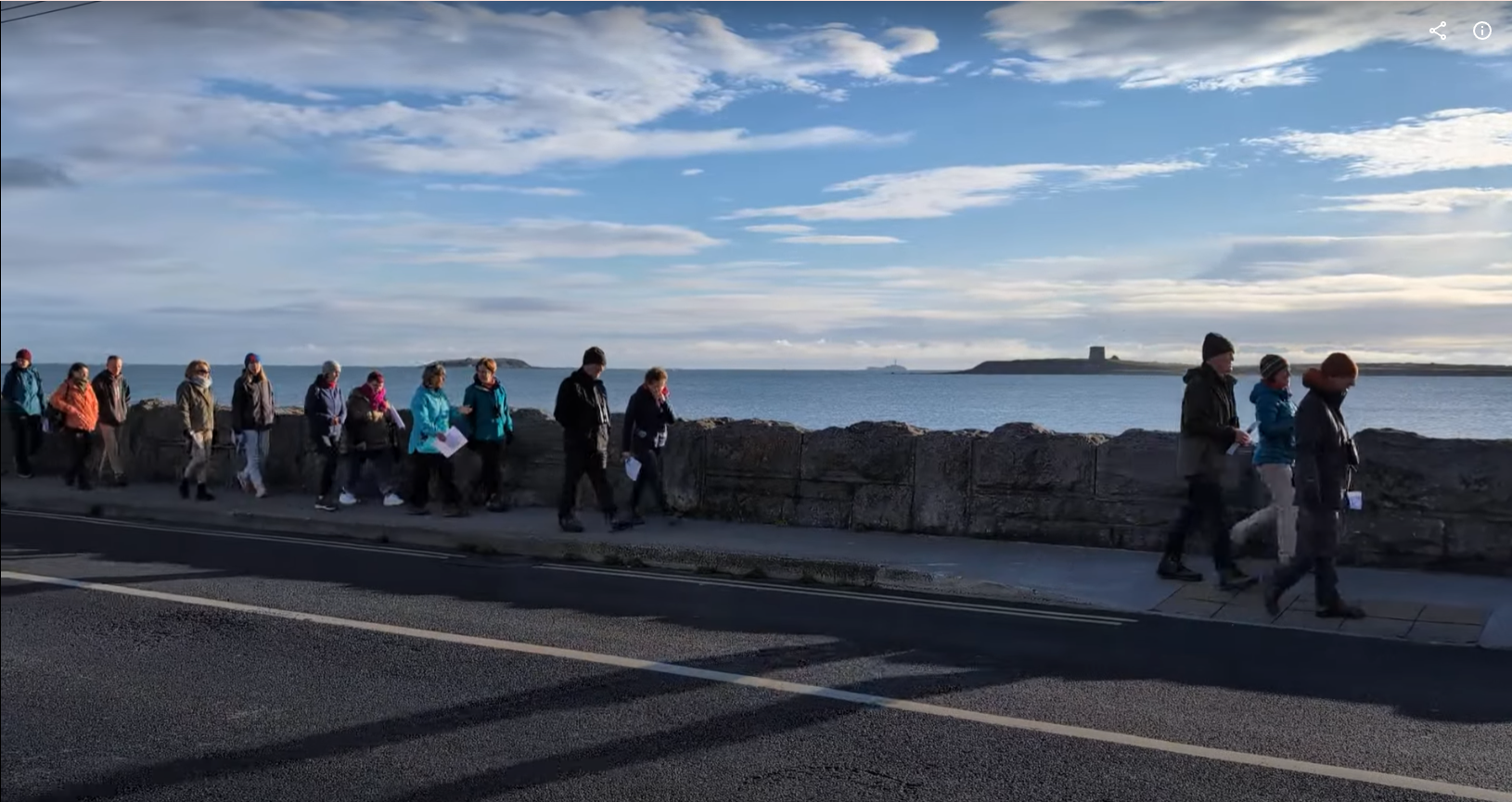
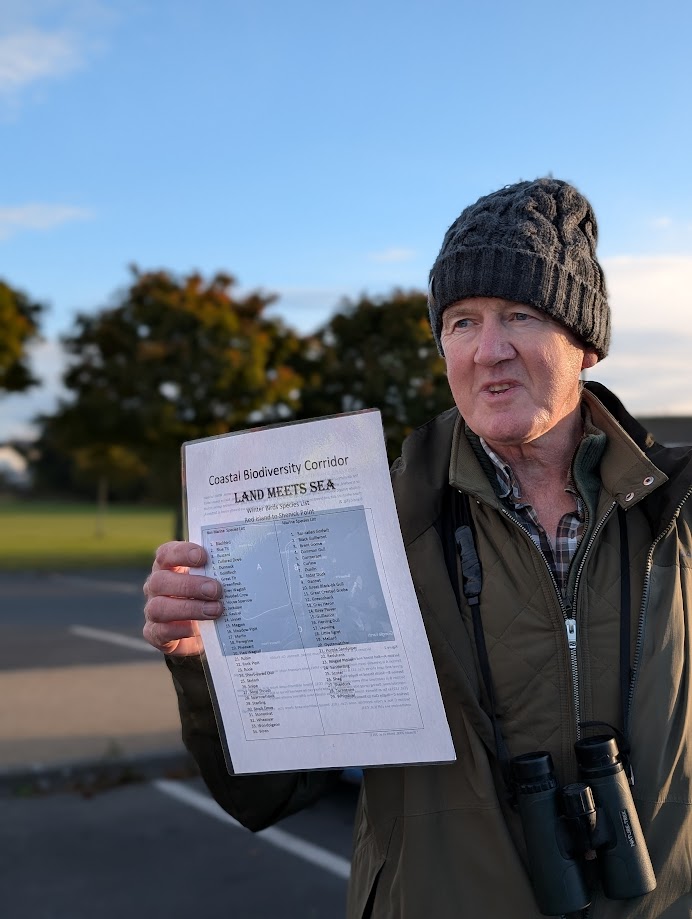
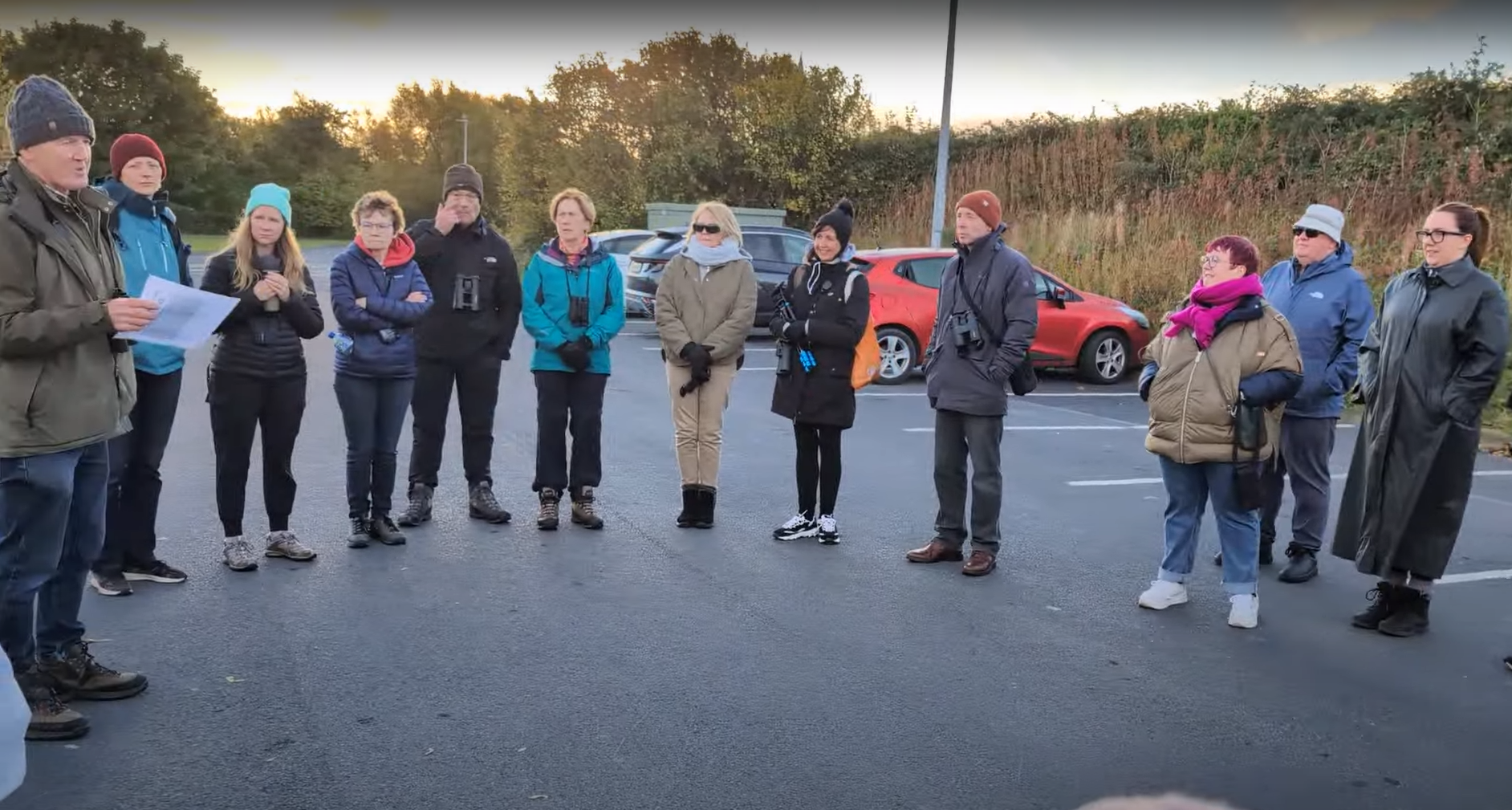
On Saturday, early risers enjoyed a peaceful and inspiring bird walk with local BirdWatch man, Cathal Copeland, while nature lovers joined Niamh for a guided tour of the parkland around Skerries Mills. Niamh’s passion for the park’s potential was contagious, as she spoke about how simple tweaks—like mowing less or letting the mill stream meander—could make a world of difference for both nature and the community.
Photos: Evelyn Cottell (2), Sabine McKenna (the others)



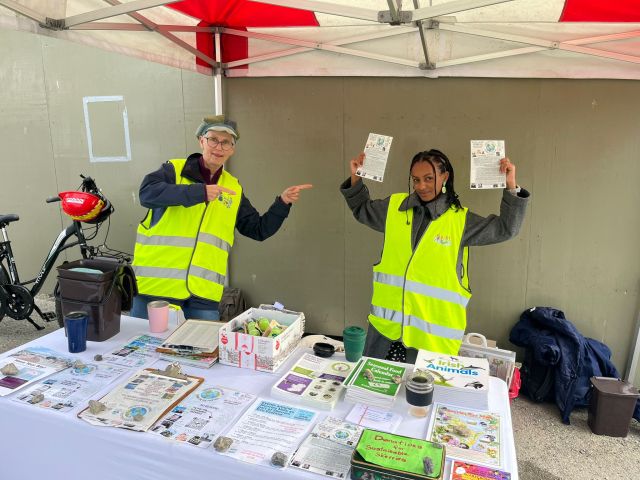
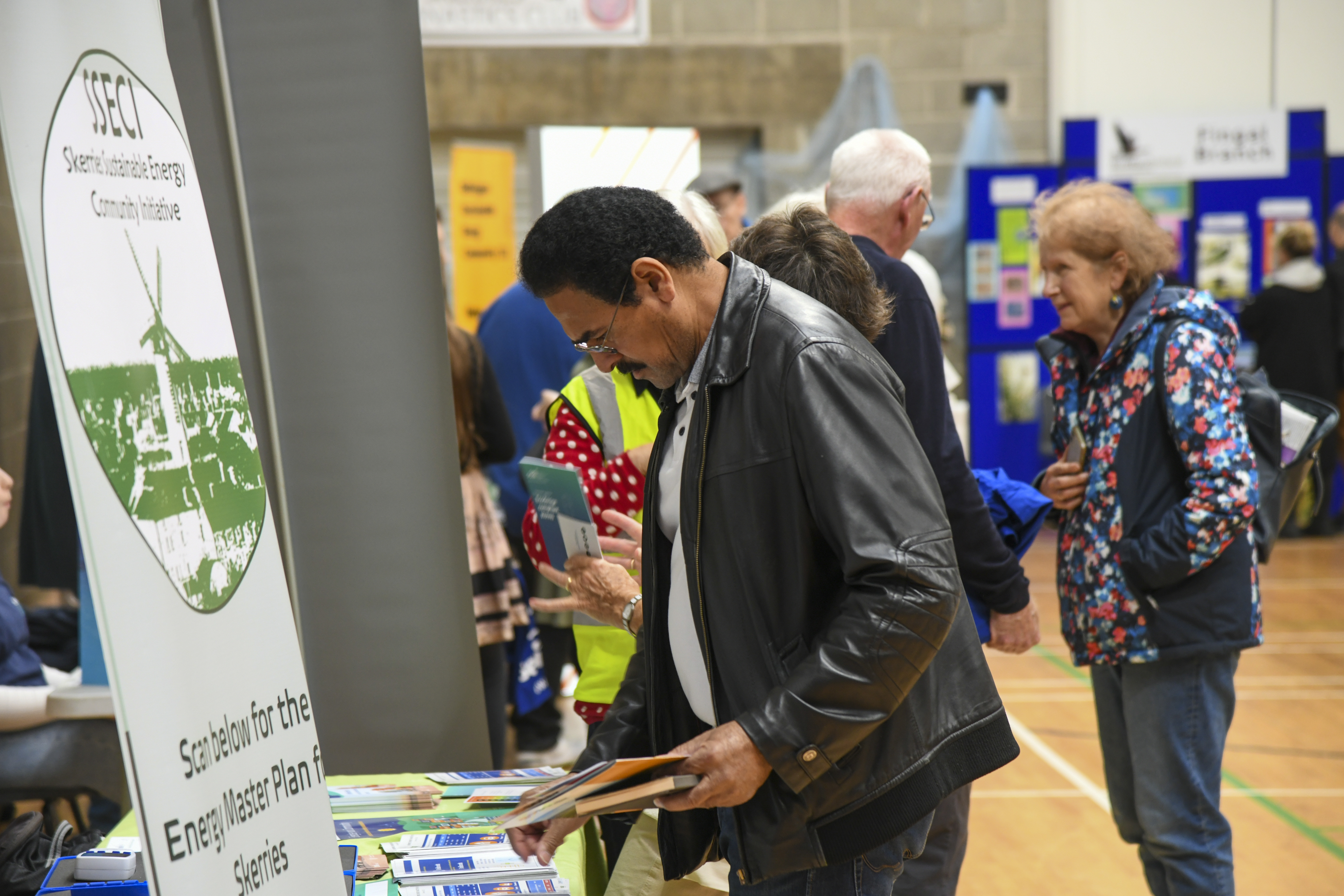
We had many great chats as guests at the Skerries Mills Farmers’ Market and were able to draw attention to the other festival events, as well as hand out some information on gardening for nature, eating with the seasons, and the local wildlife.
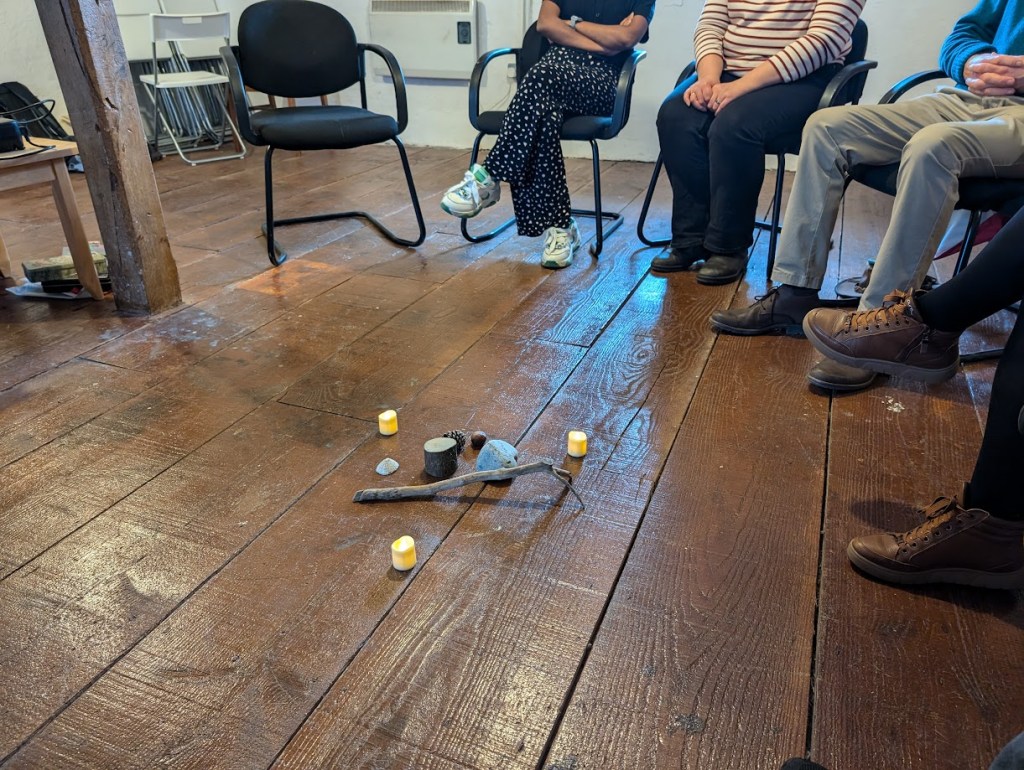
The “Active Hope” taster workshop with Sarah-Jane Cullinane and Josephine Lynch allowed us to face and honour our worries and fears, before we tuned into our love and appreciation for the natural world, to which we belong, finding sources of strength to do what we can to be part of the collective transition to a society and way of being which protects and nourishes.

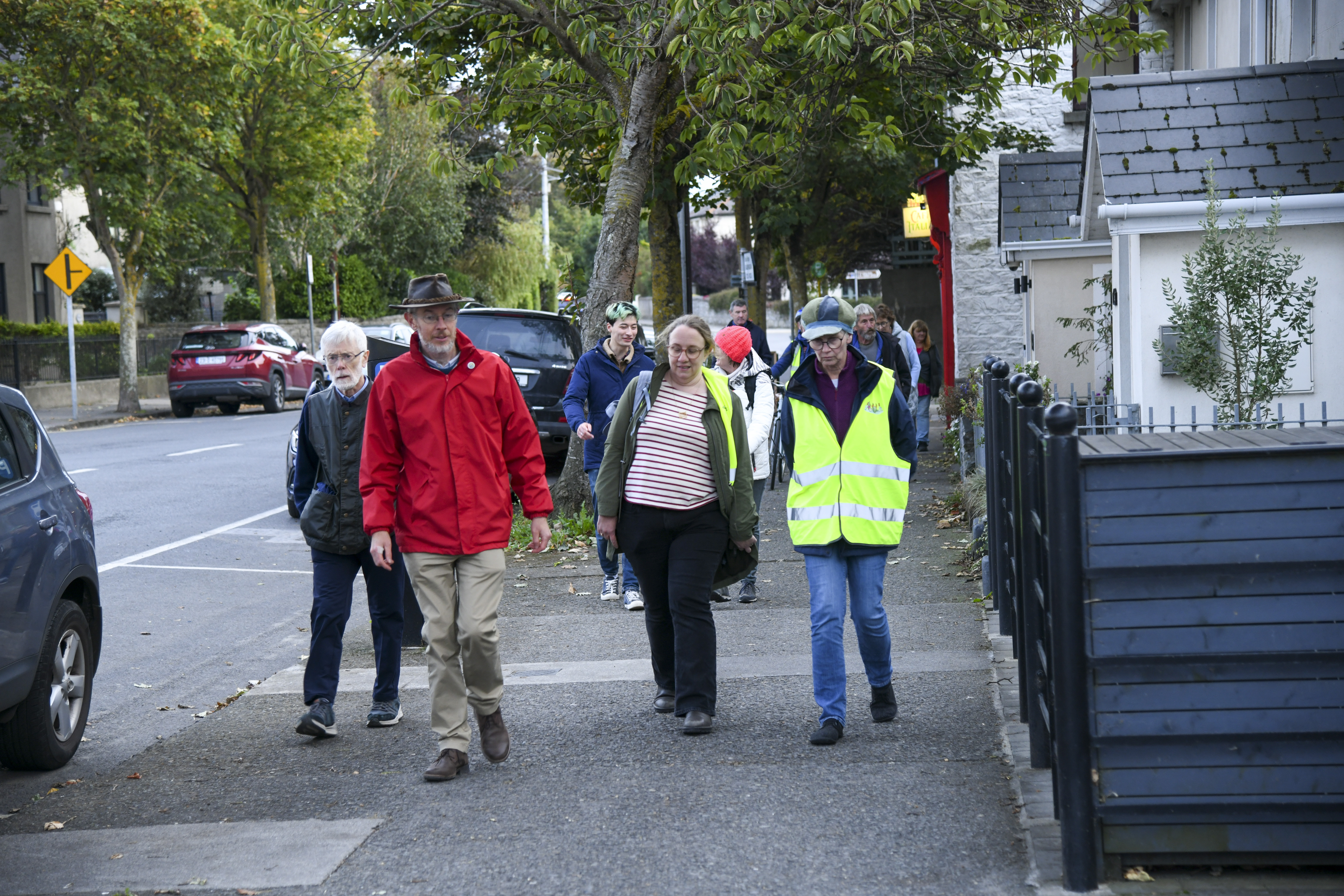
But perhaps the standout feature of the festival was its focus on water. Environmental consultant Féidhlim Harty led a fascinating Water Walk, showing how small changes in stormwater management can have a big impact. We were impressed by the spanking new demonstration water butt and rainwater planter at the Old School – fair play to the Sustainable Skerries Water Team and the Skerries Community Centre for getting that ready just in time! For us in a coastal town, slowing down the flow of rainwater during those more and more frequent downpours and thus minimising surface runoff, flooding and associated pollutants (as well as storing water for those more and more frequent droughts) is of particular importance.
Photos: Kevin McFeely, Fly Media (2), Evelyn Cottell (1)


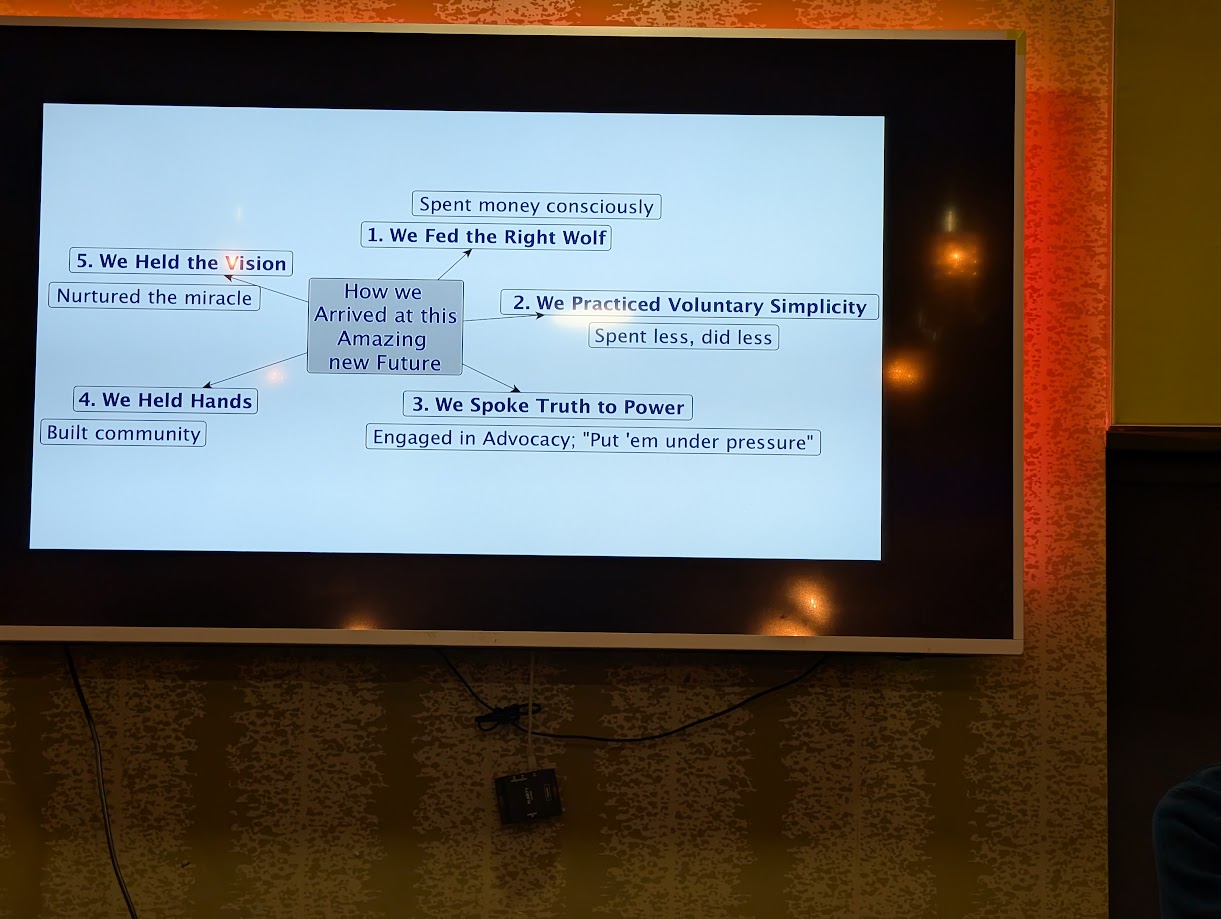
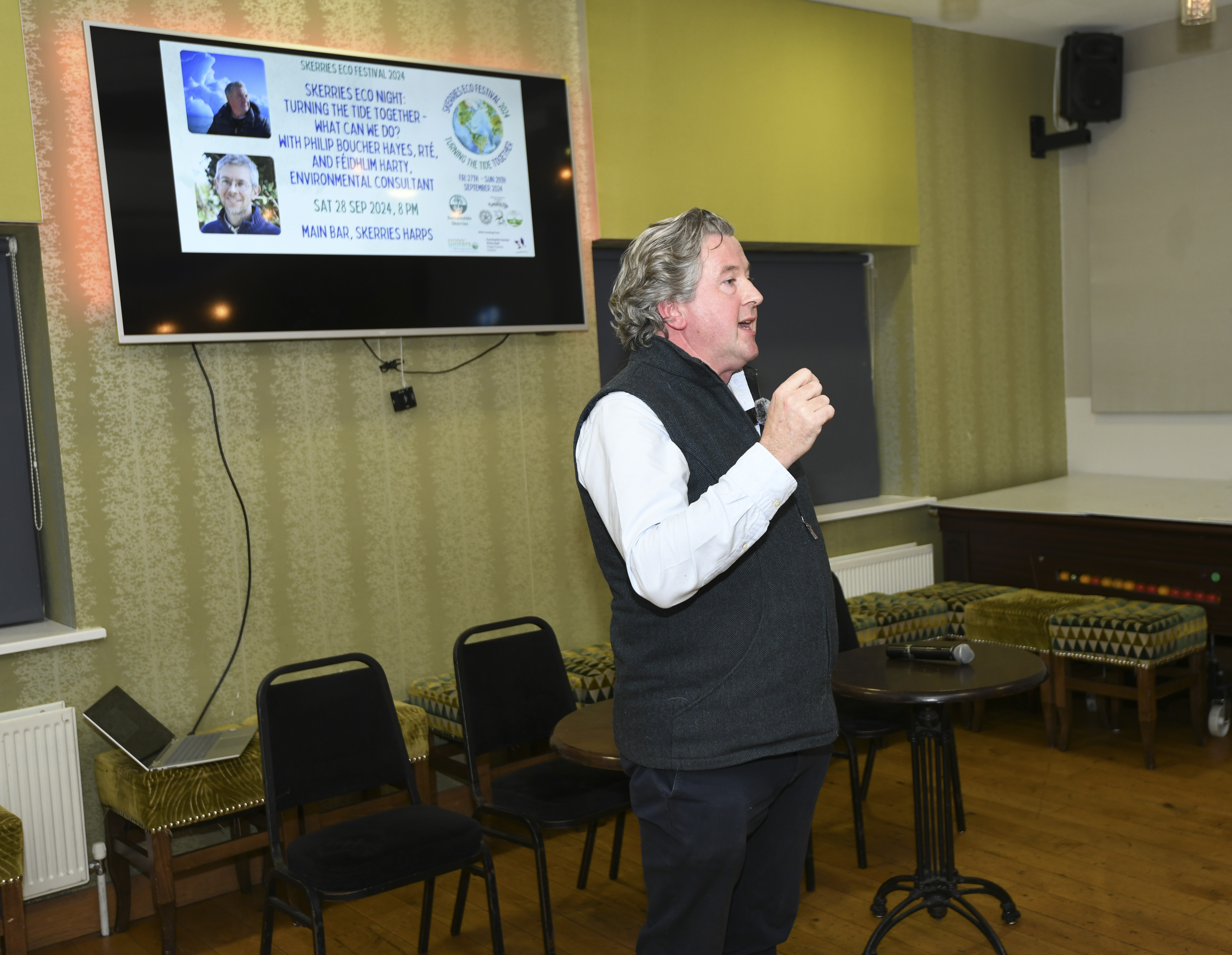
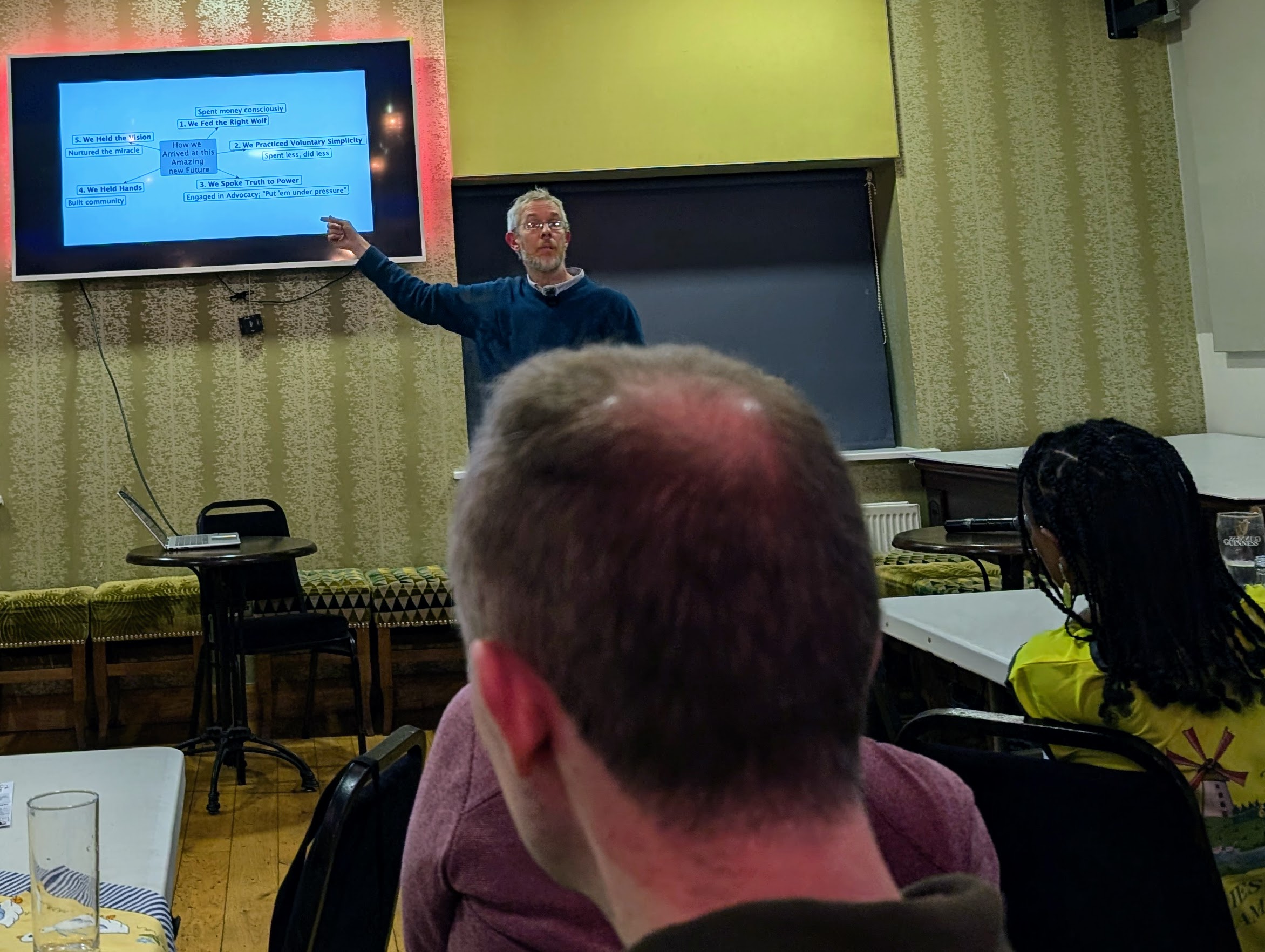
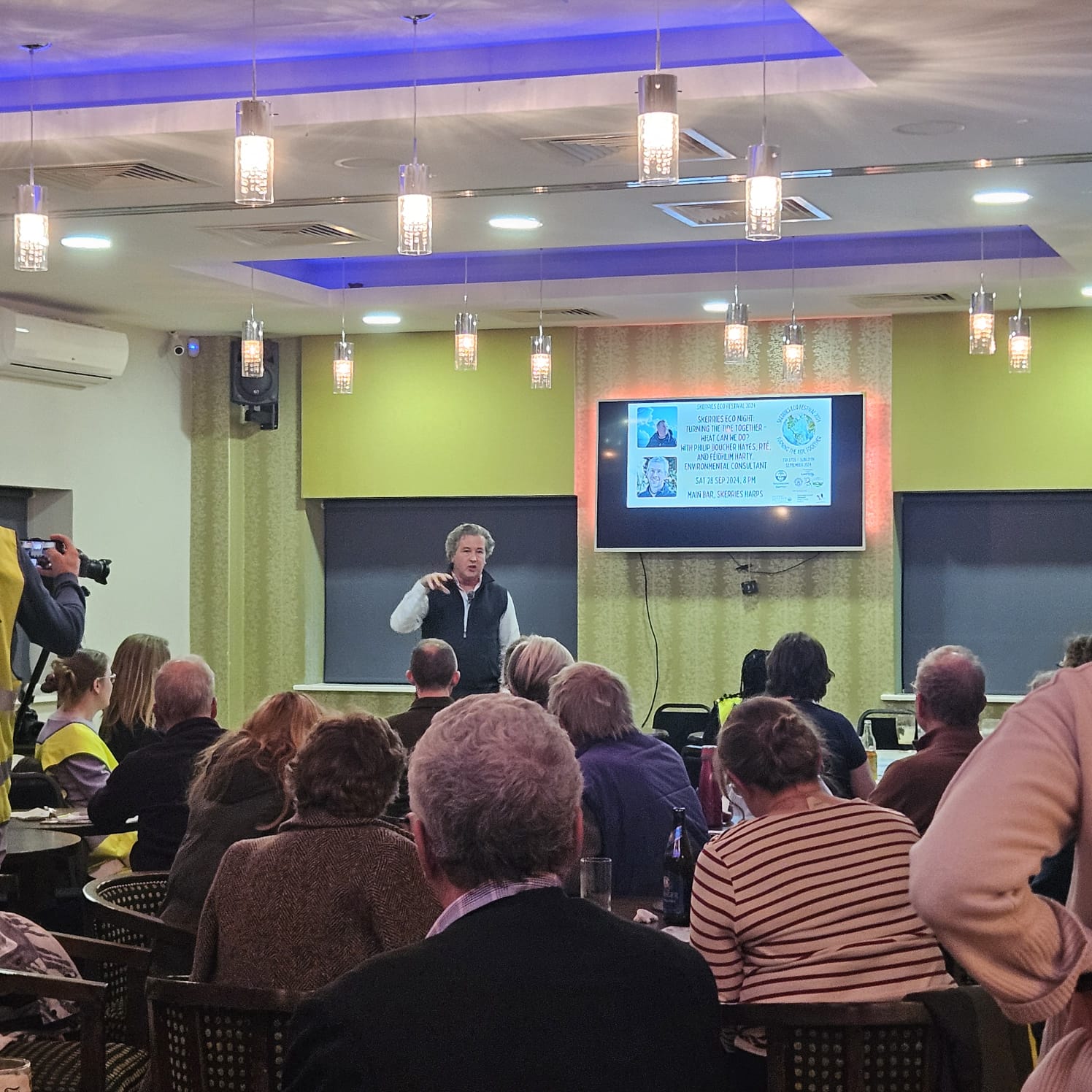
RTÉ’s Philip Boucher-Hayes joined Féidhlim Harty for a well-received night in Skerries Harps. Philip shared his experiences and insights from his recent television documentary series, “Rising Tides”… in a nutshell, there is no time for slacking, we need to act now, for instance regarding coastal erosion and coastal and inland flooding. Féidhlim was the second speaker and took us on a thought experiment… Let’s assume we’re looking back to the mid-2020s from a future where we did indeed turn the tide. What will we have done right? His answer was complex enough, but he also boiled it down to these five simple aspects:
- Feed the right wolf: Make conscious decisions on where your money is going, and what you eat.
- Practise voluntary simplicity: Live a simple lifestyle. Do less, spend less. Enjoy more.
- Speak truth to power: Engage in advocacy. Tell those in power whose actions have negative impacts that their behaviour has such impact that you can see, and that it is not acceptable in the society we wish to create.
- Hold hands: Build networks and communities, from the ground up. Practise solidarity, and inspire one another.
- Hold the vision: nurture the miracle of change, as it grows, slowly.
We reflected on what all that means for us here in Skerries in small groups, following their inputs, and Féidhlim and Philip responded to our thoughts in such a way that we all left that evening much more hopeful and determined than we had felt beforehand.
Photographs: Kevin McFeely, Fly Media (2); Sabine McKenna (2); Karen Power (1)

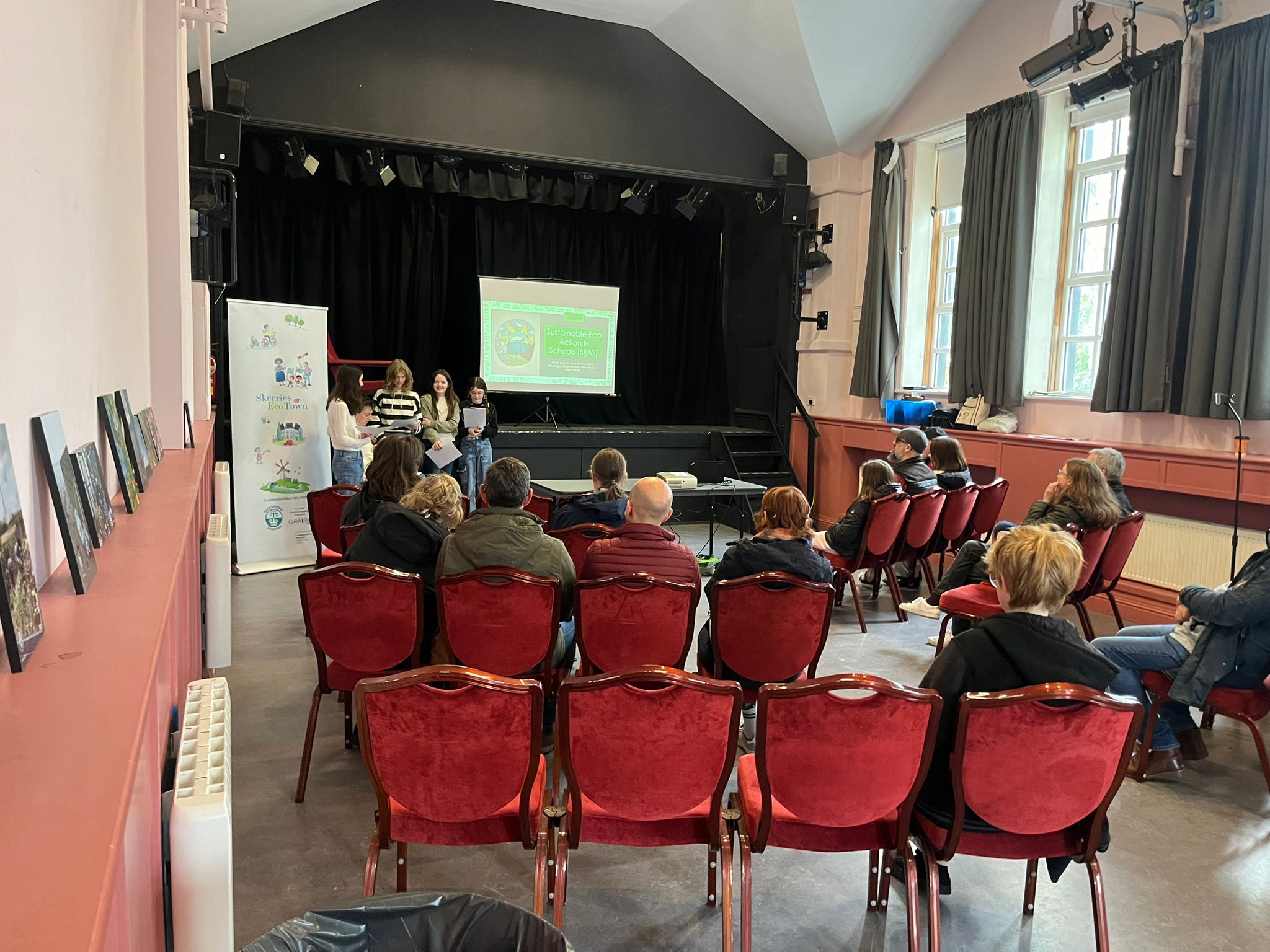
One of our favourite Sunday events was the “Green Teams in Action” workshop, where past and present members of the Skerries Community College Eco Club talked about their research into sustainability in schools. They had some very good and clear messages for all of us – including that if you want to get people to join your group, it will be much easier to win them over if you have some nice biscuits ready for them!
There was gardening advice at the fair, and for those who wanted to get a good practical overview, Máire Jones talked about “Mission Not Impossible: Gardening in small spaces”. Do look up the video on that one, it was so full of practical, down-to-earth information, amazing.
Of course, the festival wasn’t all for grown-ups, nor was it all theoretical or serious!
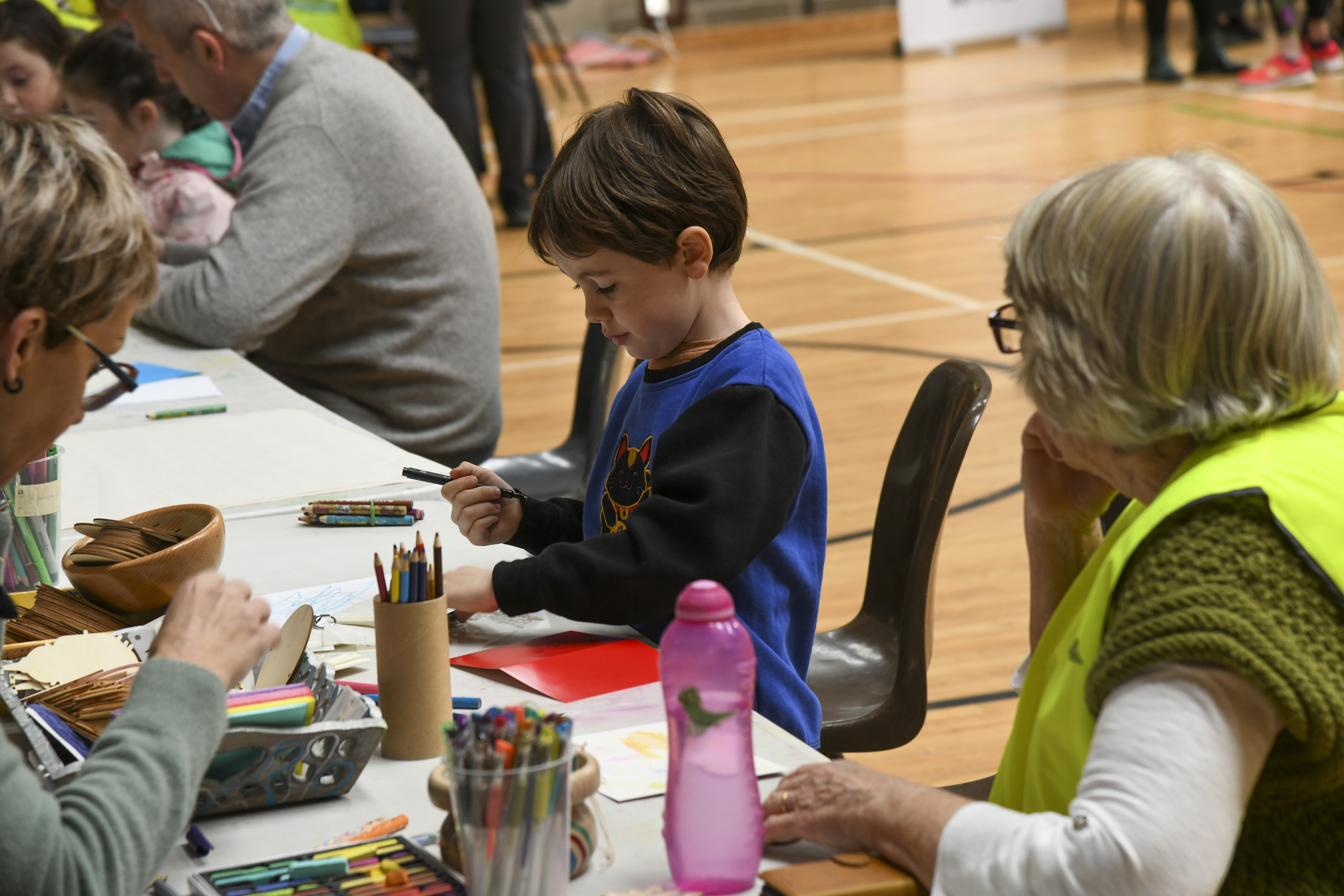
Children could test their bike skills on the amazing obstacle course which the Irish Centre for Cycling had set up on the grass next to the swan pond. The amount of repeat cyclists proves how brilliant that one was. Families loved the doodle workshop with Niamh Sharkey and Owen Churcher, based on their most recent books, “Hello Bird” and “Leaflings” – and the arts & craft area at the Eco Fair. Bike repair demos, organised by Skerries Cycling Initiative in front of the Old School, found much interest, too.
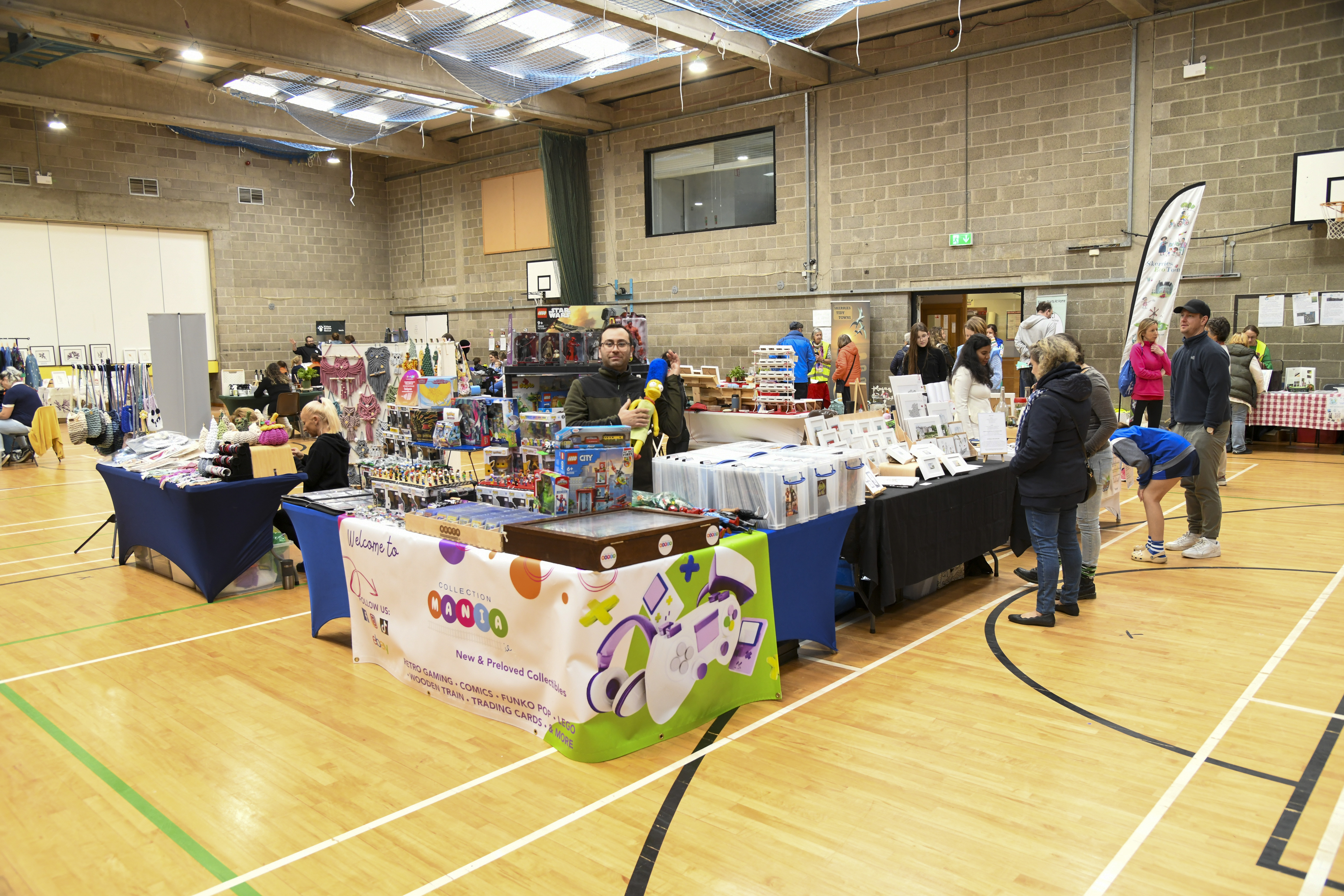
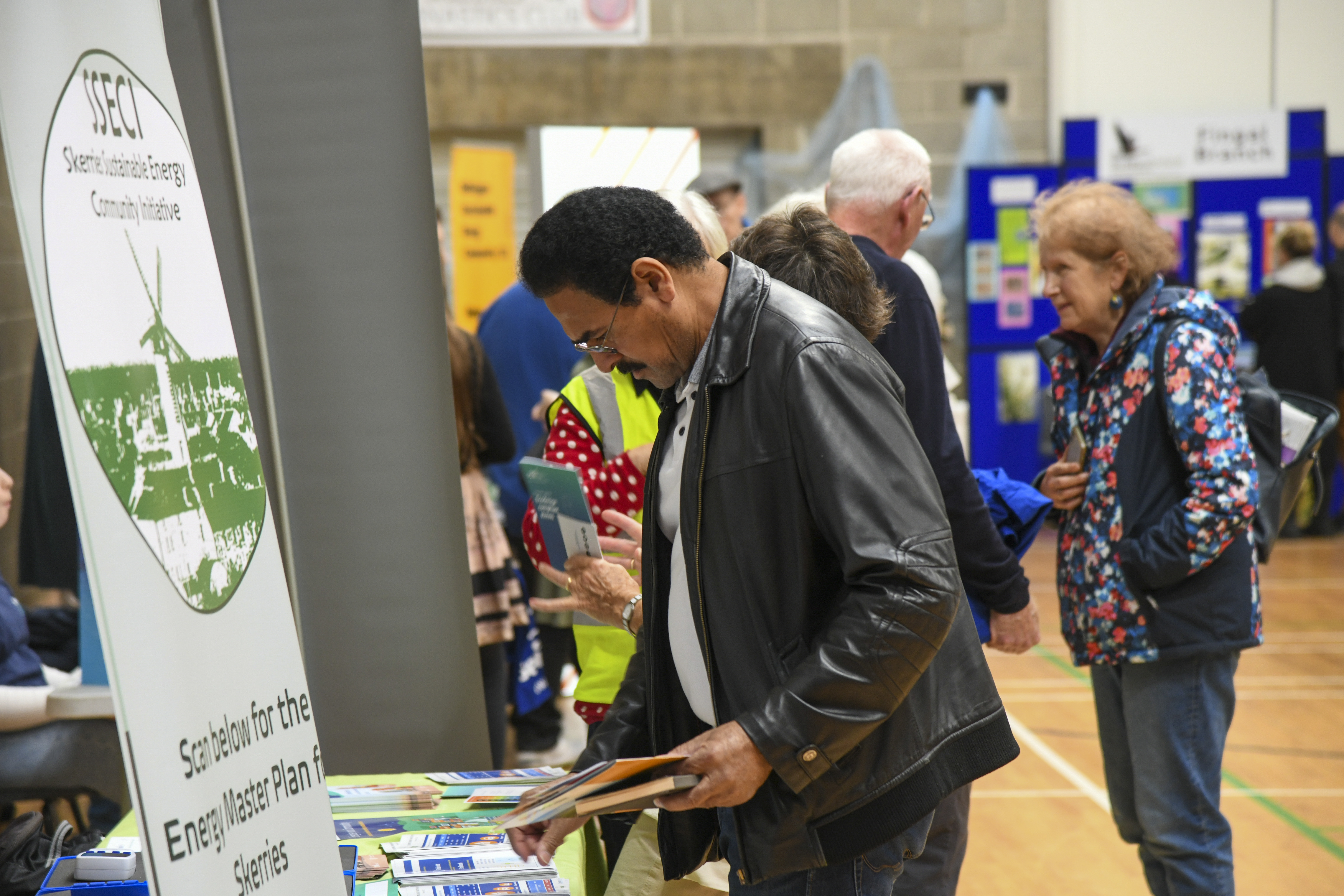
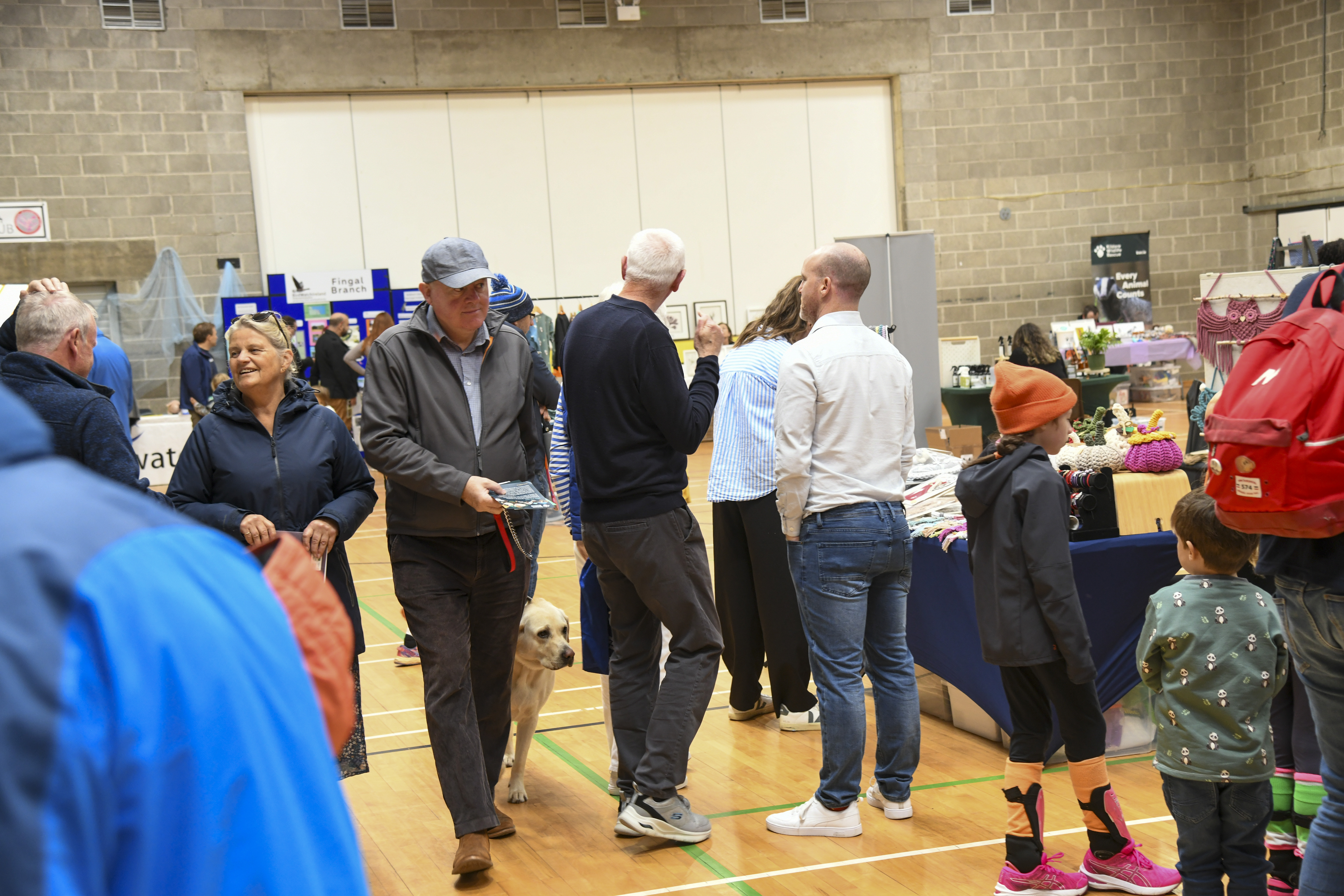
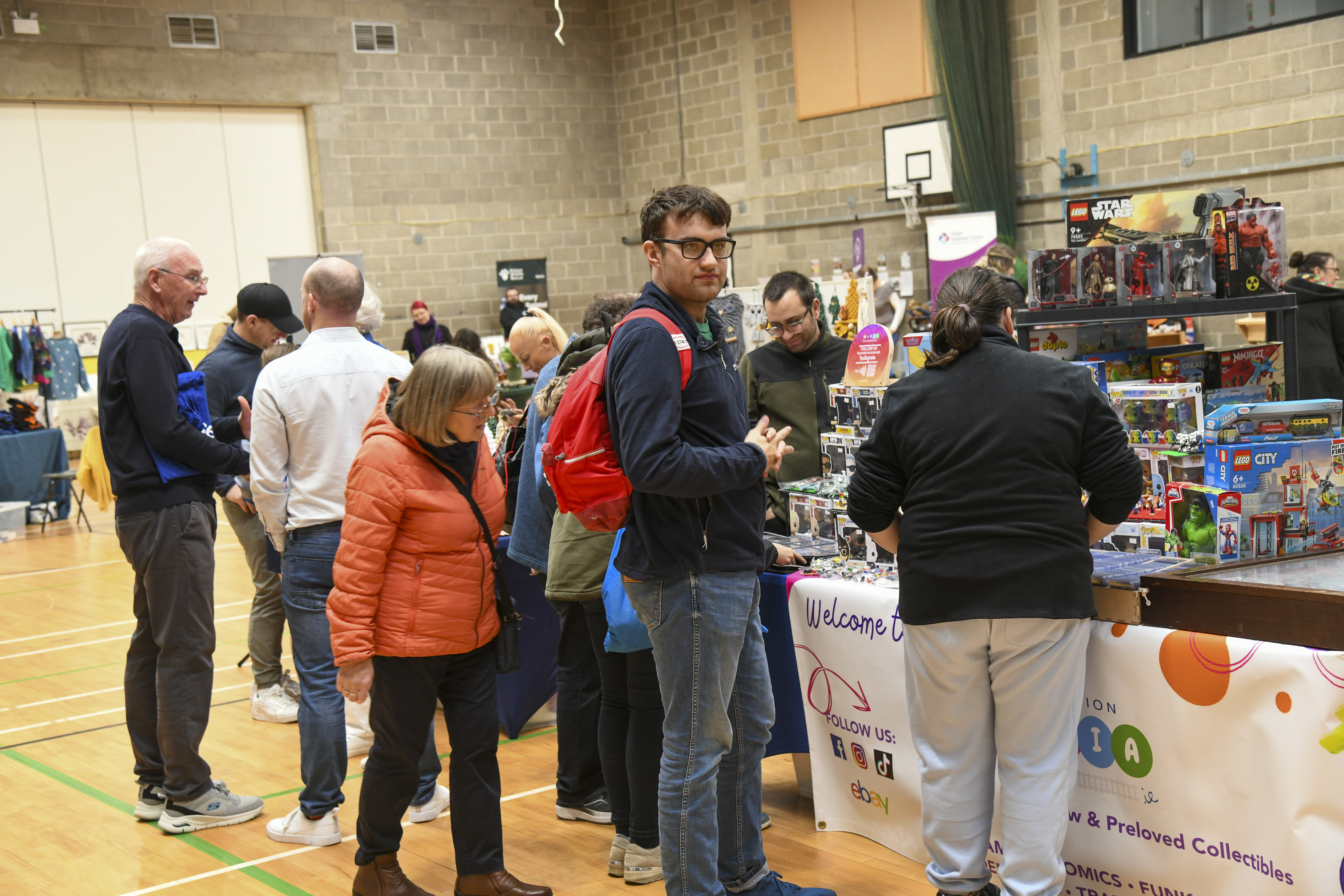
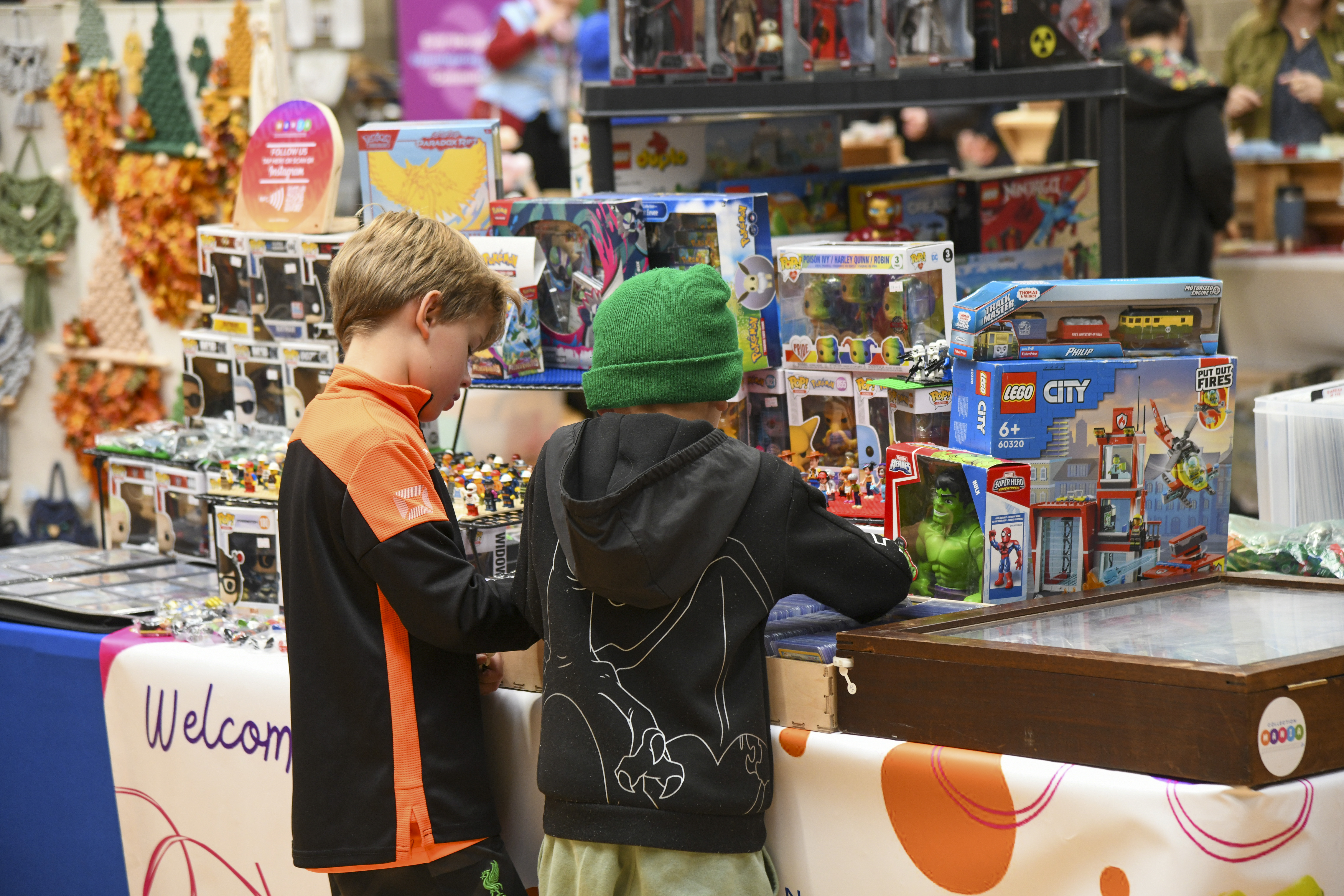
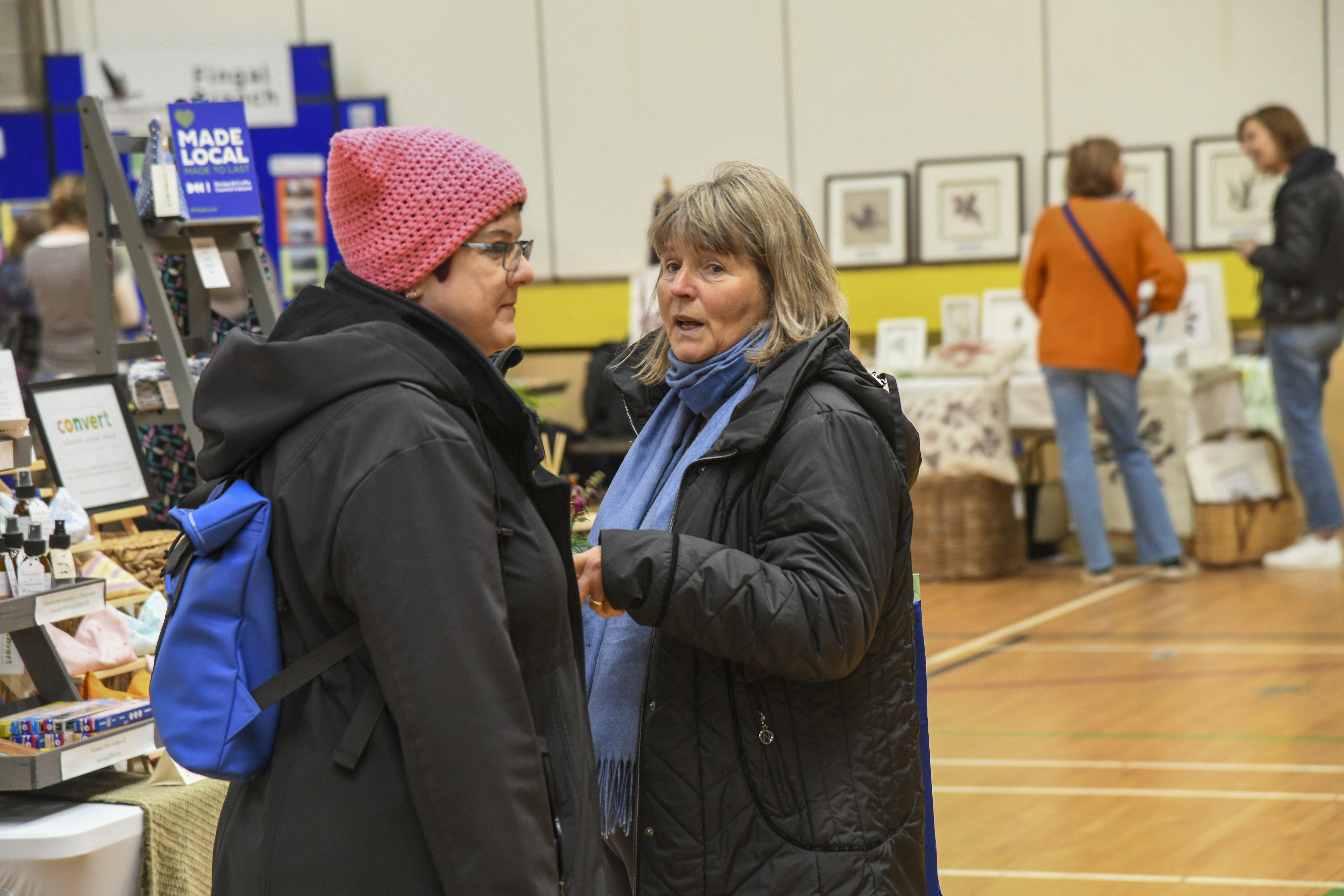
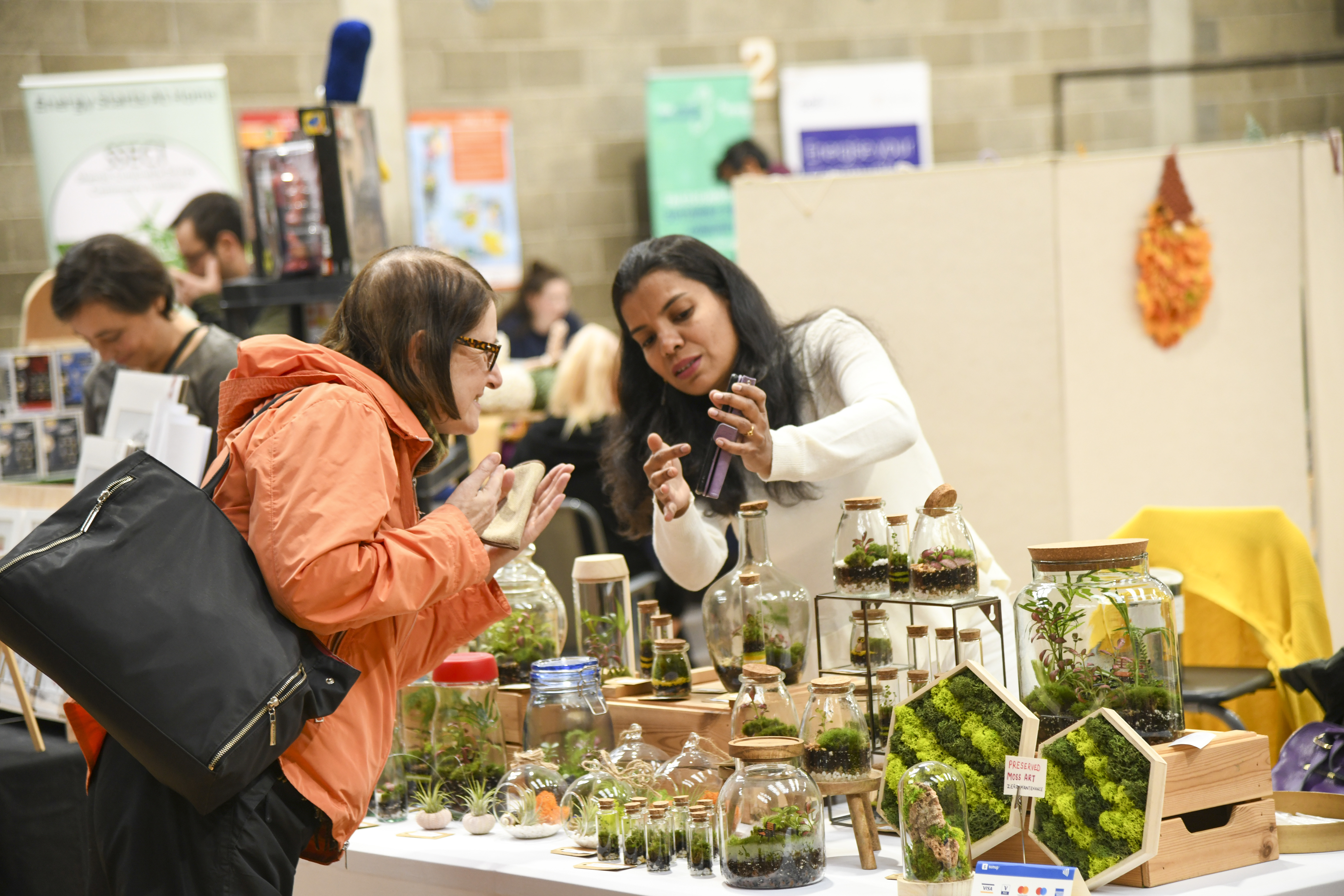
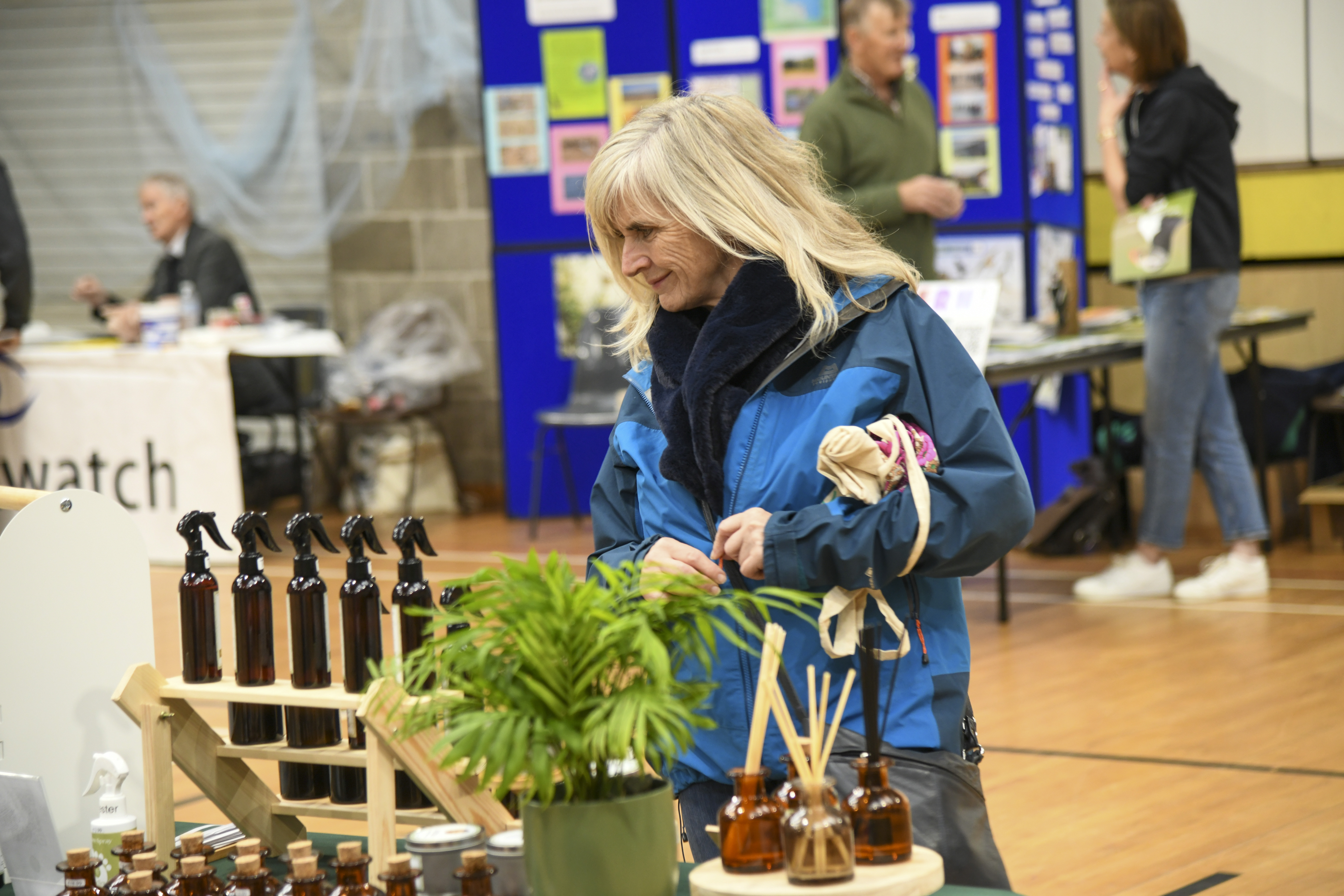
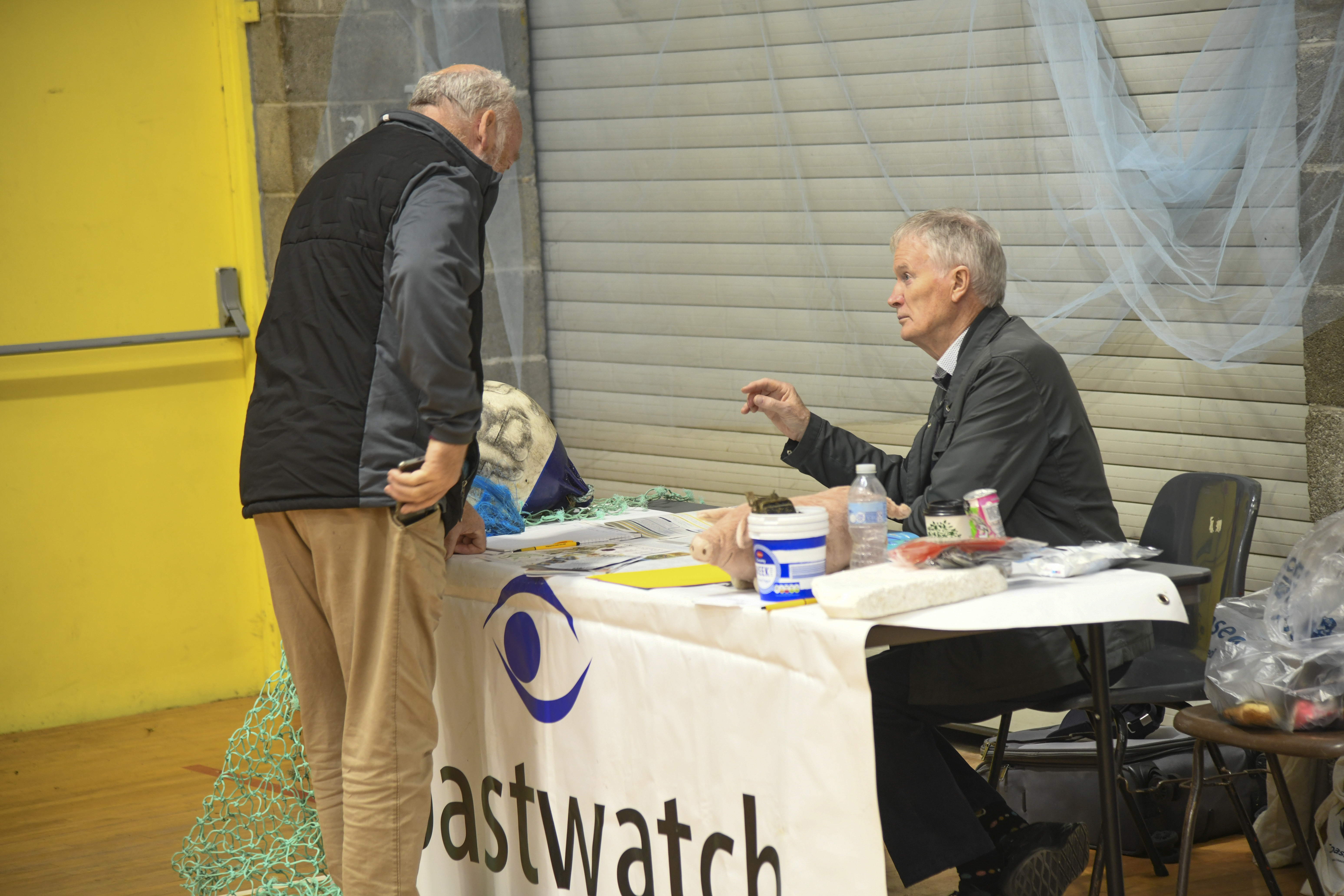
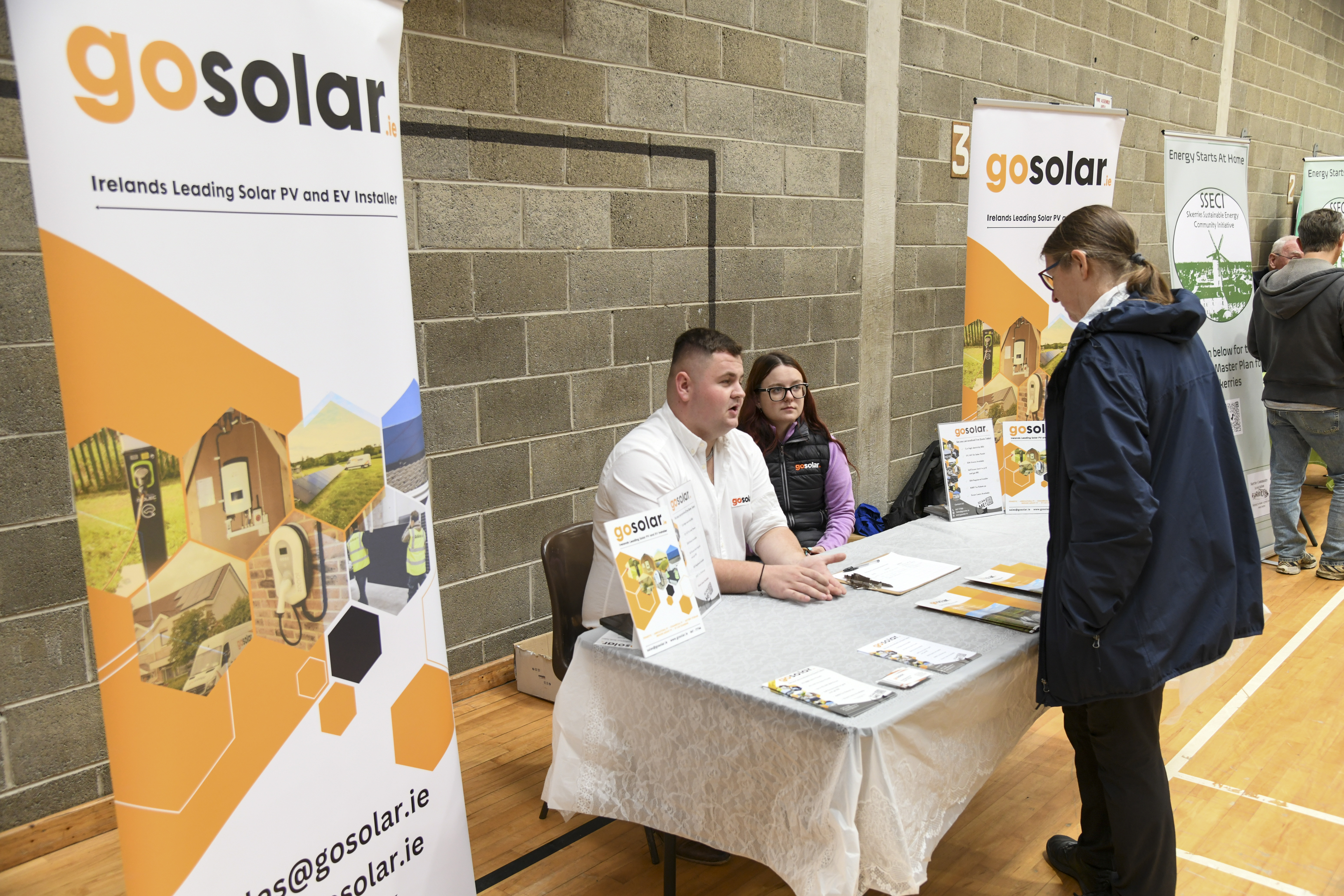
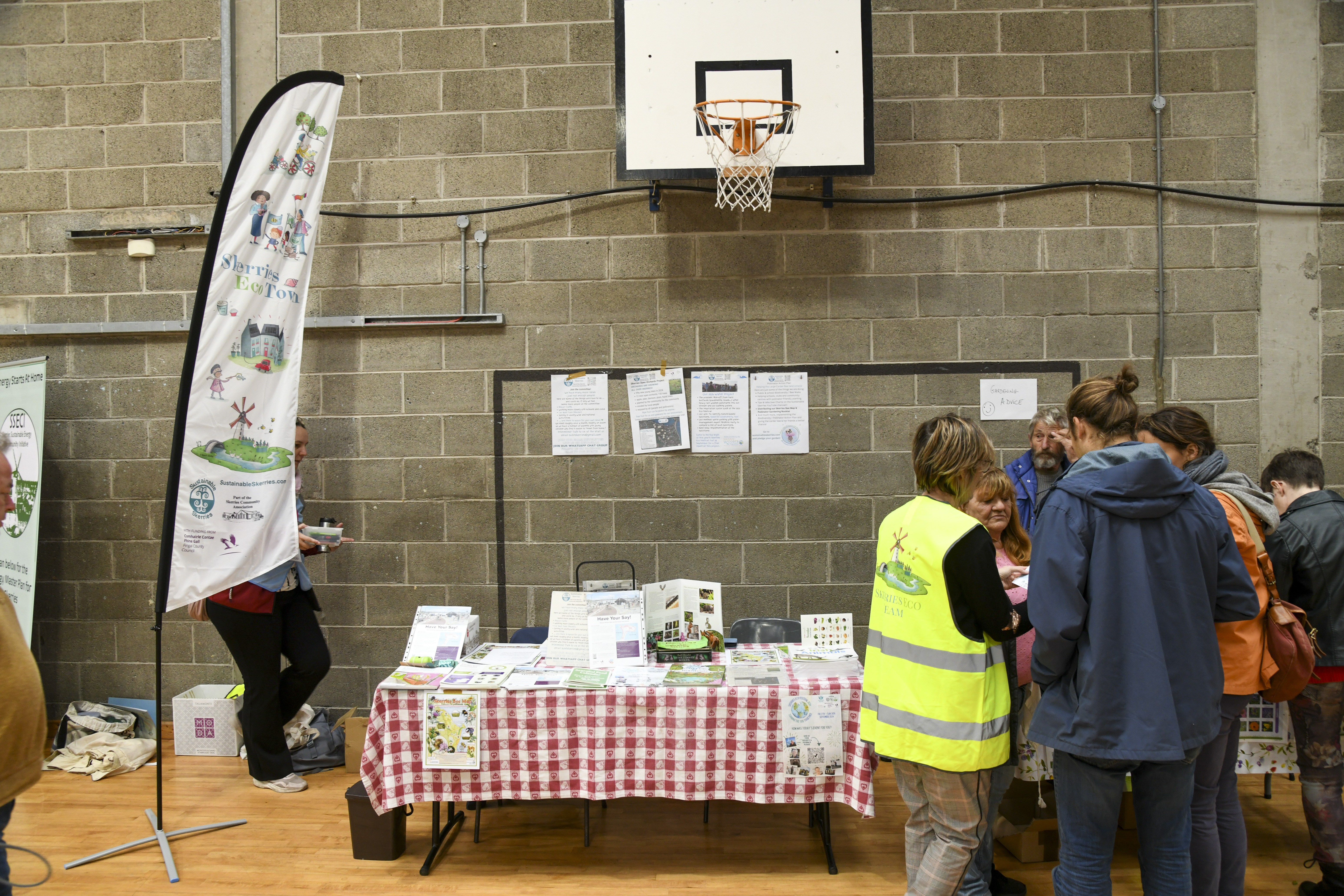
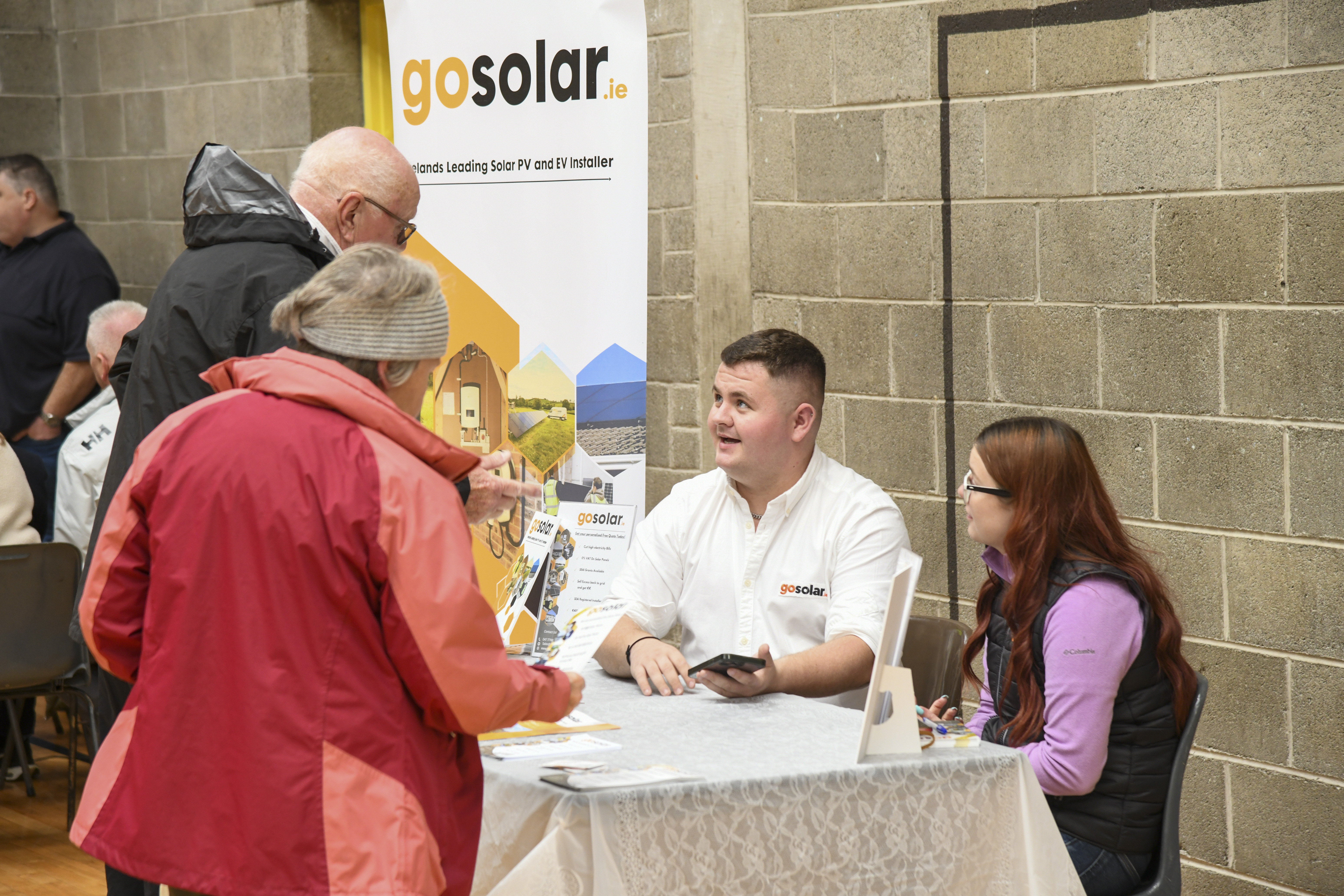
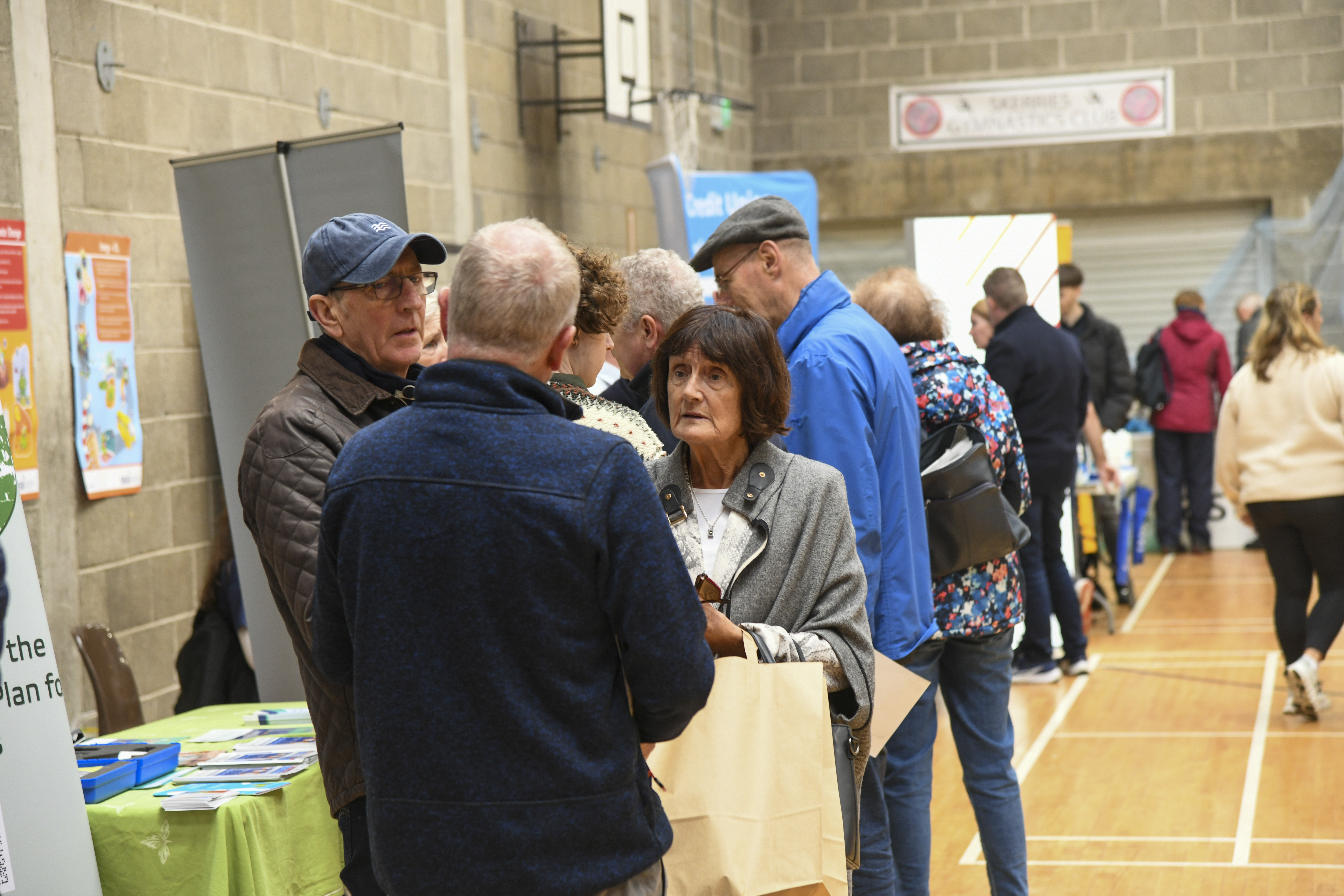
From the moment you stepped into the Eco Fair, you knew this was more than just a typical market. It wasn’t just about picking up eco-friendly goodies like handmade soaps and upcycled treasures (though there were plenty to choose from!). Visitors also had the chance to chat with local solar panel providers, learn about sustainable energy initiatives, and even find out why mowing your lawn less might be the best thing you can do for wildlife. There was such a buzz about the fair that many are already calling for a similar event before Christmas!
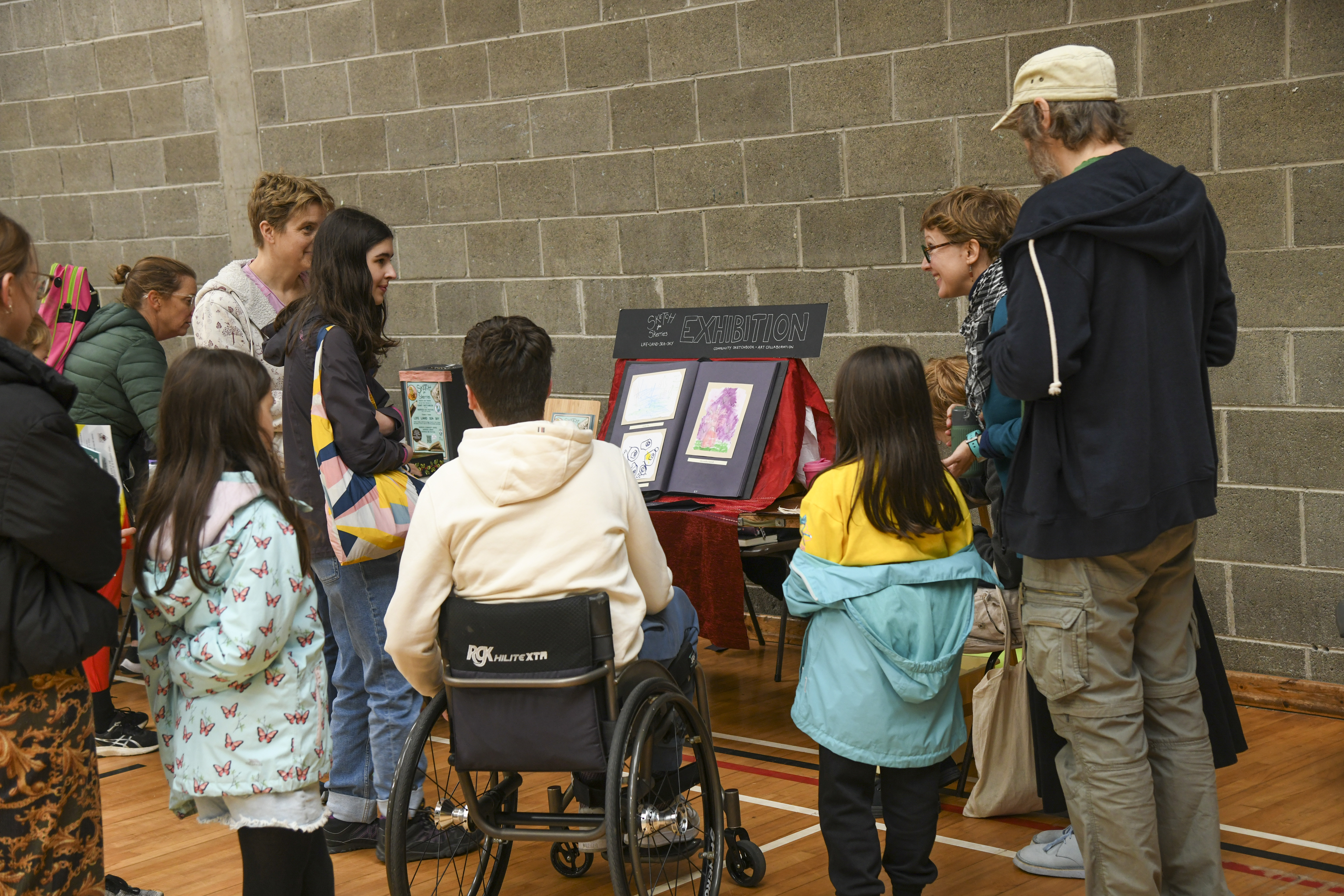
Art lovers were in for a treat with the Sketch for Skerries project, initiated by local artist Kristina Keegan. Over 50 artists contributed to this stunning exhibition, which captivated visitors throughout the weekend. You can see some of the artwork on the galleriakristina.com blog.
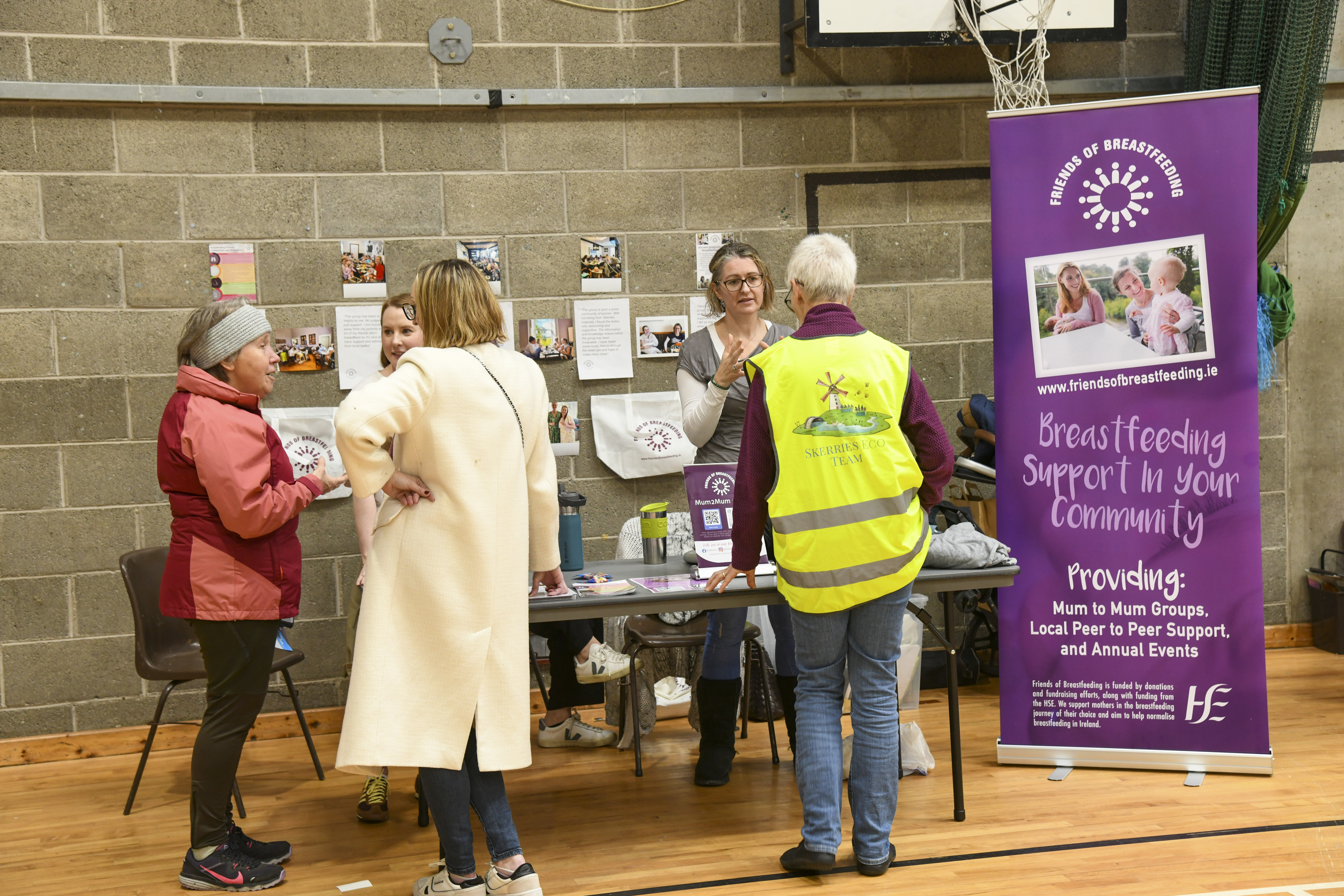
For those who wanted to learn and take action, Speakers’ Corner provided a range of inspiring talks. Experts shared insights on everything from home energy-saving tips to the role of insects in biodiversity and the sustainability advantages of breastfeeding. Plans are already in place to improve sound and visibility for next year, making it even easier for the audience to soak up the wisdom shared.
There was plenty of music, not only on Friday during the opening night, courtesy of the Skerries Ukulele Strummers, but also on the Sunday, when the Ecoleles (originally formed for the Skerries Pride of Place Afternoon in early September) framed the Speaker’s Corner.
And comedy, thanks to Colm O’Regan, shaped the festival finale. His show Climate Worrier struck the perfect balance between humour and insight, leaving the audience both laughing and reflecting on the challenges ahead. If the number of people buying his book is any indication, Colm’s message definitely hit home… one in three walked home with his Climate Worrier under their arm!
Photos: Kevin McFeely, FlyMedia.ie



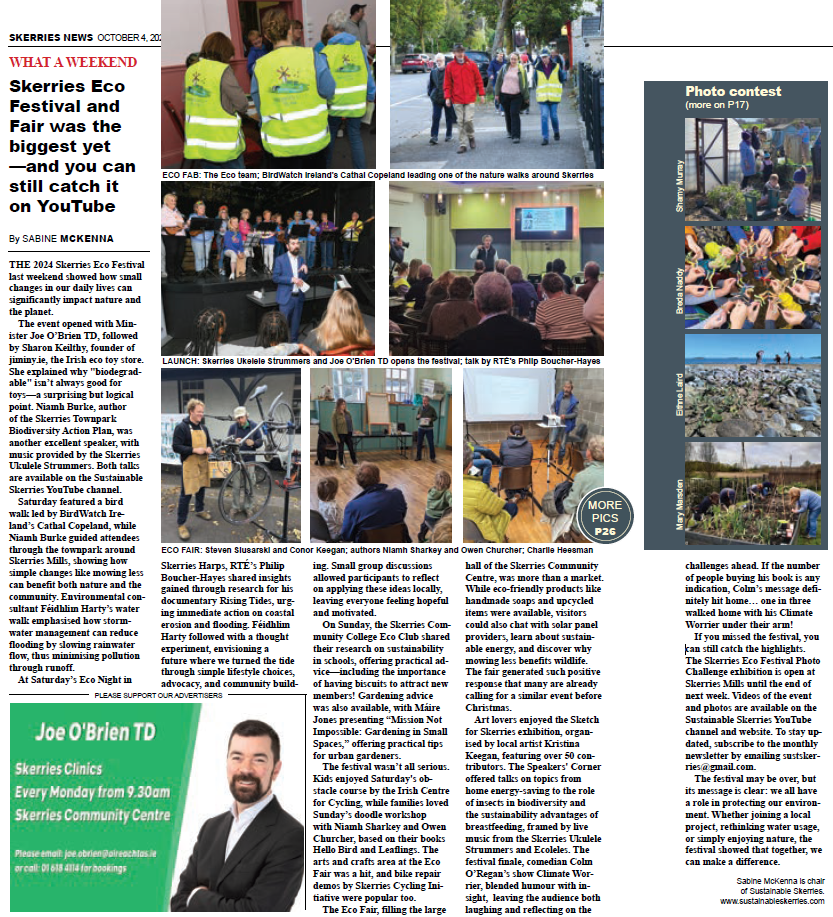
Missed the festival? Don’t worry—you can still catch up on the highlights!
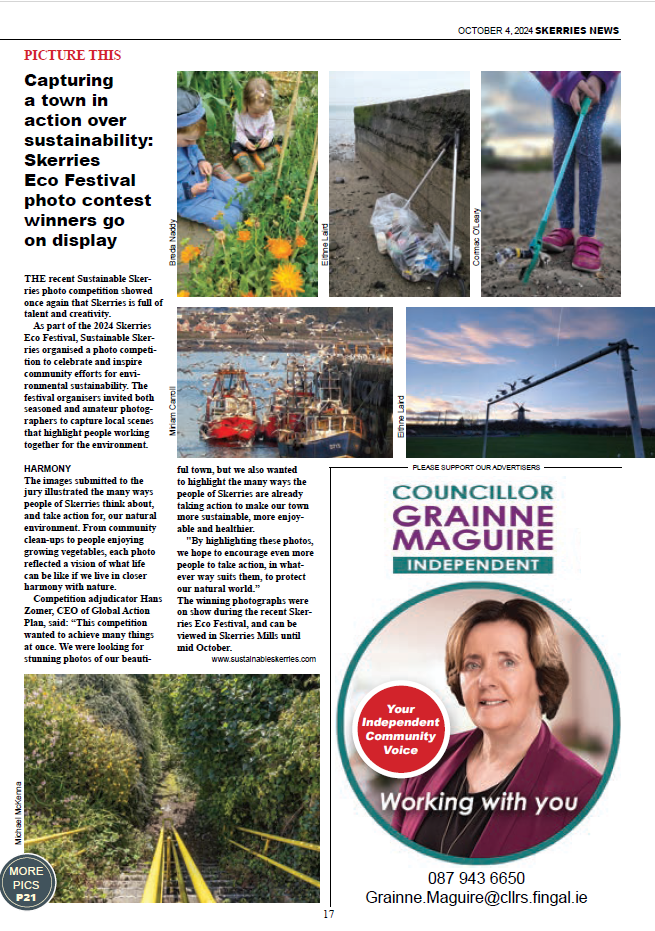
The 2024 Skerries Eco Festival Photo Challenge resulted in a visually striking and thought-provoking selection of photos, which are now on view at Skerries Mills, until the end of next week.
Head over to the Sustainable Skerries YouTube channel for videos of the event, including some of the main talks, and check out the festival photos on sustainableskerries.com. And if you want to stay in the loop, make sure to subscribe to their monthly newsletter by emailing sustskerries@gmail.com.
The Skerries Eco Festival may have come to a close, but its message is clear: there’s something we can all do to protect our environment. Whether it’s getting involved with a local project, rethinking how we use water, or simply spending more time enjoying the nature around us, the festival proved that together, we can make a difference.
The festival would not have been possible without the support of Fingal County Council and LAWPRO.
The above article was published, in a shortened version, in Skerries News on 04 October 2024.
Alongside a lovely writeup about the 2024 Skerries Eco Festival Photo Challenge!
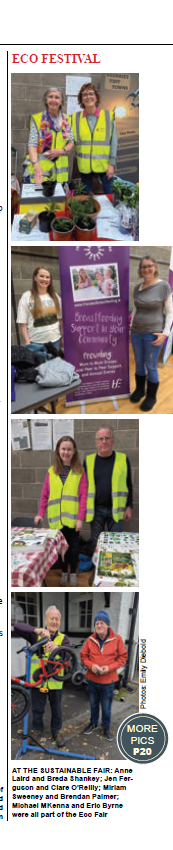
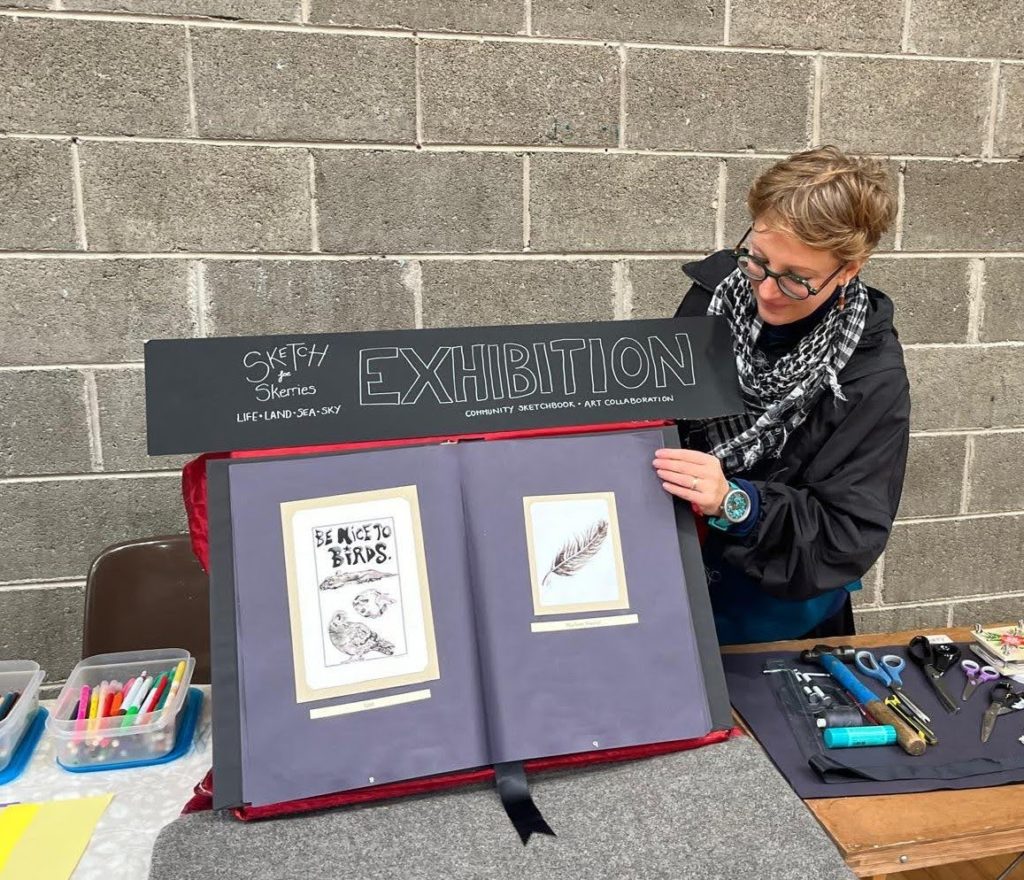
Did you get to see the wonderful sketches people contributed to the Sketch for Skerries project? Local artist Kristina Keegan had this idea, which added so much to our Skerries Eco Fair (part of the 2024 Skerries Eco Festival). And just one day later, on 30 September 2024, she wrote a blog post on her site, https://galleriakristina.com/blog/ which she kindly allowed us to repost here. Just look at those images!
Yesterday the Sketch for Skerries project came to a close and the completed book, containing original artwork of over 50 artists, went on display at the Skerries Eco Festival.
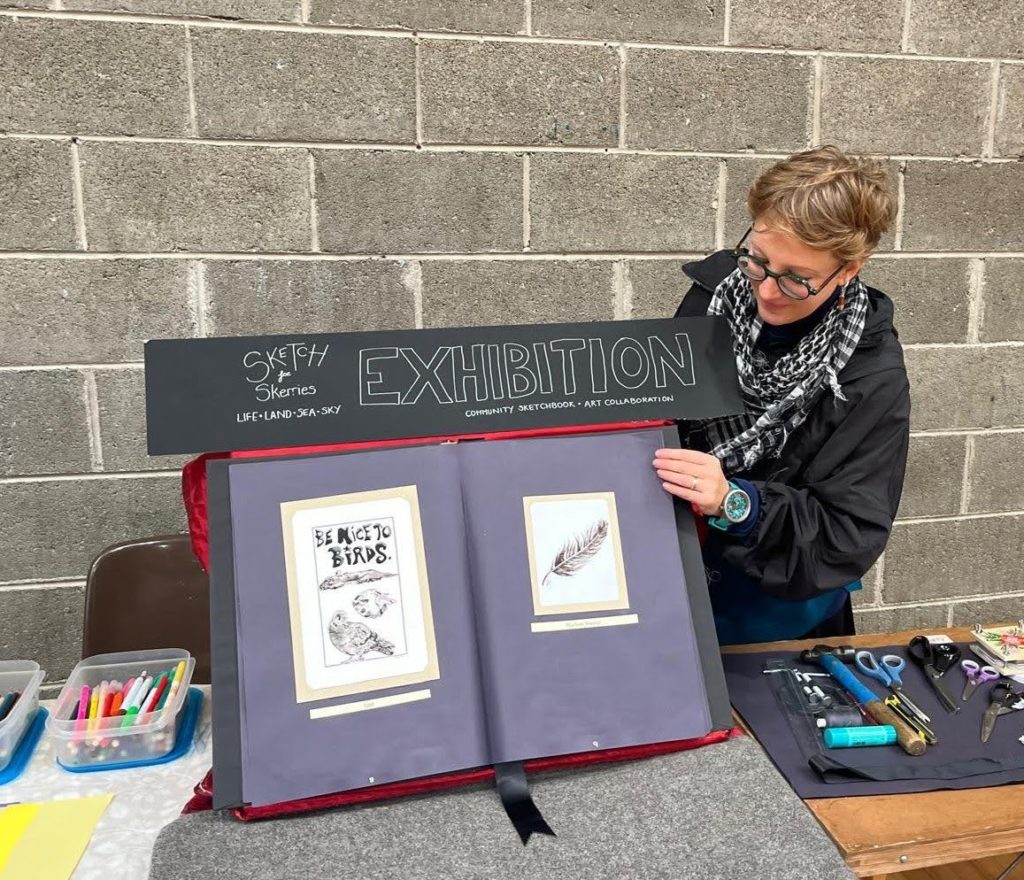
Members of the public and even some of the artists themselves arrived at Skerries Community centre on Sunday to turn the pages of the Sketch for Skerries “exhibition in a book”.
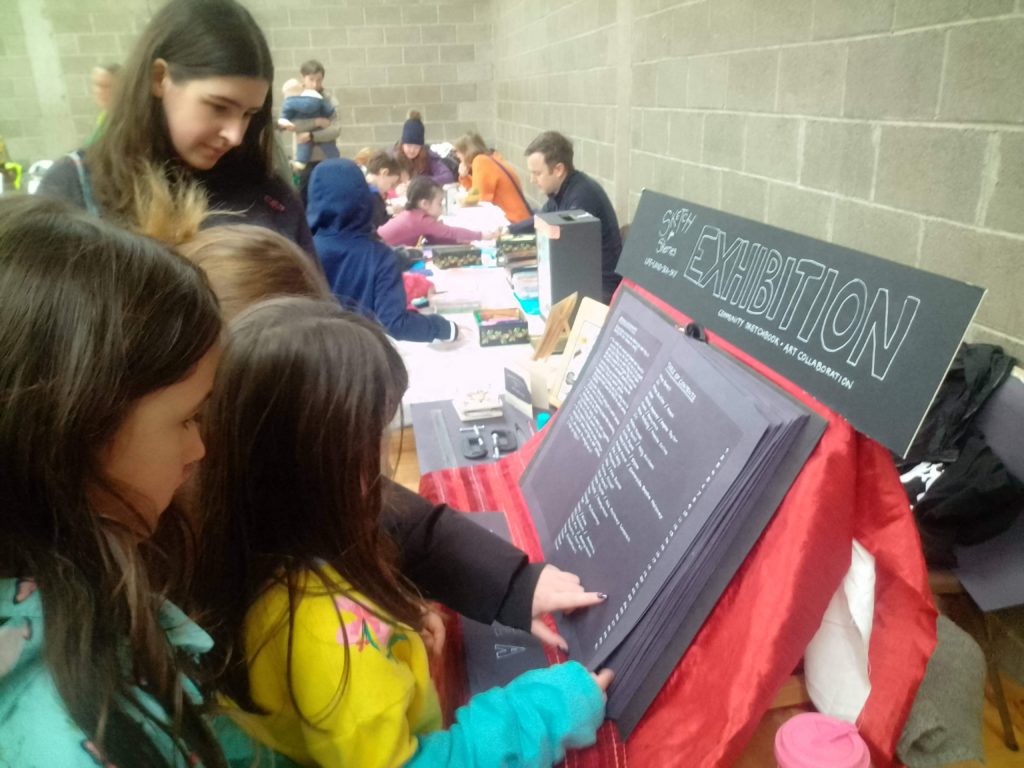
Visitors were able to choose between locating a specific artwork by scrolling through the table of contents and turning to a particular page, or browsing through every page of the book.
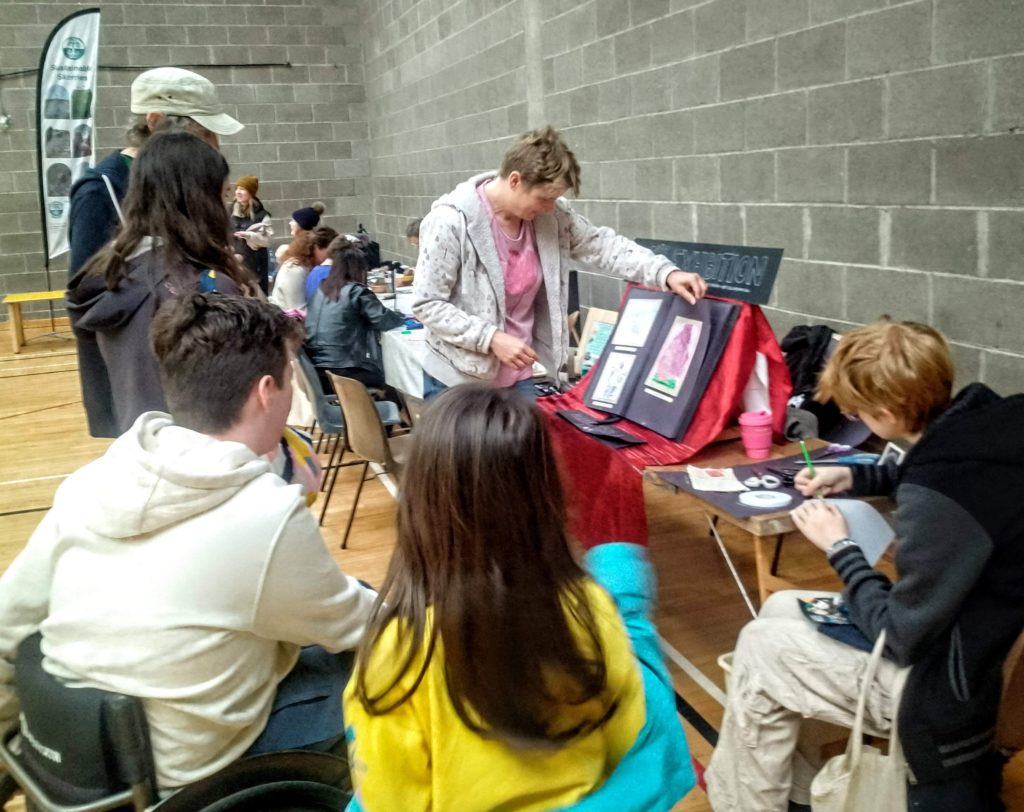
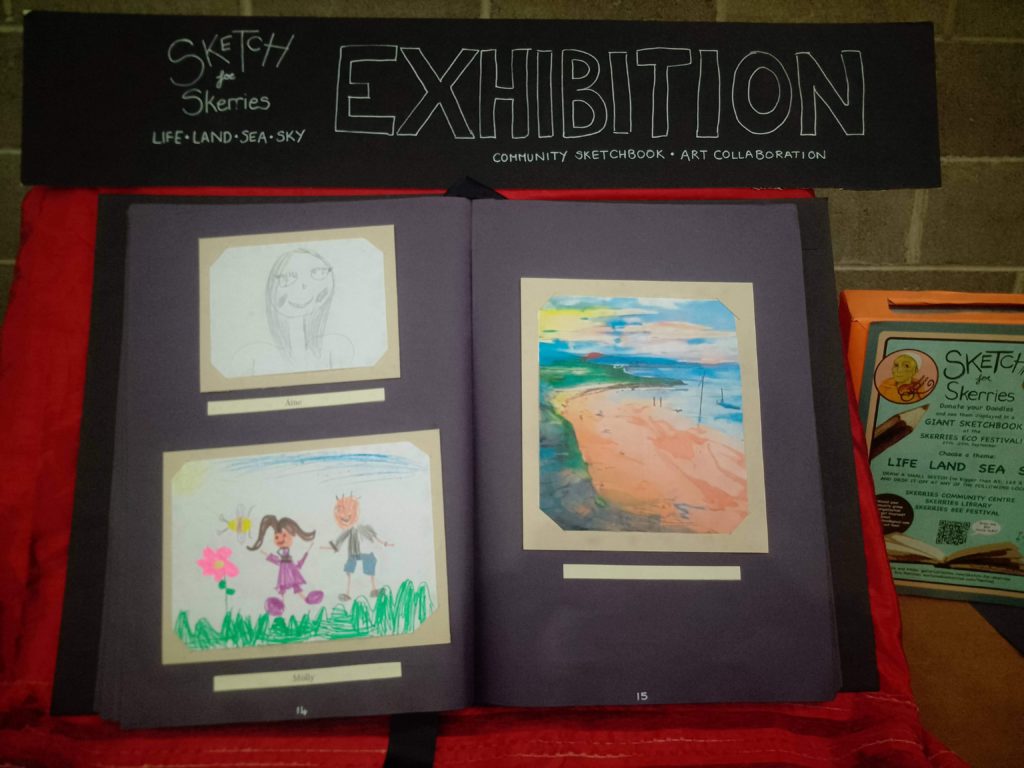
The hand-stitched pages of the book held up to multiple page-turns and visitors delighted in both the construction of the book itself and the wide range of beautiful sketches it contained. I enjoyed chatting to the public about the various steps involved in pulling together a collaborative community sketchbook as well as constructing the book itself.
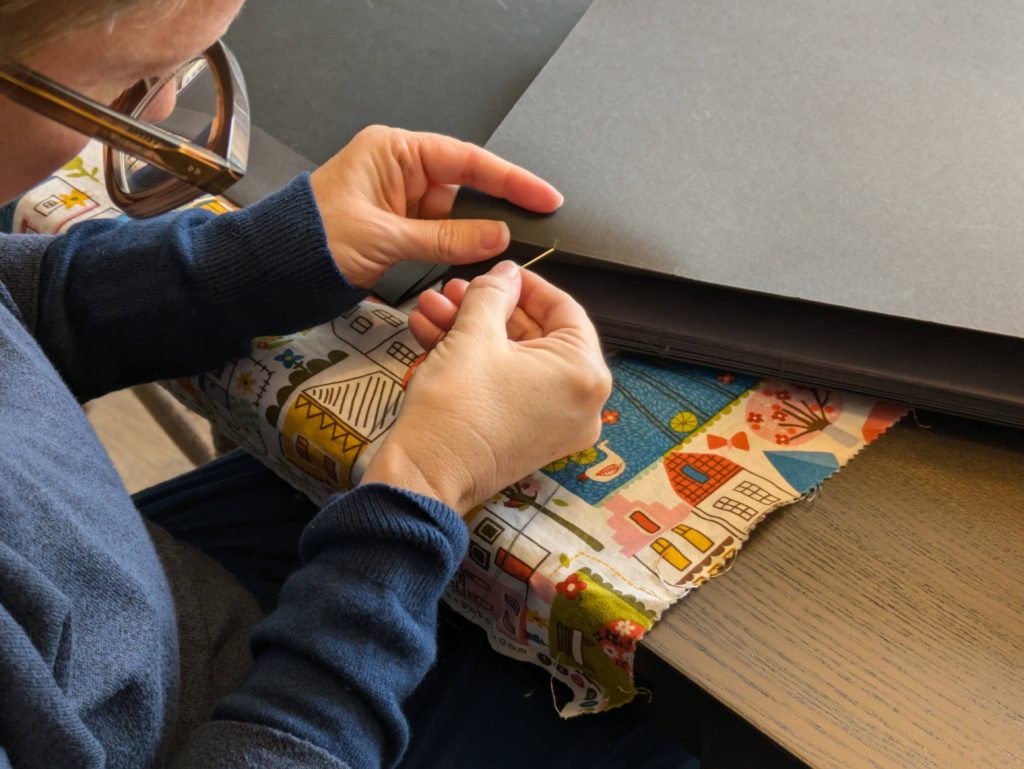
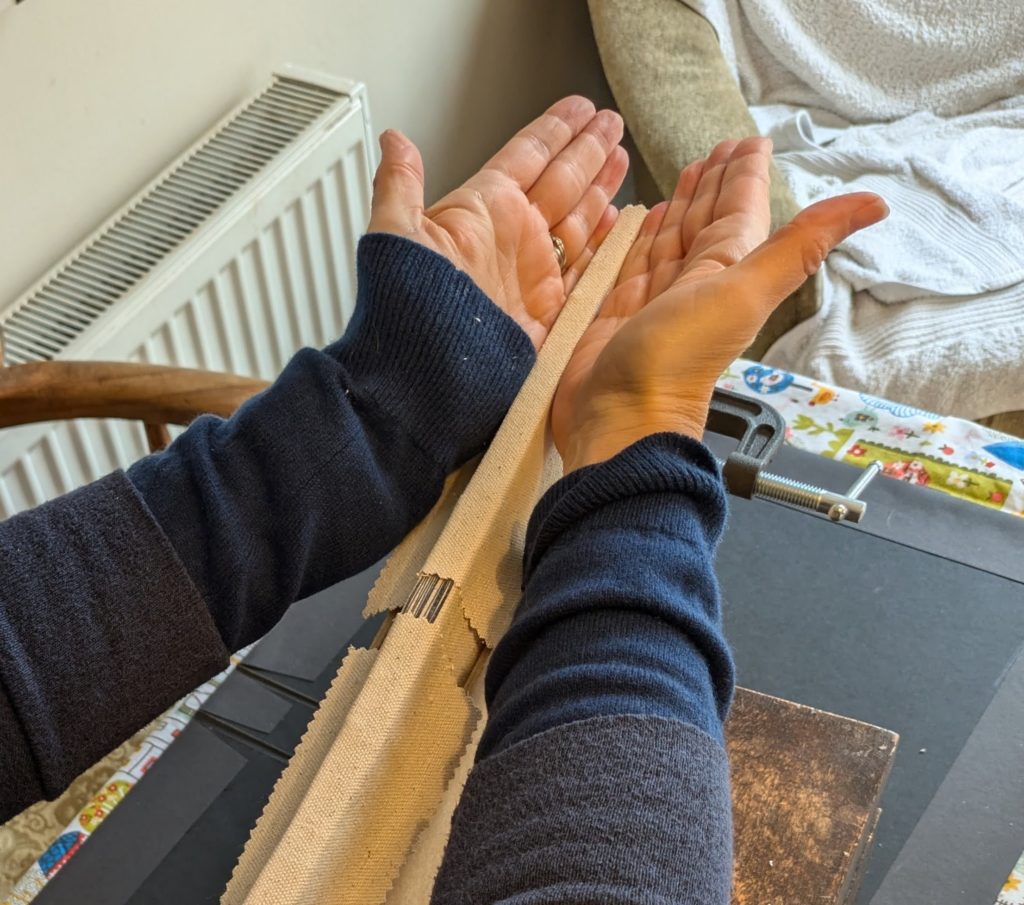
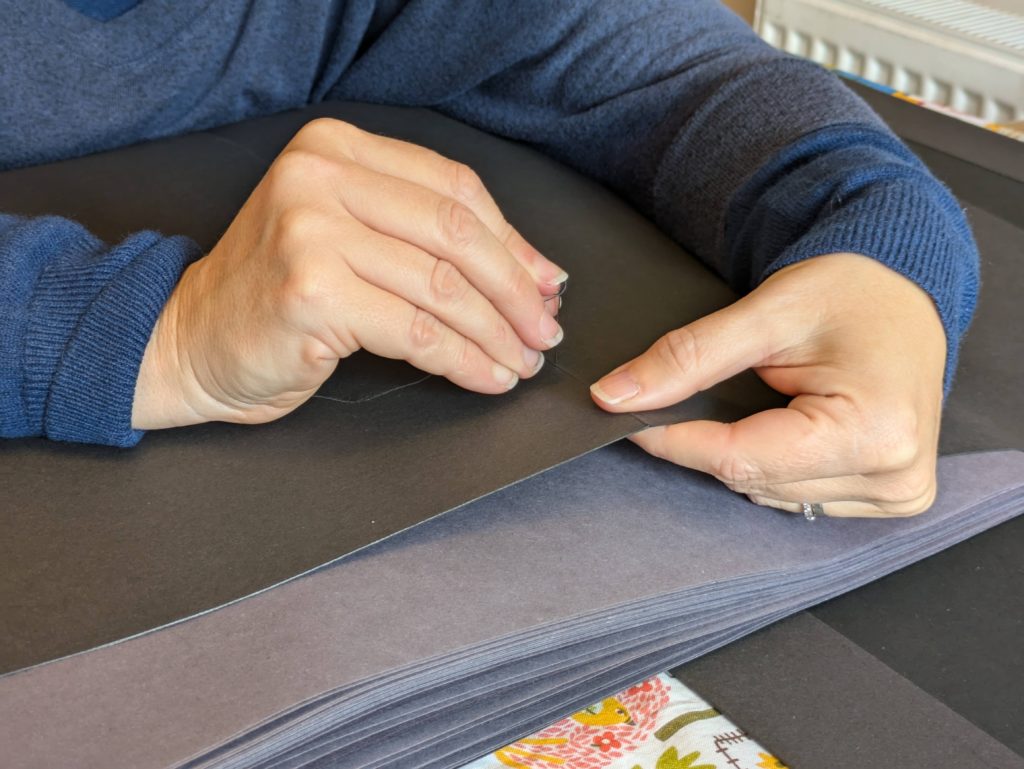
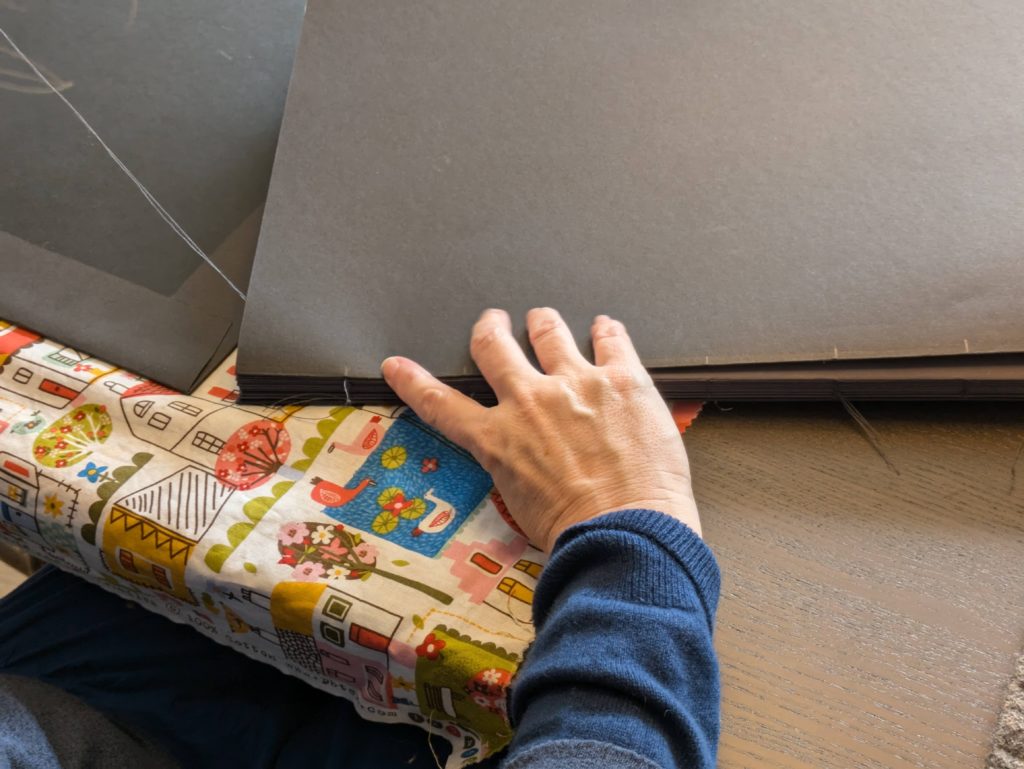
Meeting some of the artists and listening to them talk about their creative process in responding to the call-out and creating a sketch was one of the most enjoyable parts of the day for me.

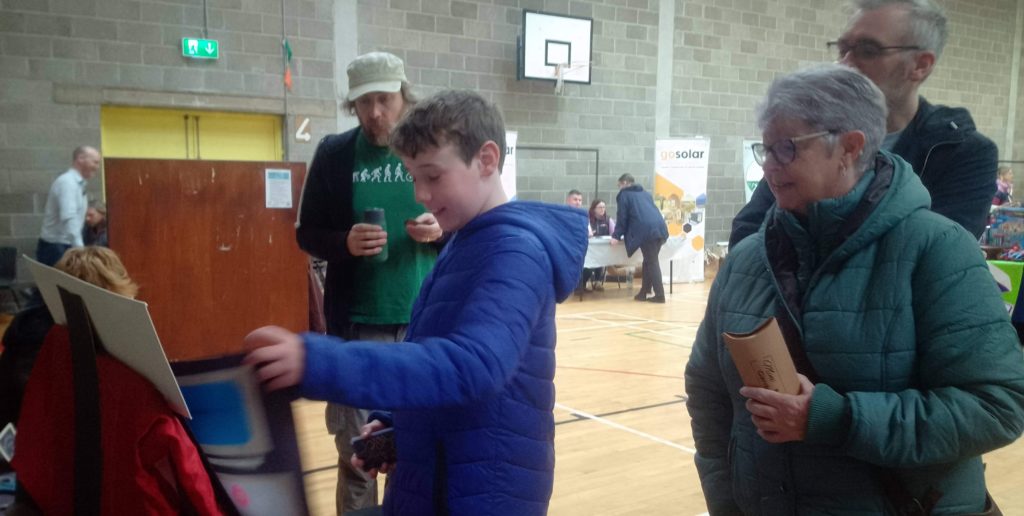
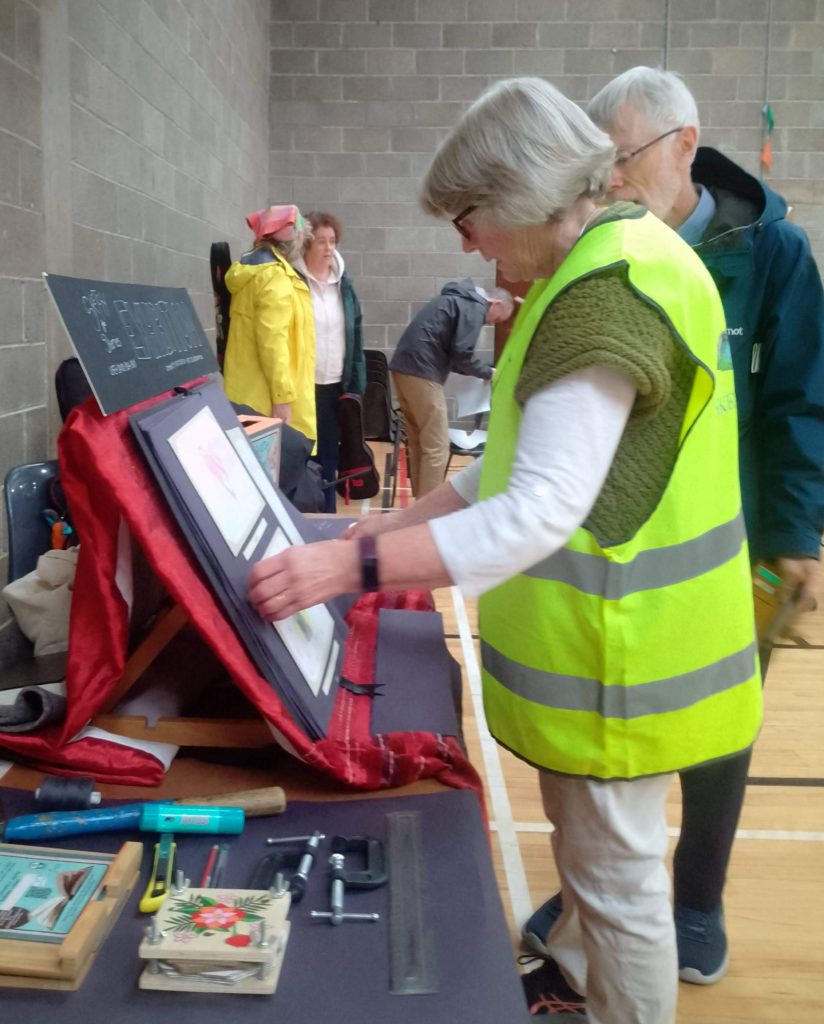
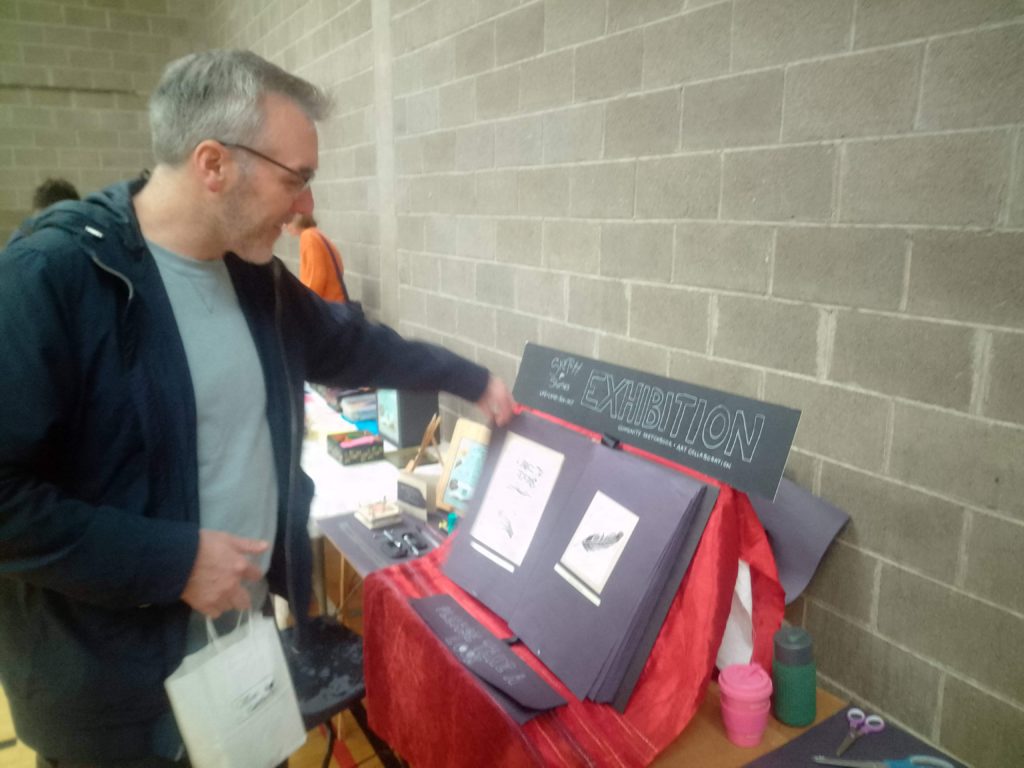
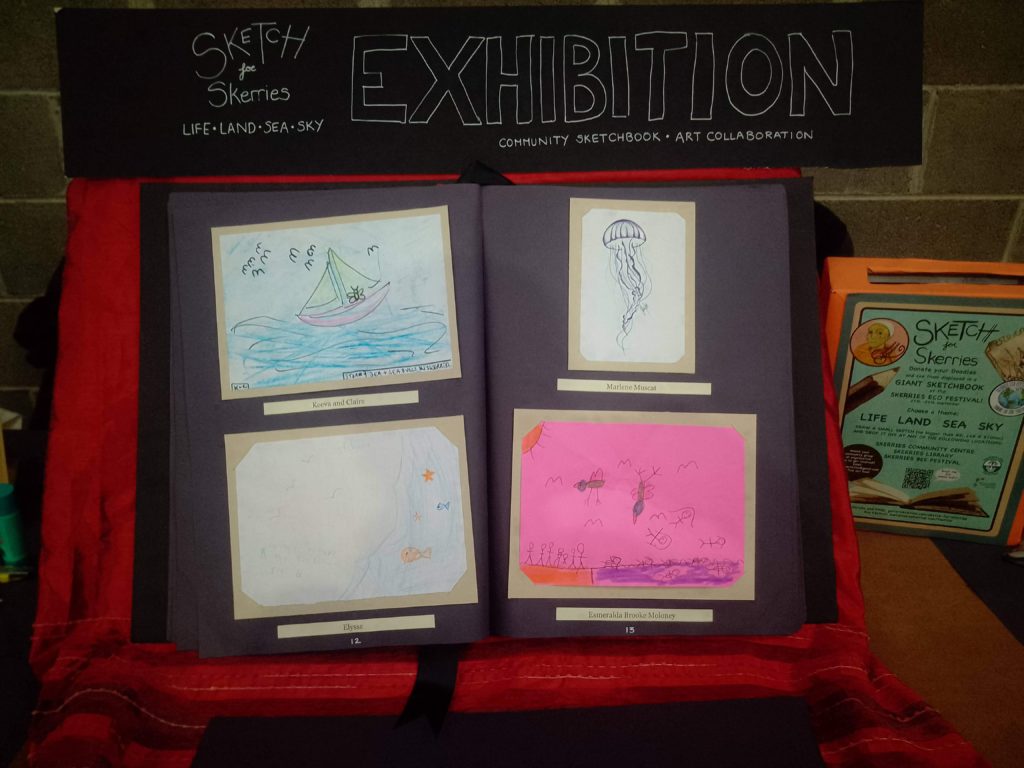
I hope to exhibit the collection again and possibly add to it by running the project again next summer. However, in the meantime here’s a sample of some of the excellent work that was on display.
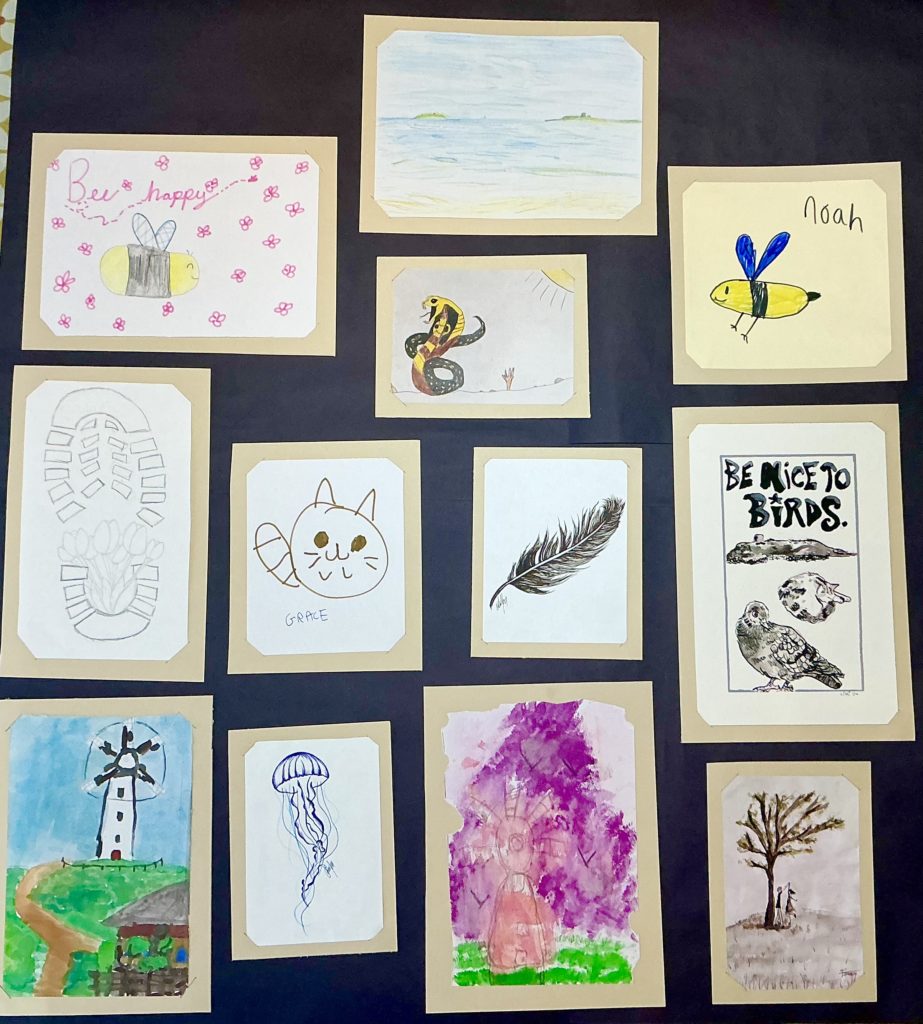
Thank you, Kristina Keegan of https://galleriakristina.com, for allowing us to repost your blogpost here.
Thank you for coming to our event – please leave some feedback so we know what works & can work on what doesn’t!
Go directly via this link or cut and paste:
https://docs.google.com/forms/d/e/1FAIpQLSfS-JIj8Bq7cj8zeUAlZPI0ixNSvqhFp6Ms8DqovpjW8xlaLQ/viewform
 Sustainable Skerries