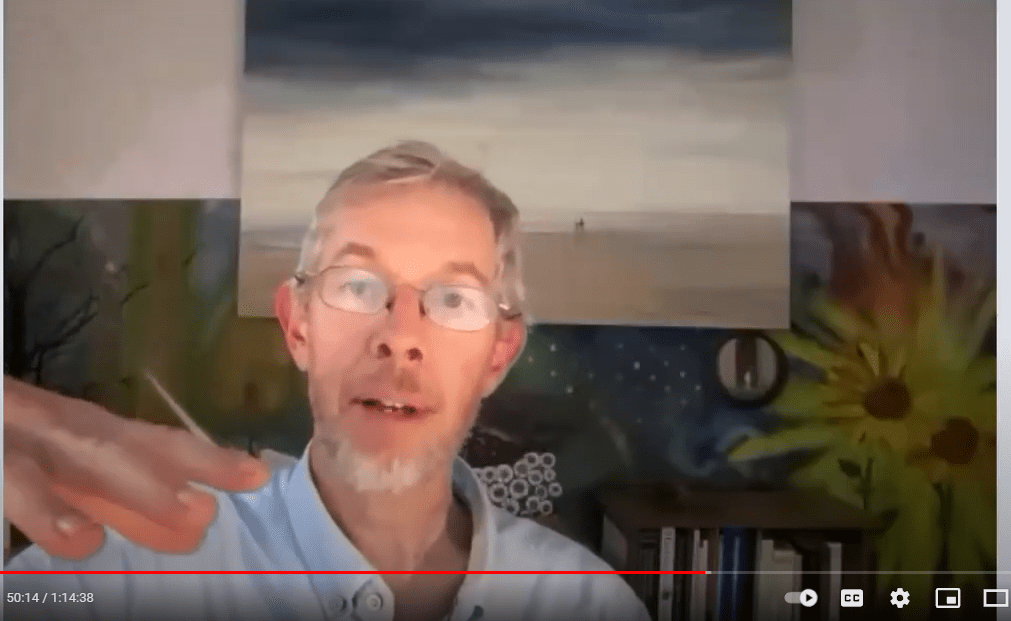
There was an amazing amount of interest in the online talk environmental water management expert Féidhlim Harty gave recently, entitled “Catch that raindrop!”
He gave us A LOT of information – so this recording (also on our YouTube channel) will help those who couldn’t make it on the day as well as those who would like to see details again!
We have also put links to all the resources Féidhlim mentioned on the page dedicated to our water projects: SustainableSkerries.com/water
Our thanks goes to the Local Authority Waters Programme aka LAWPRO – without you, this event would not have been possible!
For more on the Skerries Water Project, make sure to come to the Skerries Eco Festival Eco Night, Sat 28 September, when Féidhlim will be one of two speakers. (The other will be Philip Boucher-Hayes, RTÉ.) Féidhlim will be reporting on his work (also financed by LAWPRO) on nature-based solutions to run-off from hard surfaces like pavements and roads after heavy rain.
Volunteer project manager and Sustainable Skerries committee member Helen Scullion writes: “These can help reduce localised flooding, and at the same time remove pollution from this water before it gets to our stream or bathing waters. Since the solutions are nature-based, they also increase biodiversity. So it’s win-win-win!” Check our Festival page for more, or even better, subscribe to our newsletter (if you haven’t already) to make sure you’ll know when booking for that night opens.
And for now, sit back and enjoy the video!
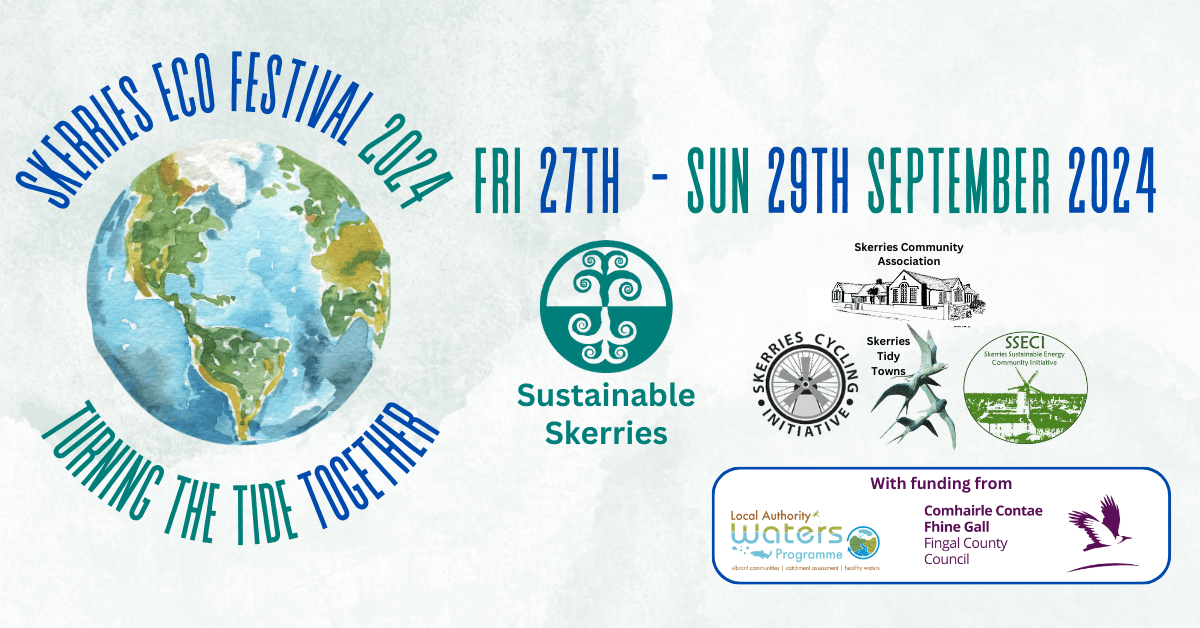
You may have been wondering what we have in store for you for this year’s Skerries Eco Festival. Here is a first taste!
The Three Days, Fri 27 / Sat 28 / Sun 29 September
We’ll have a super opening night with a talk on biodiversity in our very own green lung, the Townpark, by ecologist Niamh Burke, and one on sustainability and children’s toys (and other consumer products) by the wonderful toy sustainability expert Sharon Keilthy. Music by the Skerries Ukulele Strummers! Fri 27 September, Little Theatre, from 7.30 pm
After a colourful mix of walks & talks and workshops (including a bike skills one organised by Skerries Cycling Initiative) and hopefully lots of chats at our stall at the Skerries Mills Farmers’ Market, we’re ready for the Skerries Eco Night with environmental consultant Féidhlim Harty (yes, the same one who is delivering this Wednesday’s [31 July 7.30 pm] online talk on catching rain drops), who will share his ongoing work on environmentally-friendly water management in Skerries with us, and broadcaster and journalist Philip Boucher-Hayes! Sat 28 September, Skerries Harps, from 8 pm
And then the Skerries Eco Festival Eco Fair from 11 am to 4 pm on Sunday 29 September (see below), plus a children’s workshop with Niamh Sharkey and Owen Churcher, arts & crafts activities for all ages, talks and workshops – including a Green Schools event with the national award-winning Skerries Community College team, who will tell us about their work on how schools can be eco-friendly. Prepare to be amazed.
We will NOT end the festival on a sad note – thanks to professional “climate worrier” and comedian Colm O’Regan, who will perform in our final event on Sun 29 September, 5 pm, in the Little Theatre.
Booking for all these will open soon, so keep your eyes open for updates especially here and on our Instagram and Facebook pages!
About that Skerries Eco Festival Eco Fair…
The 2024 Skerries Eco Festival Sunday will see a bigger and better Skerries Eco Fair than ever before! We have the use of the large hall in the Skerries Community Centre and have already a number of very interesting stalls both from traders and crafters and from groups that will provide information and opportunities for learning in the eco sphere.
And now we’d like your help to attract even more! Who would YOU like to see?
Please share this link with any trader / crafter who might be interested: Trader/Crafter Link …and this link with any organisation which might be able to set up a good info stall (or send their contact to sustskerries@gmail.com and we’ll get in touch with them directly): Information Stall Registration Link.
Calling all artists and photographers!
Sketch for Skerries – Help create a Giant Sketchbook for display at the Skerries Eco Festival
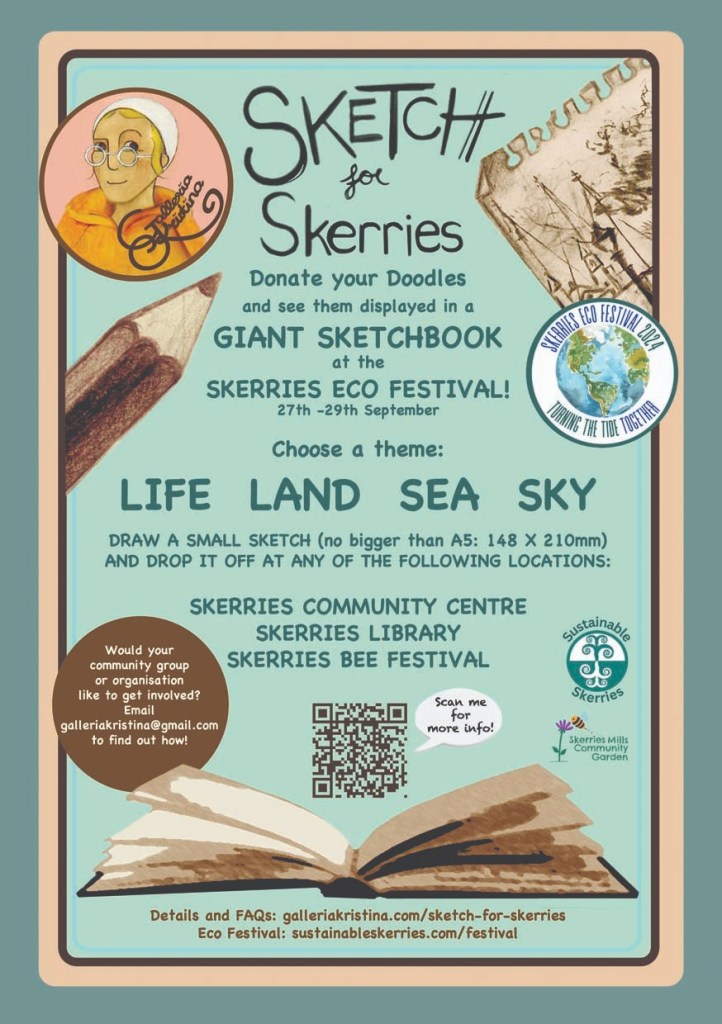
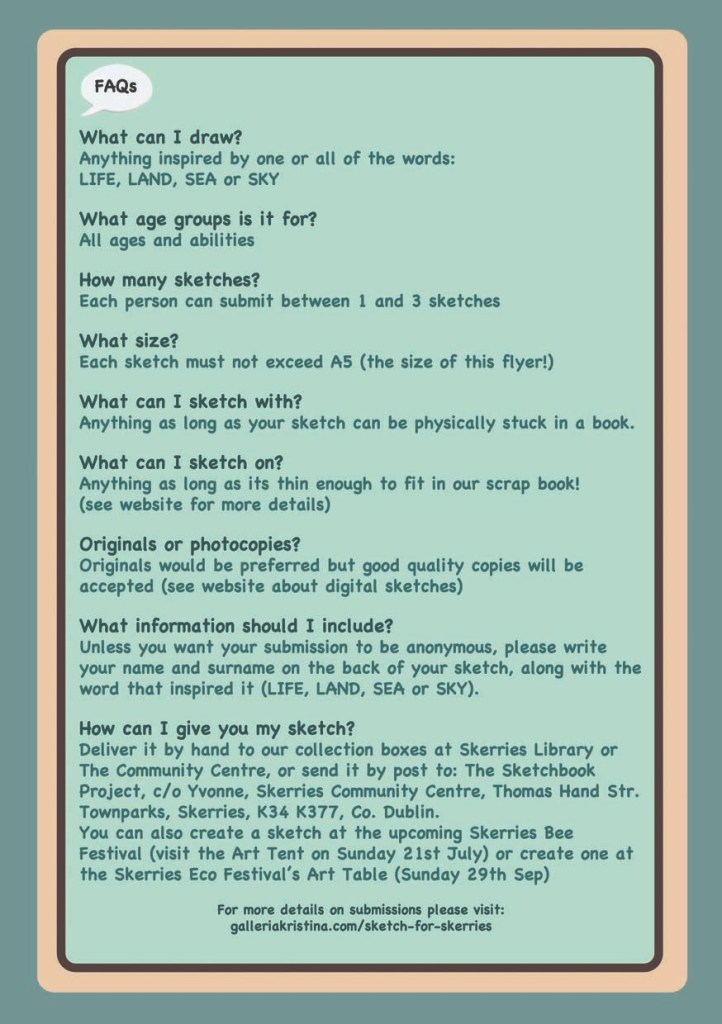
We are delighted that Kristina suggested this initiative in the run-up to the Skerries Eco Festival. You may have seen her information leaflets around town already. Here is an excerpt from her website – go to galleriakristina.com/sketch-for-skerries for full details. 💚 Thank you, Kristina!
What is it?
An initiative of Skerries-based artist Kristina Keegan of Galleria Kristina in collaboration with several local community groups and organisations and the people of Skerries and surrounding areas. … collaborating with: Sustainable Skerries, Skerries Library, Skerries Community Gardens, Skerries Community Centre and YOU!
It is a community art collaboration that seeks to collect sketches from the general public under an environmental theme, and will result in a portable exhibition of these sketches in the form of a handmade scrapbook/sketchbook.
What is its aim?
The aim of the Collaborative Sketchbook Project is to encourage COLLABORATION and AWARENESS OF OUR ENVIRONMENT through ACCESSIBLE ART (Sketching and doodling)
How will it work?
I would like to invite people of all ages and all abilities to join me in this project, and to create a sketch (or donate an already existing sketch) inspired by any ONE of the following headings:
LIFE
LAND
SEA
SKY
Whether it is a quick sketch or a mere doodle, I would like to encourage as many people as possible to create something visual under one of the themes mentioned above, and to donate it to be exhibited in a collaborative community sketchbook/scrapbook. Since the sketches (no bigger than A5) will be mounted in a book, the creations should ideally be made on something thin, such as paper.
For more, go to galleriakristina.com/sketch-for-skerries
Capture the Beauty of Our Community:
Enter Our Local Photo Competition!
Do you have an eye for beauty and a knack for capturing perfect moments? We are excited to announce the second Sustainable Skerries photo competition – and we want YOU to participate! Whether you are a seasoned photographer or an enthusiastic amateur, this competition is the perfect opportunity to showcase your talent.
We are looking for stunning images that highlight the essence of the central theme of this year’s Eco Festival: “Turning the tide together”. Our judge this year will be local resident (and Global Action Plan CEO) Hans Zomer, who is looking forward to your photos.
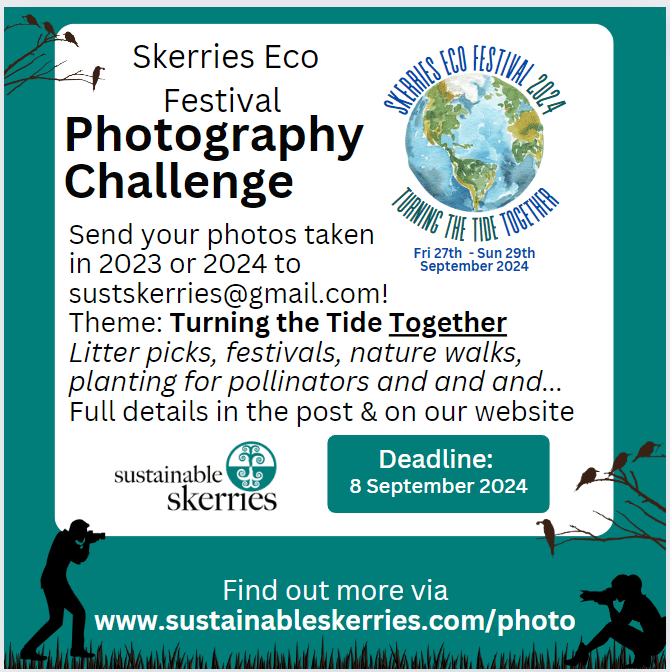
Rules: Send up to 3 photos to sustskerries@gmail.com by 8 September.
Photos must be taken in 2023 or 2024. More details on SustainableSkerries.com/photo
By the way, all Sustainable Skerries events would make super topics! (And we always let people know that photos are being taken, so that’s good to know.)
Join the team now!
Would you like to help make this the best Skerries Eco Festival yet?
Then send an email to sustskerries@gmail.com and let us know your suggestions & ideas, tell us that you’re available to help out as a volunteer (Helen will be in touch with you in due course about when and how) or even that you’d like to join the preparation team!
There are people in it from Sustainable Skerries, Skerries Tidy Towns, Skerries Sustainable Energy Community Initiative, Skerries Cycling Initiative and the Skerries Community Association. Join us! Join the fun – and help make a difference!

Committee member Miriam Sweeney, who is the woman behind our Skerries Beach Toy Library, writes:
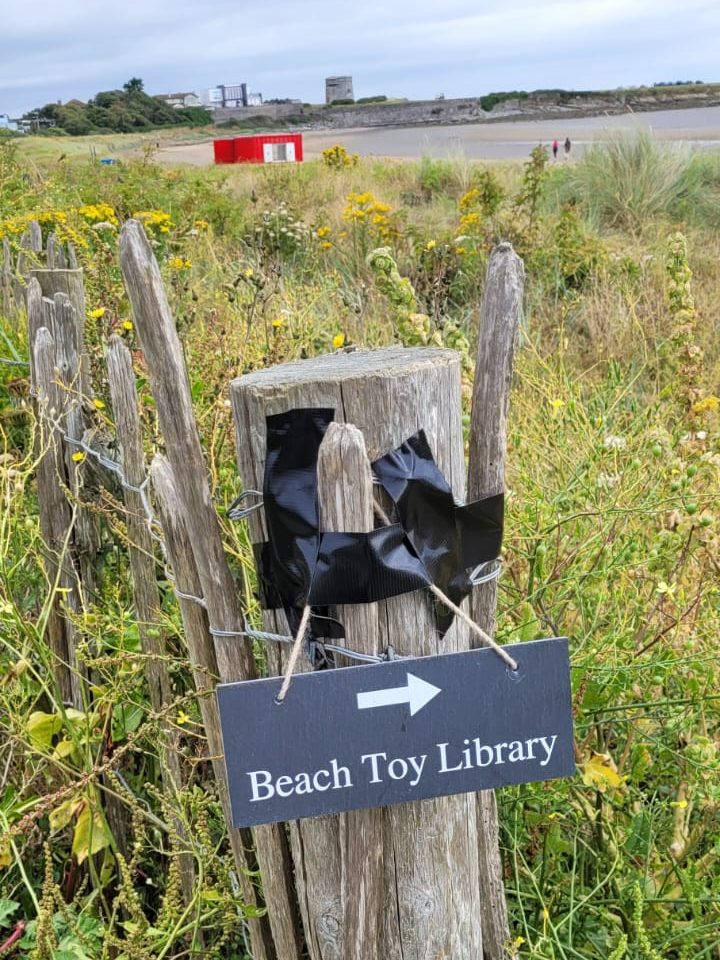
On the lovely sunny morning of Sunday 7th July 2024, the Skerries Beach Toy Library was launched. It is located on Skerries South Strand, on the beach, at the bottom of the path between the main public toilets and the lifeguard’s hut. A small sign on the fence at the footpath points the way.
Beach toy libraries put unwanted toys to good use and help reduce plastic waste. They also help parents save money and avoid the need to carry lots of toys on beach trips. Simply borrow the toys from the box, play with them, and return them when you are finished.
This initiative stemmed from a suggestion in the Chat4SustainableSkerries WhatsApp group; where a member spotted a beach toy box in Clogherhead, Co. Louth, and mentioned how great it would be to have something similar in Skerries.
The Sustainable Skerries Committee agreed and sprang into action. Councillor Karen Power got the go-ahead from Fingal County Council, the Men’s Shed kindly agreed to make a signboard and the Foróige group volunteered to design the sign.
Then we only needed a box and some toys to launch for the summer holidays! We got a great response, with many likes and positive comments on social media.
On the launch day, we were delighted to welcome local families, passers-by members of the Skerries Community Association, Skerries Tidy Towns, of our own committee, and people generously bringing toy donations. You may have seen some photographs of children happily playing with the toys on our social media, this even made the Skerries News the following week.
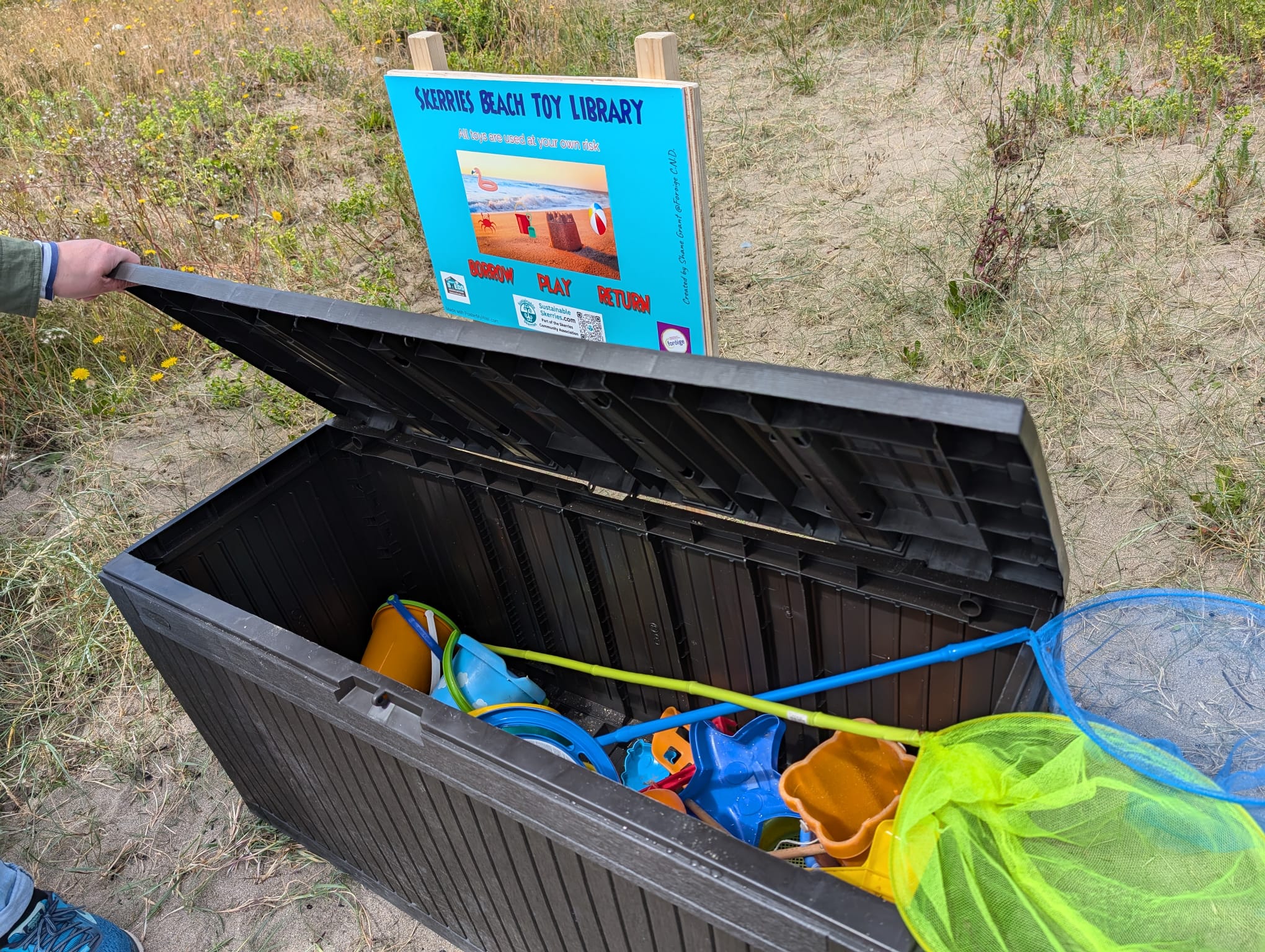
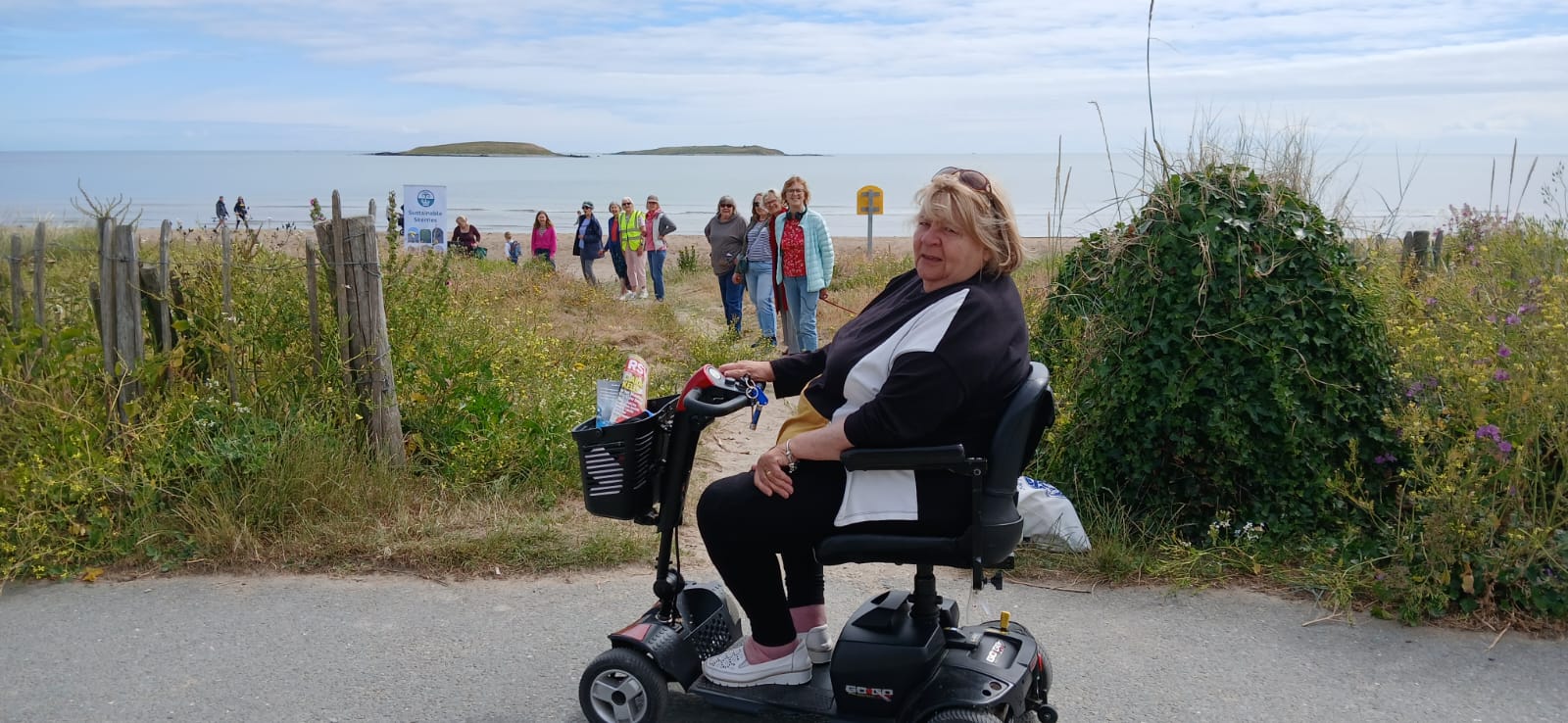
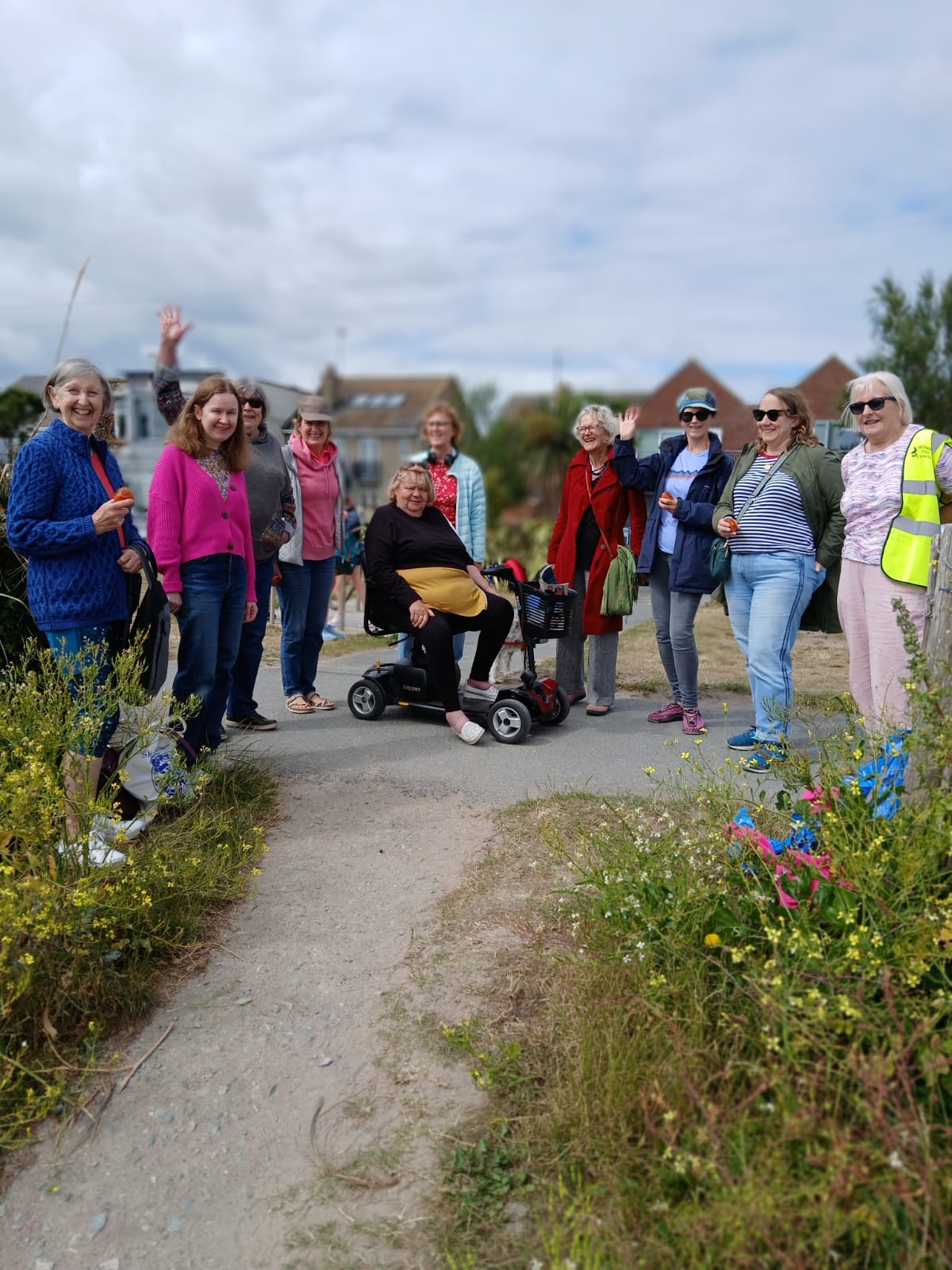
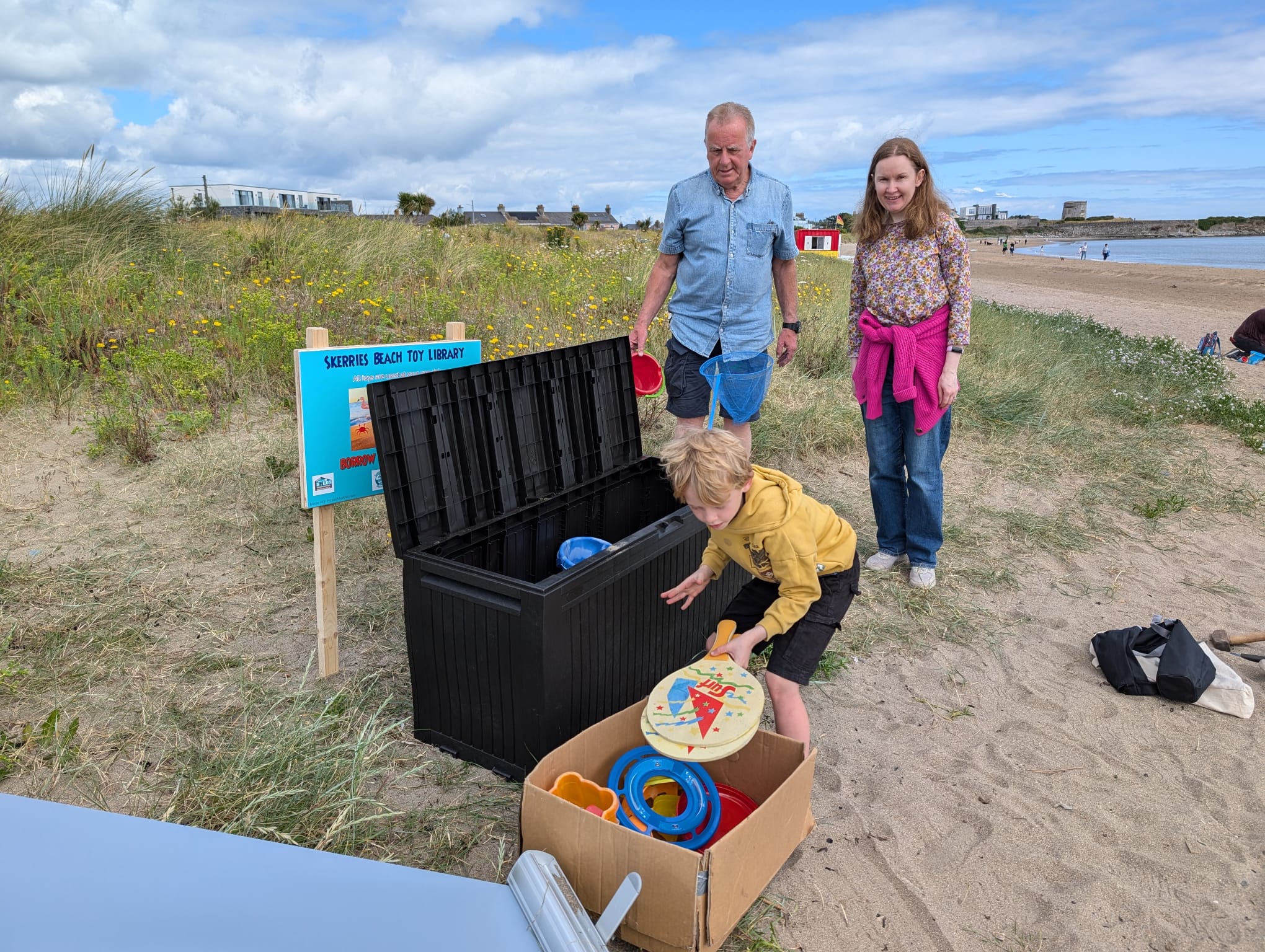
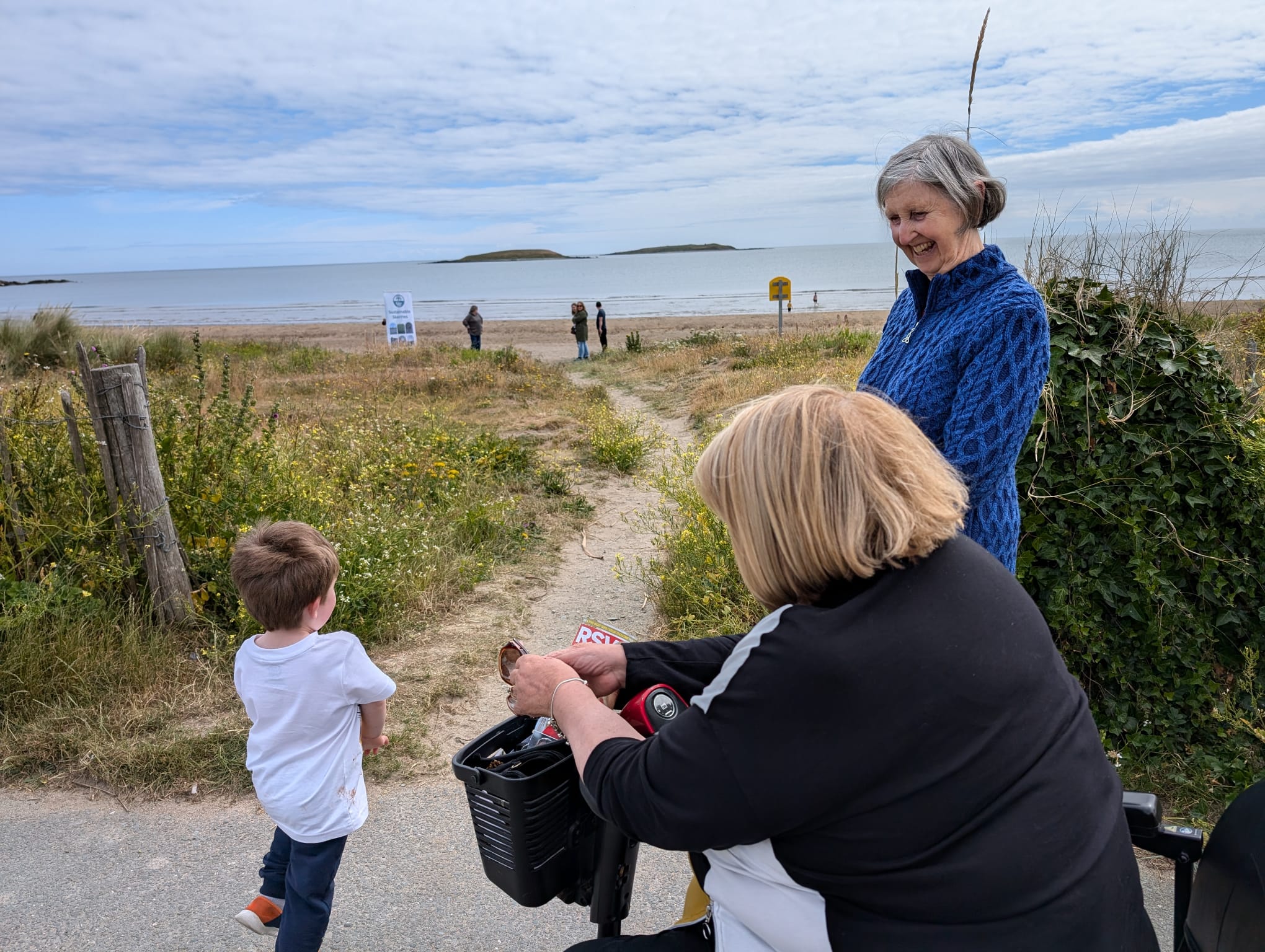
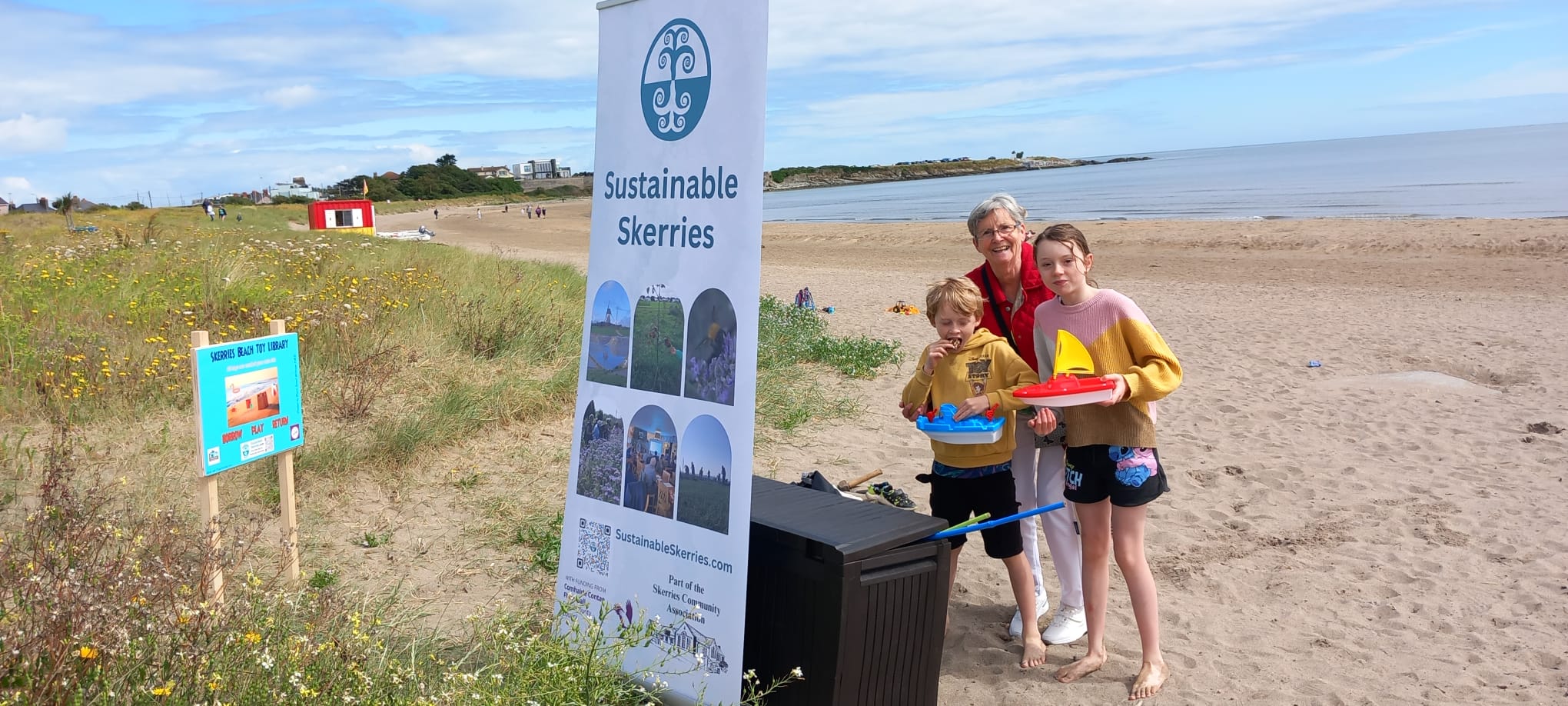
You may also recall that Tuesday 9th July was very stormy, more suited to kitesurfing than playing with beach toys. We are grateful to the thoughtful person who put stones on the lid of the toy box to stop it from blowing open.
Since then, the toy library has seen great use, not just by the many visitors to the beach but also by the sand beetles found sheltering underneath it one day when moved for maintenance! The box is already showing some wear and tear though, we’ve been patching it up but we intend to put something sturdier in place in the medium to longer term. If anyone could help with that, we would be delighted to hear from you.
We are also happy to accept further donations of good-quality beach toys. They can be dropped directly into the box. If it happens to be full, please let us know, and we’ll keep the toys in reserve to replace worn ones.
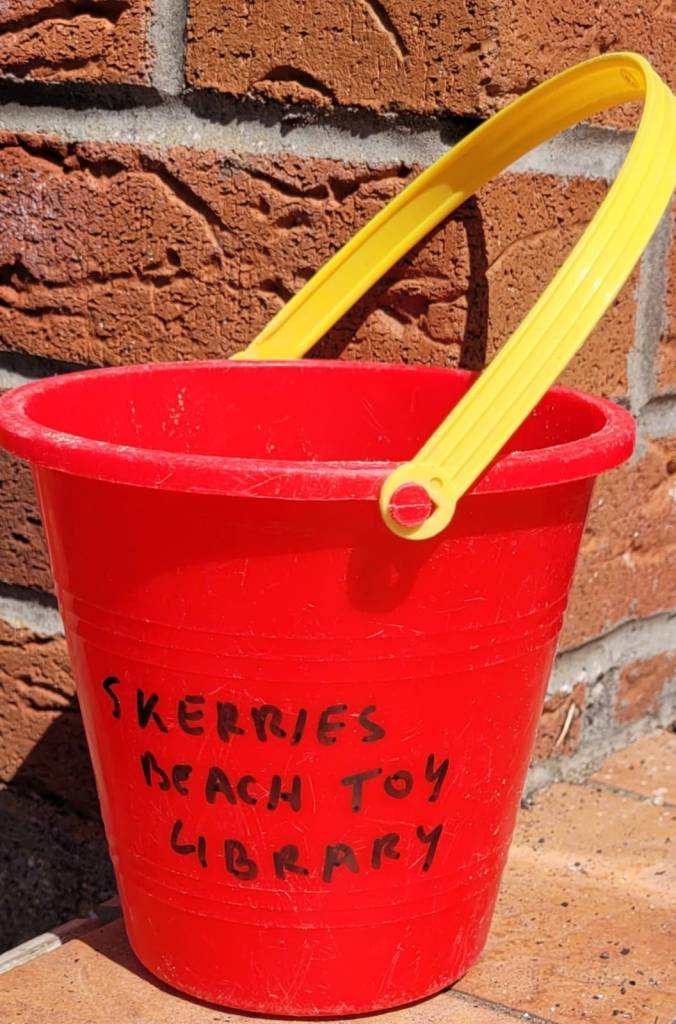
We check the box regularly and have started labelling the toys as belonging to the box.
So, if you find any toys on the beach with “beach toy box/library” written on them, please return them.
Thanks again to the many people who contributed to this great initiative, which we aim to run from April to September annually.
Would you like to join the Chat4SustainableSkerries WhatsApp group, where this initiative started? Send your name and phone number in an email to sustskerries@gmail.com and we’ll add you!
In our series of blog posts about the 2023 Skerries Eco Festival, Sustainable Skerries committee member Evelyn Cottell sums up talks number four to six of our nine wonderful Sunday Afternoon Talks . She writes:
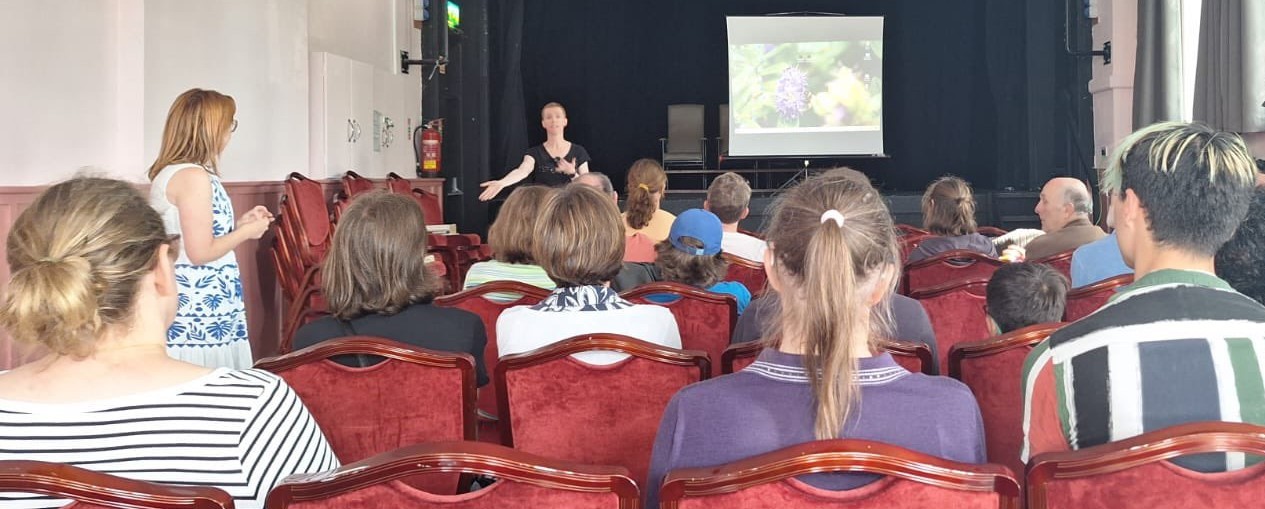
The ECO Talks session took place on Sunday 3rd September 2023 in The Little Theatre. In the nearby Old Schoolhouse, ECO Fair stalls were in full swing, facilitating a flow of people in and out of the two events, according to personal time and interest.
Events aimed to inform on a wide range of topics including conservation of energy; marine; river and birdlife; biodiversity, waste reduction & management, the work of Skerries Tidy Towns and on promotion of active travel.
The extent of local group initiatives and activities, which are establishing strong roots, were presented. This session also aimed to inspire residents to take further action to protect and enhance our town’s natural beauty and sustainability.
Nine speakers, including local and external experts, gave short presentations, followed by Q & A’s.
We covered the first three talks (on the Skerries Mini Orchards, on rewilding the Mill Stream and one with bike repair & cycling tips, in a previous blog post, Afternoon Talks 1-3 of the Skerries Eco Festival 2023.
Here is my summary of the next three talks:
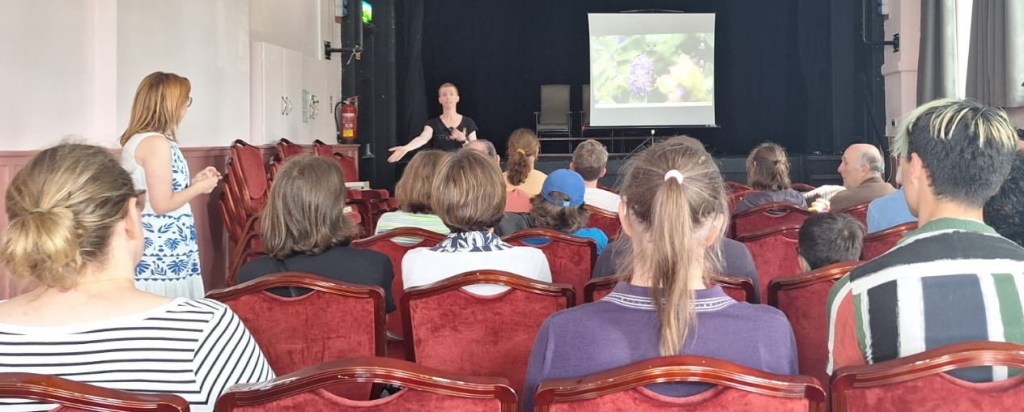
Why I quit my job and started the world’s first eco toy store- Sharon Keilthy (jiminy.ie)
Sharon Keilthy of jiminy.ie impressed the audience with her personal story on why she quit her job and started the world’s first eco toy store. While out shopping for an “Eco friendly, made in Europe” present for her daughter’s birthday, she failed to find what she went looking for, and so was inspired to set up her own business. She spoke passionately, conveying a depth of research and knowledge of the plastic toy industry. 90% of toys are made from virgin plastic (originating from petroleum), and transported a 22,000km from China. Surprisingly, 90% of the carbon footprint from toys come from the plastic and not the transport process. Sharon uses plastic free materials, made from sawdust and recycled cups in her toys, all made in Europe. Of the 4 big Global toy makers, Lego appear to be the only one who are serious about sustainability, with a pledge to be totally sustainable by 2023. It is not surprising with her vision and drive that Sharon is currently engaging with some of the top toy makers in the world including Mattel.
Update:
Since setting up her business in 2018 Sharon has learnt much about what makes a toy sustainable. She shares this knowledge and experience, engaging regularly with key toy business communities and committees, including:
- The Women in Toys Sustainability Learning Community (Co-founder)
- Sustainable Toys Action Consulting (Co-founder)
- The Toy Association (USA)- (Committee member)
- Otis College, LA, Toy design students (Guest lecturer)
- Sustainability monthly columnist for Spielwarenmesse’s Spirit of Play magazine and Sustainability member for their Toy Award judging panel 2024.
In January 2024 Sharon gave a presentation at the world’s largest toy trade fair- Spielwarenmesse, in Nurnberg, Germany- “Sustainability is becoming mainstream in the toy industry-are you ready?” Here she gave her view on 8 main business cases for sustainability: 1. Moral – sustainability is the right thing to do; 2. Profit – if sustainability maximises profitability; 3. Competition – to retain market share there is the need to match or beat competitors’ sustainability levels; 4. Funding – banks or investors need to see sustainability to lend businesses money; 5. Risk – sustainability avoids/reduces risks to business continuity; 6. Talent – people want to work for sustainable businesses; 7. Brand/reputation – society will judge on our sustainability; 8. Regulation – regulators like the EU will mandate or incentivise sustainability.
Indeed the 8 business cases could be applied to businesses beyond the toy industry. There are 2 EU regulations upcoming that should have positive impacts on sustainability:
- Corporate Sustainability Reporting Directive (CSRD) – like an annual financial report but for sustainability.
- Ecodesign for Sustainable Products Regulation (ESPR) -expected to be effective 2026.
Ecodesign for Sustainable Products Regulation for toys at a glance:
- Requirements / incentives to improve products’ sustainability including carbon footprint, use of post-consumer recycled materials, durability, reparability (e.g., availability of spare parts and repair services), and recyclability;
- Better labelling / information to help shoppers and business buyers choose more sustainable products and get them repaired (including a Digital Product Passport and the EU Ecolabel);
- Potentially mandating ‘green’ public procurement;
- Making it illegal to destroy unsold goods
It is wonderful & inspirational to see a local Irishwoman make such a positive impact on the global toy industry.
A Cleaner, Greener Town- Maeve McGann and Emer McLoughlin (Skerries Tidy Towns)
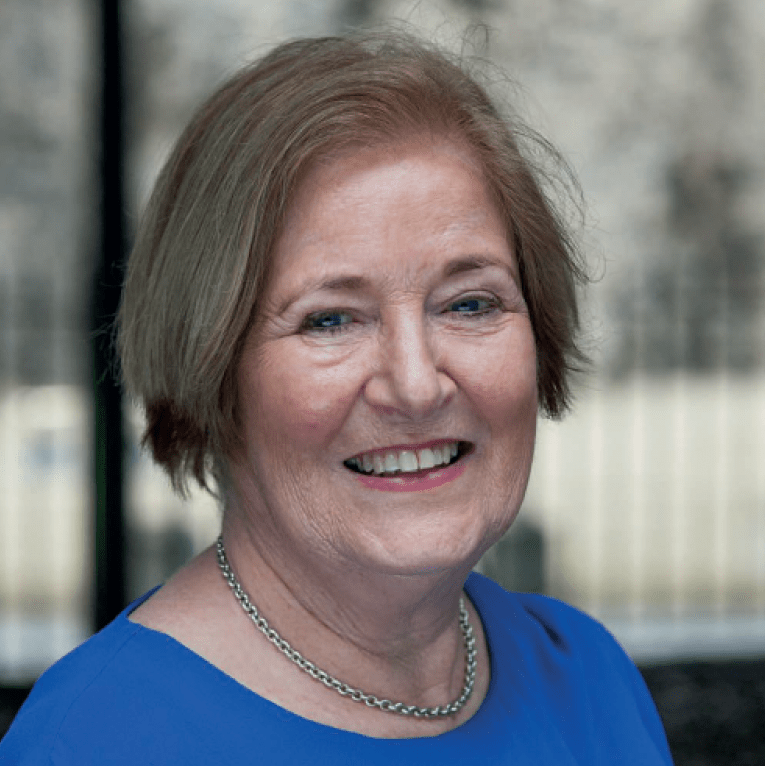
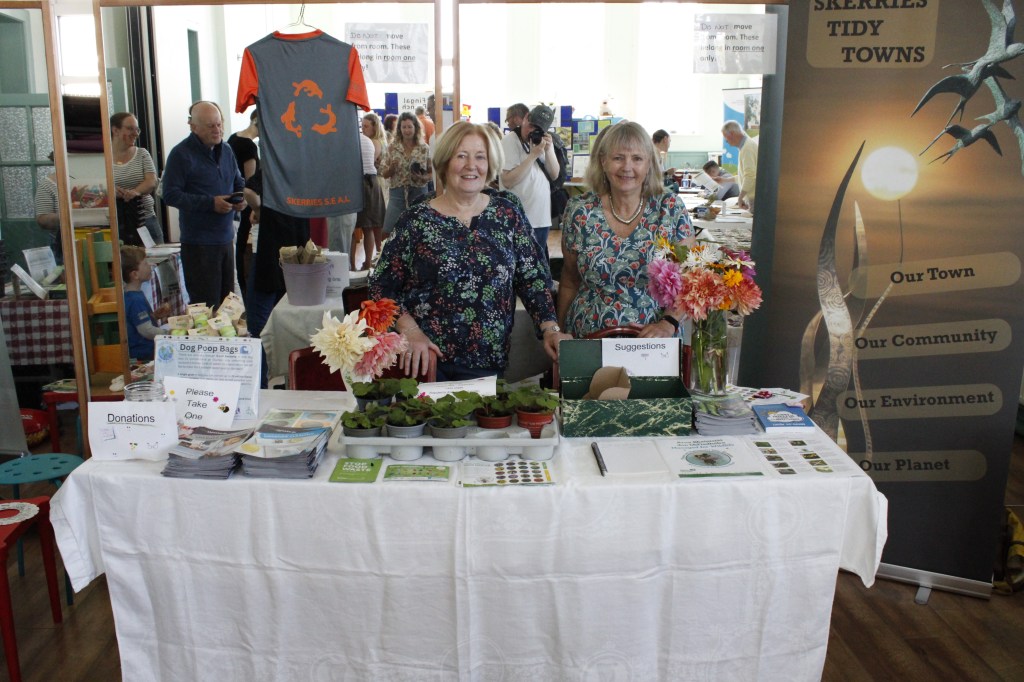
Skerries Tidy Towns (STT) committee representatives took the floor, to educate and encourage on “A Cleaner, Greener Town”. Like Sustainable Skerries, Skerries Tidy Towns is one of the many committees of the Skerries Community Association.
With the changing nature of the national Tidy Towns competition, STT lobbied to have a name change. A subtext was added eventually– Tidy Towns, caring for our environment. The aims of TT’s competition is “to improve the local environment, making it a more attractive, cleaner and sustainable place to live”.
Tidiness and Litter control of a town’s environment has been synonymous with the competition, (still accounting for the section with the largest number of marks assigned-90). Maeve rightly pointed out though, that when we reflect fully on litter (including dog poo on our beaches-please BAG IT. BIN IT) and specifically on the detrimental impact that plastics, (in all its forms-micro and macro) has on sea life, plastic litter control should be right up there in terms of protecting our marine environment. Examples of the great work STT do include the “Adopt a Patch” and SEAL (Skerries-Everyone-Against-Litter) schemes, with weekly litter picks. Removal of litter and dumping from the Mill stream (or Brook), has been managed, since the beginning of COVID, by its nearby resident, Dara Mac Domhnaill and his team of “Stream Huggers”, working as a subgroup of STT.
Nature & Biodiversity and Sustainability are now key environmental sections of the TT competition (55 marks each). Biodiversity can be defined as the variety of all living things and their interactions. It supports all life on earth. Without biodiversity, our entire support systems for human and animal life would collapse. What can we do to protect biodiversity?….Avoid using chemical sprays; leave space in our gardens for wildlife; allow gaps in walls and fences for hedgehogs to pass through; keep some undisturbed leaves in Springtime, so that insects can shelter until the weather warms up. What has STT done in terms of biodiversity? They have worked with Fingal County Council over several years to reduce the cutting of grass in specific areas of the town, while retaining the cutting regimes for its playing fields. STT support “NO MOW MAY”, to allow the dandelions (providing a unique and limited source of pollen in early summer) to bloom in gardens and grass verges. Additional Biodiversity activities include the establishment of native pollinator friendly wildflower corridors and corners in the town, and wildflower seed and native tree planting around the stream.
Sustainability can be defined as any theme or project where a negative impact of the environment can be reduced (e.g. food and clothes waste, water conservation through use of water butts). STT measures to address Sustainability include the use of compostable cups by all coffee shops in the town. But there is acknowledgement that we have some way to go to rid the town of disposable cups. Meanwhile, the “Keep Cup” campaign is encouraged, to bring your own cup to the coffee shop, as is re-usable water bottle use, to reduce plastic waste. Many cafes and bars have signed up to refill water bottles for free. In the past, STT supplied water butts to anyone who adopted a flower pot or window box. Indeed, you can install a water butt in your own garden to conserve water during heavy rains and drought. The Tidy towns group supports Voice Irelands initiatives of 2nd hand shops. They report that clothes production releases 1.2 billion tones on greenhouse gas emissions every year. So change the way you think about shopping- don’t think you have to buy the latest fashion and don’t get distracted- shop for what you only need for your wardrobe. The same applies for food waste…buy only what you need, eat what you buy, keep food fresh and avoid the bin. This advice is not only sustainable for the environment but also for your purse or pocket.
Other key TT sections include Engagement with the community (schools, businesses, and 3rd parties), Streetscape, Public Parks and Buildings. Examples of STT’s heritage preservation are the beautiful limestone kerbs and cobblestones; conservation of the quality of many old shopfronts in the town; preservation of heritage buildings such as the thatched cottages of Skerries. Fingal County Council and Abarta heritage have collaborated on an audio guide for Skerries- www.abartaheritage.ie. Under the Greenspaces & Landscaping section, STT have planting native trees, wildflowers and plants. When it comes to community sustainability, use recycling facilities, and don’t leave empty boxes or bags behind. Never litter. Clean the kerb outside your house or premises. Use 2nd hand shops when you can. We all have a personal responsibility to our town and planet.
New Skerries Tidy Town volunteers are welcome at Quay Street shed, where they tend to meet at 2 pm on a Monday. Email maevemcgann@gmail.com or email to tidytowns@skerriesca.com or follow on their Facebook page.
The presentation displays best on a computer. You can also open it at this link: Link to presentation
Protecting our Marine Environment- Michael Walsh (Coastwatch Ireland, Fingal Branch)

Michael Walsh, representing another key environmental conservation organisation – Coastwatch Ireland (Fingal branch), took the floor to talk on “Protecting our Marine Environment”. This was a timely presentation, as Coastwatch Irelands annual citizen science shore survey is carried out from 15th September to 15th October. Michael guided us through the survey form, how to find and book a survey area (a 500 meter stretch of coastline), how to access trainings and reference materials (online and in person) and how to execute and submit survey findings. The survey covers several fields, including type of hinterland and inflows to sea (with nitrate and nitrite testing). A large section on biodiversity, including plant and intertidal seaweed types, invasive alien species, intertidal fish and invertebrates (e.g. sea anemones, clams, barnacles, limpets, crabs, shrimps), marine bivalves (e.g. cockles, muscles, oysters, razor shells) litter, waste and pollution. The public launch of findings of the autumn survey 2023 took place online on 4th December Survey Results | Coastwatch Europe. All accessible survey sites along Skerries coastline were surveyed this year. (Estimated to be between 30-40, as it’s difficult to determine where Skerries starts and ends).
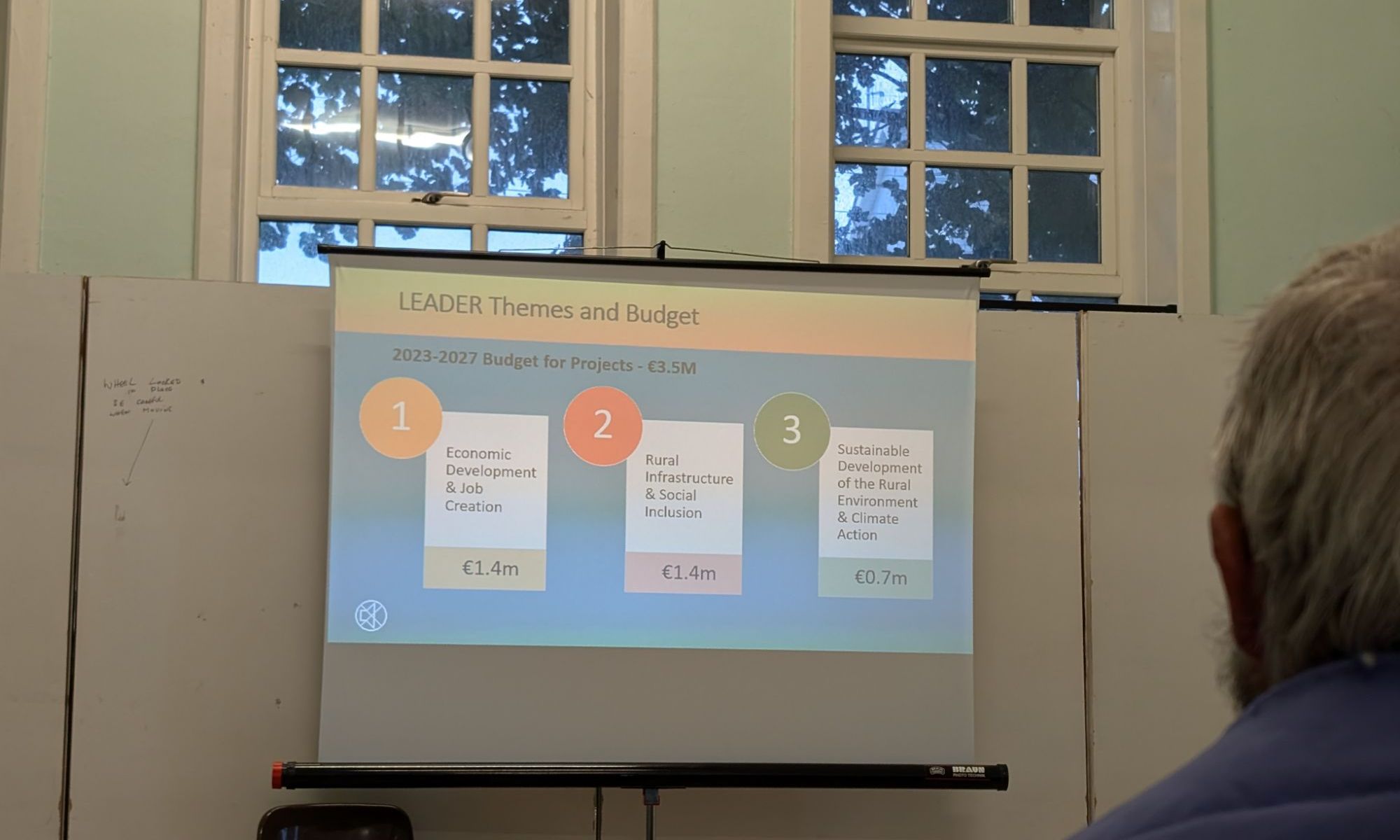
It was great to see / meet so many different groups and individuals at the recent LEADER Funding Information Session, and inspiring to hear about the range of initiatives in Skerries.
Interestingly, there were quite a few treasurers of various organisations, but also board and committee members. The groups included the Skerries Scouts, Skerries Active Retirement, Skerries Allotments, Skerries Mills Community Garden, the Holmpatrick Church of Ireland parish, Man-O-War GAA, as well as the organising Skerries Community Association with many of its committees, such as Skerries Tidy Towns, Skerries Age Friendly, Sustainable Skerries, Skerries Cycling Initiative and the Skerries Sustainable Energy Community Initiative.

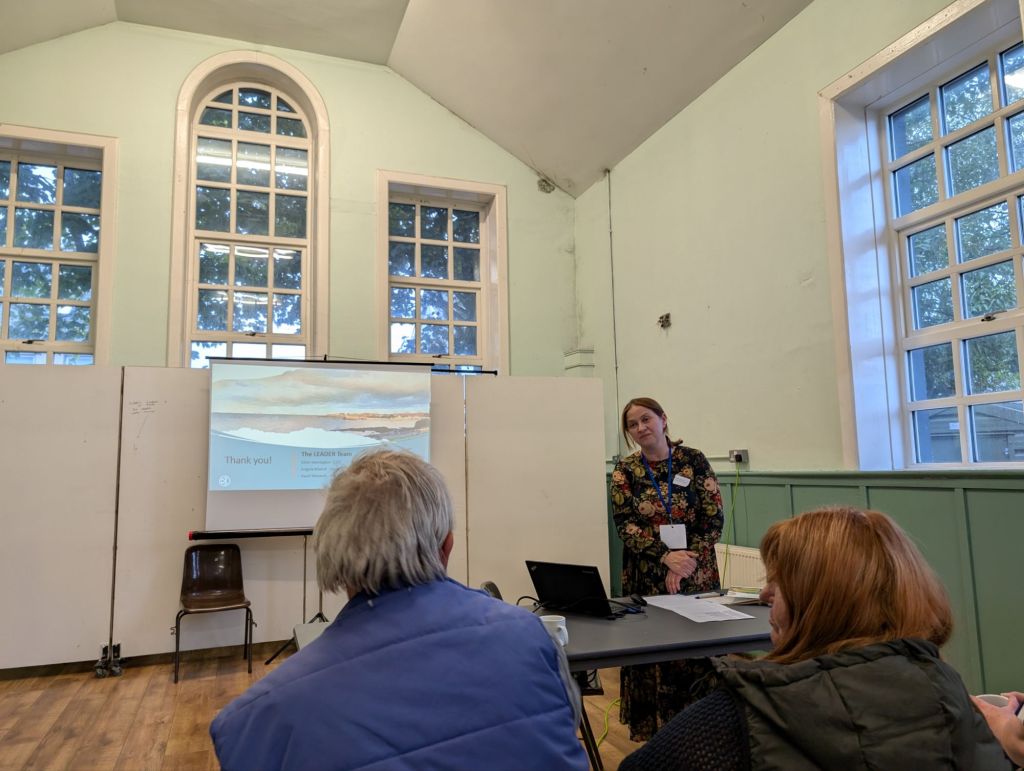
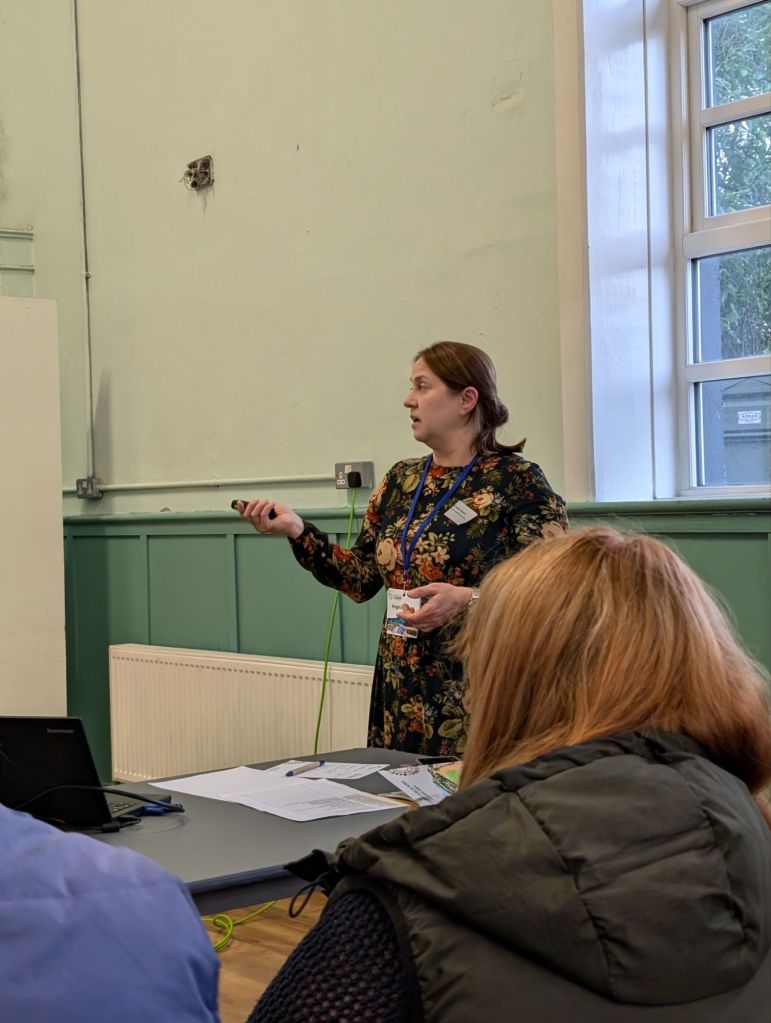

This introduction into how to apply for money from LEADER was suggested by us here at Sustainable Skerries, and we are grateful to the Skerries Community Association for taking up the idea and putting on this event – and of course to Angela Manoli of the Fingal LEADER partnership.

The Skerries Community Association identified that an important way they can help its committees, and other local groups, is to make it easier to find sources of funding. Two of its committees, Skerries Autism Friendly Town & Sustainable Skerries, have successfully gained LEADER funding in recent years, so this workshop was a first initiative.
It can be very time consuming to obtain funding, which is a challenge for voluntary groups. The SCA says they hope to continue to help identify possible funding sources, and encourage collaboration and sharing of knowledge around it.
On the night, there were many specific questions – some of which we’ll mention below. Angela Manoli kindly shared her slide sets with us. If you have any questions, please do contact her via their online contact form.
Here are some things we learned during the evening:
- Angela & her colleagues at LEADER are very happy to discuss individual project ideas and how they might be adjusted (if necessary) so that they fit within LEADER’s funding criteria.
- It’s definitely worth getting in touch for a quick chat – before you spend a lot of time on your idea. In our experience, the first idea can morph quite a bit with their experienced help (for the better, of course).
- There are different levels of financial aid available, depending on whether you’re carrying out a feasibility study, running some training, or renovating a building, to give some examples.
- One important consideration is whether the project that you might be looking for funding for could displace someone who is already doing that.
- Right now, it looks as though there is less funding than there was in the last 3-year round, but that may change yet. Don’t let it put you off!
- Capacity-building for your group / team ranks highly.
- Overall, the focus seems to always be on what is most beneficial for the community. And sustainability comes into every single one of them!
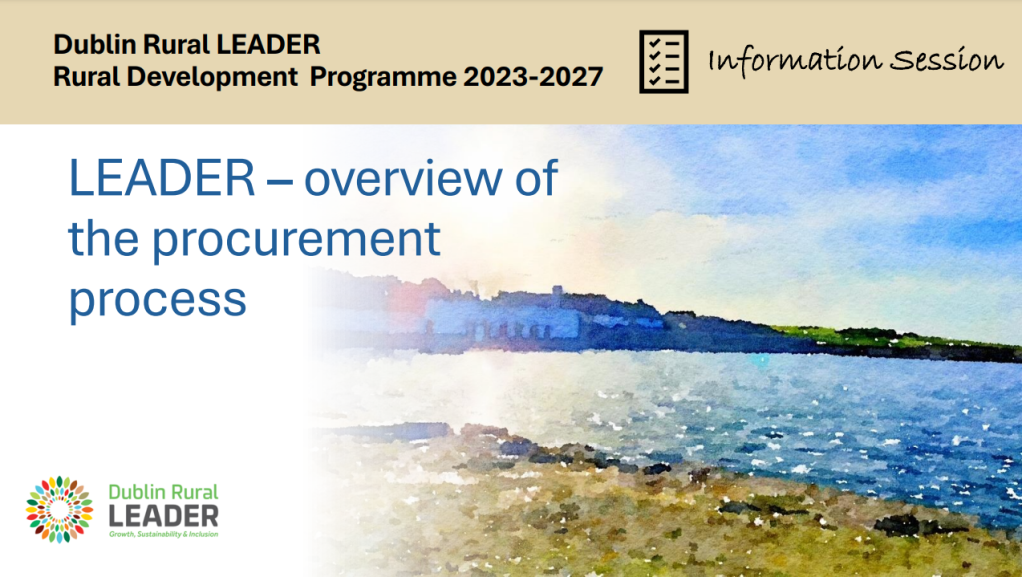
And we are very grateful to Angela that she a) answered all our questions patiently on the night and b) allowed us to share her slides on procurement as well. Here they are:
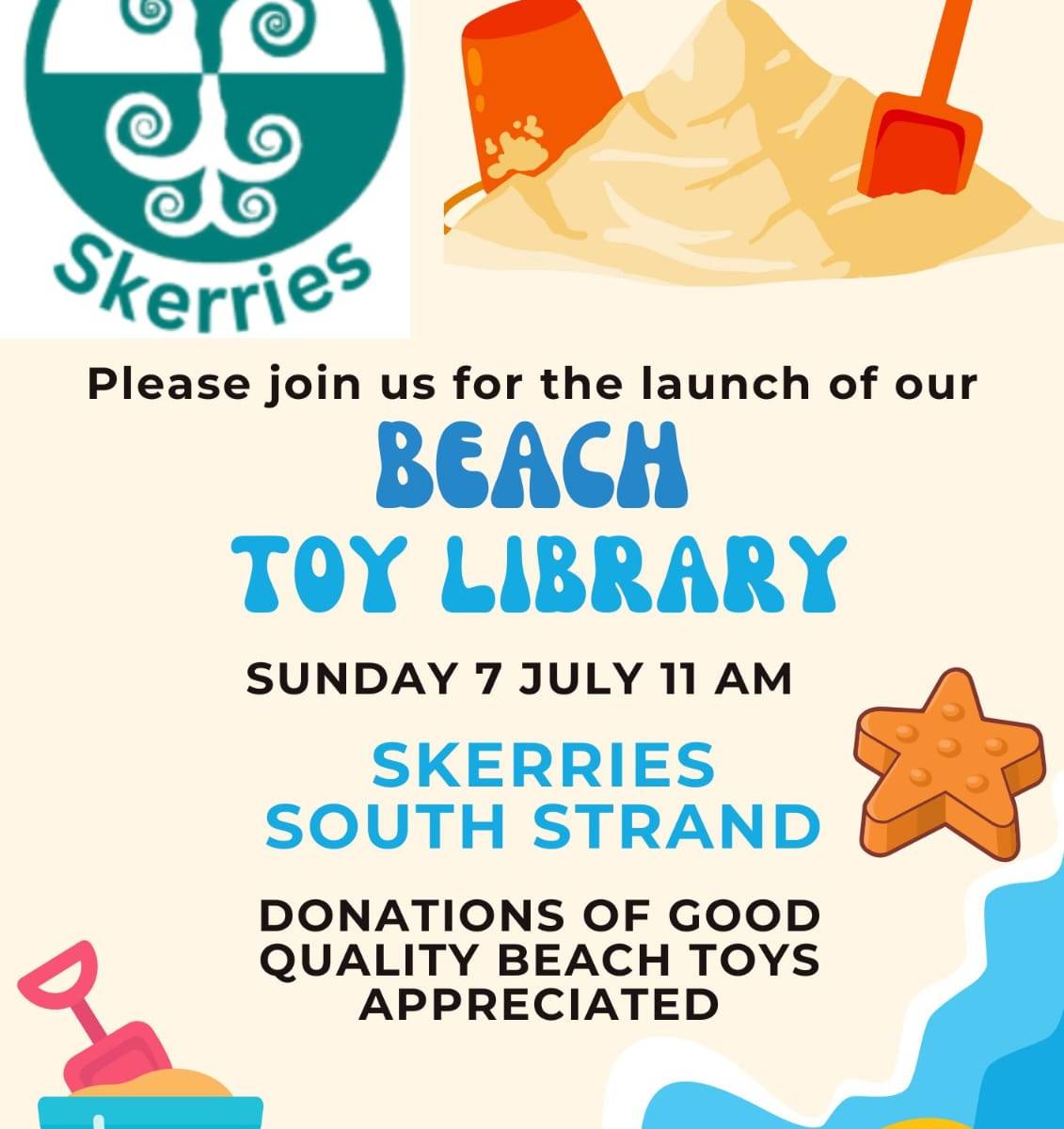
Please join Sustainable Skerries, a committee of the Skerries Community Association, for the launch of our beach toy library, at Skerries South Strand, on Sunday 7th July at 11 am.
Beach toy libraries put unwanted toys to good use and help reduce plastic waste. Simply borrow the toys from the box, play with them, and return them when you are finished!
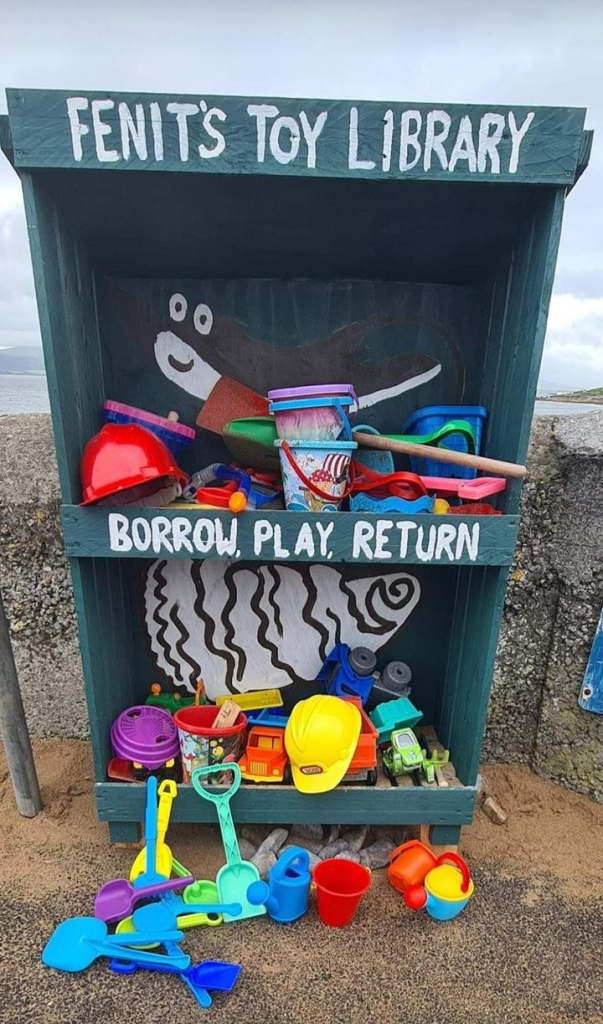
This beach toy library in Fenit, Co. Kerry, a cooperation between Fenit Town Hall and Fenit Town Conservation, reduced beach waste by over 70 %, according to Mary O’Brien Browne, Fenit Town Hall.
Donations of good quality beach toys would be greatly appreciated. If you can’t bring them on Sunday, please drop them into the box during the following week. If the box happens to be full please don’t leave them beside it, contact sustskerries@gmail.com and we’ll consider keeping some in reserve to replace toys that get worn out. We’ll be checking the box regularly.

With thanks to Fingal County Council for giving the Go-Ahead for this, and to Skerries Men’s Shed and Foróige for making/designing the sign that we’ll put beside the box.
We look forward to seeing you there!

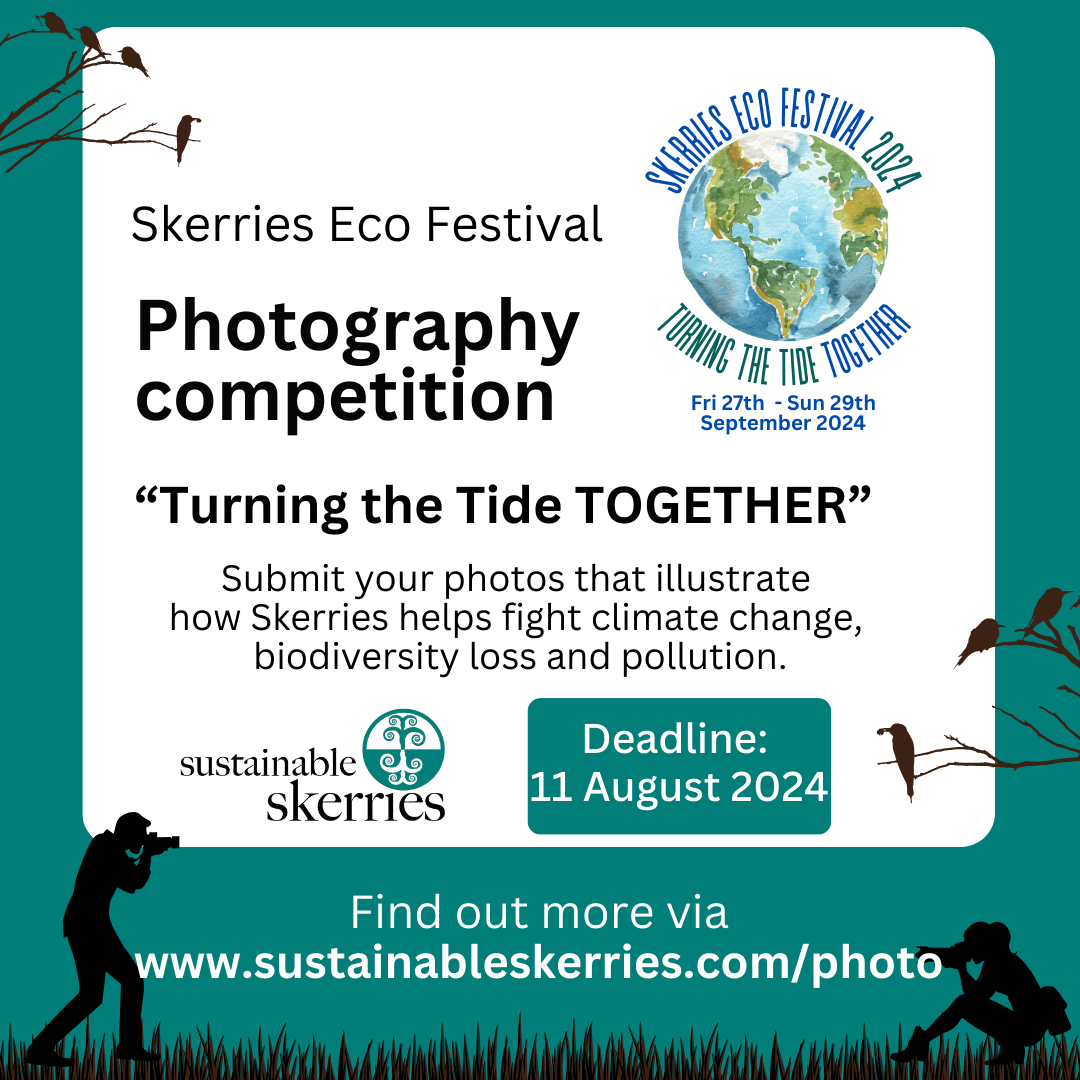
Capture the Beauty of Our Community:
Enter Our Local Photo Competition!
Do you have an eye for beauty and a knack for capturing perfect moments?
We are excited to announce the second Sustainable Skerries photo competition – and we want YOU to participate!
Whether you are a seasoned photographer or an enthusiastic amateur, this competition is the perfect opportunity to showcase your talent.
We are looking for stunning images that highlight the essence of the central theme of this year’s Eco Festival: “Turning the tide together”.
How to Enter:
1. Take a Photo:
Capture a photo that represents the theme of the competition: Turning the Tide Together.
Your photo is your opportunity to tell a story about ordinary people taking action to protect our environment.
Capture moments and scenes that illustrate local efforts to fight climate change, biodiversity loss and pollution. Just make sure the photo was taken in Skerries, in 2023 or 2024, and relates to the central theme.
- Please note: If your photo features people, make sure you have received their permission to be photographed. (For guidance on this issue, visit dataprotection.ie)

We are grateful to Fingal County Council for their support for the 2024 Skerries Eco Festival Photo Challenge.
2. Submit Your Entry:
Email your photo to SustSkerries@gmail.com, with the subject line “Photo Competition Entry.” Please include your name, contact information, and a brief description of the photo (where it was taken and what it depicts), including the names of any people featured in the picture.
You can submit up to 3 photos.
By submitting photos, you agree that Sustainable Skerries can use your photographs online and offline (with credit to the photographer), and that they can be shown as part of the 2024 Skerries Eco Festival.
3. Deadline:
The deadline for submissions is Sunday 11 August 2024.
Make sure to get your entries to SustSkerries@gmail.com on time!
The ten best images will be printed on 8×12 blocks and be shown at an exhibition during the Skerries Eco Festival, which is taking place on 27-29 September.

All entries to the competition will be assessed by the CEO of Global Action Plan and local sustainability advocate, Hans Zomer, who will select the winners based on the criteria of relevance to the core theme, creativity, technical excellence and emotional impact. We are delighted that we have won him to be our adjudicator this year!
The ten best images will be printed on 8×12 blocks and be shown at an exhibition during the Skerries Eco Festival, which is taking place on 27-29 September – and then for two weeks in Skerries Mills!
The photographers whose photos are chosen for this exhibition will receive their printed pic, on an 8×12 block after the close of the Skerries Mills exhibition.
Don’t miss this chance to use your skills (and your lens) to shine a light on the uniqueness of our community, and the beauty of people taking action for a better world.

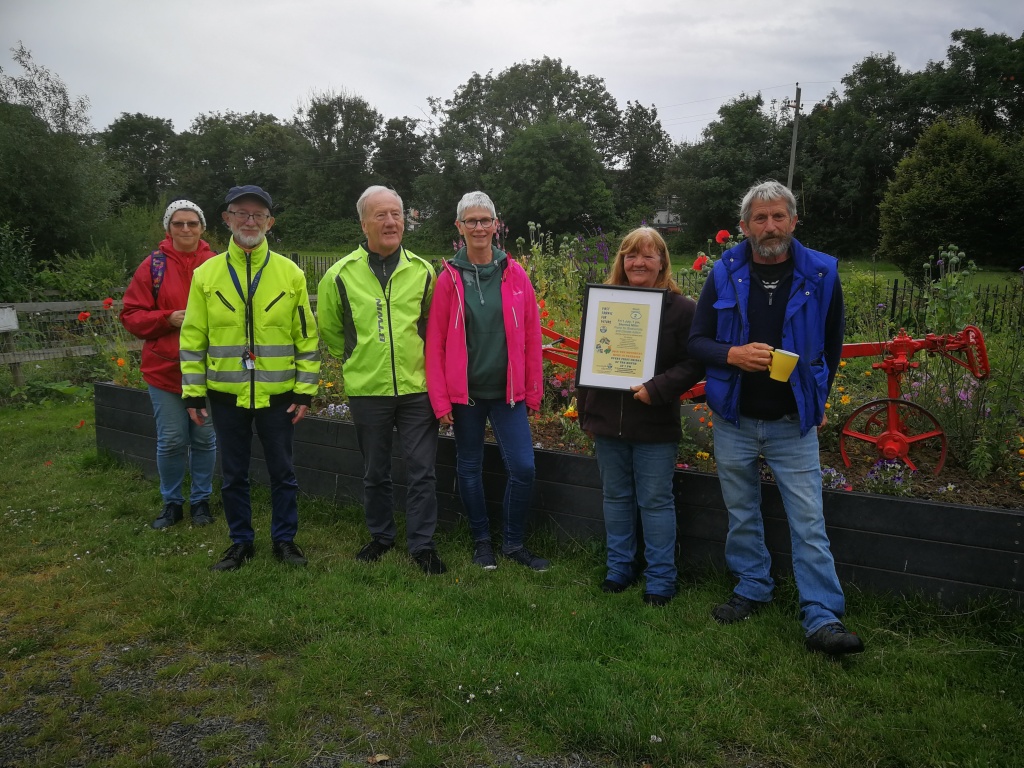
We are delighted to announce that the Jim Quigley Volunteers of the Year 2024 here in Skerries are Charlie and Marion Heasman! Below a short explanation about the award, one picture of the awards ceremony, and the nomination received by the judges.
Jim Quigley was a champion of community development; a larger than life personality who was a dreamer and a doer; an idealist and an activist. 1970, Jim married Brigid Carolan and shortly afterwards the couple came to live in Skerries, purchasing their home in the newly built Hillside Estate. He was a Director of the Skerries Community Association for 22 years and Chairperson for ten of those years and worked on many, many projects. Perhaps the most visible legacy of his work in Skerries is the Community Centre. In 1977, the Skerries Development and Community Association set up a sub-committee to look at the needs of their fast-growing town. It was finally opened in 1982. Every year, the SCA selects a volunteer, or volunteers, who are announced at its AGM.
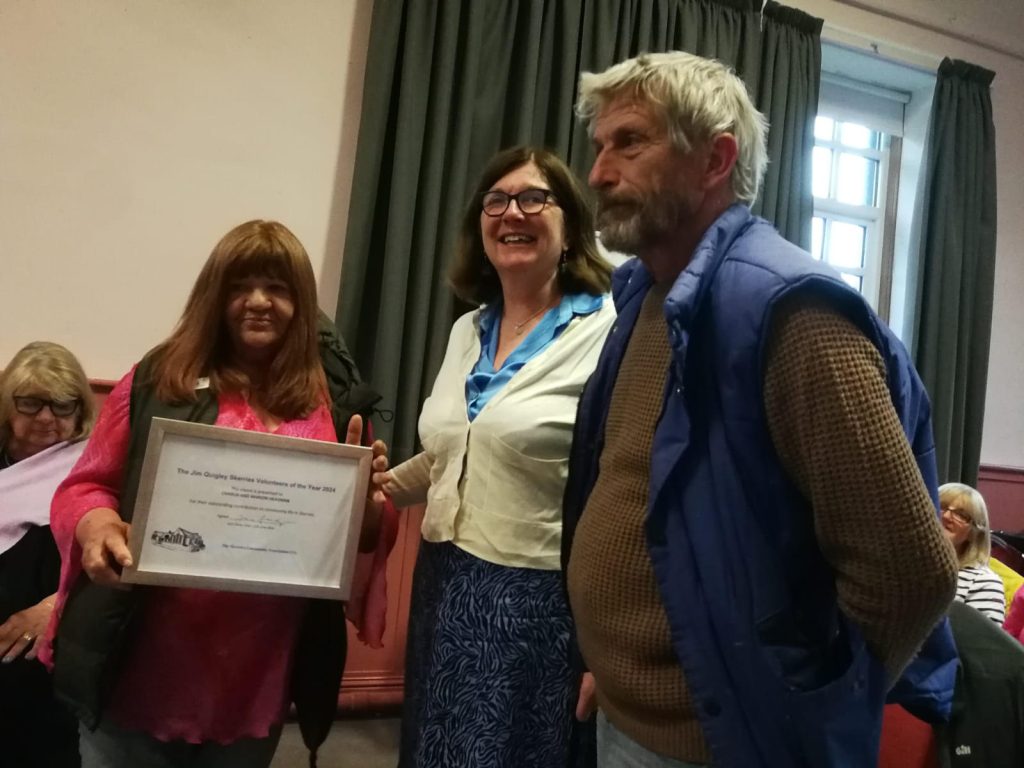
Charlie and Marion’s dedication to volunteering has left an indelible mark on the community of Skerries. Their passion for biodiversity and their tireless efforts have resulted in numerous positive changes and a profound impact on the local environment.
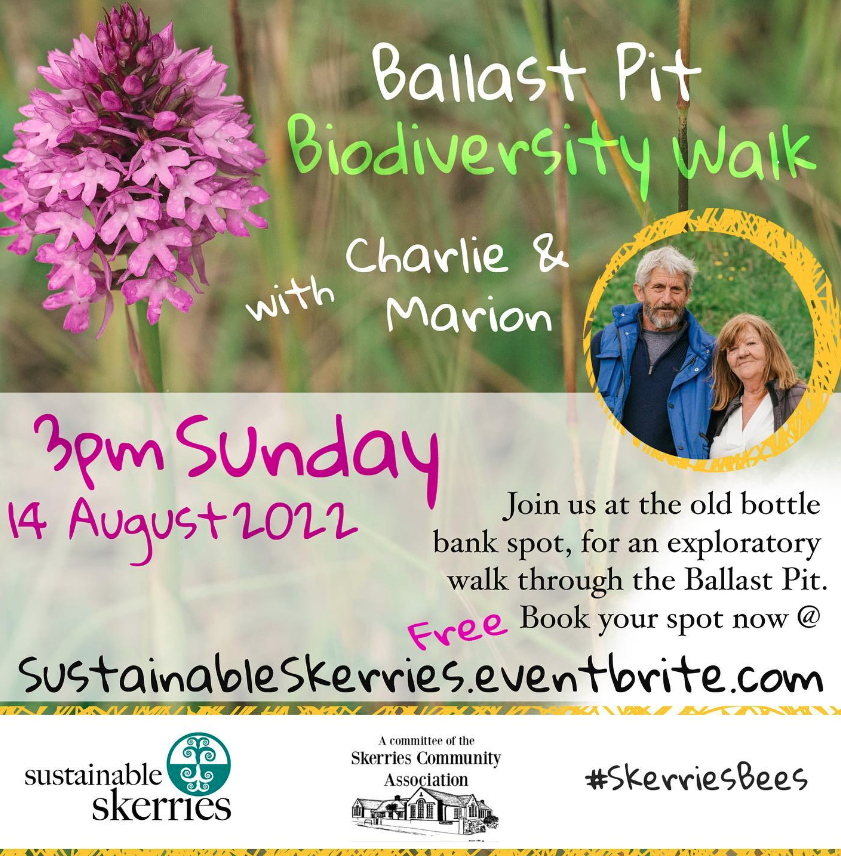
Over the years, they have become well-known advocates for the Ballast Pit, leading nearly a dozen biodiversity walks in the area. These walks not only educate the community about the local ecosystem but also inspire an appreciation for the natural world.
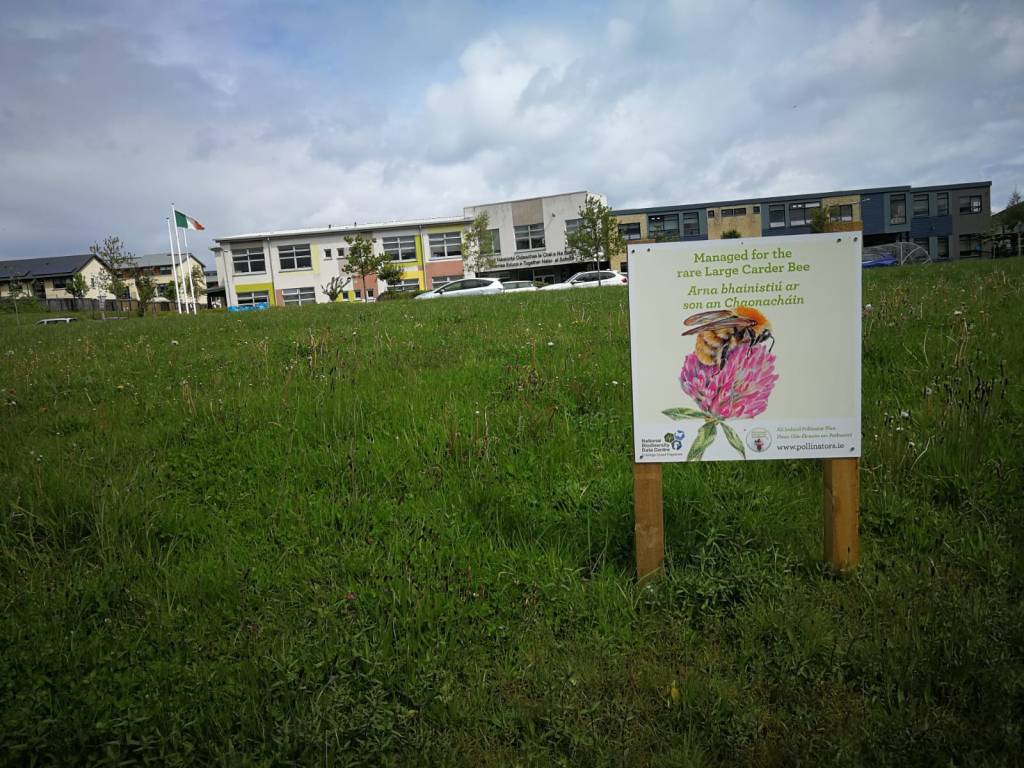
One of the most significant impacts has been the establishment of pollinator corridors for the Large Carder Bee, creating new habitats that support these vital pollinators. Hundreds of school children in Skerries are now actively engaged in bee conservation efforts, thanks to Charlie and Marion’s initiative. They painstakingly reached out to every school in the area, nurturing relationships and cultivating a sense of responsibility among the students. The result is a flourishing wildflower meadow at Skerries Educate Together, now in its second year, where children actively participate in nurturing the local environment.
Furthermore, they have contributed to the creation of two new festivals in Skerries – the Skerries Bee Festival and the Scarecrow Festival. These events not only bring the community together but also raise awareness about biodiversity.
Charlie and Marion have touched the lives of numerous people in Skerries. They operate a Pollinator-Friendly Gardening WhatsApp group, connecting like-minded individuals who aim to enhance biodiversity in their gardens. Their expertise and support are invaluable, particularly in initiatives like the Skerries Open Orchards Project, where they played an integral role in planting 100 fruit and nut trees across eight mini orchards in Skerries.
Charlie and Marion have also embraced new technologies and channels to reach more people, co-running the Instagram account @SkerriesBees, which serves as an educational platform and a source of inspiration for the community.
Their efforts were further recognized when the National Biodiversity DataCentre, responsible for the All-Ireland Pollinator Plan, chose Skerries for their first-ever Wild Bee Festival in 2022, an event they later transformed into the annual Skerries Bee Festival in 2023. They were also invited to speak at the national Wild Bee Festival in Tralee in 2023, and at biodiversity events in Clare and Kerry this year.
Their collaborations with Fingal County Council have resulted in tangible change, such as the reduction in roadside verge mowing. They were instrumental in establishing a pollinator-friendly planting trial in Turvey Natural Reserve, for which they supplied the kidney vetches, of which they grew some 1,500 over the last two years. More kidney vetches were also planted in Rogerstown Park.
Perhaps most remarkably, their love for bees and the environment has had a ripple effect on the entire community. Biodiversity has become a central concern in Skerries, as evident in the creation of a pollinator-friendly garden at the Community Centre, with the involvement of children attending Montessori/Playgroup programs; wildflower areas in most schools in Skerries, established with active help from Charlie and Marion; relaxed mowing regimes voted in by a number of residents’ associations; stretches of the South Strand, Skerries Mills / Townparks and Mourne View being planted up with kidney vetch and knapweed plugs.
And it’s not just about biodiversity – Charlie dedicated four years volunteering with Fáilte Isteach, teaching English to immigrants locally, demonstrating their commitment to fostering inclusivity in the community. This is in a way being continued now through the Skerries Community Garden, where they organised a course for Ukrainian refugees living in Skerries last year, which was very well received, as well as one with International Protection Applicants living locally this year.
The impact is also palpable in this note from Christine, mother of two and Skerries resident:
Charlie and Marion are like the granny and grandad of biodiversity in Skerries. In a town where many people don’t have their family living nearby, they have naturally created a sense of family and togetherness that many of us cherish. They’ve voluntarily come along to people’s gardens (invited of course) to help us figure out wildflower meadows or how to rethink more nature-friendly gardens. Last year they grew 1500 kidney vetch plug plants on their own initiative and ‘borrowed’ space in some gardens to create wildlife corridors across the town for the large carder bee. The Gardening for Pollinators WhatsApp group is often ‘hopping’ with activity when kids or adults alike spot one of the beautiful bees in a place we didn’t anticipate. … Apparently, bees can remember human faces so when we see Charlie and Marion just walking around on the wildlife corridor up at Barnageeragh or at the Ballast pit we fully suspect the bees also recognise them. We always learn a bit more about nature just through talking to Charlie and Marion and part their company with a smile and an echo of their laughter. Their approach is literally from the ground up and it has been the best form of environmental engagement a town could ask for!
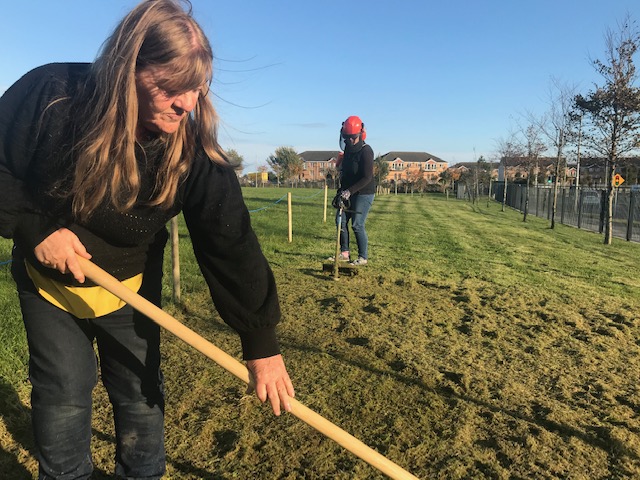
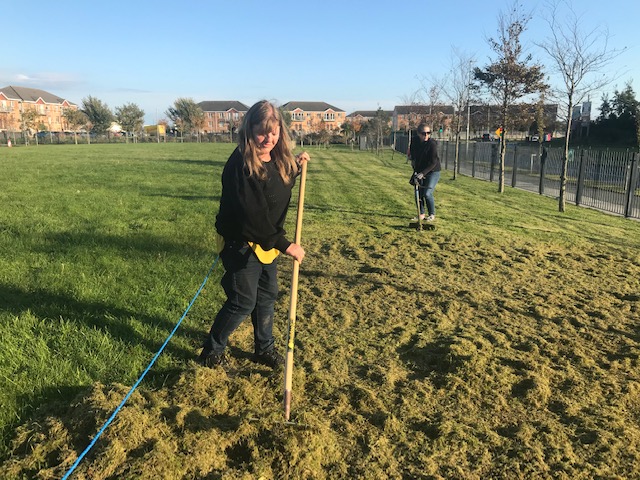
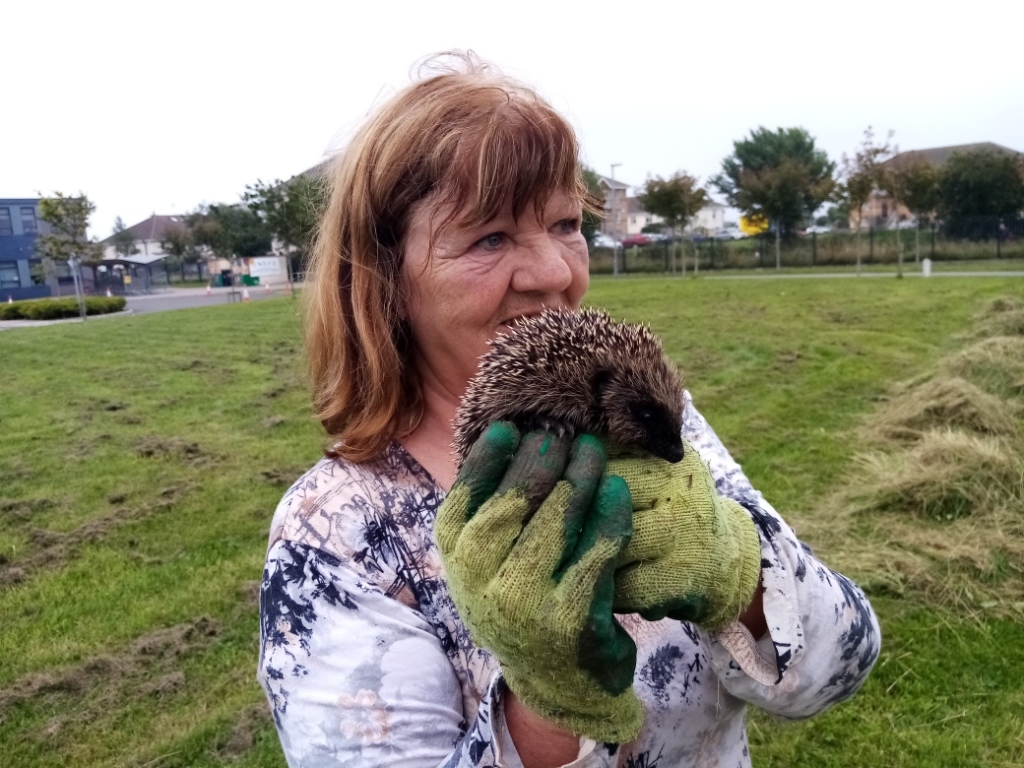
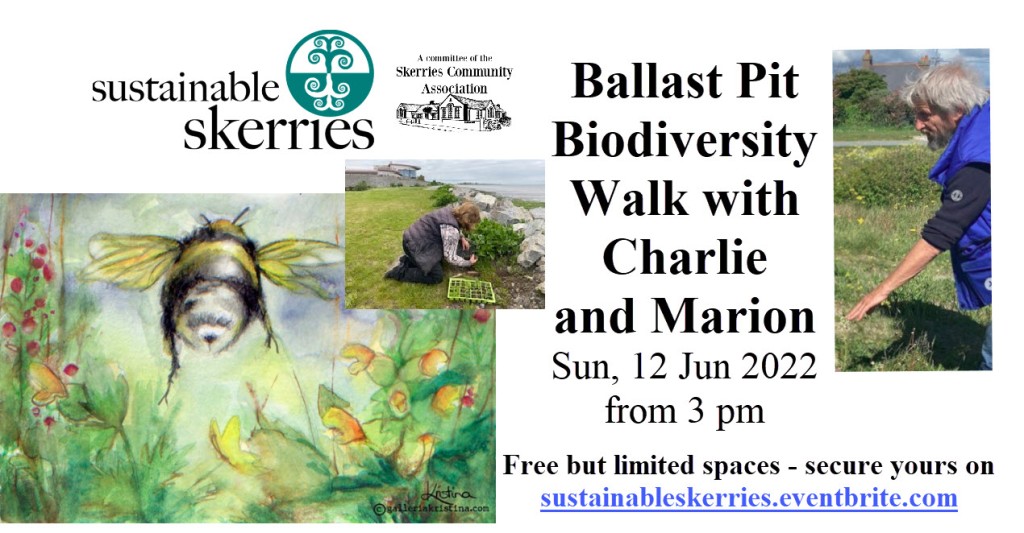
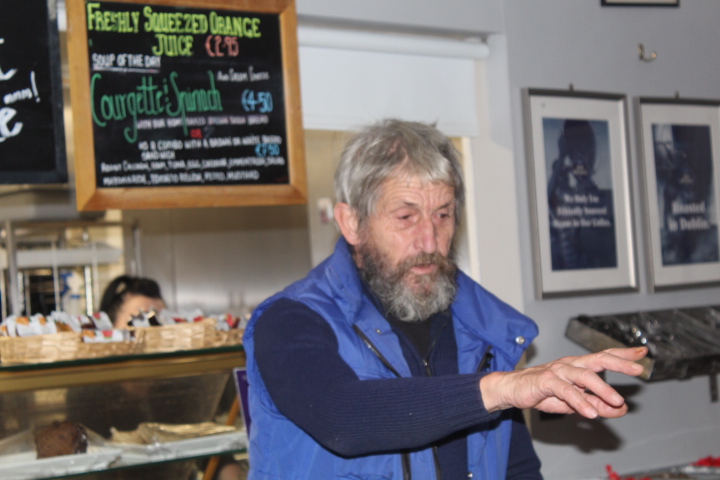
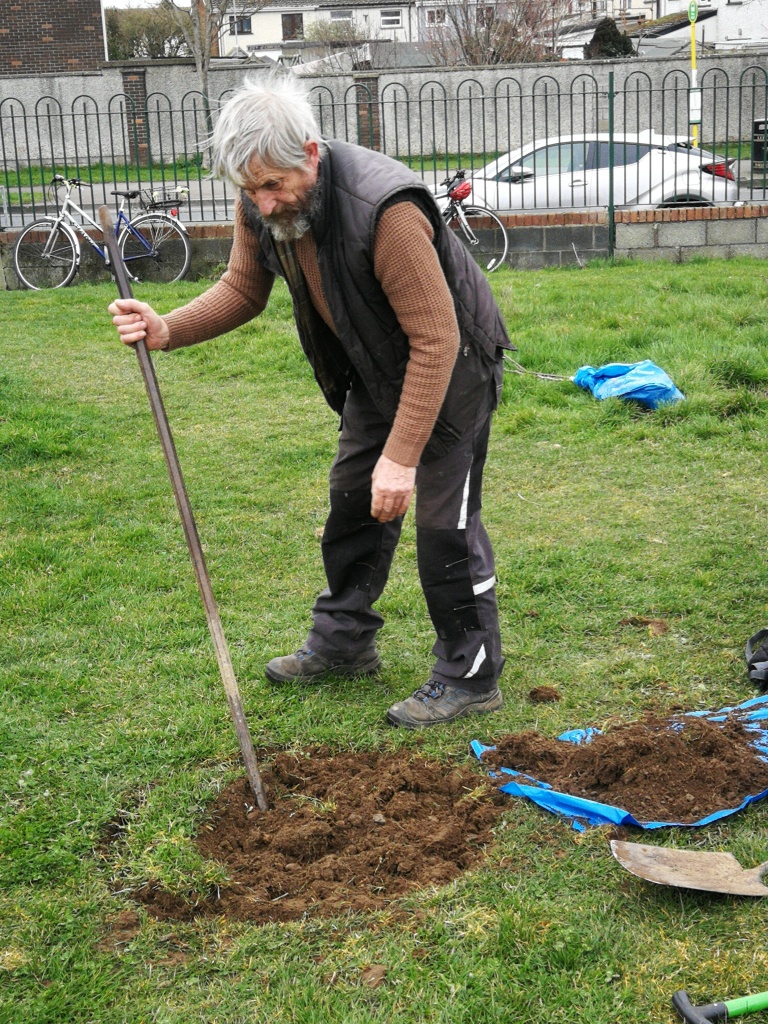
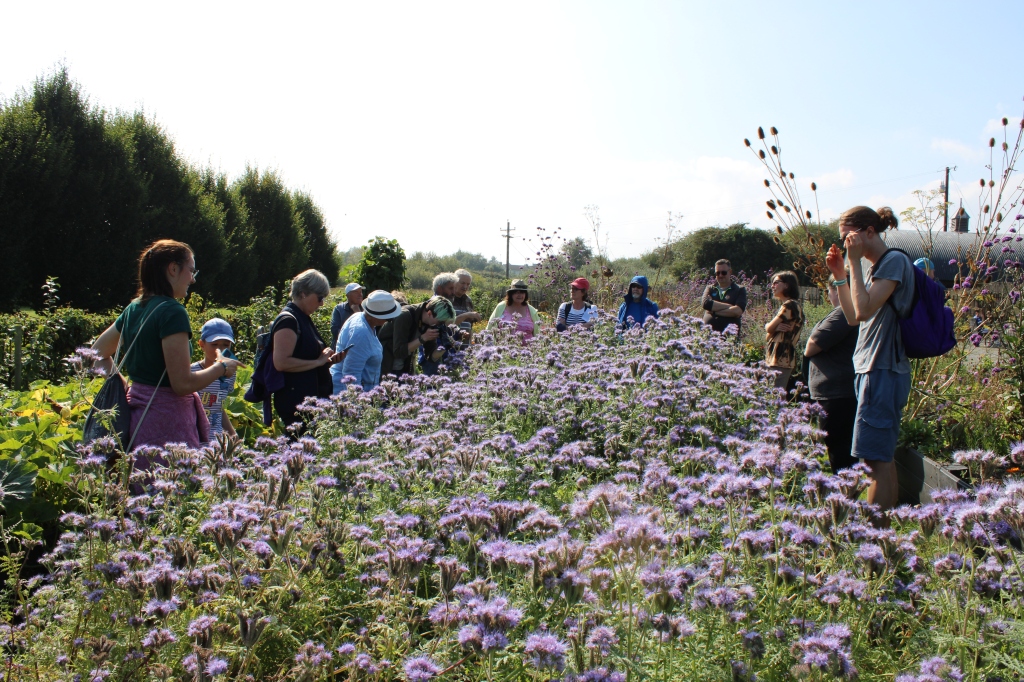
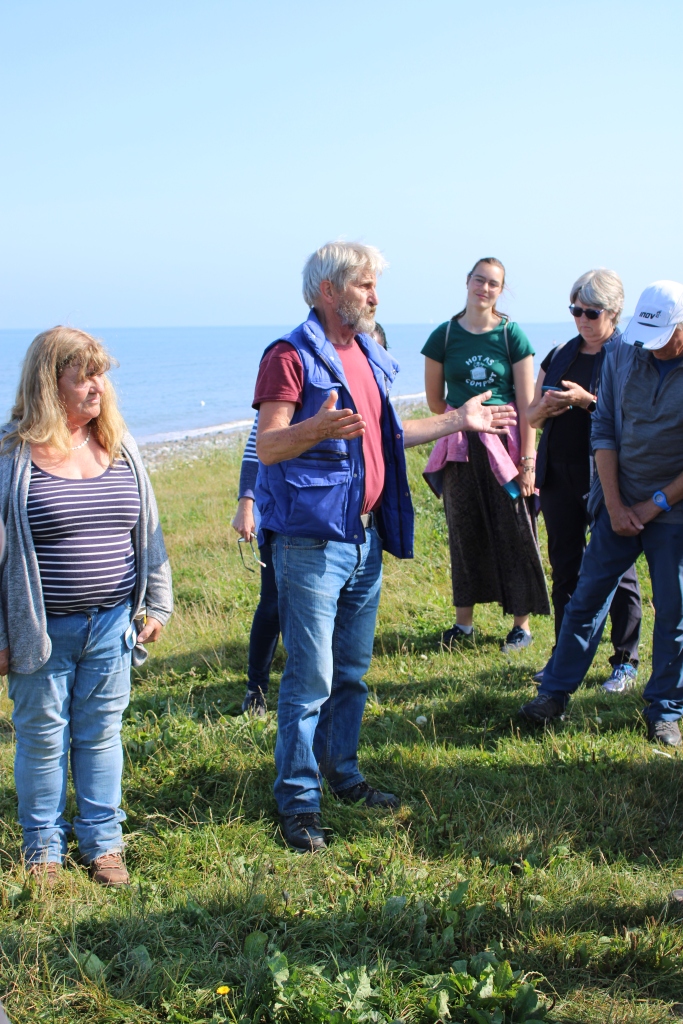
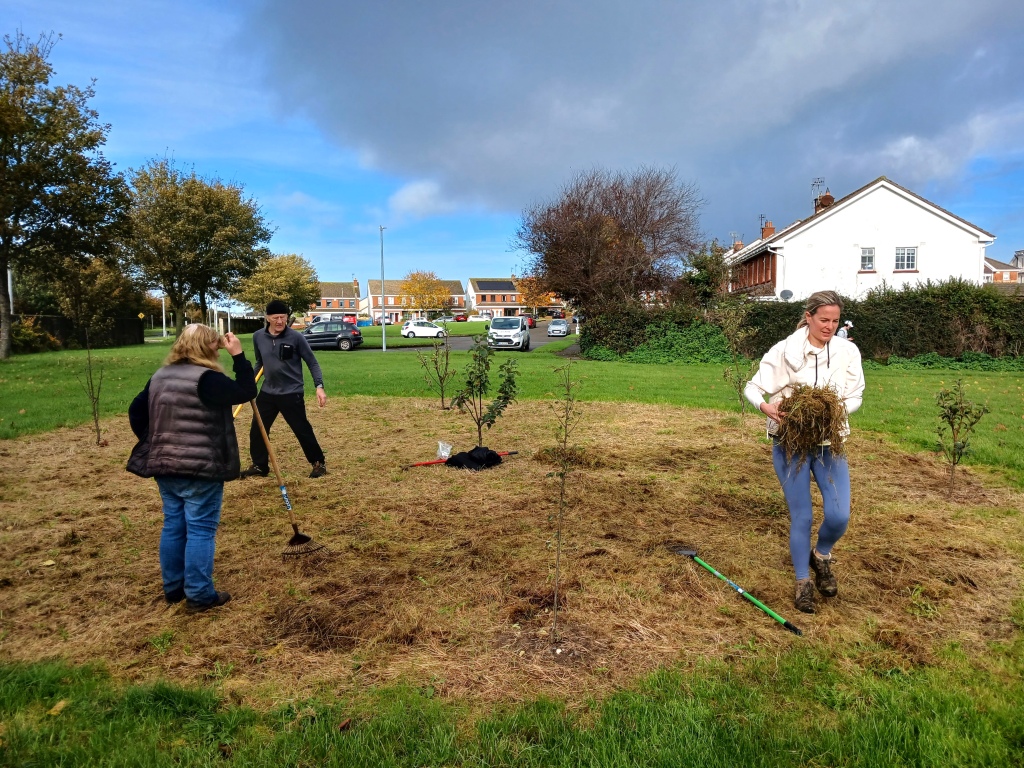
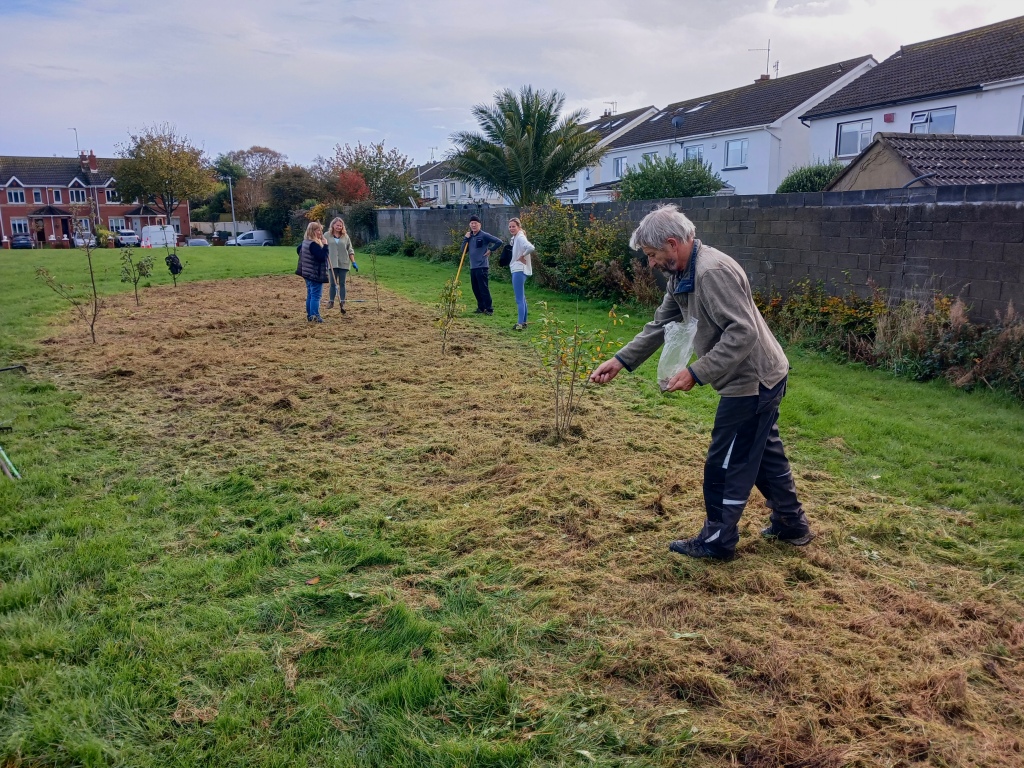
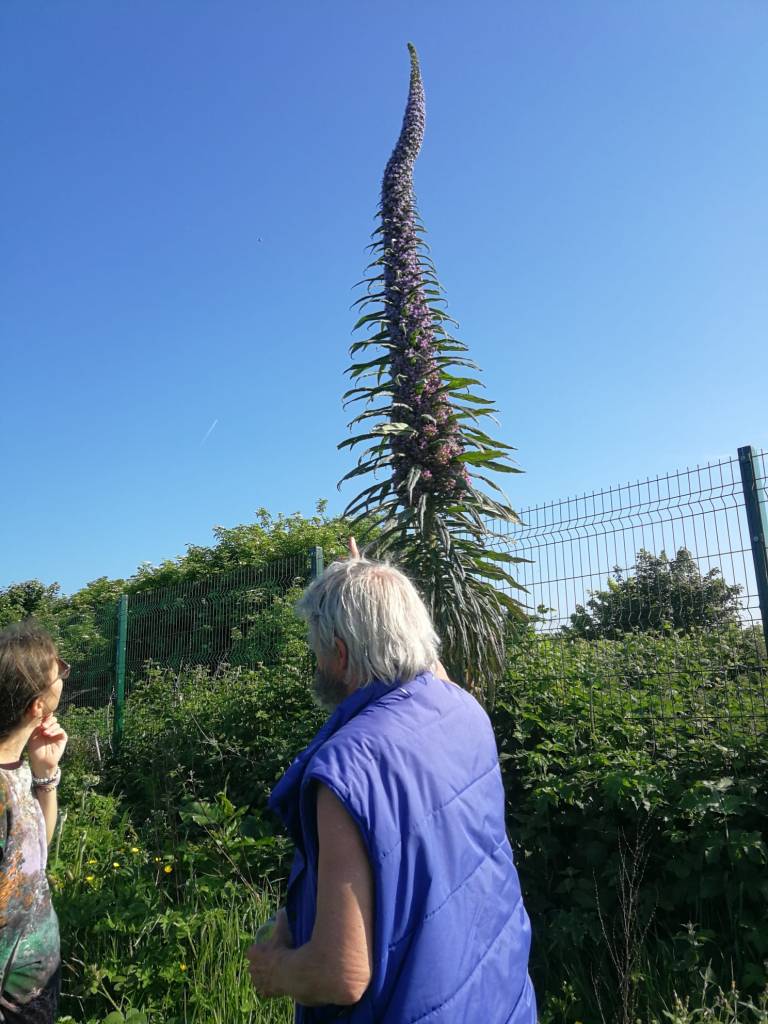
Here are just some glimpses of the many things Charlie and Marion were involved in over the years:



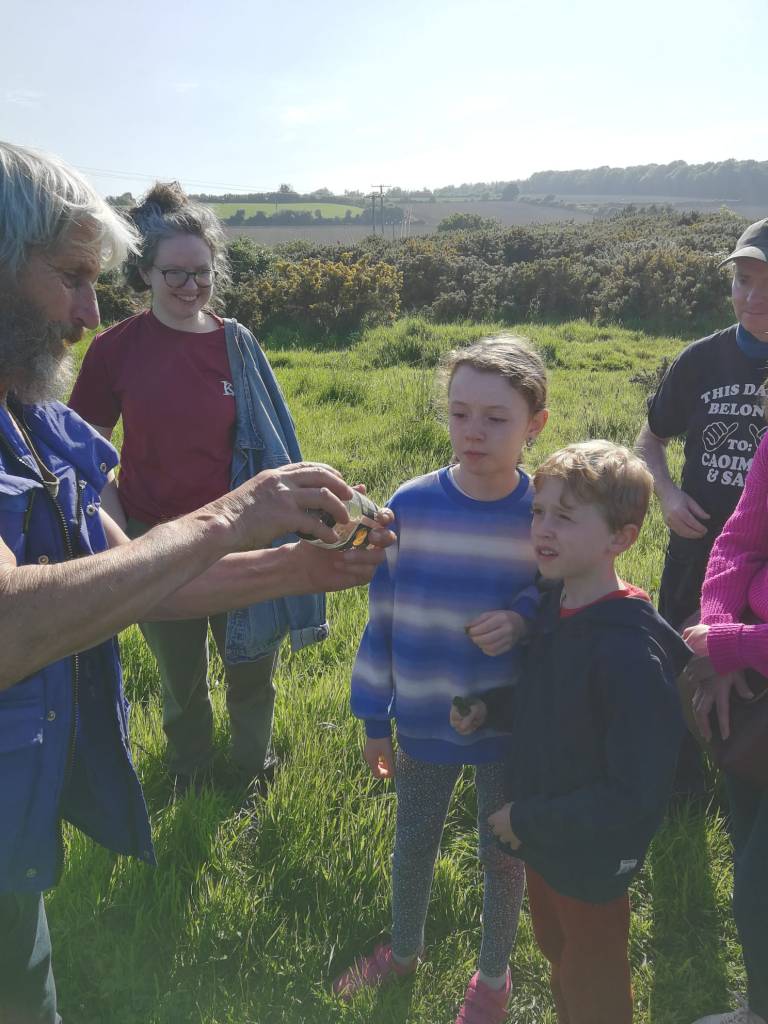
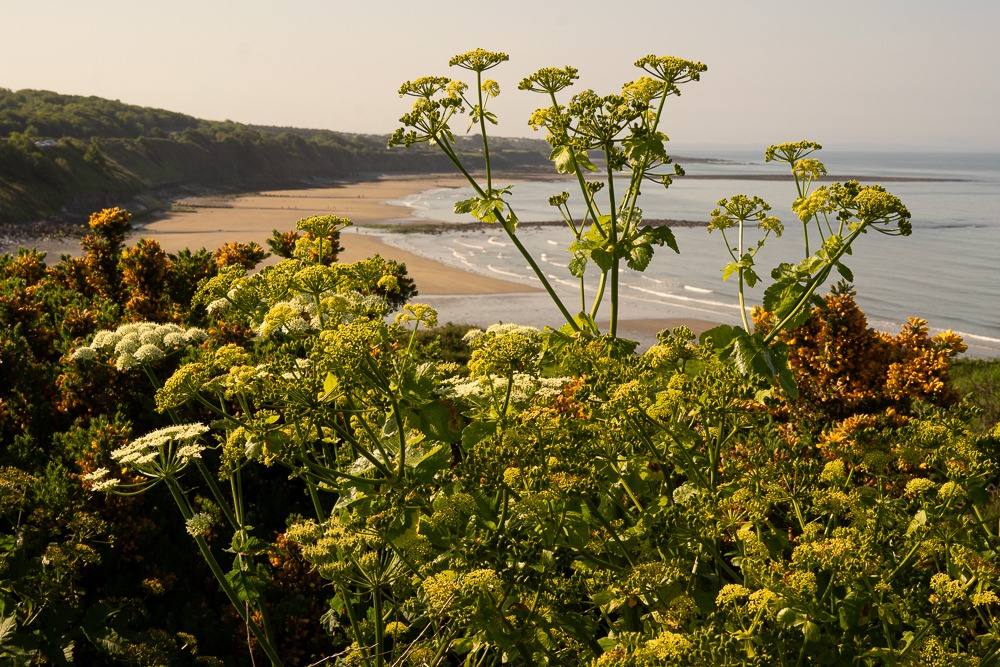
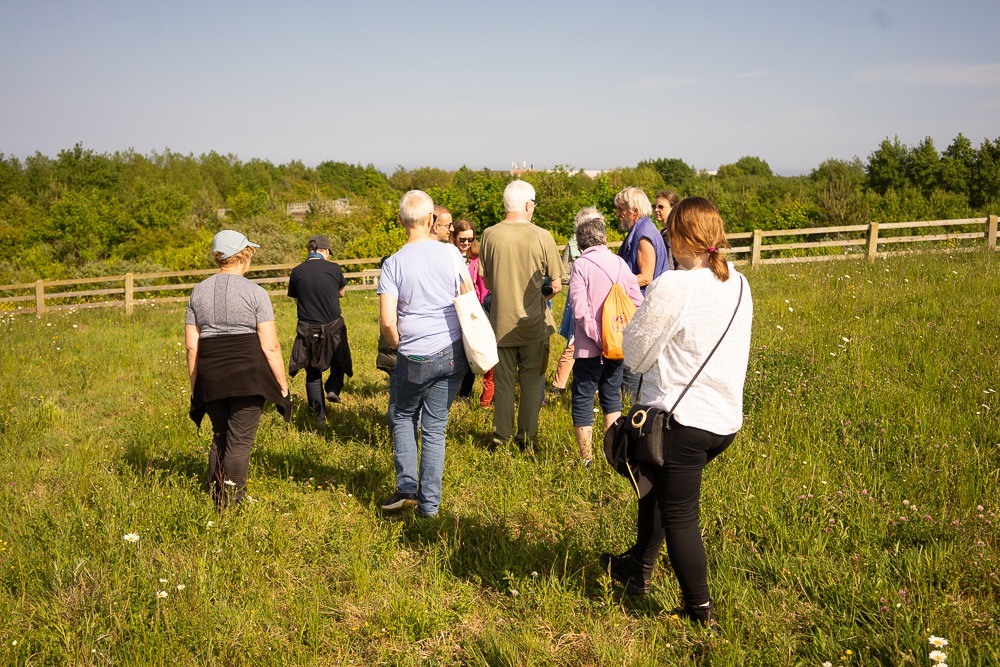
While we conduct biodiversity walks on a regular basis through the summer months, yesterday’s was perhaps the nicest yet.
For one thing we had a beautiful warm, sunny day; so warm in fact that quite a few of those people booked went to the beach instead. This meant that we had a relatively small group of some dozen or 15 people. That’s actually okay in a way; smaller groups are both more manageable and intimate, we all enjoyed the occasion.
The other reason the walk was memorable was that it is a brand new biodiversity site in the town, we were keen to see what it looks like now and how it progresses over time. It also lies at the extreme North-western end of the town and effectively extends our biodiversity corridor as far as Ardgillan.
The Hamilton Hill Estate is a relative new-build, and house construction was completed a few years ago; the tidying up and landscaping work continues and at the time of writing is just about complete. Part of the site could not be built on because it’s an old landfill and was thus spared development. Instead Fingal County Council had it turned into an amenity area which includes a basketball court and an extensive wildflower meadow.
The somewhat dated satellite image below shows the area clearly; the brown area at bottom right which doesn’t yet show the basketball court next to the road and the meadow running up the slope to the railway line.
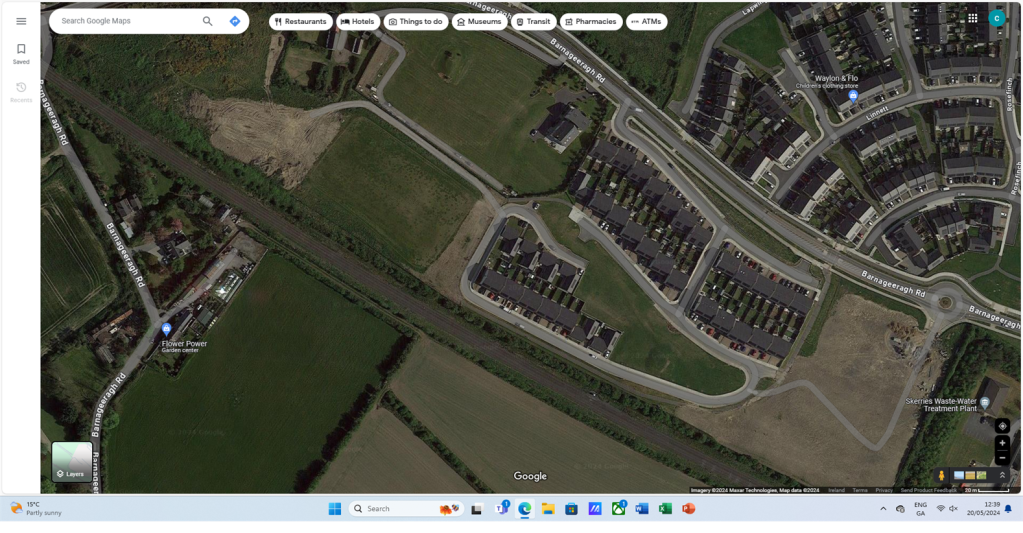
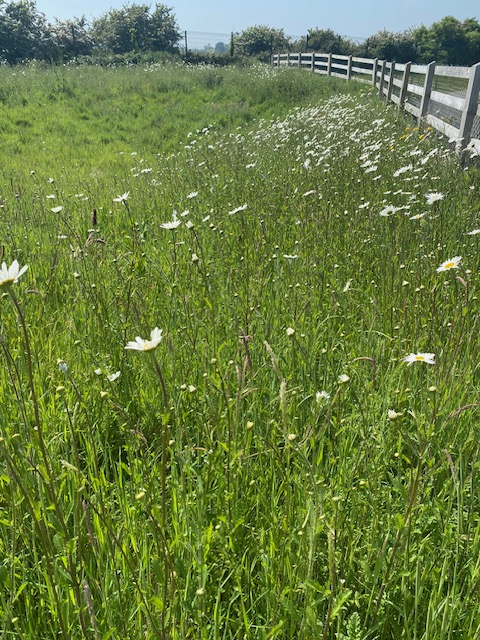
The meadow was seeded with wildflowers some time last year which means that this will be its first full year in flower. While the seeds obviously took very well, there was very little flora showing this early except masses of Oxeye daises; good for pollinators but not of very much interest to the Bumblebees which we were looking for. Between all 15 of us I think we found a paltry three! Not to worry; the other wildflowers will soon be in bloom.
From here we walked North-west to the other, slightly smaller brown area, where we found a different story. Below is a closer look:
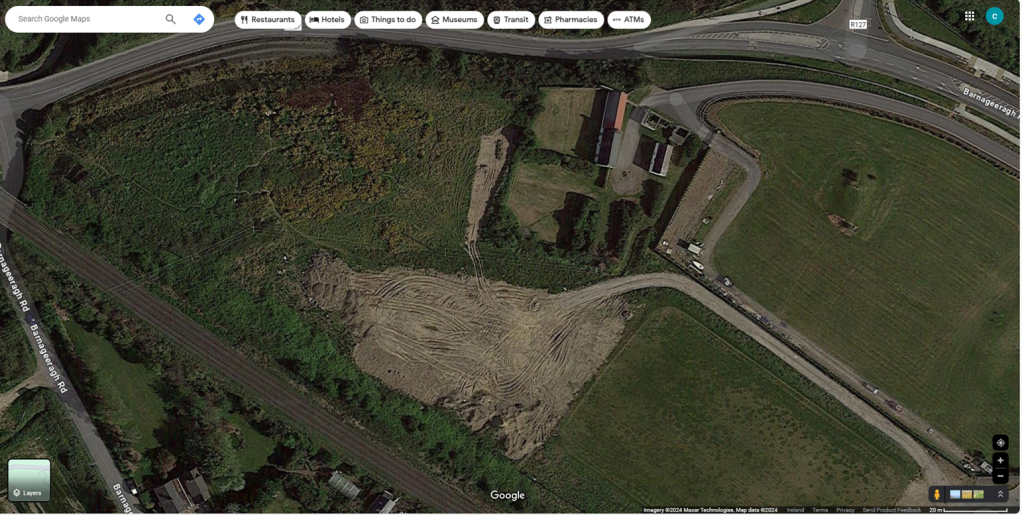
More bare earth can clearly be seen. Quite why it was bulldozed, levelled and left no-one seems to know, but that’s what happened. Wildflowers quickly recolonised it from the natural seedbank that was there in the soil all along, and today it looks like this…
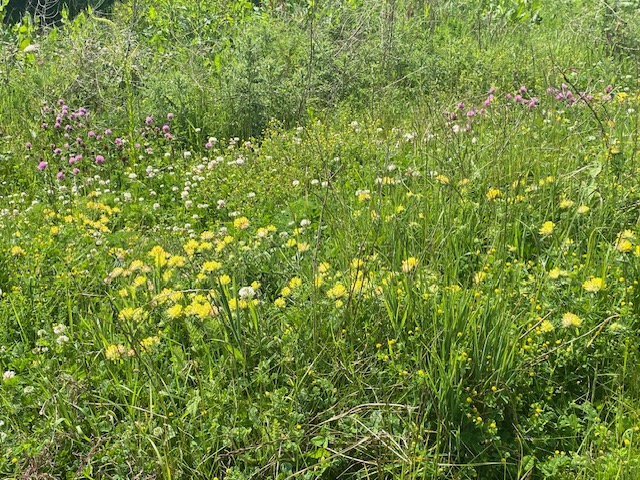
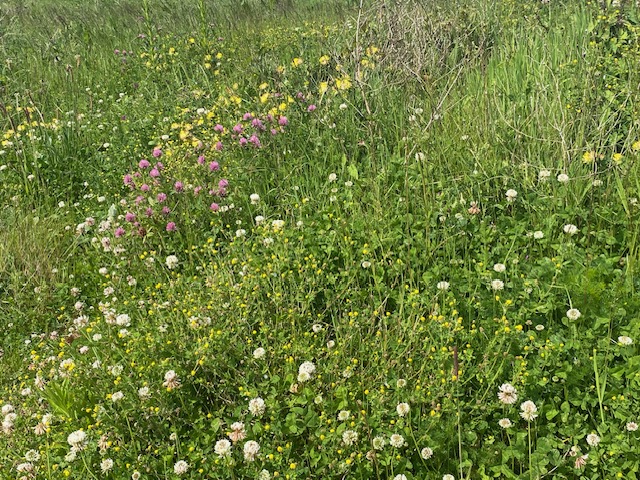
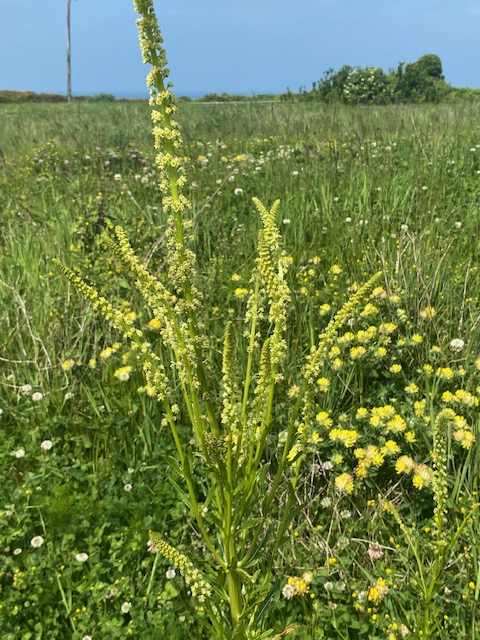
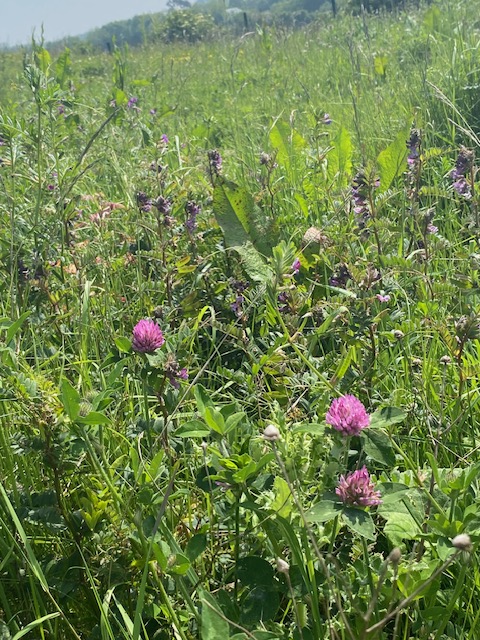
…and this is where we found our Bumblebees. And Butterflies. And Hoverflies. And so much more.
Sustainable Skerries member Miriam had brought her two children and husband along, and it was Cormac who stole the show with a photo, using his phone, taking a picture of two Hoverflies making some more Hoverflies:
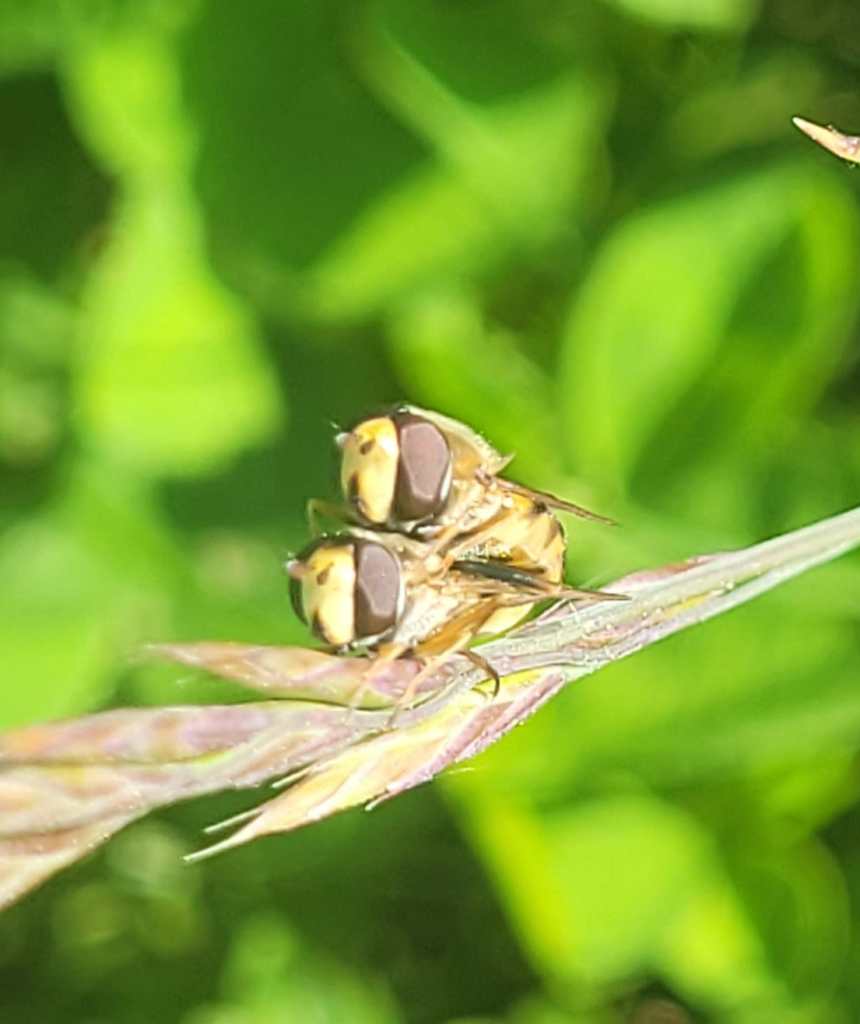
It may seem strange to think that bulldozing an area into submission ultimately encourages wildlife but in this case that’s exactly what has happened. Wildflowers are outcompeted by heavy grass or woody plants such as Gorse and Bramble and have to patiently wait their chance for some sort of disturbance. In days gone by this disturbance would have been provided by the likes of Wild Boar digging or large herbivores churning up the ground. They’re long gone; here heavy machinery has done the job instead.
If left alone this area will eventually return to Gorse and Bramble. A good management regime might be to divide the area up and actually bulldoze different sections in rotation. Those decisions are not up to me but one would hope that FCC will do the right thing to preserve it.
In the meantime nature is being given a chance, people and their dogs (if they have one) can use the space, and children can chase Butterflies or, if they’re brave enough, catch Bumblebees in jam jars.
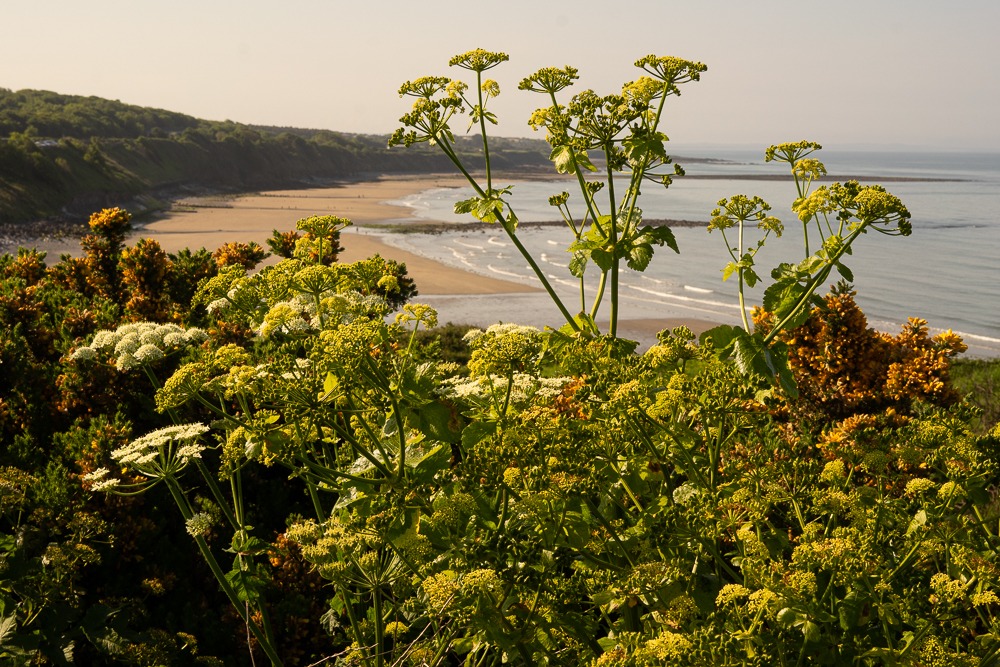
The next Biodiversity Walk will take place on Fri 7 June, 7 pm. It’s part of our First Fridays for Future series.
And maybe you can join us for a “Pint for the Planet” afterwards! (Location to be decided after the walk.)

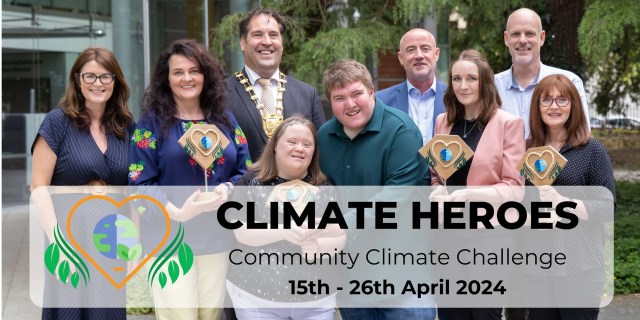
Skerries group praised for its climate actions, coming 7th in a nationwide climate competition.
Recently, we took part in the Climate Heroes event. Under the stewardship of committee member Miriam Sweeney, we came 7th out of 59 teams in total! Committee member Hans Zomer writes:
Along with volunteers from community groups in 17 counties across Ireland, the members of “Sustainable Skerries” teamed up to combat consumption and take small steps to change their lives, their communities and the world.
Our friendly neighbourhood volunteers took part in the nationwide “Climate Heroes” competition organised by the charity Global Action Plan.
The Skerries team was one of 11 teams from Fingal, who together logged over 16,000 climate smart micro actions, saving more than 15.5 tonnes of CO2 emissions – roughly as much CO₂e as is emitted by flying all the way around the world 1.6 times.
This result meant Fingal was the highest scoring County in the nation, for the second year in a row. Indeed, 5 of the top 7 teams in the country are from Fingal!
“Taking part in Climate Heroes made me more aware of the small practical changes I could make as an individual. When my small actions were added to the lifestyle changes that others were making, the resulting reduction in CO2 emissions were surprisingly significant,” said Máire Jones, one of the Sustainable Skerries team members.
On average, each Sustainable Skerries participant saved some 193 kg of CO2e emissions – well above the average for all the competition participants (which was 97.5 kg per person). If people continue this commitment for the full year, it would result in a saving of 5 tonnes of CO2e emissions – a big chunk out of the average annual per capita emissions in Ireland, which is 11,900 tonnes.
The Sustainable Skerries climate heroes selected actions from a menu of 40 activities, which had been assigned average emissions rates and were themed around transportation, food, shopping, and energy. Participants could see the consequences of their actions in real time, compare them against their teammates and other groups, and visualise how small actions taken collectively can pack a powerful punch.
Supported by funding from Irish Aid, the competition was accompanied by webinars that explored the global dimension of climate change and spotlighted the amazing local work of citizens across Ireland.
“Our Climate Heroes have reduced their carbon footprints significantly, and more importantly have built a sense of collective engagement, community and empowerment. Their enthusiasm and dedication underscores the vital role of individual and collective actions in addressing the climate crisis,” said Alex Whyatt, Global Citizenship Coordinator at Global Action Plan.
“In our webinars, we saw the amazing work that groups across the country are doing to make their communities more sustainable, inclusive and future-focused,” Whyatt concluded.
Reflecting on the broader impact of the challenge, Hans Zomer, CEO at Global Action Plan and himself a Skerries resident, expressed gratitude to all participants:
“The actions of the hundreds of people that took part in this unique challenge serve as an inspiration to us all. Sometimes global problems such as climate change can be overwhelming, but the people who took part in the the Climate Heroes showed that each and every one of us has the power to effect meaningful change.”
“As the world confronts the urgent imperative of climate action, volunteers like these Climate Heroes give us hope and show what can be achieved if we work together.”
 Sustainable Skerries