
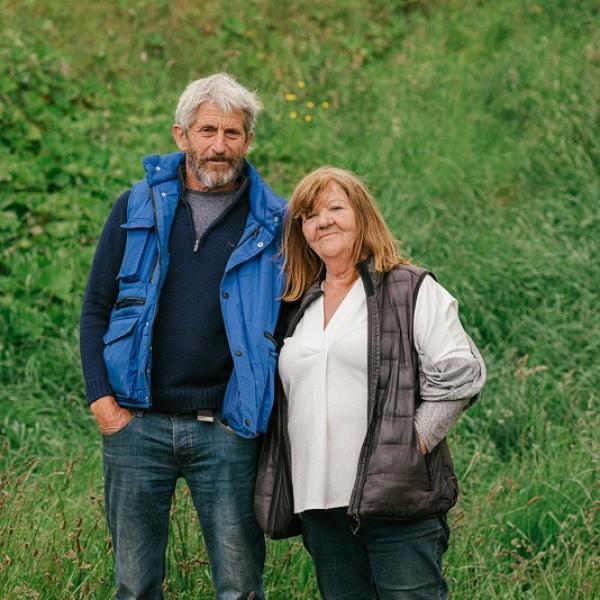
Join Marion and Charlie Heasman, who are the driving forces behind our Pollinator Action Plan, for the first Sustainable Skerries biodiversity walk of the year – this time in Hamilton Hill!
- Sun 19 May 2024, 4 pm
- Meet at the pedestrian lights, Skerries Educate Together N.S.
- Wear sensible shoes, bring rain gear if necessary!
Get your tickets on Eventbrite or join us on the day. We are asking for €5 per adult, if possible, to support our work. Thank you!
Charlie writes:
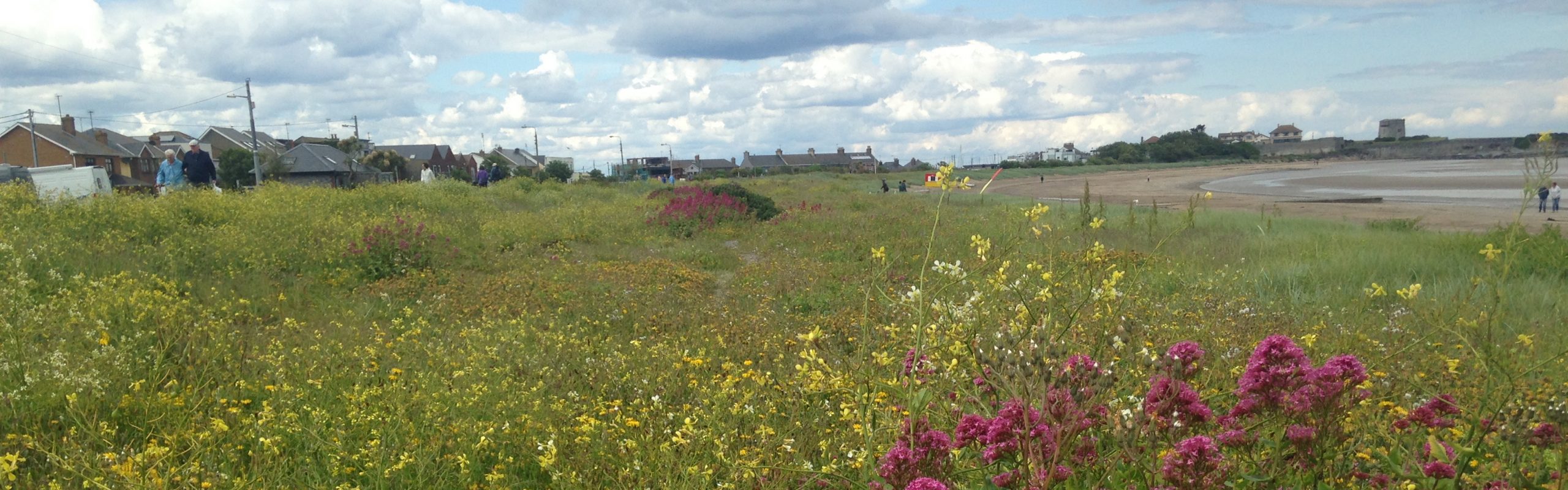
We are pleased to hold our first ever Bumblebee Walk on the Hamilton Hill Estate where we have a whole new area of pollinator habitat. Incorporated in the newly completed Multi Use Games Area is a large wildflower meadow which will flower for the first time this year.
Our recorders regularly spot the Large Carder Bee in the locality and it is hoped that the area will become a stronghold for this threatened species of Bumblebee along with all the other pollinators and become an extension of our existing biodiversity corridor..
Come along to find out more.
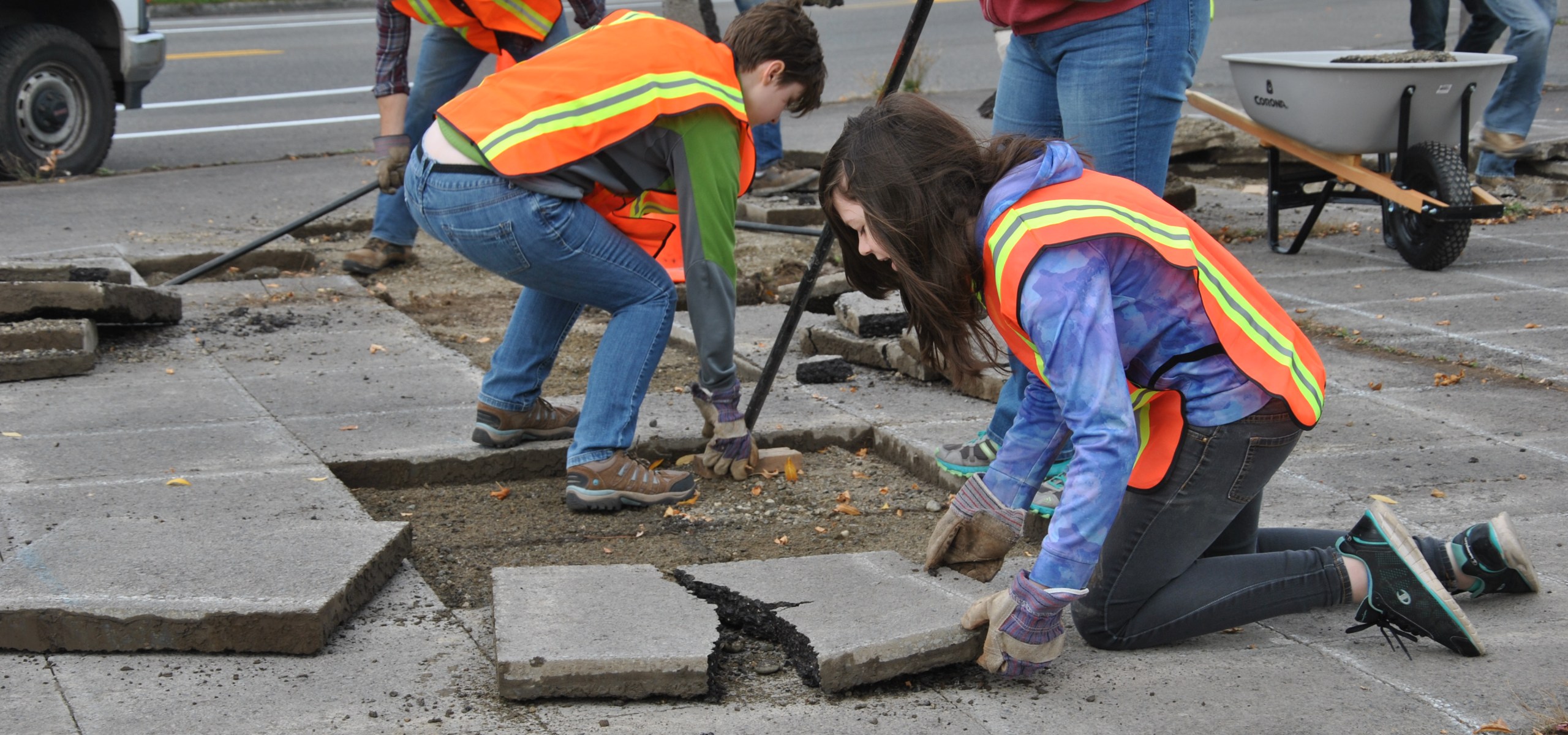
Planting for pollinators, planting apple trees, leaving the dandelions on our existing green spaces are all part of greening our town, but something else is happening underfoot … Hans Zomer draws our eyes to more concrete facts. He writes:
Did you know that there is also another quiet revolution happening in our town?
More and more people in Skerries are calling for “depaving” — rolling back the tendency to cover our gardens and streets with concrete or stones, and reclaiming paved surfaces for nature.
And their motive is not just aesthetics; it has also got to do with adjusting to our future of extreme weather events. After all, the impermeable surfaces that blanket our streets, gardens and footpaths – such as concrete, tarmac and stone slabs – contribute to flooding and biodiversity loss.
Rain that falls on covered surfaces runs off immediately, and risks overwhelming our drainage systems. In contrast, green spaces and natural gardens soak up the rainfall, reducing the amount of runoff and the resulting risk of flooding in our town.
But the benefits of depaving extend beyond flood resilience. Green spaces created through depaving projects provide sanctuaries for native flora and fauna, and capture the dust and pollutants that otherwise would have ended up in our watercourses.
What’s more, the scientific evidence that green spaces are better for our mental health than built up environments is mounting. Researchers have also found that green public spaces encourage people to walk rather than drive, meaning people take more exercise.
In short, the time has come to heed the call of “depaving”; to peel back the layers of concrete, and “pave the way” for a brighter, greener tomorrow for everyone.
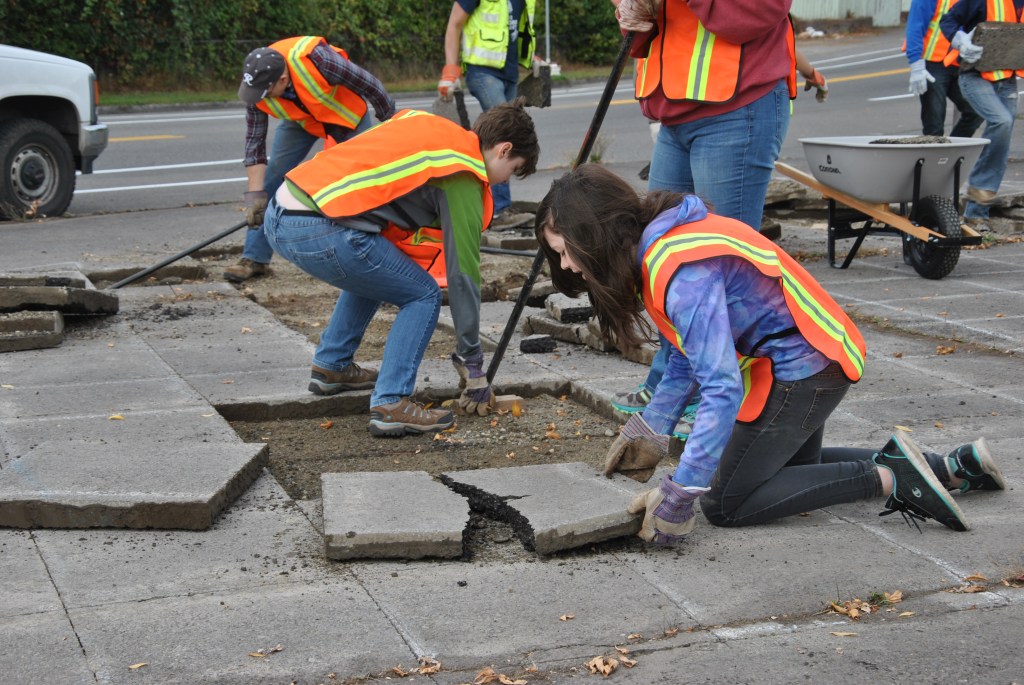
Depaving in Pierce County, Washington. Image: Wikipedia, By STORM Outreach – https://www.flickr.com/photos/132714403@N02/46093120691/, Public Domain, https://commons.wikimedia.org/w/index.php?curid=124717459
Sustainable Skerries made a submission to the draft Climate Action Plan (see below).
The acknowledgement stated: “All submissions will be reviewed by the Department of the Environment, Climate and Communications, and may inform updates to the final version of this year’s Plan.”
Let’s hope it will make a difference! Here is our submission:
Sustainable Skerries, a committee of the Skerries Community Association, based in North County Dublin, welcomes the opportunity to comment on the draft Climate Action Plan 2024 (‘CAP24’). It has many positive aspects, including increased focus on the role of local authorities and citizen engagement, and additional actions and key performance indicators compared with CAP23. Some suggestions to further strengthen CAP24 are set out below.
- The role of local authorities and tracking of their action plans
In October 2023 Sustainable Skerries responded (here) to the Fingal County Council Draft Climate Action Plan 2024-2029 (‘FCC’s draft plan’). In that context, it is positive that CAP24 recognises the key role of local authorities in addressing climate change and the need for training and capacity building for local authority staff and elected members (chapter 19).
On p.385 CAP24 states “local authorities will devise an approach for the annual implementation of actions, track progress through KPIs, and report on progress at local and national levels”. Sustainable Skerries felt that FCC’s draft climate action plan could be improved in that regard. For that reason, we suggest that at national level, a demand is added that all actions in the local authority climate action plans be linked to specific, measurable, achievable, relevant and time-bound goals. Multiple actions in the draft Fingal plan are currently too vague with no targets specified.
Actions in all local authority plans must thus also be weighted in their impact so that a report on the progress can reflect in a quantifiable manner how much mitigation, or what progress with adaptation, has been made. Additionally, it is meaningless to report that “20% of all actions have progressed” if any specific action only moves the needle a tiny bit. Indeed, there is no indication across the multitude of actions in Fingal’s draft plan as to what actions take priority or are considered most impactful, again emphasising the need to carry out an impact assessment for each action e.g., in terms of emissions or energy efficiency. Local authority action plans should be mandated to include prioritisation. This should also help with prioritisation and informing where budgets are spent. KPIs need appropriate target ranges set in advance. We call upon national agencies to support local authorities in developing meaningful KPIs. - The impact of data centre electricity demand on emissions
Several submissions to FCC’s draft plan, including from Sustainable Skerries, raised concerns about the contribution of data centres to emissions. We note that CAP24 mentions data centres explicitly only once (p.52), even though the SEAI’s National Energy Projections 2023 highlight that the achievement of the electricity sector’s carbon budget will be heavily influenced by datacentre demand. We request that section 12.4.1.3 of CAP24 on electricity demand management explicitly covers actions related to datacentre electricity demand. - Decarbonising the aviation sector
We note that Dublin Airport and the impact of air travel on greenhouse gas emissions are not mentioned at all in FCC’s draft plan, again this was raised in several submissions to FCC. We note that CAP24 recognises the importance of international co-operation, including EU regulations, in decarbonising the aviation sector. However, the only concrete measure that appears to be mentioned is the use of sustainable aviation fuels (p.281). However, there is still considerable uncertainty as to the emissions reduction impact from sustainable aviation fuels, as well as other challenges
related to sourcing them, therefore experts believe that other mitigation measures also need to be considered e.g., Sustainable Aviation Fuel: How Sustainable Is It Really? | IBA. This includes aviation demand management, on which CAP24 is silent, even though the DAA has requested permission for an increase in the passenger cap on Dublin airport, which appears incompatible with climate targets – Plans to expand Dublin Airport clash with global effort to slow climate change – Dublin Inquirer. We ask that the topic of decarbonisation of the aviation sector be more fully explored in CAP24, including consideration of additional actions such as the potential for demand management. - Community Engagement
Sustainable Skerries welcomes chapter 9 on Citizen Engagement and the expected outcome of “delivering the vision of climate action for Ireland through the shared values of fairness, collaboration and positive change” (p.99). Like FCC’s draft plan, CAP24 focuses actions in this area on communication and engagement. These are necessary but not sufficient for action, people also need to have the facilities/infrastructure to be empowered to affect change. We ask that this is more explicitly recognised in CAP24, and sufficient support provided to local authorities and to community groups to enable them to implement new facilities such as the provision/expansion of community repair and recycling spaces, to facilitate behavioural change.
It is important to recognise that high emitting sectors such as transport and agriculture, and the increased usage of data centres, are providing goods and services to consumers and households. Therefore significant change is required at the household and community level to achieve carbon budgets. It is positive that CAP24 recognises the need for further social and behavioural research to identify and address barriers to policy implementation (p.111). We suggest that more emphasis is placed on this aspect of CAP24, as without overcoming social barriers (such as concerns regarding financial costs and practical inconvenience or mistaken beliefs about climate change), the many technical solutions proposed are unlikely to be successful. Additionally, whilst the community climate action fund is welcome, community groups are usually time-constrained volunteers, who need practical as well as financial support to contribute to climate action, e.g., direct access to specialist
expertise in relevant areas or the possibility of using climate-action funds for paying for admin support .
Conclusion
Sustainable Skerries recognises the many positive aspects of CAP24 and acknowledges the considerable work that has gone into producing it. We hope that our comments are useful in improving it even further.

Committee Member Hans Zomer reminds us:
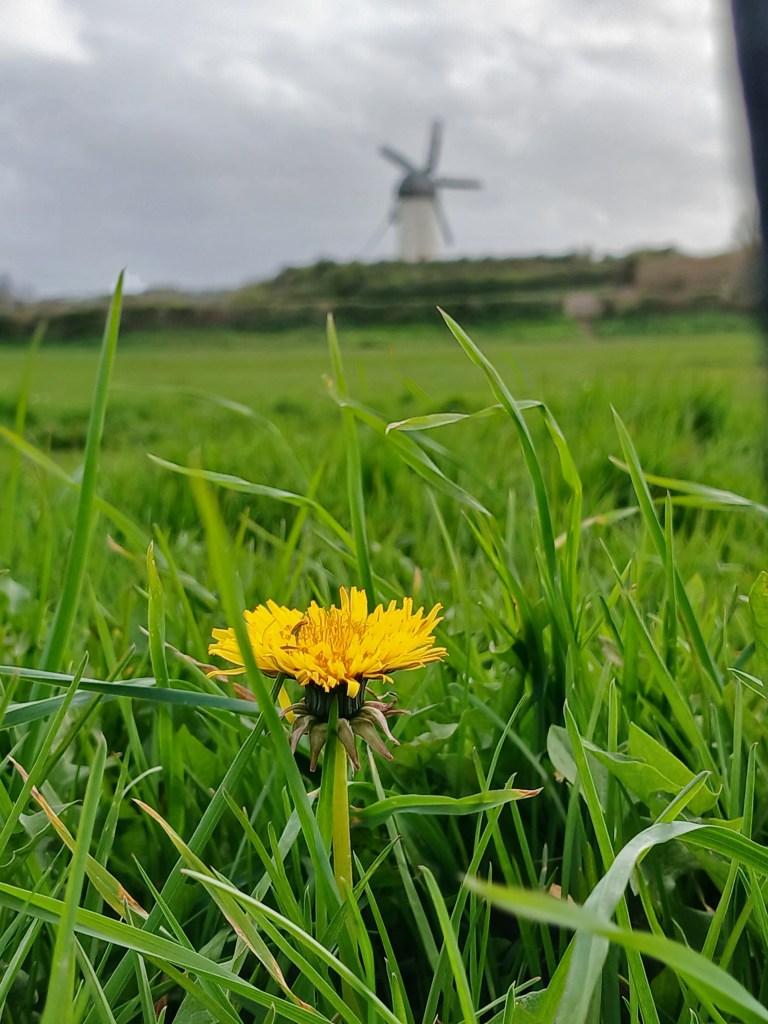
Spring is an important period for our buzzing buddies, the bees. Bees and other pollinators rely on a variety of flowers for food from March to October, especially in the spring, when they’re just waking up from their winter hibernation. And some of their favourite food comes from these beautiful yellow flowers, that many people consider weeds. Did you know that there are 98 species of bee in Ireland? And that only one of them, the honey bee, is not at risk? So, this spring, lend a helping hand, by doing something simple: let those dandelions bloom, and leave this yellow bee superfood bee!

Are you a member of a neighbourhood network? A WhatsApp group just for your road? A Facebook group for your estate? A residents’ association even? Yes? Great! And do you get messages via the Neighbourhoods Network? No? Then join the network! The Skerries Community Association, or rather, volunteers on their behalf, run a WhatsApp group with one rep from each group that joins up.
The Skerries Community Association (SCA) is facilitating this network of neighbourhood groups in order to bring together all the neighbourhood groups in Skerries. This helps the exchange of information and more.
If there is no group yet in your area, just start one! More details and a list of existing member groups of the Skerries Neighbourhoods Network on skerriesca.com/neighbour
And why is this important enough to be mentioned on the Sustainable Skerries blog?
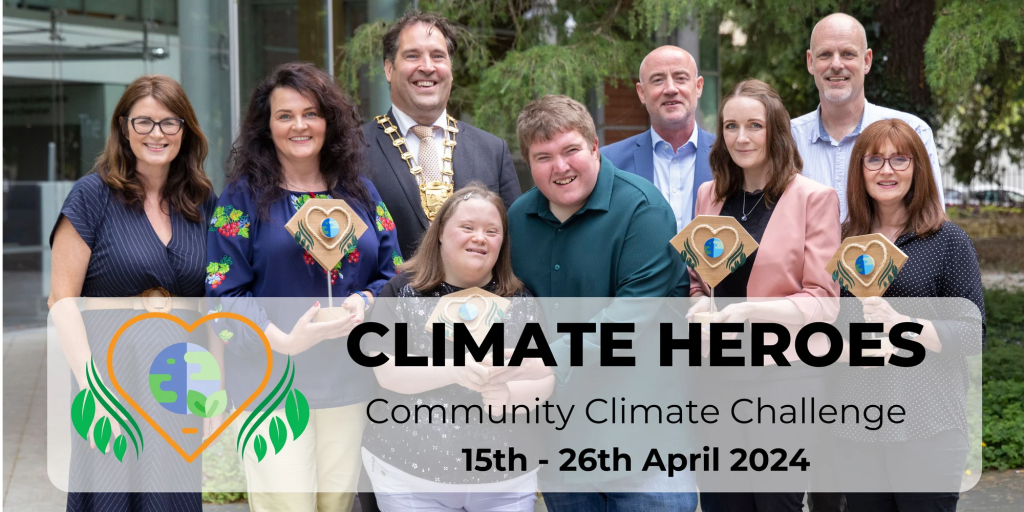
Because this year, the SCA is challenging all neighbourhood groups to join the Climate Heroes challenge!
What is Climate Heroes? Climate Heroes is team-based climate challenge. Together with other members of your group, you will learn about and take simple actions on the drivers of climate change. Investigate and challenge the forces driving climate change. Compete to reduce carbon emission. Capture your actions using a simple yet powerful app. Best of all, this competition is fun, engaging, and habit-forming – and fully free to community groups and organisations in Ireland.
What’s involved?
- Register at this link before April 11th
- Join an orientation session to learn more about the platform and competition
- Attend optional workshops to frame climate actions through a global lens, and meet others committed to the cause
- Log climate friendly actions during the two week challenge, and encourage your team to do the same.
- Reflect, debrief, and pat yourself on the back!
What is the Skerries Challenge? The best of all the participating Skerries Neighbourhoods Network Climate Heroes groups will win a special prize, thanks to the Skerries Community Association:
Tea / coffee and cake for all team members (5-15) in a Skerries coffee shop of their choice! So find some neighbours, set up a neighbourhood group if necessary, and get started on climateheroes.ie ! Don’t forget to share on the Neighbourhoods Network WhatsApp group that you’re participating!

Would you like your garden to be more nature-friendly?
Are you wondering what plants to get, and how to manage them?
For many years now, Charlie and Marion Heasman have been central to making Skerries a more pollinator-friendly town. They are the driving forces behind the Biodiversity (Pollinator) Action Plan, giving the rare Large Carder Bee the best possible chance to thrive by creating wildflower meadows and pollinator corridors.
If you have seen the beautiful and flourishing community garden at Skerries Mills, then you have witnessed another of their areas of activity. And they are of course behind the annual Skerries Bee Festival.
Many local people have privately sought their advice in making their gardens more pollinator-friendly.
Charlie shared his insights with us in this illustrated afternoon talk, just in time for the gardening season.
Photographs of butterflies and bumble bees were taken during Charlie and Marion’s Skerries Eco Festival Pollinator Walk by Leo Carroll.
Couldn’t make it? Here is the video of his talk!

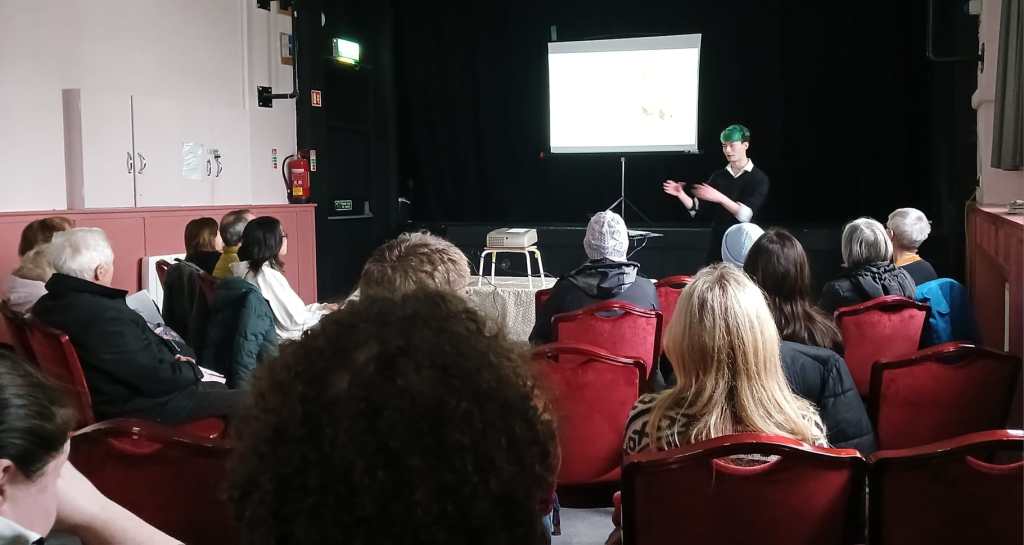
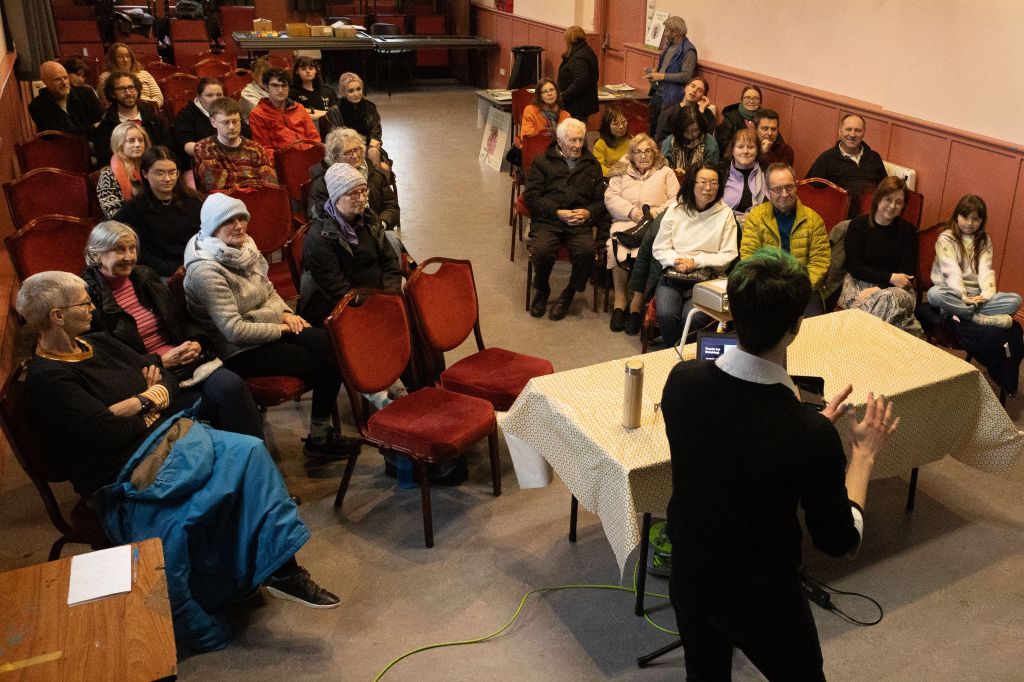
Those who joined Sustainable Skerries last Sunday for Leo Carroll’s talk on insects and biodiversity were in turn mesmerised, fascinated, at times a bit shocked and overall very happy that they had been able to come.
Leo certainly loves insects. He also knows his stuff and is really good at sharing his enthusiasm. Being a skilled macro-photographer (check out his work on Instagram!), as well as a highly engaging speaker, certainly helps. We couldn’t believe it was his first public talk!
If you’re now feeling a bit left out because you weren’t able to come yourself, or indeed if you were there and would like to see some of those slides again, and to hear Leo talk about them – well, then you’re in luck because we recorded the live audio and combined it with the slide show in this video:
A big thank-you to all who helped on the day with this event, to those who spread the word, and to those who came – and most of all of course to Leo: We are looking forward to more talks from you!
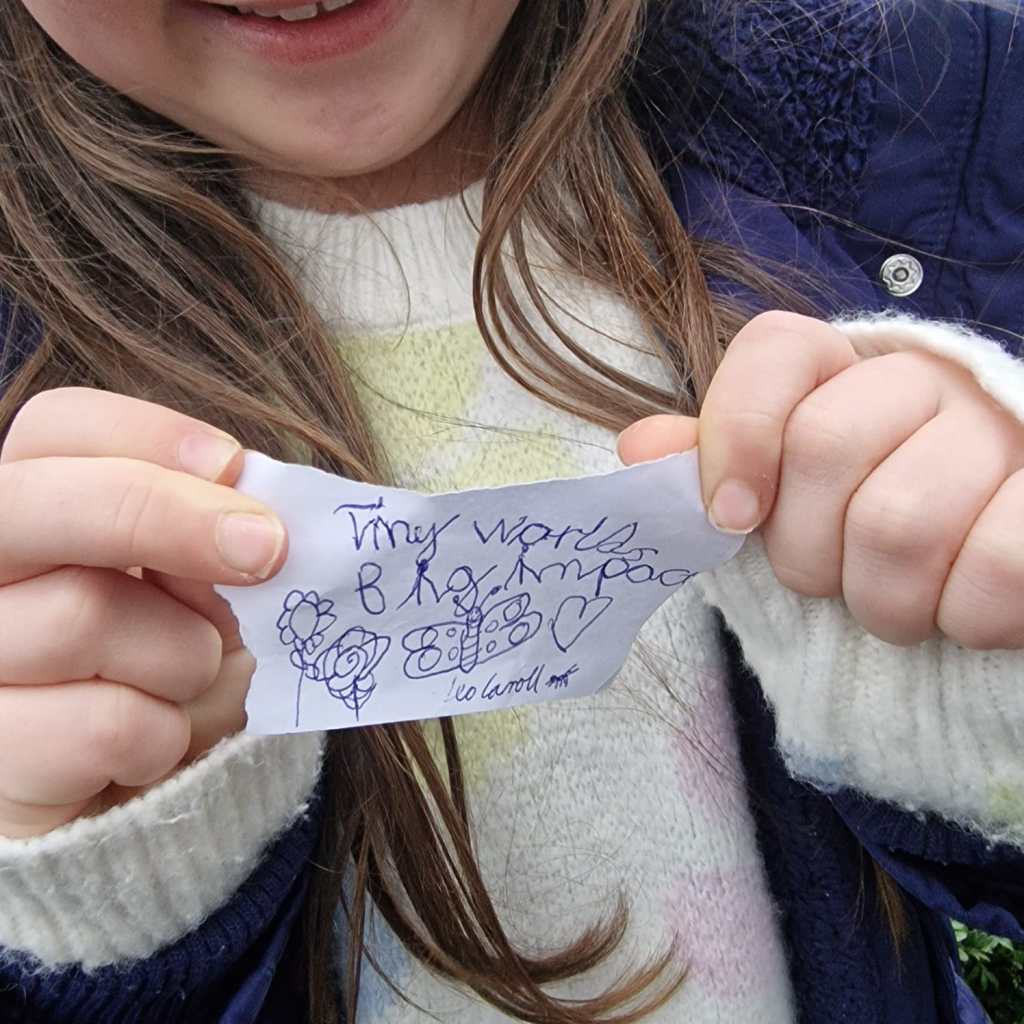
PS: We were very impressed with young Olivia’s drawing, inspired by Leo’s talk – which Leo then signed for her. Wow!

By Sabine McKenna and Hans Zomer. March 2024
This is the first in a series of articles written for Skerries News, showcasing individual projects driven by committees of the Skerries Community Association (SCA) and their work. Expect to read about issues as diverse as sensory gardens and cycling advocacy, town twinning and getting Skerries ready for the Tidy Towns adjudication season, neighbourhood groups, sustainable energy plans and all the fun and goings-on in our Community Centre.
In November 2021, a promising opportunity emerged for us in Skerries: funding to establish “open orchards” in our public spaces.
Initially, it might have been just a passing thought for some individuals – a notion of enhancing the town with more fruit trees. However, for us, members of Sustainable Skerries, it sparked a journey of community engagement and sustainable action.
With the support of ChangeX, an organisation dedicated to community-driven projects, we seized the opportunity to apply for funding to establish open orchards. Thanks to our connections with Fingal County Council, and our affiliation to the Skerries Community Association, we successfully secured funding and collaborated with the Parks Division to bring our vision to fruition. And regular readers of Skerries News will know that our local newspaper has reported on the project’s progress in detail!
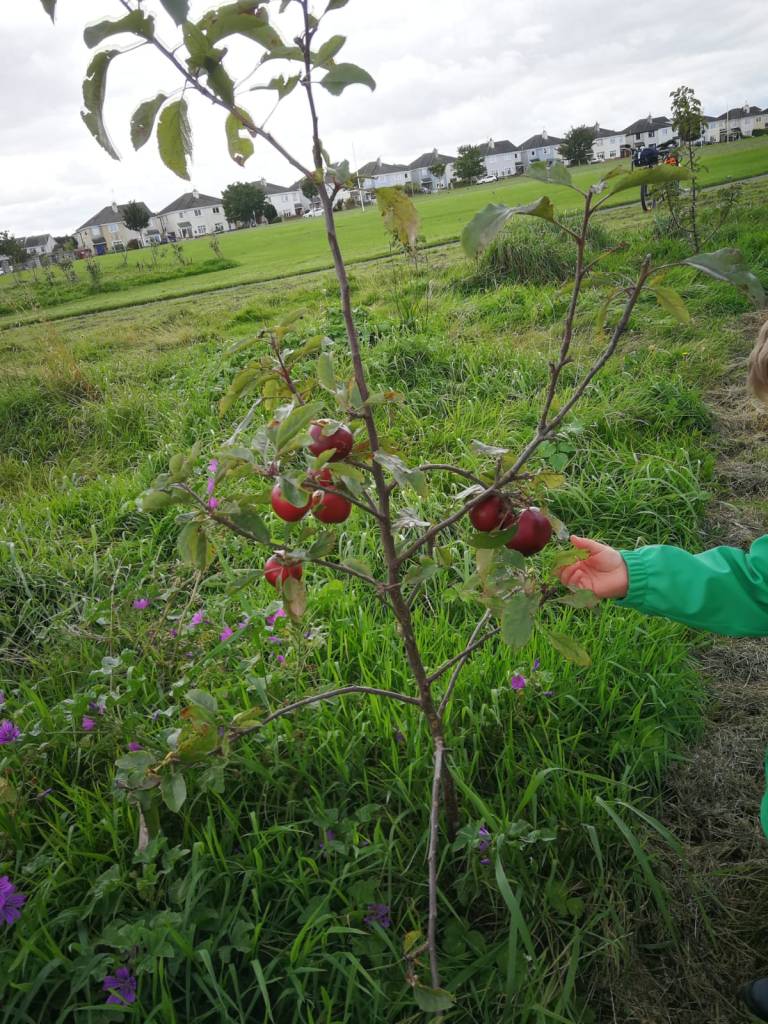
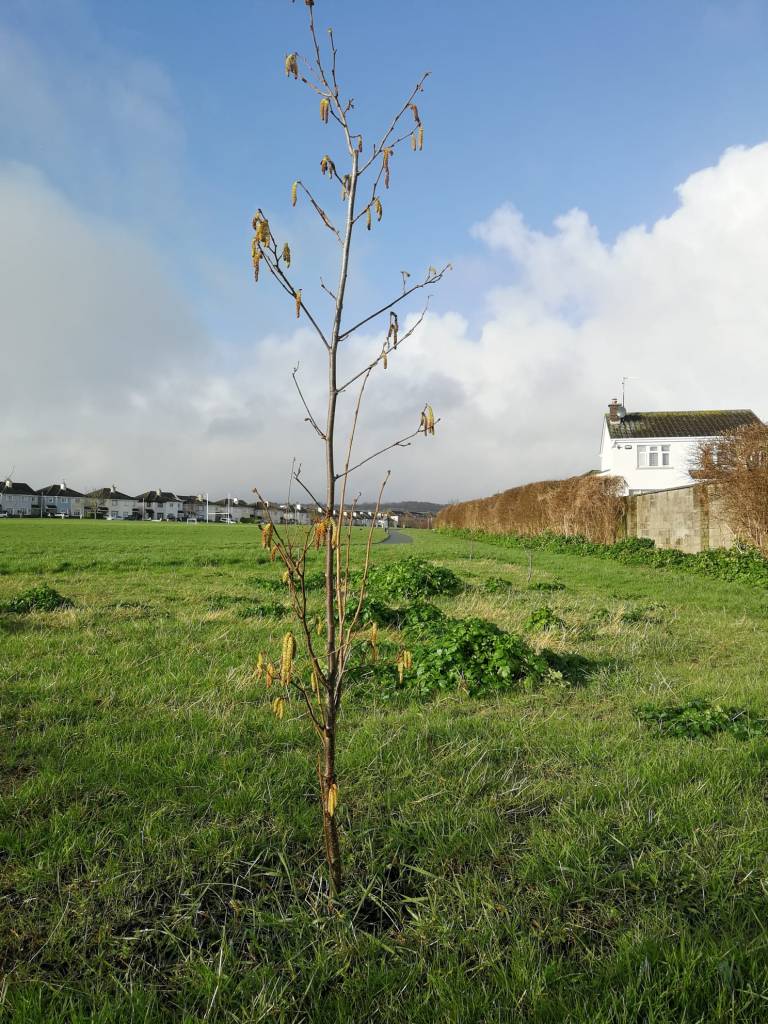
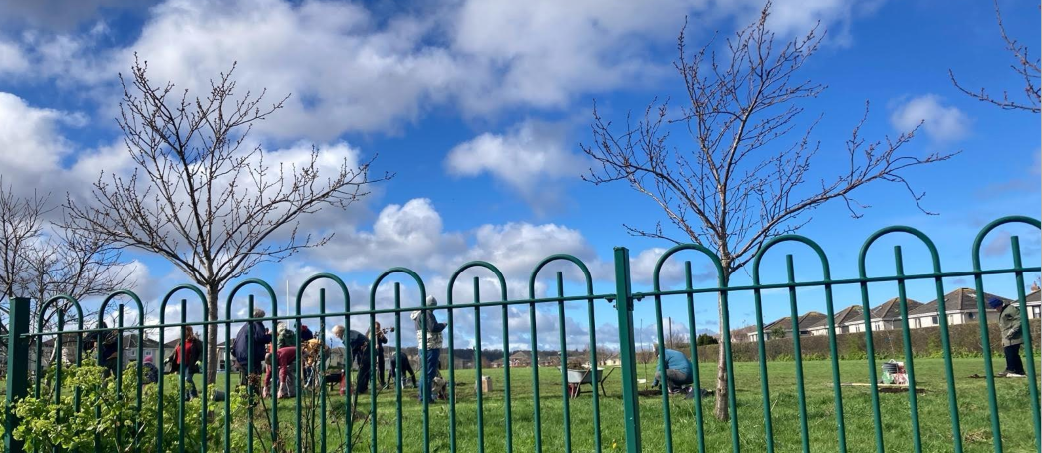
In February and March of 2022, the first three mini open orchards – located at Kelly’s Bay, Mourne View, and near the pedestrian crossing at the Ballast Pit – were planted, marking the initial steps of our orchard project. While the trees are still small, the joy of harvesting the first few apples last autumn was a testament to our collective efforts.
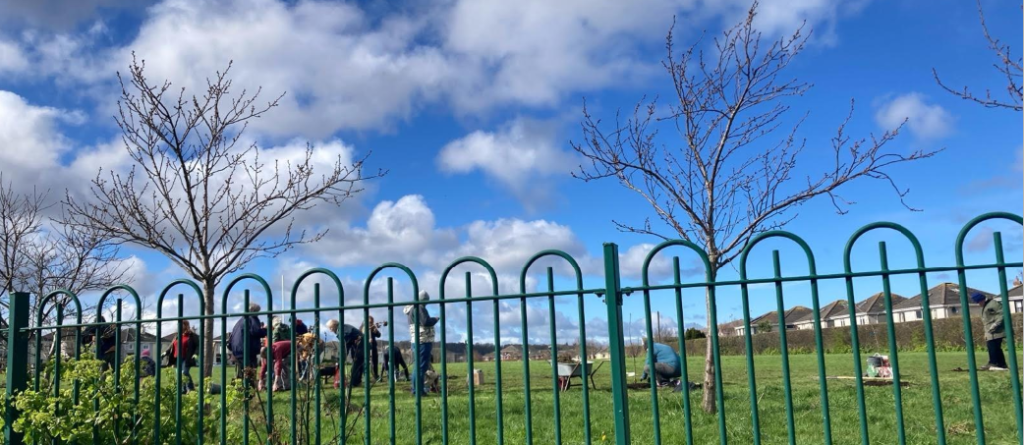
Buoyed by the success and with continued support from Fingal County Council, we expanded our initiative in 2023, planting additional mini orchards in Selskar, Skerries Rock (The Vale and near Seacrest), St. Patrick’s Close and Greenlawns. And in 2024, we hope to extend three of our current mini orchards. The first new trees were planted on Saturday 2 March, and more will follow this weekend.
And the best thing is … we got to meet so many wonderful people. Nearly every other committee of the SCA was represented during our planting days (they are really good fun, even if you might get a bit cold at times – double socks are a must!)
Join us this Saturday, 9 March, in Ardgillan View (2pm), Townparks (3:30pm) and Downside (5pm).
And if getting your hands dirty isn’t really your thing, then you might like Leo Carroll’s “Friendly Neighbourhood Bug” talk in the Little Theatre, on 10 March, at 4 pm.

Looking for ideas for a “Net- Zero Skerries”
Committee member Hans Zomer recently wrote the following article for Skerries News.
Please consider subscribing to Skerries News
We strongly suggest subscribing to Skerries News online – €20 for a year, you get it in your inbox first thing every second Friday morning as a PDF and support this very important local service!
Working on a shared vision for the future of Skerries
Hans Zomer
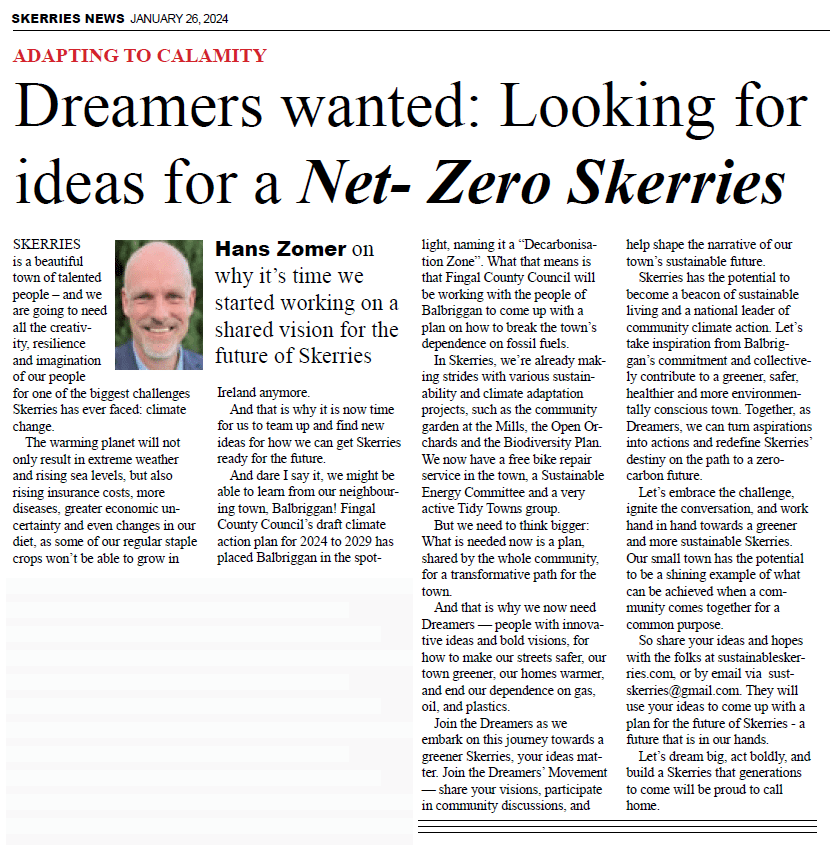
Skerries is a beautiful town of talented people. And we are going to need all the creativity, resilience and imagination of our people for one of the biggest challenges Skerries has ever faced: climate change.
The warming planet will not only result in extreme weather and rising sea levels, but also rising insurance costs, more diseases, greater economic uncertainty and even changes in our diet, as some of our regular staple crops won’t be able to grow in Ireland anymore.
And that is why it is now time for us to team up and find new ideas for how we can get Skerries ready for the future.
And dare I say it, we might be able to learn from our neighbouring town, Balbriggan!
Fingal County Council’s draft climate action plan for 2024 to 2029 has placed Balbriggan in the spotlight, naming it a “Decarbonisation Zone”. What that means is that Fingal County Council will be working with the people of Balbriggan to come up with a plan on how to break the town’s dependence on fossil fuels.
In Skerries, we’re already making strides with various sustainability and climate adaptation projects, such as the community garden at the Mills, the Open Orchards and the Biodiversity Plan. We now have a free bike repair service in the town, a Sustainable Energy Committee and a very active Tidy Towns group.
But we need to think bigger: What is needed now is a plan, shared by the whole community, for a transformative path for the town.
And that is why we now need Dreamers — people with innovative ideas and bold visions, for how to make our streets safer, our town greener, our homes warmer, and end our dependence on gas, oil, and plastics.
Join the Dreamers
As we embark on this journey towards a greener Skerries, your ideas matter. Join the Dreamers’ Movement — share your visions, participate in community discussions, and help shape the narrative of our town’s sustainable future.
Skerries has the potential to become a beacon of sustainable living and a national leader of community climate action. Let’s take inspiration from Balbriggan’s commitment and collectively contribute to a greener, safer, healthier and more environmentally conscious town. Together, as Dreamers, we can turn aspirations into actions and redefine Skerries’ destiny on the path to a zero-carbon future.
Let’s embrace the challenge, ignite the conversation, and work hand in hand towards a greener and more sustainable Skerries. Our small town has the potential to be a shining example of what can be achieved when a community comes together for a common purpose.
So share your ideas and hopes with the folks at sustainableskerries.com, or by email via sustskerries@gmail.com. They will use your ideas to come up with a plan for the future of Skerries – a future that is in our hands.
Let’s dream big, act boldly, and build a Skerries that generations to come will be proud to call home.

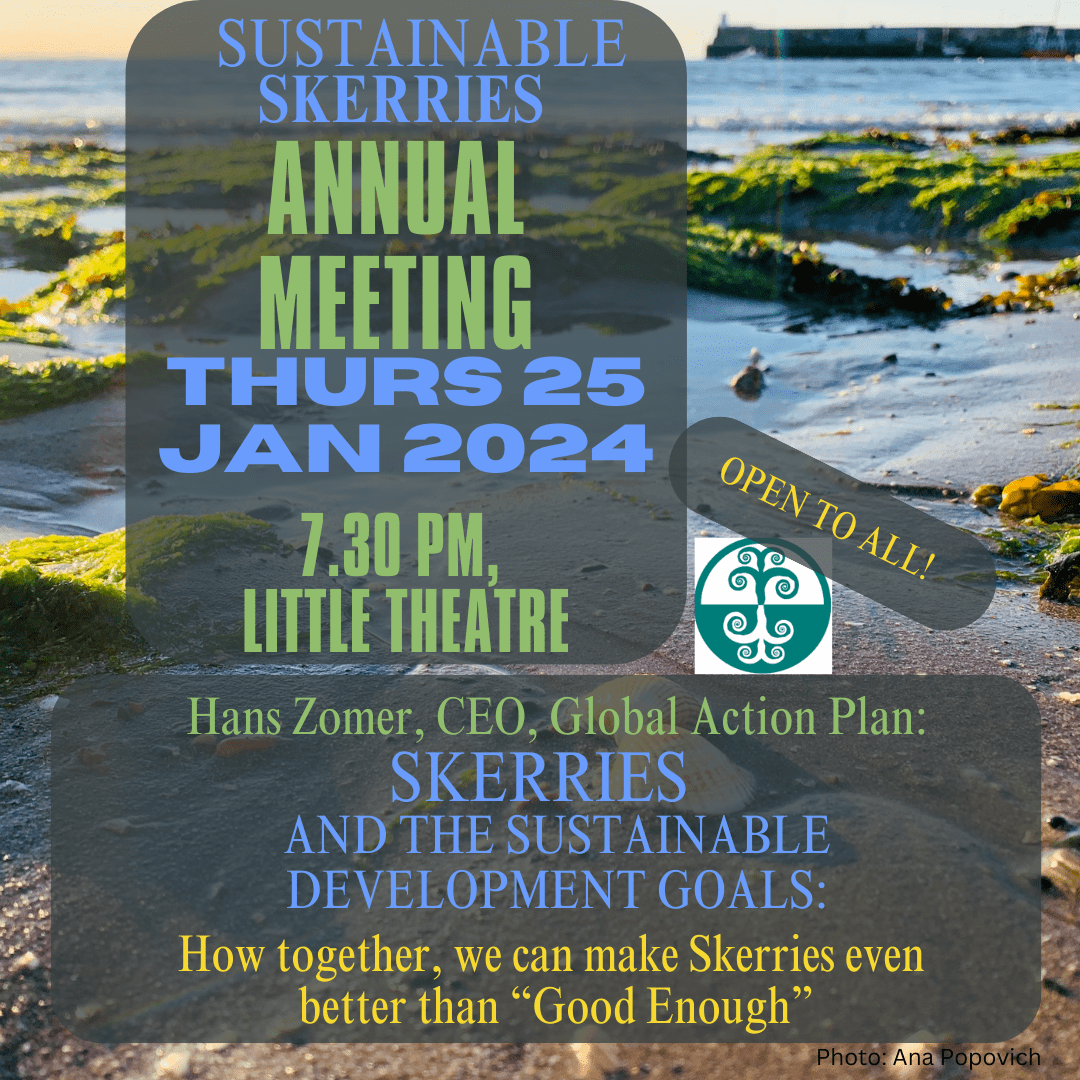
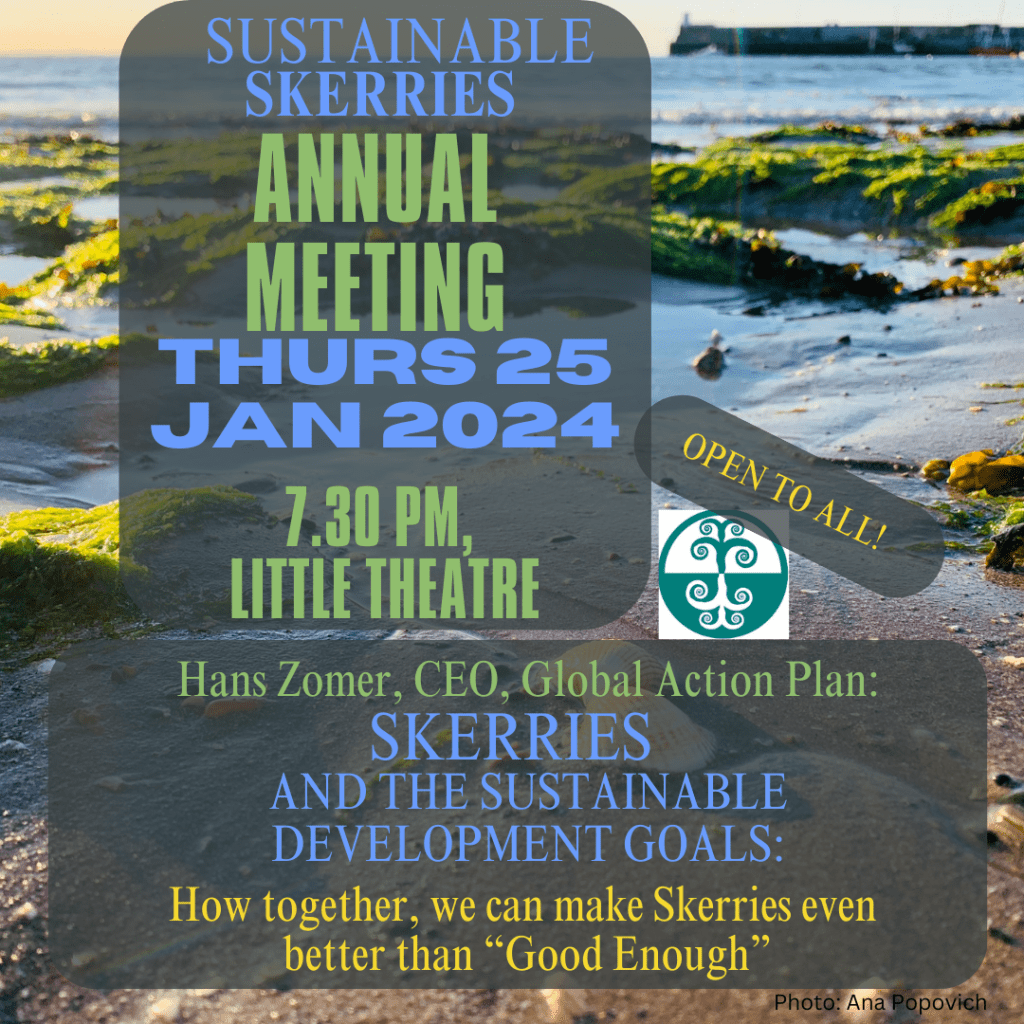
We would like to invite everyone to a talk by Hans Zomer of Global Action Plan on “Skerries and the Sustainable Development Goals – How together, we can make Skerries even better than ‘good enough.’” – and to our Annual Meeting. This is open to anyone interested in attending. Please sign up using this link!
- Sustainable Skerries Annual Meeting, Thursday 25 January 2024, from 7.30 pm, The Little Theatre, Old School, Skerries Community Centre, Thomas Hand Street
Incorporating an informal seed exchange. Bring seeds in small, labelled envelopes!
Traditionally (before Covid and before the time of most committee members), Sustainable Skerries used to hold an annual meeting. We feel that this is a useful way of touching base with the wider Sustainable Skerries community – those who subscribe to our newsletter, as well as those who are members of our WhatsApp group “Chat4SustainableSkerries.”
While this meeting is open to everyone interested, any decisions can only be made by Sustainable Skerries members (those on the newsletter and WhatsApp chat group lists). Don’t forget to sign up using this link!
Sustainable Skerries is a committee of The Skerries Community Association CLG (SCA – which of course holds its own AGMs). We feed into the SCA Annual Report, Financial Statements (which are then audited) and are represented by a committee member on the SCA Board of Directors.
Agenda:
- Guest Speaker: Hans Zomer, CEO, Global Action Plan: Skerries and the Sustainable Development Goals – How together, we can make Skerries even better than “good enough.”
Followed by Questions and Answers - A series of short (3 min) reports on the work of Sustainable Skerries in 2023
plus preview on projects already in the pipeline for 2024
Followed by Questions and Answers
Biodiversity Action Plan – Charlie Heasman
Skerries Open Orchards Project – Sabine McKenna
Consultations / Submissions – Miriam Sweeney
Skerries Eco Festival – Sabine McKenna
Water Management Action Plan – Helen Scullion
Sustainable Skerries and the Skerries Community Association – Helen Scullion
Followed by Questions and Answers - Some formalities:
Approval of committee members;
brief overview of our finances (treasurer: Breda Naddy) - Discussions: What we can do in 2024:
Spreading the word –
Skerries Eco Festival, Skerries Eco Nights: What focus would be best for these?
Sustainable Skerries Survey (to form the basis of an article on actions people in Skerries can take): Who would like to cooperate on this?
Tangible projects – in addition to what’s already in the pipeline:
Community Climate Action Projects Fingal? Keen to be Green in Skerries? - Any Other Business / next committee meeting
The meeting is open to anyone interested in attending. If you know anyone else who’d like to attend, please forward this email to them and ask them to sign up using this link!
See you there!
Sabine & the rest of the committee
 Sustainable Skerries