

Charlie Heasman; 12th July 2017


It’s been a funny old growing year so far – but then aren’t they all? – and in our allotment we’ve so far had our usual mix of successes and failures.

I’m blaming the cold, wet early summer which only came right a couple of weeks ago.

For instance, the courgettes I planted out in late May just sat there and refused to budge an inch.  Just as I was thinking I’d have to start some more the weather improved and now they’re flying.  Soon we’ll be back to the usual problem, familiar to all allotment growers, of how to give them away.  Eventually people start crossing the street when they see you coming.

BTW, if you’ve alienated all your friends and still have some left (courgettes that is; not friends) try them on the barbecue (again, courgettes: not friends).  Slice in half lengthwise, score the fleshy side with a knife and rub in salt, pepper and olive oil.  After ten minutes of the charcoal treatment they are the absolute melt in the mouth experience.

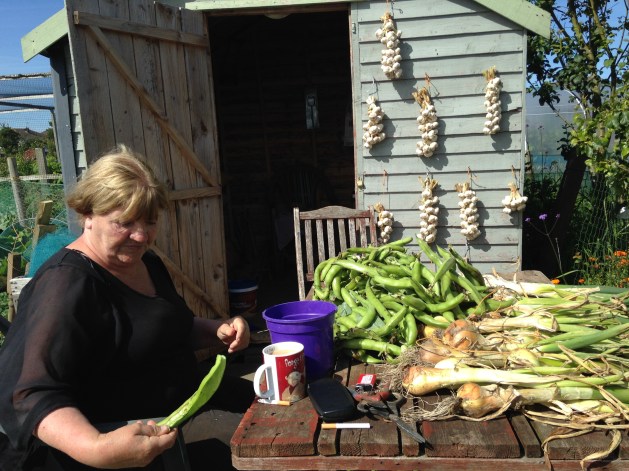
Our garlic did okay again this year and is now dried and plaited for winter storage.  The winter onions grew well and we were pleased with them also – up until mid-June.

IMG_3742

Garlic plaited, onions drying, and broad beans for the freezer.

Onions are supposed to grow and swell up until the longest day.  At this point they decide that the job’s done and the necks fall over and start to wither; time to pull and dry them.  But by mid-June we’d noticed that the stalks were developing neck rot while still standing, we put this down to the incessantly wet weather and decided to pull them early.

Unfortunately we were probably too late.  Best guess: we’ll lose half of them in storage.  Every year we manage to grow and store a year’s supply; I’ve a feeling that by early 2020 we’ll be back down the supermarket.

Other crops fared better.

The winter broad beans grew profusely and yielded well, swelling the contents of the freezer in so doing.  We also had a few plants volunteer in odd parts of the allotment; these are currently providing a later fresh crop.

To me that’s one of the little extra pleasures of gardening: something pops up, you leave it to its own devices and reap the reward.  Lazy gardening made even lazier.

IMG_3739

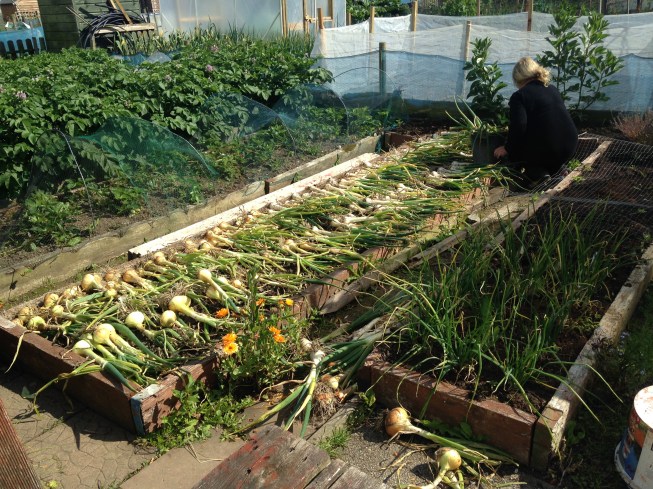
Onions pulled and laid out to dry.

But so far this year we are best pleased with our potatoes.

In the first few years we didn’t much bother with them; they seemed like too much work.  Dig the ground, make trenches, plant the spuds, earth them up.  A heck of a lot of spadework and earth moving.

Then we discovered ‘No Dig’.

Any regular reader of this blog will know that we are trialling it for the first time this year.  We have scarcely stuck a fork into the soil at all.  The beans responded well (as did our peas), the onions did well until they developed the dreaded neck rot on account of the weather, but how on Earth (or indeed, in earth) do you grow potatoes without digging?

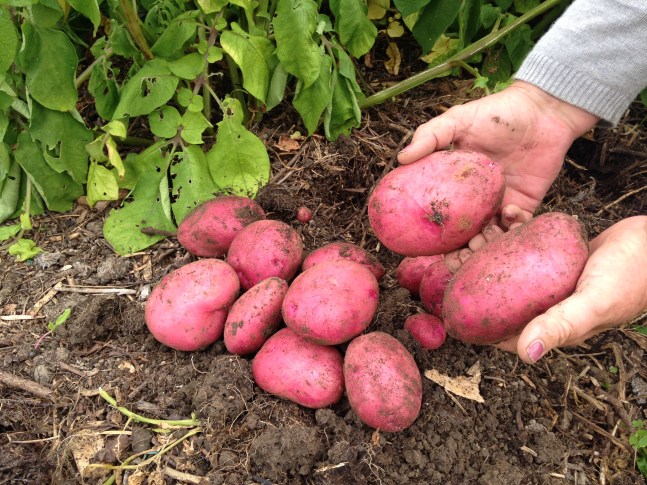
Answer: dib holes into the soil at the appropriate spacing.  Drop in the potatoes.  Cover with 4″ of homemade compost and leave to grow.  When the plants have reached the stage where they would normally be ridged, apply another 2″ to keep the light off the tubers.  Sit back and enjoy a glass of wine.  Repeat last stage if and when necessary.

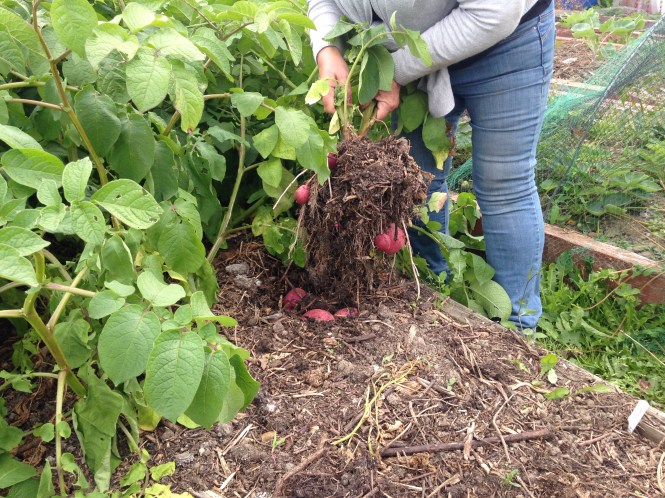
When it is time for harvest follow the steps below:

IMG_3839

1. Grasp plant firmly by base.

IMG_3840

2. Twist and pull.

IMG_3842

3. Scrabble around with fingers and remove potatoes.

It really is as simple as that.

Because the tubers have developed in the compost as opposed to the soil below they are really easy to get out.  Who out there remembers as a kid ‘lucky dip’ in a barrel of sawdust?  Pulling potatoes proves to be an evocative memory.

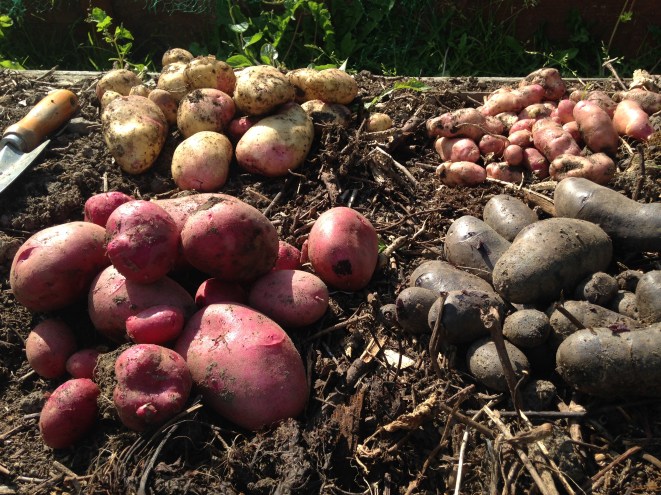
The spuds in question are Sarpo Mira, and more about them in a moment; but this year we grew four different varieties.  Here they are:

IMG_3888 (1)

Back left: King Edward, back right: Pink Fir Apple, front left: Sarpo Mira, front right: unnamed Blue Potato.

King Teds are self explanatory: an oldie but a goody.  Pink Fir are one of our personal favourites: a small knobbly potato that looks like the ancestor of all potatoes which you simply wash and cook (don’t even think about peeling them).  Sarpo Mira: more about them to come.  Blue potatoes: no idea, a friend gave us four seeds and that’s as much as we know.

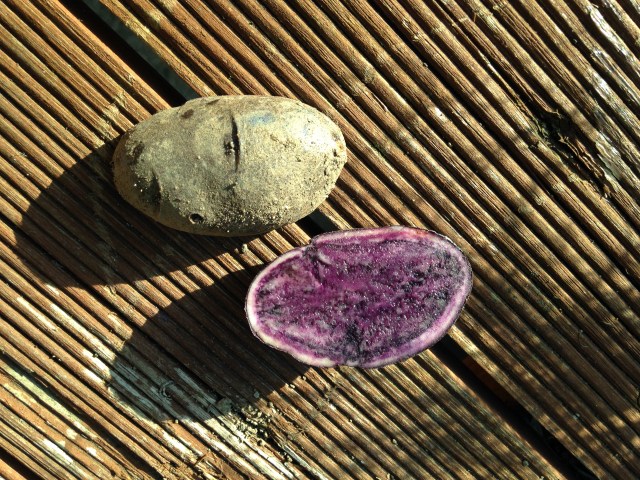
Actually, from the outside they look more black than blue; cut into them and they look like this:

IMG_3894


What’s more, they stay that colour when cooked.  We know this because we tried them for the first time this evening.  It would be nice to report that they are as delicious as they are exotic, but sadly this is not the case.  For flavour go to any of the other three.

On the other hand we have a family barbecue scheduled for tomorrow evening and blue potato salad should at least prove to be a conversation point.

So what about these Sarpo Mira?

I must confess that I’d never heard of them before this year, but when I did I did what I always do and looked them up on the internet.  This is what I learned:

Circa 1940 the Communist Regime in Hungary were looking for a high yielding, blight resistant, low maintenance potato which did not require a plethora of sprays to feed the masses.  They came up with this.

It was quite probably incidental, but actually it also has the extra advantage of good texture and taste (my opinion).  We like it because it has a waxy texture; the internet tells me that if you leave it in the ground (and I’m sure that ours will yield even heavier if left), it will become floury.  Truly a potato for all people.

Those Crafty Commies might have done the world some good after all.

Leaving Communist Hungary and returning to Skerries Allotments it was our friend and neighbour, Norman Scott, who in a roundabout way introduced us to them.  Last year he gave some seed to another neighbour who grew them, didn’t earth them up properly, and dumped the resultant green potatoes in the bottom car park.

I saw this and, being the parsimonious person that I am, retrieved them and kept them for seed.  The progeny are in the pictures; free seed grown in free compost.  Couldn’t be better.

———————–

So it’s nice to be able to write about something nice.

It’s also nice to be able to report that the dumping of plastics and other non-biodegradables in the allotments has slowed significantly.  Not stopped; slowed.  Fair play to those who now segregate, but there are still some eejits that (and I use the word ‘that’ as opposed to ‘who’ advisedly) haven’t yet got the message, and if it were not for the efforts of one or two people who clear up behind them the problem would be worse.

They’re quite content to have someone else wipe their backside for them and they know who they are.

I will not mention by name one of those who currently does most of the clearing up because (s)he would not thank me for it, but D**** ****e, you know who you are too.

Also sprays.  Why do a significant minority insist on spraying outside and around their allotments?  Is there a practical or  an aesthetic preference for the dead, scorched look or is there some other reason?


Charlie Heasman, June 16th 2019

IMG_3725

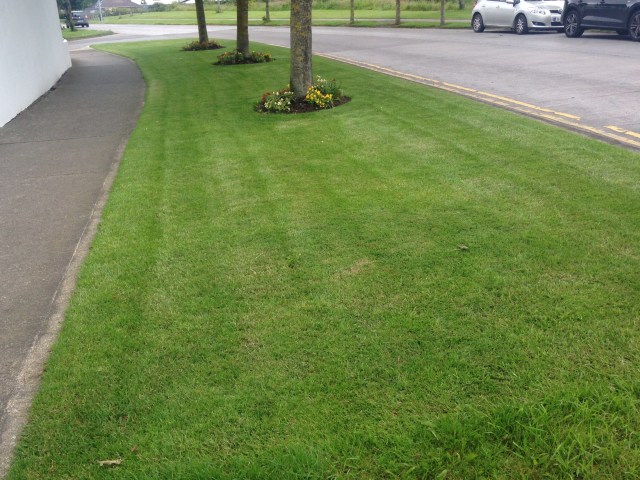
I set out to write about bumblebees and have veered off topic before even writing a word so this will be a post in two parts.  The bees will come later, and there is a connection, but for now let’s think about the grass.

We have an obsession with lawns, lawnmowers and keeping grass cut.  By cut we mean short, the shorter the better.  Skinned in fact.  A uniform verdant green is what is to be earnestly desired and imperfections of any kind, especially weeds, will not be tolerated.  For many of us even so much as a daisy with the temerity to pop up is a bridge too far.  Out with the lawnmower, reach for the spray, apply lawn conditioner.  A natural look?  Not in my backyard!

But why?  No, really, why?

It is not as if in so doing we are bringing a natural look to our gardens; quite the opposite.  What we are doing is overcoming nature, bringing a bland homogenised look to the ground we own and walk on.

What’s more it’s costly.  Costly in terms of labour, costly in terms of weedkillers and additives.  And perhaps there’s the answer.

We live in a world where we judge the value of things not by their worth but their price.  The more it costs the more we want it.  An expensively manicured lawn is just that: expensive.  It proclaims to the world that the owner has money; come to that it proclaims to the owner that the owner has money.  There is nothing new about this.

Go back a few hundred years and look at the great estates of Britain and Europe.  Palatial stately homes were designed and built to shout one thing: ‘look at me, I have money’.  Once the house was built the grounds had to be landscaped and vast lawns established.  These swathes of land sent out the same message: ‘I have so much money that I don’t need to use the land, I can do with it what I please’.

It cost money too, a lot of money.  This was before the advent of the lawnmower and maintenance would have had to be done entirely by hand.  A scythe was the weapon of choice and cutting grass tight and keeping it that way with a scythe was hugely laborious. A mansion was a status symbol; a mansion with a well manicured lawn doubly so.  Lawns were the preserve of the rich; no-one else could afford one.

Then in 1830 a resident in the small village of Thrupp, just outside Stroud in Gloucestershire, did something to change all that.  He invented the lawnmower.

This not only saved the rich a considerable amount of money, it also meant that the newly emerged Victorian middle class of the Industrial Revolution could now afford a lawn too; albeit a rather more modest sized one.  And afford it they did, each pocket sized patch of carefully shorn green proclaimed the wealth and upward mobility of the owners behind the front door.  The invention of the lawnmower revolutionised the suburban landscape and helped make it what it is today, our vanity and our desire to show off remain unchanged.

Our forbears emulated their betters and we ape our forebears without even knowing we’re doing it.  That is how we’ve ended up with our present mindset.

Now, I can’t tell anyone what they should or shouldn’t do in their garden and have no wish to do so, anymore than I would feel compelled to dictate the colour of their wallpaper.  I’m simply inviting people here to ask themselves why short grass is so important to them.


IMG_3718

Grass verges are another matter entirely, they are not status symbols and if we can get away from the ‘shorn like a sheep’ mentality we can perhaps find a better use for them.

Howls of anguish already: “they must be kept neat”, “we don’t want our town looking scruffy”, “we can’t have weeds growing along our roads”, etc, etc.

Point taken, but can we at least compromise?  If we were to look at things through slightly different eyes would we even be compromising at all?

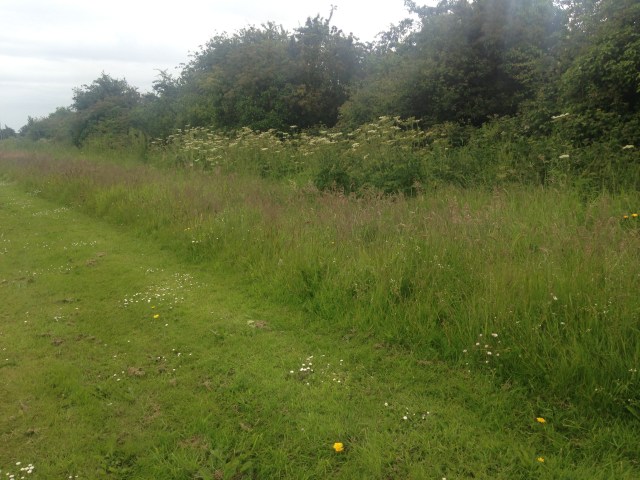
I believe Fingal CC have got the balance somewhere near right on the railway side of the newly named Barnegeera Road.

IMG_3713

A strip along the kerb is mowed; the rest left (so far this year at least) to nature.  This inconveniences absolutely no-one, saves fuel and taxpayer’s money and benefits wildlife.  A win win situation.

Personally I’d like to see the mowed strip narrower and the wild part wider but we’re working along the right lines here.  Do I think it looks untidy?  No I don’t.  Do you?

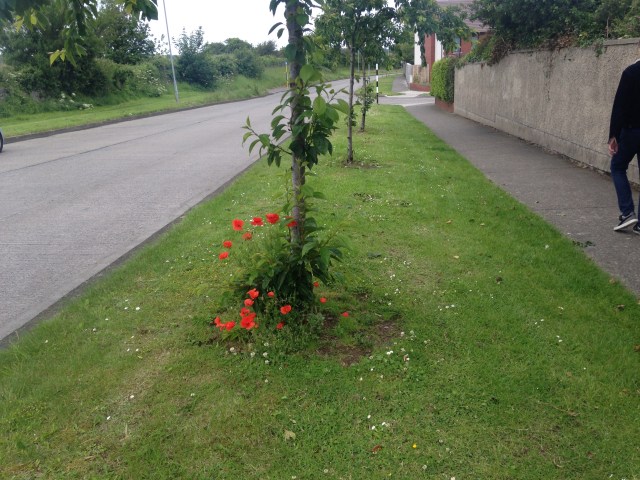
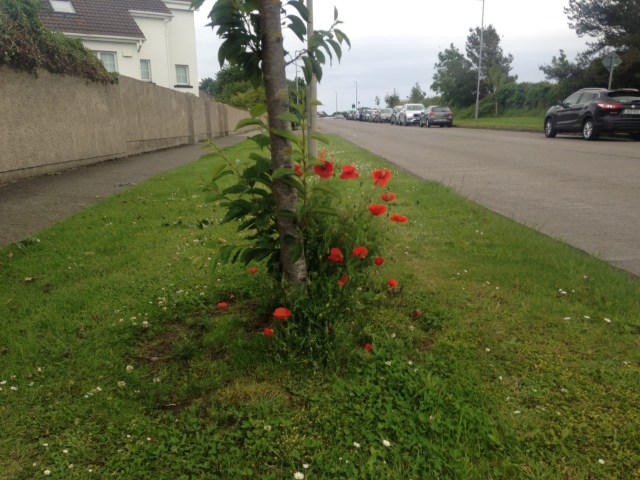
Crossing to the other side of the road, and going back to our first picture, we have a different story.

IMG_3716

Fingal, like so many Councils, are in the habit of spraying round the base of trees; these poppies are probably doomed.  Why do it?

What is so harmful about a tiny patch of wildlife that it must be exterminated?  Far less harmful than the sprays that do the job.

———————————–

Let us move to another part of Skerries and to the bees that were originally supposed to be the subject of this blog.

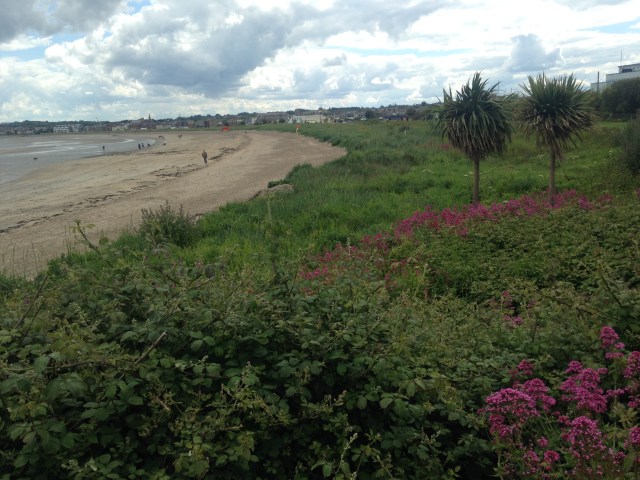
We are going to the South Strand.

IMG_3693 (1)

We have parked up, got out of our car and are walking across the neatly mown grass.

IMG_3694

But what happens when we reach the unmown part?

IMG_3692

This is what happens.

This part could be mown, but it’s not.

It gets better…

454288450580738049_IMG_1056

Nature imitating art: a Renaissance painting if ever there was one.

IMG_3697

IMG_3700

IMG_3706

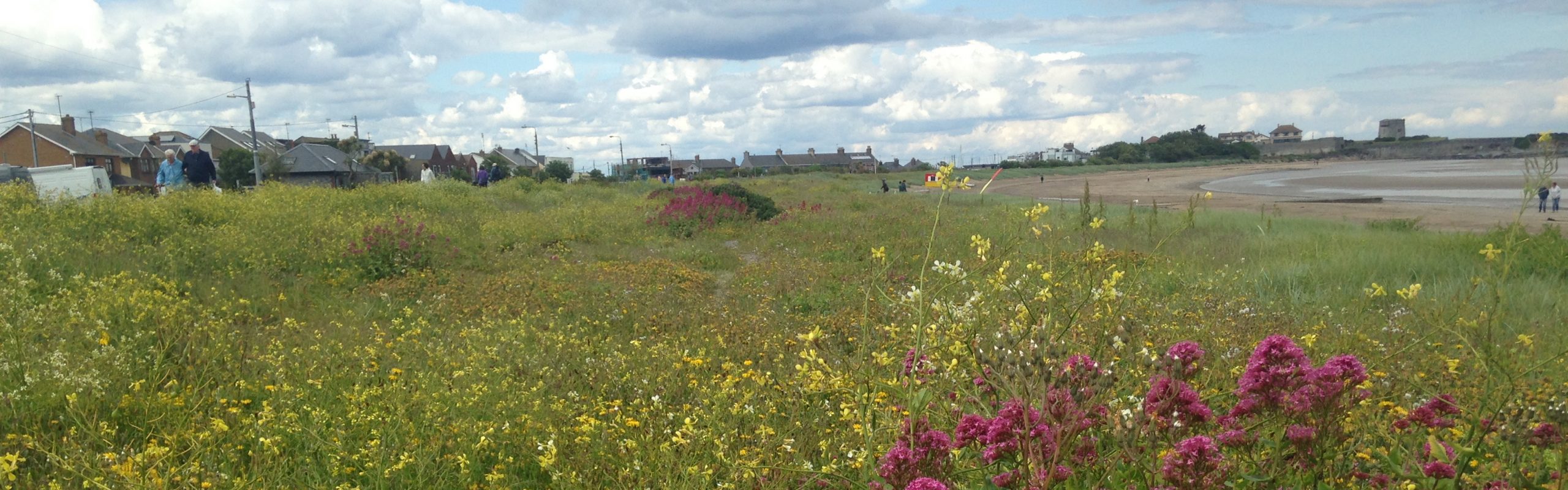
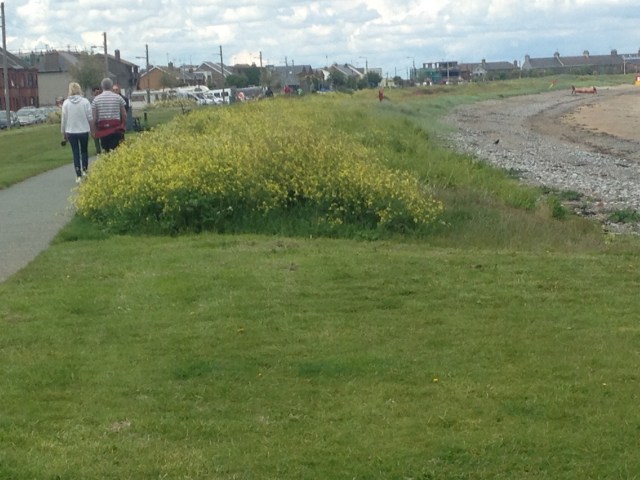
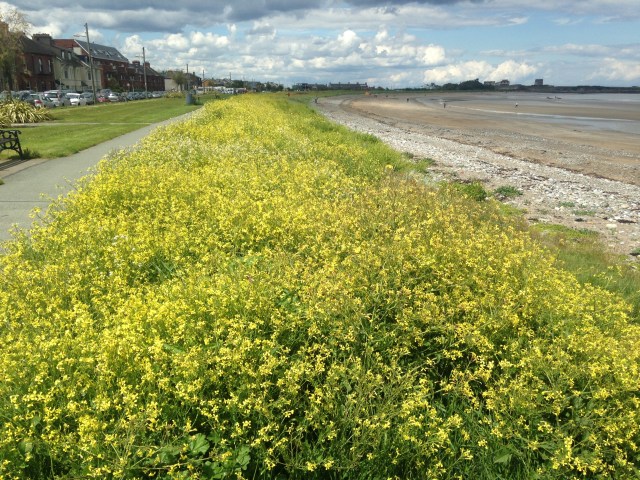
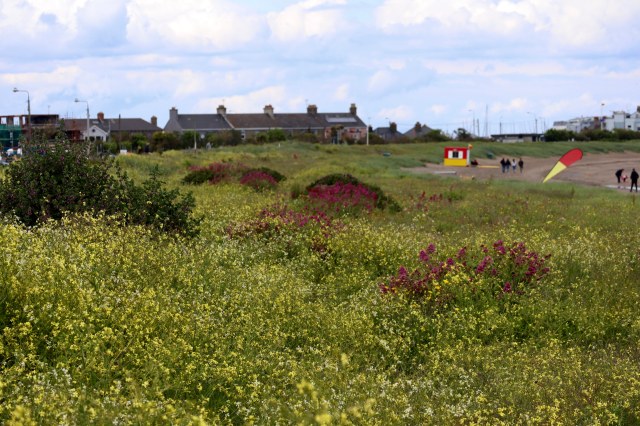
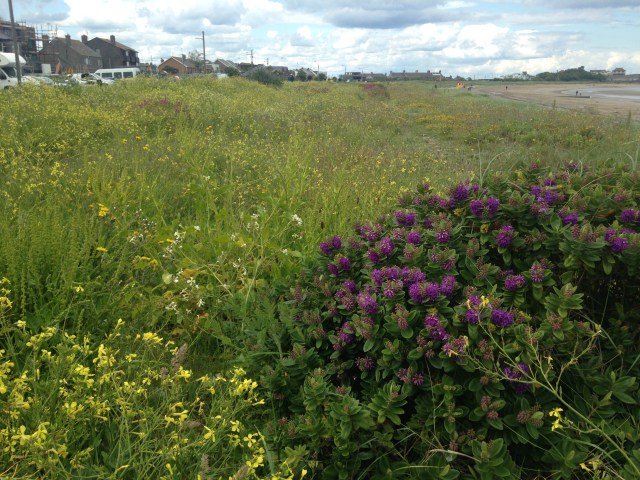
This strip of land is left to its own devices, it grows what wants to grow on it and people can enjoy it.  Access is in no way restricted, one can walk alongside it, across it, or through it.  What’s more, so can insects.  And bees, which is why we were here yesterday.

Bumblebees, as we all know, are in decline.  So are a whole host of other pollinating insects.  At this rate it will not be long before we are all in trouble ourselves, we need to reverse the trend, and urgently.

The problem is that in order to fix a problem it is necessary to know as much about said problem as possible, and that is not always easy.  How much have bumblebees declined?  How many were there before?  What do we actually mean by before?  Before what and when exactly?  How many are there left now?

Fortunately there has been a monitoring scheme in place in Ireland for ten years now so at least we have an idea how many there were then; before that is only guesswork but it doesn’t take a lot of guessing to say that it would have been considerably more.

Unfortunately the results of ten years study has shown a steep decline with several species now endangered.

The public, you, me and anyone else can help here by monitoring a local area and submitting records of sightings to the National Biodiversity Database.  Skerries has a newly formed group of bumblebee watchers doing just that and they’ve actually managed to come up with some good news for a change.

One of the members came across what he was pretty sure, but couldn’t quite believe, was four queens of the same species feeding on the same plant.  Seeking confirmation, a photo was duly sent and the answer came back.  Not only were they indeed queens but they were of a species (Bombus muscorum) in the close to endangered rating.  They had not been previously recorded in Skerries.

That sighting was in the Ballast Pit one week ago.  Marion and myself thought it might be worth a look on the South Strand and that is what has brought us all here now.

We were amazed when we set to work just how many bees were here, in places so many it was difficult to count at all.  We encountered five different species, pretty normal for any one site.


-4528486109478630773_IMG_1052 (2)

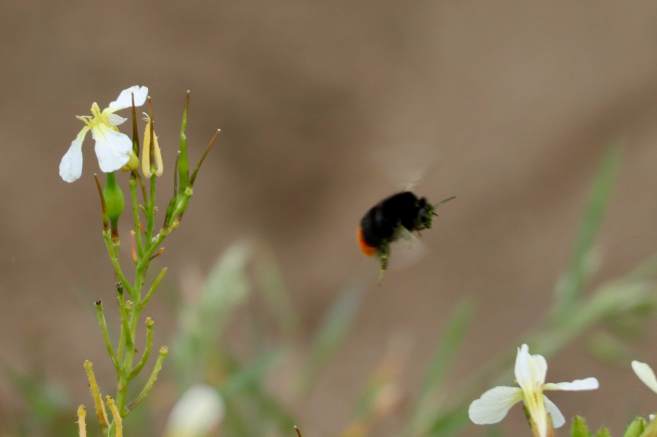
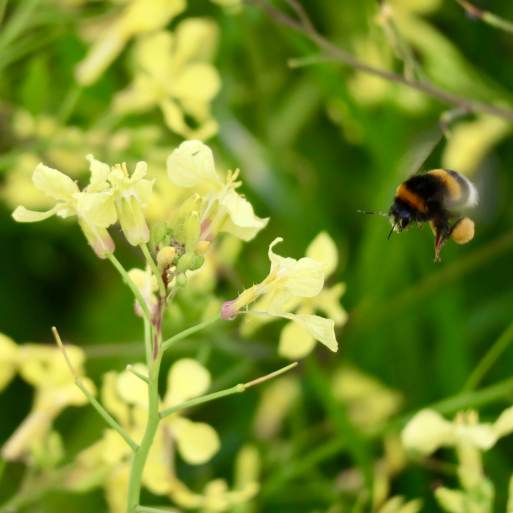
B lapidarious Photo: Tom O’Reilly, Drogheda

4671500109076307134_IMG_1058

Note the full pollen sacs. Tom O’Reilly again


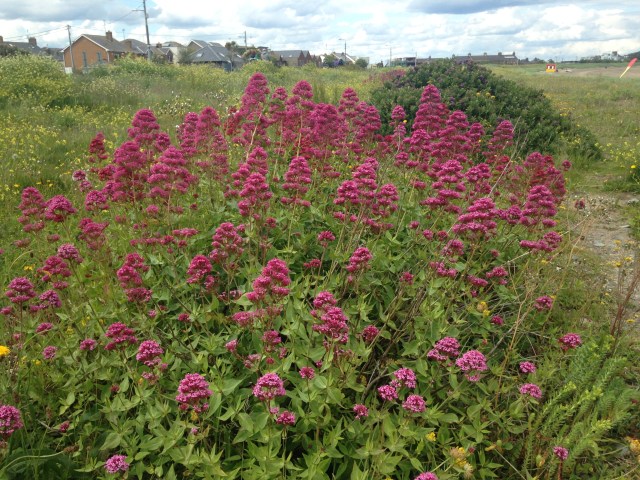
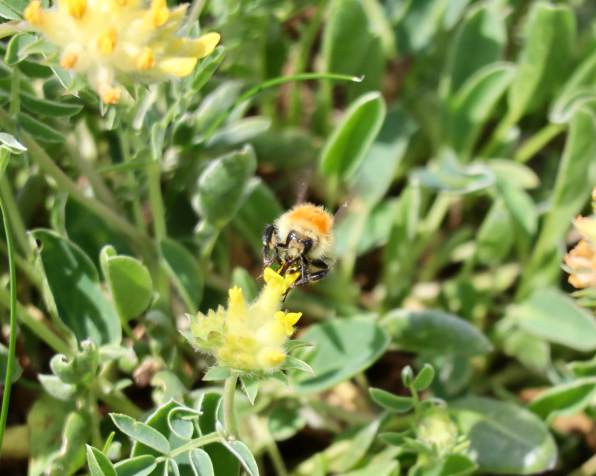
We were only about 15 mins in when we found what we.d hoped to see: a Bombus Muscorum, and a queen at that, feeding on Red Valarian.

Out came the trusty iphone and photographic evidence obtained.  Unfortunately I’m a lousy photographer, especially when it comes to bees which tend to be incooperatively mobile, and I’d be ashamed to show that picture here.

Our luck changed in this respect a little later when,having found plenty more of the same species, a guy with a decent looking camera asked us what we were doing.  We told him and he was pretty interested, being an amateur beekeeper himself as it turned out, so he started clicking away.  The results are these photos.

2744795620005273387_IMG_1074

B muscorum worker. Photo: Tom O’Reilly


We were able to lead him to a muscorum queen and here she is:

-2698406177361728069_IMG_1075

All in all a successful day.  When we got home we tallied our counts and found that, by our results at least, the semi endangered muscorum actually makes up 6% of the bumblebee population of the South Strand.  An important and surprising result given that it was first recorded in Skerries only one week previously.

——————————

To conclude:

The South Strand is a small but important conservation area but you have to look closely to appreciate its full value.  No-one has to maintain it; simply leave it alone and let nature do what nature does.  The same can be said of the Ballast Pit and other odd corners around the town.

But what if we had more?

What if we can overcome our fixation with mowing and our fear of long grass?  Could we not rewild odd corners of the green spaces like this through the town?

IMG_3726

Or this:

IMG_3720

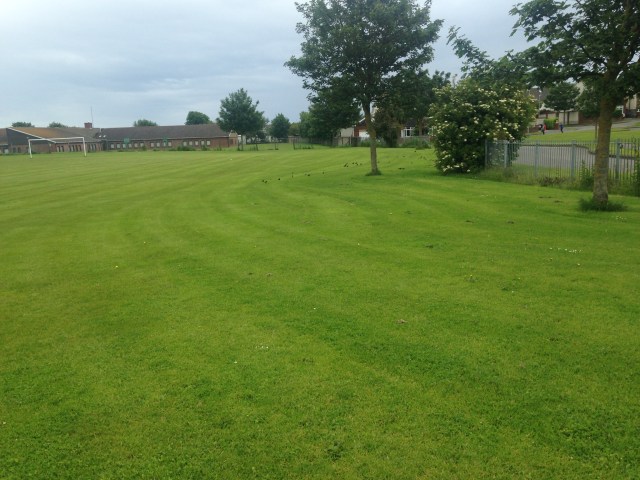
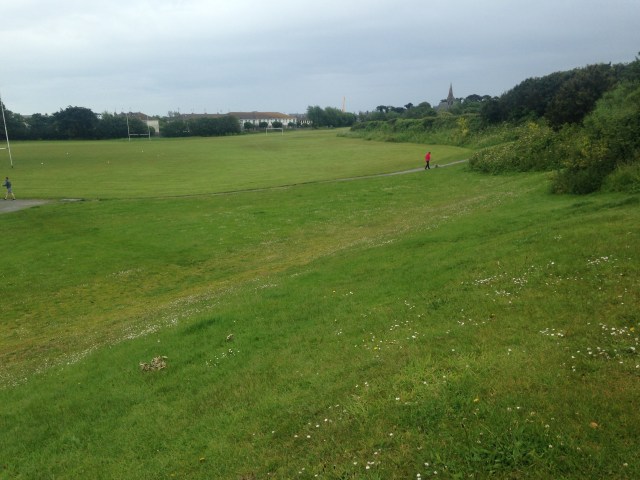
At present these are little more than green deserts, it would cost little or nothing to change this.  Leave the actual playing fields of course; they serve a purpose; concentrate on the margins and corners and all pollinators would benefit.  So would we in the long run.  Big time. 

Now imagine if every town in the Country did the same.

Charlie Heasman; 7th June 2019


IMG_3539 (1)

Skerries allotments, May 2019

IMG_3541

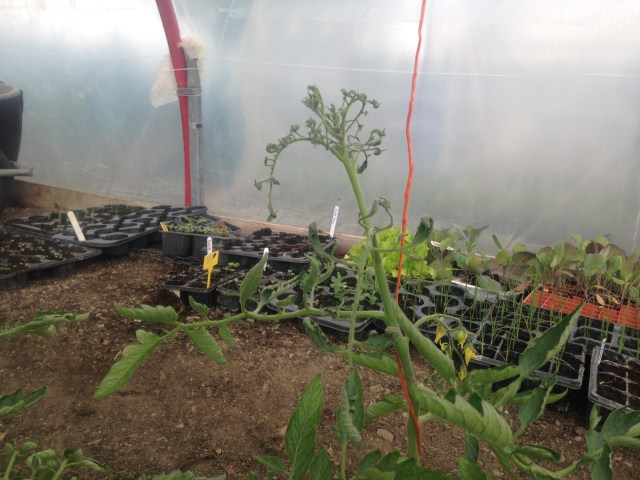
Tomato plant showing classic symptoms

When I first started writing this blog I thought I’d be talking about growing healthy veg, working with nature and all things joyous.  Now, for the second time in three months, I’m writing about something nasty.

You may recall that in April the subject was the huge amount of waste we allotment holders collectively produce, the illegal dumping of it, and the problems and expense of dealing with the consequences of same.  I’ve a feeling that we have not seen the end of all this and that another rant may not be too far ahead in the future.

But that’s another day’s work;  here and now I want to alert everyone to the dangers of herbicide contamination which can, and is, finding its way in to our allotments wreaking absolute havoc as it does so.

The problem is aminopyralid poisoning, and it’s on the increase.  None of us can afford to ignore it or pretend it doesn’t exist.  It does, and it’s only going to get worse.

The problem, at least in our plot, first appeared last Spring and initially we had no idea what was wrong.  Our tomatoes were the first to show signs, with the growing tips curling into tight gnarled knots, the stems growing long and spindly so that they couldn’t support their own weight, and further growth ceasing altogether.  Symptoms, in short, identical to those in the photos above.  Not ours, incidentally; those are this year’s plants and someone else is the lucky owner.

At first we thought it must be some sort of virus, though what and where it had come from we had no idea.

Then other things started happening.  Perfectly healthy broad beans – raised in modules in the polytunnel –  were planted out, sat in the ground for a week or two, tried to flower when only six inches tall, and died.  A row of peas was perfectly healthy and growing well for most of its length, but at one end seedlings died faster than we could replace them.  All other veg seemed pretty much okay.

If this was a virus it was acting in a very strange manner indeed.

At the same time our friend Carmel, who has two plots in two different parts of the allotments was having identical problems not only with her tomatoes but also with her potatoes: all showing exactly the same leaf curl symptoms.  This was a little surprising because our potatoes were perfectly fine.

The penny finally dropped: we had both used the same batch of cow manure.

One further piece of evidence was an absolute clincher as far as we were concerned.  I had spread manure on most (but not all) of the allotment and nearly all of the polytunnel.  In fact I ran out three quarters of the way up the second bed of the tunnel and applied compost instead.  The tomatoes planted here were perfectly healthy, showing no signs of stress and stayed that way for the summer.  All the rest we had to take out and replace with fresh plants, this time grown in grow bags.

Ditto the peas, which had also received compost except, as you might by now have guessed, one end which did get manure.  Entirely by accident, and nothing to do with judgement, our potatoes didn’t get manure either.  And stayed healthy.

We now needed absolutely no more convincing that the cow muck was in some way to blame.  But how?

At this point I did what I invariably do when I’m stumped: I Googled it.  The answer came up time and time again: aminopyralid.  Try it yourself, there’s an ever increasing amount of information out there – most of it, significantly, from organic growers and gardeners.

In fact all of a sudden everyone seems to be waking up to and talking about the dangers.  Here in Ireland Klaus Laitenberger from Green Vegetable Seeds talks about it in his June newsletter and over in Somerset organic grower and gardening guru Charles Dowding posted a Youtube video two weeks ago.

For my part, I was going to say nothing just yet because I recently started doing a trial and wanted to see the full results before saying anything.  But fresh outbreaks are occurring almost weekly in Skerries allotments and it would be pretty useless to wait and warn people after the event.  In any case, I have some results already and am about to share them here.

I kicked myself last year for not retaining a sample of the suspect manure for laboratory testing, which I thought would have settled the matter one way or another.  (Some people were still insisting that the cause was a virus; others blamed late frost, nitrogen excess and anything else they could think of).

In fact lab testing is not an option here, mostly because it is prohibitively expensive.  There probably isn’t a facility in Ireland anyway; samples would have to be sent to England or beyond.  The problem is that aminopyralid can cause damage even when present in minute quantities, 1 part per billion will destroy sensitive crops such as tomatoes, potatoes and legumes, and 1 part per billion takes a lot of finding in even the most advanced laboratory.

So I had nothing to send for testing and wouldn’t have been able to afford to do so in any case.

Then, at the beginning of last month, I heard that someone elsewhere in the allotments had spread cowmuck over almost his entire plot and planted potatoes, with disastrous results.  I don’t know the guy, I’ve never met him, but I can quite confidently tell him that he has aminopyralite contamination.  I might never meet him anyway because I’m told that at this point he walked out, shut the gate, and vowed never to return.  Shame.

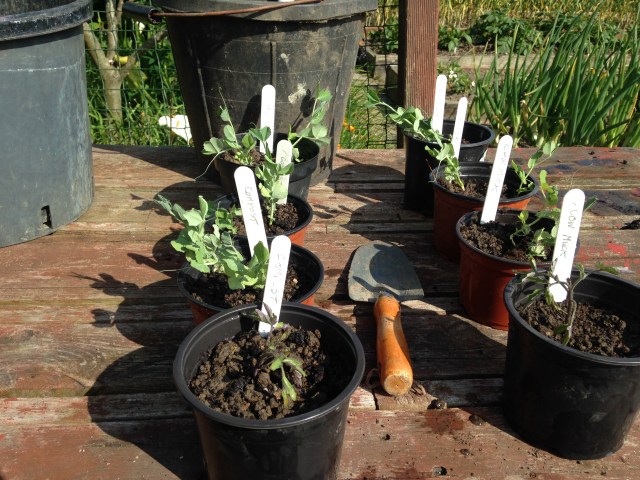
But at least he’d left the remnants of his manure pile behind, so I helped myself to a bucketful.  Back in our allotment I took soil from a bed that I knew to be clean and filled flowerpots with a 4:1 mix of earth and cowmuck.  Soil was taken from the same spot, mixed 4:1 with compost and also potted up, the pots were labelled.  Pea plants and two tomato plants went into each sample, were given the same subsequent treatment and kept side by side to see what transpired.

IMG_3549 (4)

21st May, peas and tomatoes potted up.

IMG_3606

Peas two weeks later (compost on left, cowmuck on right)

IMG_3611

And the tomatoes

To my mind the evidence is irrefutable, but as a backup I subsequently planted a couple more tomatoes, french beans and four potatoes.  These are not ready yet but I’m confidently predicting the outcome.

This might prove there’s something wrong with the cowmuck, but of course it doesn’t prove what exactly.  For this we must revert to the internet, as said earlier.  Google aminopyralid images and see what you get; you’ll get pictures like these.  Search for written texts or videos and you’ll get the same story.

So what is this aminopyralite, and what’s the story?

It is a herbicide manufactured by Dow Chemicals and is licensed here for the control of broadleaved weeds in agricultural grassland and has been around for the last decade or so.  On this side of the Atlantic it is most commonly sold under the name of Forefront; in America as Grazeon.  In 2014, after much controversy, it was withdrawn from the market here (at least in the UK; I’m not altogether sure about Ireland) and that should have been the end of it.  But in 2015 it was reintroduced with exactly the same formula and the only difference being enhanced safety guidelines on the packaging.  One of those guidelines was that users should ensure that treated grass or hay should not be allowed to enter the compost chain.

Clearly this is not working.

Aminopyralid is absorbed by all the vegetation it is sprayed on.  Broadleaf weeds die; grasses do not.  But those grasses retain the chemical and one way or another (as grass, hay or silage) are eaten by cattle, sheep or horses, pass through them and end up in the manure.

It will eventually break down but no two authorities can agree on how long this will take.  Estimates range from one year to five.  I hope to prove here that one year is hopelessly optimistic.  Back to Carmel.

Last year she carefully took all of the cowmuck that she could back out of her beds; a laborious process as one can imagine.  Also, by the very nature of things, inexact.  This year she rather foolishly planted her tomatoes in the same place – she won’t mind me saying so because she’s kicking herself anyway – and got the same results.  Those are her tomatoes in the first two photos.

So that batch of manure at least has remained virulently active for two years so far despite Carmel’s best efforts to remove it.

Meanwhile another grower is experiencing the problem in his polytunnel this year for the first time.  Again, reef everything out and replant in growbags.  He is not best pleased either.

At this point I should stress, very clearly, that I am not blaming any individual for the problem in our allotments.  I’ve been told the name of the farmer from whom the manure came, but I’ve never met him.  Those who have tell me that he is a conscientious type who adopts best farming practices and would be appalled by all this, and I have no reason to disbelieve it.

Which leaves the question hanging in the air: where did the contamination come from?

I’m also told that he buys in some of the winter fodder for his cattle, and it is entirely possible he bought the problem in completely unwittingly on a contaminated delivery of hay.  This is the crux of the problem: the stuff is so insidious, persistent and invisible that it is virtually impossible to avoid it.  As if to prove the point, yet another allotment holder this year bought in horse manure, from an entirely different source, and is experiencing exactly the same problems.

So what can we do?

Apart from call for the stuff to be banned, which we should, the short and rather glib answer is to be very careful.  Klaus makes an eloquent point in his blog when he calls gardeners “the canaries in the coalmine” (or was it Michael D Higgins who said it first?).  It’s bitterly ironic that organic growers are the ones hardest hit by malpractice or carelessness in modern conventional farming.  We are told that aminopyralite poses no risk to the human food chain but we can see that it can, and does, pass through livestock and poison future crops.  It would seem reasonable to question whether it is therefore present in the meat or milk.  We’re currently reassured that there’s nothing to worry about but we were told the same about thalidomide, DDT and a whole host of other things which were subsequently proven to be very bad indeed.

One thing we could do in the meantime is to stop using weedkillers ourselves.  Most in the allotments don’t anyway; a disappointingly large minority still do.  Perhaps if they come to realise that these sprays are not only bad for the environment but bad for themselves they will stop.

So, no sprays and no manure.  What’s next?  We have to get our fertilisers from somewhere, right?  Buying ready made proprietary brands of compost should be safe.

It should, but it still might not be so.

Manufacturers will go to great lengths to ensure that their supply chain is not contaminated – it’s in their best interests to do so –  but it can, and does occasionally, happen.  Levingtons, a name to be trusted, fell foul in 2016 when customers complained of failing crops.  In fairness to the company they admitted liability and ‘compensated’ the victims with replacement plants and suchlike; small comfort for anyone who’s just lost the best part of a season’s production.

       This from one anguished lady:

Jan H says:

12 June 2017

Levingtons are selling contaminated Grow Bags again this year. Ironically I bought 20 of their Grow Bags with vouchers that they gave me as part of my compensation for last years lost crop. I am now in the process of losing all my crops again except for those which I planted in my homemade compost which are all growing normally. I would urge anyone with twisted, distorted and deformed plants to shout about it. How do we get this stopped? We are being sold poisonous compost to grow our food in. Who in authority can put some weight to this and get it stopped? I am witnessing 5 months of work wasting away, all that labour and a lost crop again…….


Again, I’m not trying to victimise one particular company here; I picked Levingtons because they’re a reputable company and if it can happen to them it can happen to others.  And it has happened to others.

A small bit of good news, but only a small bit: there is a test you can do – as

recommended by the RHS – on your freshly acquired manure or compost.

Before using it take a sample and plant a bean.  If after two weeks the bean is growing and healthy you’re good; if it crunches up and dies you’ve got a bad batch.  The trouble is that you’ve just wasted two weeks and have a ton of useless manure on your hands.  How do you dispose of it?

You can hardly take it home and put it in your brown bin, for all sorts of reasons.  You could  spread it on grass but the only grass you’ve got is in the laneway outside your allotment and your neighbours aren’t going to thank you for that.  You’re stuck with it.

The only answer is to keep things as ‘in house’ as possible, make your own compost from your own allotment and be very cautious about importing anything – anything at all.

Even garden waste can be problematic.  It turns out that aminopyralite has a cousin called clopyralid (thank you again Dow) which is a weedkiller approved for use on lawns.  It has a similar chemical composition and does the same things.  So if a few bags of grass clippings come your way, check and make sure the grass in question has not been sprayed, it might well have been and you will have just brought in exactly the same problems you’re trying to avoid.

All of which sounds incredibly depressing, and I’m sorry if it does but facts are facts and we ignore them at our peril.  Perhaps it’s time to stand up and shout about what’s going on around us.

Despite all this there are still people with perfectly healthy allotments, just make sure you’re one of them.

Charlie Heasman


Okay, so the title’s a little over the top but nonetheless we’re approaching the middle of May and you wouldn’t know it by the weather!

We did have that magical week of warm weather back in April when the whole town started rummaging in its garden shed for the barbecue set and rushed off down to the harbour to bag its place, Mediterranean style, at a table in the sun; but then the sun went away to be replaced with cold and rain.  And here we still are.

Which means that growth has been slow in the vegetable patch.

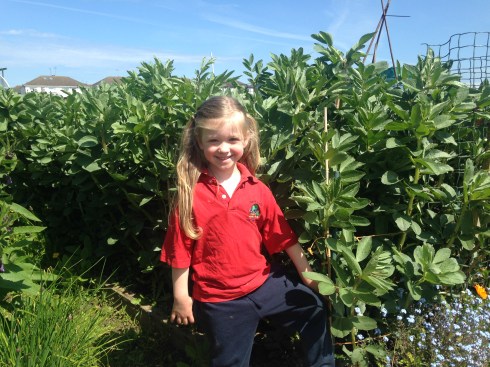
There has been some growth just the same.  Our spuds are now all showing, each plant present and correct in its allotted drill; the winter onions are beginning to swell and the first of them will soon be ready for pulling; and the broad beans that our four year old granddaughter helped me plant, “I did it all; Granddad only made the holes”, last October are now bigger than she is.

These beans are very much “hers”.  When they germinated she came back to see the first green shoots; a few times over the winter to see them slowly getting bigger; then the first flowers; and now that the bees have done their bit, tiny little swelling pods.  I’m quite certain that when it comes time to harvest she won’t let me anywhere near them.
IMG_3519 (1)

She might even take an interest in eating them.  If so I’m sure her mother who, like all mothers, struggles to get her children to eat vegetables will thank me for that.  It’s a bit of a long shot given that no-one in the history of forever liked broad beans as a child, but you never know.

Elsewhere the fruit trees have set a goodly amount of fruit – we were lucky with the frosts this year – and the strawberries are flowering well.  I’ve a feeling I won’t be let anywhere near them either if that certain little madam gets her way.

Other than that it’s pretty much a waiting game outside at the moment, but Met Eireann are promising the weather’s about to change this weekend, so fingers crossed.

Meanwhile we decided to tackle the polytunnel and get our tomatoes, peppers and what have you planted

We’d rather put this on the long finger because we’d still got some overwintered veg growing there, plus a load of strawberry plants which were supposed to give us an early crop this month.

We tried this last year with reasonable success.  They cropped from very late April all the way through May before we, ingrates that we are, reefed them out and consigned them to the compost heap.

But this year it became evident that they weren’t going to do much at all for some reason.  The plants were mostly weak and hadn’t rooted well; they had to go.  So they did.

We’re trialling the No Dig method this year in the allotment.

No Dig is exactly what it says it is: you don’t dig the soil but spread compost on top instead and plant through that.  The idea being not to disturb the living microbial and fungal ecosystem of the soil by cutting it all up and churning it about.  By not digging you don’t activate dormant weed seeds, so not only do you avoid the heavy spade work but you have less subsequent weeding as well.  At least, that’s the plan.

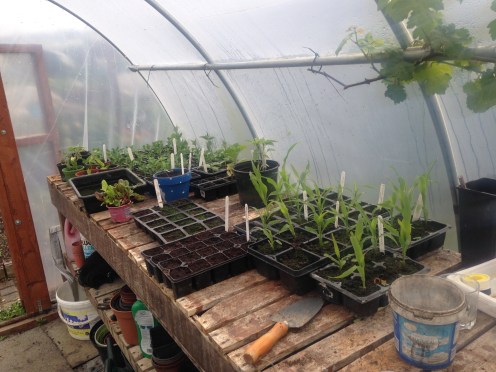
So having cleared out the beds and given them a light raking to even them up, it was time to apply 4″ of compost.

Actually, that’s not quite true.  There was no room on top for an extra 4″ of anything, so we had to raise the beds.  This we did, using reclaimed wood supplied FoC to anyone in the allotments who both wanted it, and was quick enough to grab it, by a cooperative neighbour (you know who you are Ken!), and the extra height will keep us out of trouble for a good few years.  Then the compost went in.

This made serious inroads into to our supply of homemade compost, but at the end of the day that’s what it’s for, and anyway we’re only now beginning to get the compost cycle into full production.  When fully up and running, which will be this year, we reckon to get the equivalent of four or five tonne bags annually.

IMG_3509 (1)


IMG_3511


The polytunnel should be about rather more than just raising seedlings in Spring and growing tomatoes in Summer, it’s also about extending the growing season and growing out of season produce.  The trouble is that it’s hard to get the timing right and not have stuff in the ground still coming to fruition when the space is needed for something else.  We get it wrong frequently.

Hopefully No Dig will help here as well.

This Autumn when the tomatoes and peppers come out we will again put in strawberry runners, along with carrots, cauliflower and other vegetables which we’ve found do well there over Winter, but this time we’ll plan the spacings so that the summer crops can be interplanted between them and get off to an early start.  Overlap their growing time in other words.

Because we won’t be digging or rotorvating we won’t have to completely clear beds between rotations; simply plant beside and pull out as necessary.  That’s the plan at any rate.

[Edit]  Since writing this post the sun has come out and the weather warmed up.  Hooray!  Long may it last.

Sustainable Skerries recently hosted a Bumblebee workshop, an event that was hugely enjoyed by all who attended.

The event consisted of a two hour talk in the Community Centre (with, of course, the statuary break for tea and biscuits) followed by a stroll up to and around the allotments for a spot of practical field work and bee identification.

Our speaker was Dr Tomás Murray from the National Biodiversity Database, and Tomás exceeded all our expectations.

The man is clearly very well informed and passionate about his subject, in fact his infectious enthusiasm was, well, infectious.  We were expecting an interesting talk; instead we got a fascinating one full of interesting snippets.

We all know, for instance, that bees have barbed stings; well in fact they mostly don’t, bumblebees don’t and nor do any other bees except honey bees.  And there’s a very good reason.

Bumblebees are the best pollinators of strawberries, far better than honeybees – although honeybees are better at apples – and there is a reason for that too.

Ireland used to have 20 species of bumblebee; as of last year – and rather bucking the trend of biodiversity loss – we have 21.  There is a story to be told, and it’s local to the Dublin region.

If you weren’t there on the day and would like to know the answers to these questions please send an SAE and a postal order for €5.00 to Charlie Heasman at…


It’s not all good news for bees of course and we were expecting to be told this.

Bumblebees have been monitored here since 2012, making Ireland the first country in the world to do so – others have followed.  Since 2012 a 17% decline in population has been measured, with some species faring better or worse than others.  How much of a decline there has been in, say, the last 50 or 100 years, nobody knows because no-one counted them back then.  We can only assume it has been huge.

All this monitoring and recording takes time and money, and the Biodiversity Database is on a budget.  Tomás stressed that they could not have have got anywhere without the help of the public; ‘citizen scientists’ such as you and I.  Anyone can sign up to the Pollinator Monitoring Scheme and play an important part.  Here’s the link:


Who are our pollinators?


It’s actually quite fun if you have an hour or so to spare each week.


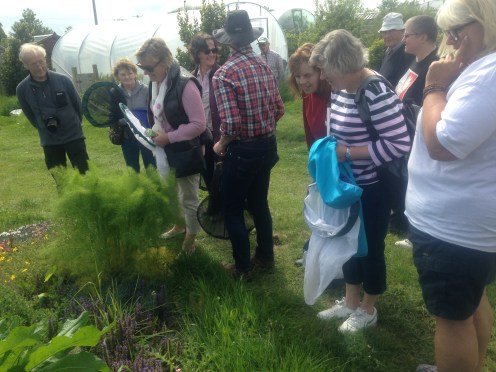
Having had our lecture, consumed our tea and biscuits and eaten a packed lunch, it was time to progress to the allotments.  Here, armed with nets – one for everyone in the audience, but you had to give them back at the end of the day – we were shown how to catch a bee, transfer it to a glass phial, and have a good look at it before letting it go again.  All without harming the bee or getting stung ourselves.

We were also fortunate that the afternoon was warm and dry, which met with the approval of both the bee spotters and the bees themselves.  There were plenty to be seen.

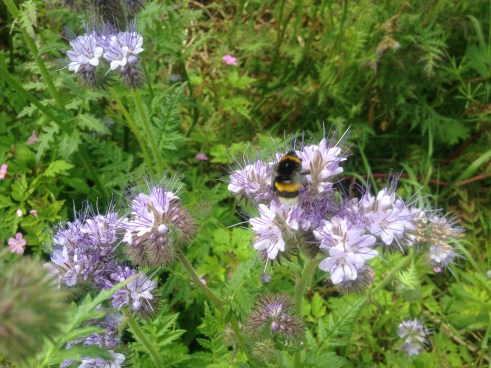
Most of them (Bombus locorum aggregate to the initiated) were to be seen on Polly Farrell’s phacelia.  No, that’s not a rude word; it’s a type of flower.  Here’s a picture:

It seemed quite selfish of Polly to hog so many bees for herself, but fortunately there were more than enough to go round.

Our mentor poked around in the foliage, catching bees, sometimes holding them, and identified the different species.  He explained which were the most useful flowers for pollinators, which were useless, and why.  We were told the best place to site a beehive, what to do to provide wild nesting habitat and the importance of mice.  Altogether an excellent day.

He had her by the back leg, so she couldn’t escape. Also,apparently, she was trying to sting but couldn’t penetrate the skin.

But perhaps the most important aspect of all this is the value of urban and suburban environments.  It is difficult to pinpoint any one reason for the drastic decline of pollinators (indeed, there is no one single cause) but pesticides, herbicides and agricultural mono-culture must all play a part.  Gardens, allotments and public spaces play a vital role in maintaining safe habitat, and the safer and more accommodating we can make it the better it will be for all of us.  In fact there are many ways we can all help at no cost to ourselves and with every chance of reaping the rewards.

Wouldn’t it be great if the town of Skerries as a whole were to get involved?


Here’s another link worth clicking on:

https://www.irishtimes.com/news/science/national-biodiversity-data-centre-seeks-to-turn-tide-of-wildlife-decline-1.3898132?mode=amp&localLinksEnabled=false


And before ending, I know there is zero chance of anyone sending me a €5 postal order, so here are the answers:

Honey bees have a barbed sting because they frequently have to fight off large mammals; all other bees do not.  The biggest threat to a bumblebee is likely to be another insect its own size or smaller; a single barbless sting will do the job.  Honeybees have to fight off much larger predators which are after their honey: bears, honey badgers and us for example.  A quick single sting will not do the trick so they have developed a barb.  The sting stays, is ripped out of the bee and the unfortunate bee dies, but not in vain.  A bit more of the bee detaches with the sting and, pulsating away, keeps pumping in venom. Not only that, but it secretes a pheromone that alerts and attracts other bees in the swarm, encouraging them to attack also.  Eventually even the most determined bear will be driven away; or so the bees hope.

Bumblebees are best at pollinating strawberries because strawberries are compound fruits; have a look at one sometime.  It’s a multi-faceted affair with a pip on each bit.  To get a perfectly shaped strawberry it is necessary for all the fruitlets to be pollinated; anything less and you get a lopsided fruit, which is what happens if the pollinator is not a bumblebee.  But bumblebees have developed a unique method of pollen gathering which they use on strawberries called ‘buzz pollination’.  They hover over the flower and vibrate their wings at a frequency that blows the pollen into a cloud.  Some of it lands on them, their plan all along, and some of the rest settles over the centre of the flower, ensuring even pollination.

So there you have it: no bumblebees, no more perfectly shaped strawberries.  It’ll be the least of your worries anyway.

Finally, the newly arrived bee.

It is known as the Tree Bumblebee (because it nests in trees and feeds on tree flowers – sometimes nomenclature does make sense!) and is common in Europe.  In 2001 it crossed the Channel into Southern England and has spread out at the rate of 50 km a year ever since.  It was expected all along that it would eventually reach Ireland and last year it did, it was first seen by an amateur bee spotter during his lunch break in Stephen’s Green.

Which just goes to show that an amateur really can make a contribution.

Fame scientific acclaim and a €5 postal order to the first person to spot one in Skerries.


We all want to be Green, or at least here at Sustainable Skerries we hope we do, but sometimes it’s hard to do right for doing wrong.

Throwing out perfectly good plastic containers that one already owns in order to replace them with fashionably acceptable glass containers is an example.  By doing so one is not reducing either waste or pollution but simply perpetuating the consumerist ethos that we have all become conditioned to (ie buying stuff because that’s what we do) while shouting “look at me, aren’t I great?”

By all means stop buying plastic where possible and appropriate, but not until it (or anything else) has reached end of life.

Here’s a blog post we recently found.  Well worth a read.

https://www.vox.com/the-goods/2019/5/14/18563375/zero-waste-products-straws-jars-tote-bags


secondhand clothing exchange at an elementary school

A Canadian article, but could it work here in Ireland?  Probably not because we have all, adults and children alike, been conditioned into a mindset where if it’s not new it’s not worth having and the more it costs the more we want it.

We’d be delighted to be proved wrong.

Well worth a read either way.

How to Create a Secondhand Store in Your School

Still waiting for Spring

Okay, so the title’s a little over the top but nonetheless we’re approaching the middle of May and you wouldn’t know it by the weather!

We did have that magical week of warm weather back in April when the whole town started rummaging in its garden shed for the barbecue set and rushed off down to the harbour to bag its place, Mediterranean style, at a table in the sun; but then the sun went away to be replaced with cold and rain.  And here we still are.

Which means that growth has been slow in the vegetable patch.

There has been some growth just the same.  Our spuds are now all showing, each plant present and correct in its allotted drill; the winter onions are beginning to swell and the first of them will soon be ready for pulling; and the broad beans that our four year old granddaughter helped me plant, “I did it all; Granddad only made the holes”, last October are now bigger than she is.

These beans are very much “hers”.  When they germinated she came back to see the first green shoots; a few times over the winter to see them slowly getting bigger; then the first flowers; and now that the bees have done their bit, tiny little swelling pods.  I’m quite certain that when it comes time to harvest she won’t let me anywhere near them.

IMG_3519 (1)

She might even take an interest in eating them.  If so I’m sure her mother who, like all mothers, struggles to get her children to eat vegetables will thank me for that.  It’s a bit of a long shot given that no-one in the history of forever liked broad beans as a child, but you never know.

Elsewhere the fruit trees have set a goodly amount of fruit – we were lucky with the frosts this year – and the strawberries are flowering well.  I’ve a feeling I won’t be let anywhere near them either if that certain little madam gets her way.

Other than that it’s pretty much a waiting game outside at the moment, but Met Eireann are promising the weather’s about to change this weekend, so fingers crossed.

Meanwhile we decided to tackle the polytunnel and get our tomatoes, peppers and what have you planted

We’d rather put this on the long finger because we’d still got some overwintered veg growing there, plus a load of strawberry plants which were supposed to give us an early crop this month.

We tried this last year with reasonable success.  They cropped from very late April all the way through May before we, ingrates that we are, reefed them out and consigned them to the compost heap.

But this year it became evident that they weren’t going to do much at all for some reason.  The plants were mostly weak and hadn’t rooted well; they had to go.  So they did.

We’re trialling the No Dig method this year in the allotment.

No Dig is exactly what it says it is: you don’t dig the soil but spread compost on top instead and plant through that.  The idea being not to disturb the living microbial and fungal ecosystem of the soil by cutting it all up and churning it about.  By not digging you don’t activate dormant weed seeds, so not only do you avoid the heavy spade work but you have less subsequent weeding as well.  At least, that’s the plan.

So having cleared out the beds and given them a light raking to even them up, it was time to apply 4″ of compost.

Actually, that’s not quite true.  There was no room on top for an extra 4″ of anything, so we had to raise the beds.  This we did, using reclaimed wood supplied FoC to anyone in the allotments who both wanted it, and was quick enough to grab it, by a cooperative neighbour (you know who you are Ken!), and the extra height will keep us out of trouble for a good few years.  Then the compost went in.

This made serious inroads into to our supply of homemade compost, but at the end of the day that’s what it’s for, and anyway we’re only now beginning to get the compost cycle into full production.  When fully up and running, which will be this year, we reckon to get the equivalent of four or five tonne bags annually.

IMG_3509 (1)

Beds planted up and inter-planted with lettuce and scallions as a catch crop. The hanging mesh tray relieves a lot of space on the potting table and can be taken down when the plants below need stringing.


IMG_3511

Still a few bits and pieces to be planted out.


The polytunnel should be about rather more than just raising seedlings in Spring and growing tomatoes in Summer, it’s also about extending the growing season and growing out of season produce.  The trouble is that it’s hard to get the timing right and not have stuff in the ground still coming to fruition when the space is needed for something else.  We get it wrong frequently.

Hopefully No Dig will help here as well.

This Autumn when the tomatoes and peppers come out we will again put in strawberry runners, along with carrots, cauliflower and other vegetables which we’ve found do well there over Winter, but this time we’ll plan the spacings so that the summer crops can be interplanted between them and get off to an early start.  Overlap their growing time in other words.

Because we won’t be digging or rotorvating we won’t have to completely clear beds between rotations; simply plant beside and pull out as necessary.  That’s the plan at any rate.

[Edit]  Since writing this post the sun has come out and the weather warmed up.  Hooray!  Long may it last.
Here at Sustainable Skerries we’re always on the lookout for environmental news and when we find something interesting we’re inclined to want to share it with you.

So far this week we’ve found two:

Stuffed with stuff ... Maurice Herson at Oxford’s library of things. Photograph: Alecsandra Raluca Dragoi/The Guardian

A “Library of things”, a concept that ties in closely with the ‘Repair Cafe’ ethos and aims to make communities more self sufficient

and, rather less cheerfully

One million animal, plant species face extinction – UN

Earth's eight millions species of plants and animals are dying off at an accelerated rate

Sombre reading, and very easy to ignore it because it’s so depressing.  Which is exactly why we all should be reading it.  And then doing something about it.


The links are on our ‘Media’ site.

IMG_3334 (1)

I normally enjoy writing about the allotments and all that goes on through the year, and why not?  After all, we’re all up there growing healthy vegetables, communing with nature and doing our best to help the environment, so what’s not to like?

Answer above.

And below.

IMG_3439

And again.

img_3438.jpg

That first photo was taken on the 31st of March.

Fingal CC provide one of these skips twice a year, once in Spring;once in Autumn.  Up until now this has been sufficient, albeit barely.  But this year’s early skip was nowhere near up to the sheer volume of rubbish accumulated.

Photos 2 and 3 were taken a couple of days ago, and you’d never know that a skip had been filled and taken away barely three weeks since.

Actually, the skip didn’t get taken at all to start off with.  In an effort to get rid of as much waste as possible the volunteers overfilled it to a ridiculous extent.  Ever seen “Level load only” stencilled on the side of a skip?  As such that must be the most optimistic and ineffectual signage of all time, but this was taking it to the extreme.

This still didn’t stop latecomers turning up with even more rubbish, their only problem was trying to work out how to possibly get it up there.  Still they tried, and if it slipped off and onto the ground, so what?  They could at least walk away knowing that they’d done their bit.

So when the Fingal driver turned up to collect the next day he took one look, turned around and drove straight back out the gate.

There was nothing else he could have done.  If he’d have hitched up to that he’d have been pulled by the guards before he got a mile down the road.

So the next day the same volunteers had to take half the load off again and throw it to the ground.  The skip was taken.

That rubbish is still on the ground and is being added to daily.  We are back to pictures 2 and 3.

So what’s going on?  Where’s all this waste coming from all of a sudden?

I think I know the answer.

The allotments are nine years old.  They support an increasing number of polytunnels.  Polytunnel plastic has an average life expectancy of 10 years.  Up until now very few have needed replacing; now an ever increasing number each year must be recovered.  Recovering a polytunnel creates an awful amount of plastic waste.  Trust me, I know.

Look again at the photos.  How much of that is polytunnel plastic?

When a polytunnel cover is replaced it is not only the old plastic that has to be thrown out, there are a lot of offcuts from the new cover also and a large amount of waste to be disposed of..  This cannot be avoided.  What can be avoided is throwing out all the bulky doorframes still wrapped in said plastic; these should be stripped and segregated.  We’ll come back to that.

Don’t get me wrong.  I’m not against polytunnels; I have one myself.  I re-covered ours 18 months ago so it should be good, and I should be safe, for another eight years or so; but, yes, it produced a lot of waste at the time.  What I’m getting round to saying is that we have to rethink our attitudes to waste and start acting responsibly.

By now some of you have taken offence.

Good, you’re my kind of people.  You’re offended because you do care, you do try, and I’m lumping you in with the idiots (there is no other word) who don’t.  When I say “we” I mean the collective “we”, the collective “we” who are responsible for the godammed awful mess in the bottom car park.

The allotment committee have always dictated that only green waste be allowed to be left there.  They have steadfastly refused to segregate an area for non-green waste because they’re afraid that this would encourage some to bring rubbish from home.

They have a point.

Look again at photo 3.  What clown threw a plastic commode onto the pile?  I hope you’re reading this, whoever you are.  Ditto the person who disposed of their kid’s blue plastic paddling pool perched on top of the skip in photo 1.

(Actually, the thought occurs that I’ve just found a replacement word for “idiot”; in truth I’ve plenty more but unfortunately cannot print any of them here).

I feel strongly that if nothing else wood should be segregated.  My best estimate is that 40% by volume of that skip was wood.  Waste wood has a value; or at least a small value that can partially defray the cost of getting rid of it.  Some thrifty types pick through the pile for bits and pieces that they can reuse; one or two others take the best of the rest home for firewood.

And couldn’t we use it for the annual pig roast instead of importing yet more waste wood in the form of pallets.  All the while it is laced through the rest of the crap in the heap the answer is no.  But if it were put to one side?

Of course, allotment holders would have to comply and act sensibly.  A heap of old fence wire with a stake on the end of it does not constitute wood waste any more than aforementioned polytunnel doors covered in plastic do.  But if one can make the effort to assemble such things in the first place surely one can take the trouble to disassemble them when finished with?

The committee have also always said that everyone should take all their non green waste home with them.  I’m sorry, but I think this is a totally unrealistic expectation and is never going to happen.

How many people are going to bundle swathes of muddy old polytunnel plastic into their cars?  Ditto old fencing, rotting scaffold boards and wooden shed panels.  I’ll tell you the answer: as near to none as makes no difference.

Even if we segregate properly, and we should, we will need more than two skips a year.  The problem is that they cost money, and quite a bit of it.  Apparently a skip of the size in question is something in the order of €800 to €900.  Fingal won’t keep throwing us more skips just because we ask for them and the association simply doesn’t have the money.

Any income to the association is already allocated to grass cutting and maintaining the water supply etc.  there is nothing to spare.  But if the (paltry) annual membership fee of €10 was doubled to €20 an extra €1,900 would be generated.  And guess what?  It could pay for two more skips a year.

I’d be more than happy to fork out the extra cost of two pints of porter or three cappuccinos.  Would you?

Whatever the whatevers of it all, the present situation cannot continue, I think we are all agreed on that.  the electrification of the gate to restrict unwanted access will help.  There are various ideas being bandied about by the committee and it would be premature of me to talk about them here and now.  But in the meantime we can all do our bit.

IMG_3437 (1)


Firstly, the idiot who dumped this green waste on top of the (admittedly only semi segregated) plastic and wood waste should be shot, as should the people who don’t bother picking the plastic, bits of string etc out of their green waste.

I recently constructed a raised bed and filled it with soil/compost from the car park.  It was surprisingly nice looking stuff and I bet it makes an excellent growing medium without the need of anything else, but…

img_3435-1.jpg

…every spadeful contained string, plastic, plant labels, you name it, which had to be picked out.  Plastics and microplastics are invading every part of our lives, food supply and environment.  Here at Skerries allotments we seem to be doing our level best to make matters worse.

IMG_3436 (1)