Still waiting for Spring

Charlie Heasman


Okay, so the title’s a little over the top but nonetheless we’re approaching the middle of May and you wouldn’t know it by the weather!

We did have that magical week of warm weather back in April when the whole town started rummaging in its garden shed for the barbecue set and rushed off down to the harbour to bag its place, Mediterranean style, at a table in the sun; but then the sun went away to be replaced with cold and rain.  And here we still are.

Which means that growth has been slow in the vegetable patch.

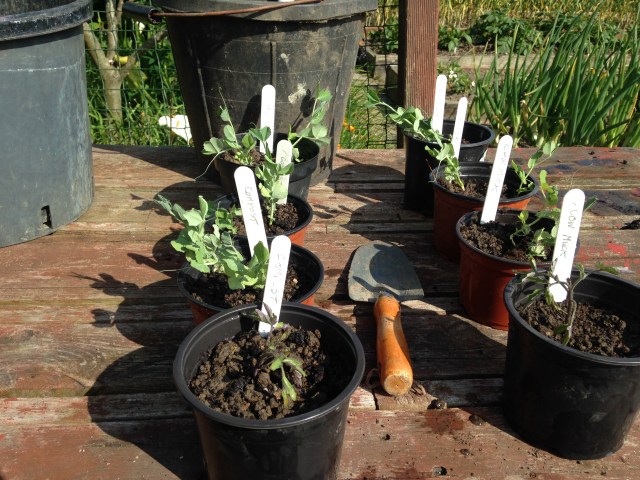
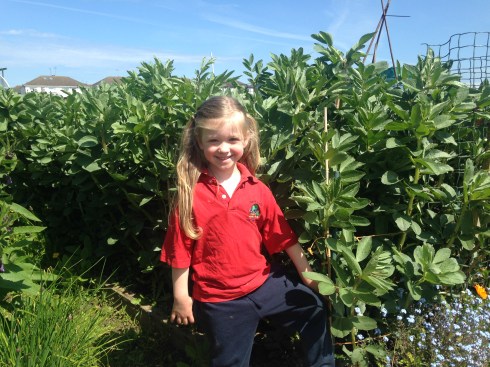
There has been some growth just the same.  Our spuds are now all showing, each plant present and correct in its allotted drill; the winter onions are beginning to swell and the first of them will soon be ready for pulling; and the broad beans that our four year old granddaughter helped me plant, “I did it all; Granddad only made the holes”, last October are now bigger than she is.

These beans are very much “hers”.  When they germinated she came back to see the first green shoots; a few times over the winter to see them slowly getting bigger; then the first flowers; and now that the bees have done their bit, tiny little swelling pods.  I’m quite certain that when it comes time to harvest she won’t let me anywhere near them.
IMG_3519 (1)

She might even take an interest in eating them.  If so I’m sure her mother who, like all mothers, struggles to get her children to eat vegetables will thank me for that.  It’s a bit of a long shot given that no-one in the history of forever liked broad beans as a child, but you never know.

Elsewhere the fruit trees have set a goodly amount of fruit – we were lucky with the frosts this year – and the strawberries are flowering well.  I’ve a feeling I won’t be let anywhere near them either if that certain little madam gets her way.

Other than that it’s pretty much a waiting game outside at the moment, but Met Eireann are promising the weather’s about to change this weekend, so fingers crossed.

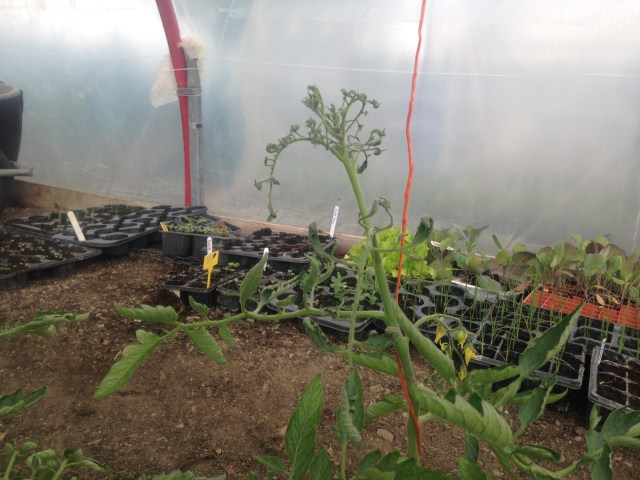
Meanwhile we decided to tackle the polytunnel and get our tomatoes, peppers and what have you planted

We’d rather put this on the long finger because we’d still got some overwintered veg growing there, plus a load of strawberry plants which were supposed to give us an early crop this month.

We tried this last year with reasonable success.  They cropped from very late April all the way through May before we, ingrates that we are, reefed them out and consigned them to the compost heap.

But this year it became evident that they weren’t going to do much at all for some reason.  The plants were mostly weak and hadn’t rooted well; they had to go.  So they did.

We’re trialling the No Dig method this year in the allotment.

No Dig is exactly what it says it is: you don’t dig the soil but spread compost on top instead and plant through that.  The idea being not to disturb the living microbial and fungal ecosystem of the soil by cutting it all up and churning it about.  By not digging you don’t activate dormant weed seeds, so not only do you avoid the heavy spade work but you have less subsequent weeding as well.  At least, that’s the plan.

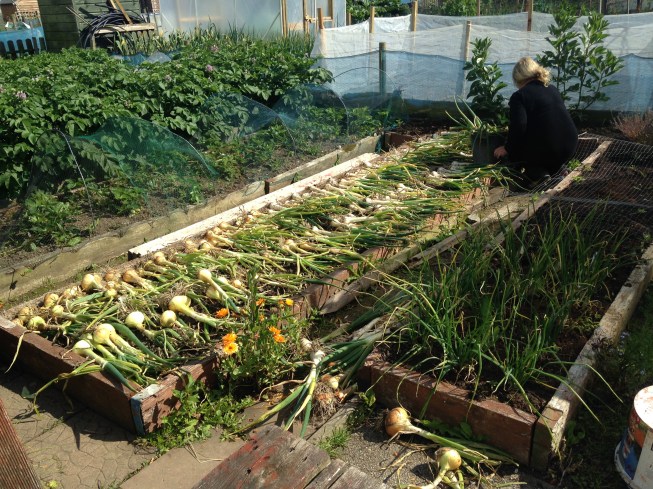
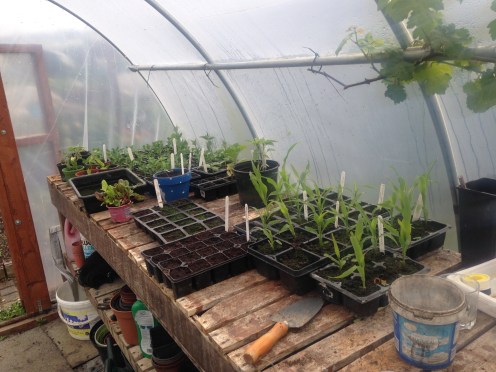
So having cleared out the beds and given them a light raking to even them up, it was time to apply 4″ of compost.

Actually, that’s not quite true.  There was no room on top for an extra 4″ of anything, so we had to raise the beds.  This we did, using reclaimed wood supplied FoC to anyone in the allotments who both wanted it, and was quick enough to grab it, by a cooperative neighbour (you know who you are Ken!), and the extra height will keep us out of trouble for a good few years.  Then the compost went in.

This made serious inroads into to our supply of homemade compost, but at the end of the day that’s what it’s for, and anyway we’re only now beginning to get the compost cycle into full production.  When fully up and running, which will be this year, we reckon to get the equivalent of four or five tonne bags annually.

IMG_3509 (1)


IMG_3511


The polytunnel should be about rather more than just raising seedlings in Spring and growing tomatoes in Summer, it’s also about extending the growing season and growing out of season produce.  The trouble is that it’s hard to get the timing right and not have stuff in the ground still coming to fruition when the space is needed for something else.  We get it wrong frequently.

Hopefully No Dig will help here as well.

This Autumn when the tomatoes and peppers come out we will again put in strawberry runners, along with carrots, cauliflower and other vegetables which we’ve found do well there over Winter, but this time we’ll plan the spacings so that the summer crops can be interplanted between them and get off to an early start.  Overlap their growing time in other words.

Because we won’t be digging or rotorvating we won’t have to completely clear beds between rotations; simply plant beside and pull out as necessary.  That’s the plan at any rate.

[Edit]  Since writing this post the sun has come out and the weather warmed up.  Hooray!  Long may it last.

Sustainable Skerries recently hosted a Bumblebee workshop, an event that was hugely enjoyed by all who attended.

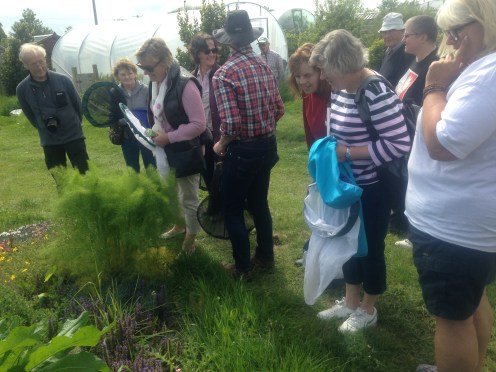
The event consisted of a two hour talk in the Community Centre (with, of course, the statuary break for tea and biscuits) followed by a stroll up to and around the allotments for a spot of practical field work and bee identification.

Our speaker was Dr Tomás Murray from the National Biodiversity Database, and Tomás exceeded all our expectations.

The man is clearly very well informed and passionate about his subject, in fact his infectious enthusiasm was, well, infectious.  We were expecting an interesting talk; instead we got a fascinating one full of interesting snippets.

We all know, for instance, that bees have barbed stings; well in fact they mostly don’t, bumblebees don’t and nor do any other bees except honey bees.  And there’s a very good reason.

Bumblebees are the best pollinators of strawberries, far better than honeybees – although honeybees are better at apples – and there is a reason for that too.

Ireland used to have 20 species of bumblebee; as of last year – and rather bucking the trend of biodiversity loss – we have 21.  There is a story to be told, and it’s local to the Dublin region.

If you weren’t there on the day and would like to know the answers to these questions please send an SAE and a postal order for €5.00 to Charlie Heasman at…


It’s not all good news for bees of course and we were expecting to be told this.

Bumblebees have been monitored here since 2012, making Ireland the first country in the world to do so – others have followed.  Since 2012 a 17% decline in population has been measured, with some species faring better or worse than others.  How much of a decline there has been in, say, the last 50 or 100 years, nobody knows because no-one counted them back then.  We can only assume it has been huge.

All this monitoring and recording takes time and money, and the Biodiversity Database is on a budget.  Tomás stressed that they could not have have got anywhere without the help of the public; ‘citizen scientists’ such as you and I.  Anyone can sign up to the Pollinator Monitoring Scheme and play an important part.  Here’s the link:


Who are our pollinators?


It’s actually quite fun if you have an hour or so to spare each week.


Having had our lecture, consumed our tea and biscuits and eaten a packed lunch, it was time to progress to the allotments.  Here, armed with nets – one for everyone in the audience, but you had to give them back at the end of the day – we were shown how to catch a bee, transfer it to a glass phial, and have a good look at it before letting it go again.  All without harming the bee or getting stung ourselves.

We were also fortunate that the afternoon was warm and dry, which met with the approval of both the bee spotters and the bees themselves.  There were plenty to be seen.

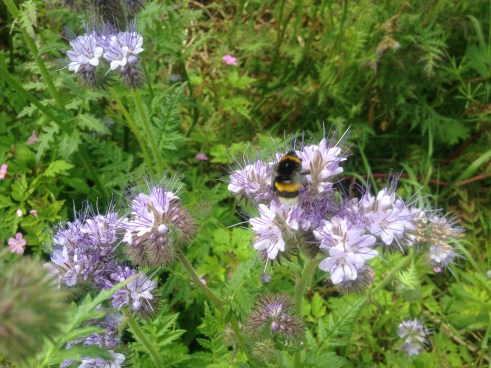
Most of them (Bombus locorum aggregate to the initiated) were to be seen on Polly Farrell’s phacelia.  No, that’s not a rude word; it’s a type of flower.  Here’s a picture:

It seemed quite selfish of Polly to hog so many bees for herself, but fortunately there were more than enough to go round.

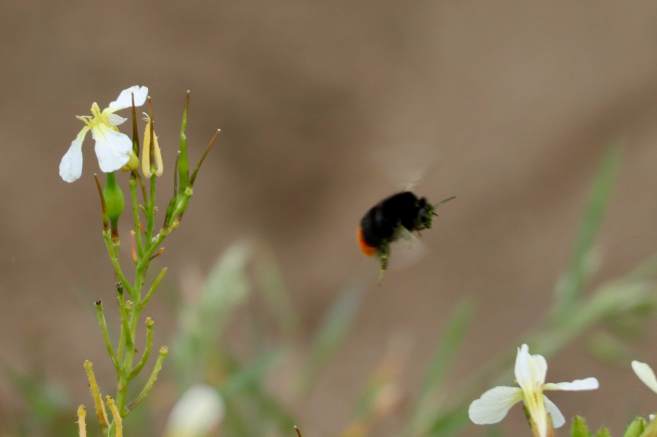
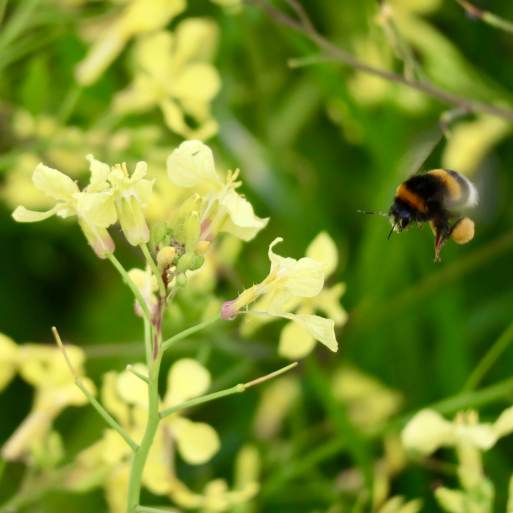
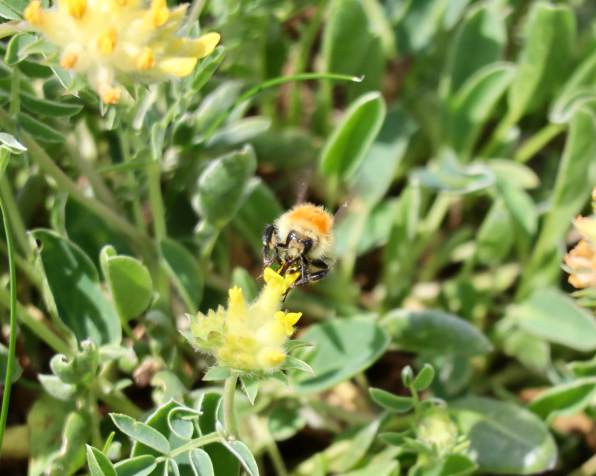
Our mentor poked around in the foliage, catching bees, sometimes holding them, and identified the different species.  He explained which were the most useful flowers for pollinators, which were useless, and why.  We were told the best place to site a beehive, what to do to provide wild nesting habitat and the importance of mice.  Altogether an excellent day.

He had her by the back leg, so she couldn’t escape. Also,apparently, she was trying to sting but couldn’t penetrate the skin.

But perhaps the most important aspect of all this is the value of urban and suburban environments.  It is difficult to pinpoint any one reason for the drastic decline of pollinators (indeed, there is no one single cause) but pesticides, herbicides and agricultural mono-culture must all play a part.  Gardens, allotments and public spaces play a vital role in maintaining safe habitat, and the safer and more accommodating we can make it the better it will be for all of us.  In fact there are many ways we can all help at no cost to ourselves and with every chance of reaping the rewards.

Wouldn’t it be great if the town of Skerries as a whole were to get involved?


Here’s another link worth clicking on:

https://www.irishtimes.com/news/science/national-biodiversity-data-centre-seeks-to-turn-tide-of-wildlife-decline-1.3898132?mode=amp&localLinksEnabled=false


And before ending, I know there is zero chance of anyone sending me a €5 postal order, so here are the answers:

Honey bees have a barbed sting because they frequently have to fight off large mammals; all other bees do not.  The biggest threat to a bumblebee is likely to be another insect its own size or smaller; a single barbless sting will do the job.  Honeybees have to fight off much larger predators which are after their honey: bears, honey badgers and us for example.  A quick single sting will not do the trick so they have developed a barb.  The sting stays, is ripped out of the bee and the unfortunate bee dies, but not in vain.  A bit more of the bee detaches with the sting and, pulsating away, keeps pumping in venom. Not only that, but it secretes a pheromone that alerts and attracts other bees in the swarm, encouraging them to attack also.  Eventually even the most determined bear will be driven away; or so the bees hope.

Bumblebees are best at pollinating strawberries because strawberries are compound fruits; have a look at one sometime.  It’s a multi-faceted affair with a pip on each bit.  To get a perfectly shaped strawberry it is necessary for all the fruitlets to be pollinated; anything less and you get a lopsided fruit, which is what happens if the pollinator is not a bumblebee.  But bumblebees have developed a unique method of pollen gathering which they use on strawberries called ‘buzz pollination’.  They hover over the flower and vibrate their wings at a frequency that blows the pollen into a cloud.  Some of it lands on them, their plan all along, and some of the rest settles over the centre of the flower, ensuring even pollination.

So there you have it: no bumblebees, no more perfectly shaped strawberries.  It’ll be the least of your worries anyway.

Finally, the newly arrived bee.

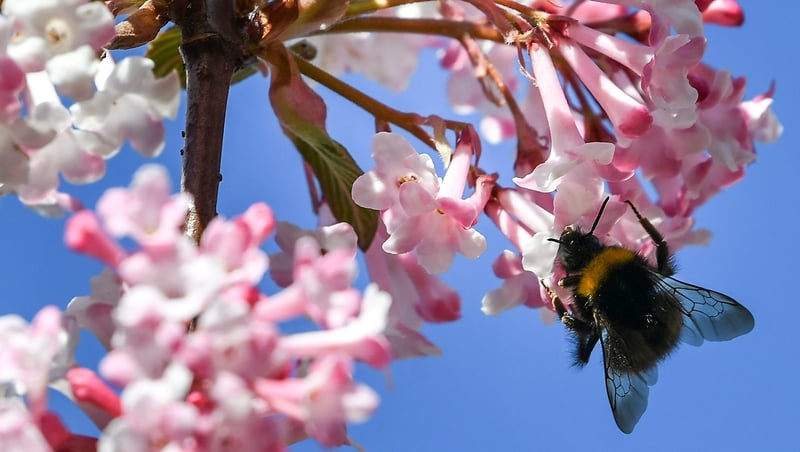
It is known as the Tree Bumblebee (because it nests in trees and feeds on tree flowers – sometimes nomenclature does make sense!) and is common in Europe.  In 2001 it crossed the Channel into Southern England and has spread out at the rate of 50 km a year ever since.  It was expected all along that it would eventually reach Ireland and last year it did, it was first seen by an amateur bee spotter during his lunch break in Stephen’s Green.

Which just goes to show that an amateur really can make a contribution.

Fame scientific acclaim and a €5 postal order to the first person to spot one in Skerries.


We all want to be Green, or at least here at Sustainable Skerries we hope we do, but sometimes it’s hard to do right for doing wrong.

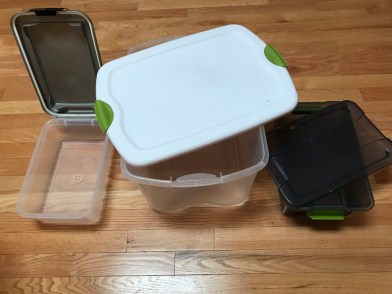
Throwing out perfectly good plastic containers that one already owns in order to replace them with fashionably acceptable glass containers is an example.  By doing so one is not reducing either waste or pollution but simply perpetuating the consumerist ethos that we have all become conditioned to (ie buying stuff because that’s what we do) while shouting “look at me, aren’t I great?”

By all means stop buying plastic where possible and appropriate, but not until it (or anything else) has reached end of life.

Here’s a blog post we recently found.  Well worth a read.

https://www.vox.com/the-goods/2019/5/14/18563375/zero-waste-products-straws-jars-tote-bags


secondhand clothing exchange at an elementary school

A Canadian article, but could it work here in Ireland?  Probably not because we have all, adults and children alike, been conditioned into a mindset where if it’s not new it’s not worth having and the more it costs the more we want it.

We’d be delighted to be proved wrong.

Well worth a read either way.

How to Create a Secondhand Store in Your School

Okay, so the title’s a little over the top but nonetheless we’re approaching the middle of May and you wouldn’t know it by the weather!

We did have that magical week of warm weather back in April when the whole town started rummaging in its garden shed for the barbecue set and rushed off down to the harbour to bag its place, Mediterranean style, at a table in the sun; but then the sun went away to be replaced with cold and rain.  And here we still are.

Which means that growth has been slow in the vegetable patch.

There has been some growth just the same.  Our spuds are now all showing, each plant present and correct in its allotted drill; the winter onions are beginning to swell and the first of them will soon be ready for pulling; and the broad beans that our four year old granddaughter helped me plant, “I did it all; Granddad only made the holes”, last October are now bigger than she is.

These beans are very much “hers”.  When they germinated she came back to see the first green shoots; a few times over the winter to see them slowly getting bigger; then the first flowers; and now that the bees have done their bit, tiny little swelling pods.  I’m quite certain that when it comes time to harvest she won’t let me anywhere near them.

IMG_3519 (1)

She might even take an interest in eating them.  If so I’m sure her mother who, like all mothers, struggles to get her children to eat vegetables will thank me for that.  It’s a bit of a long shot given that no-one in the history of forever liked broad beans as a child, but you never know.

Elsewhere the fruit trees have set a goodly amount of fruit – we were lucky with the frosts this year – and the strawberries are flowering well.  I’ve a feeling I won’t be let anywhere near them either if that certain little madam gets her way.

Other than that it’s pretty much a waiting game outside at the moment, but Met Eireann are promising the weather’s about to change this weekend, so fingers crossed.

Meanwhile we decided to tackle the polytunnel and get our tomatoes, peppers and what have you planted

We’d rather put this on the long finger because we’d still got some overwintered veg growing there, plus a load of strawberry plants which were supposed to give us an early crop this month.

We tried this last year with reasonable success.  They cropped from very late April all the way through May before we, ingrates that we are, reefed them out and consigned them to the compost heap.

But this year it became evident that they weren’t going to do much at all for some reason.  The plants were mostly weak and hadn’t rooted well; they had to go.  So they did.

We’re trialling the No Dig method this year in the allotment.

No Dig is exactly what it says it is: you don’t dig the soil but spread compost on top instead and plant through that.  The idea being not to disturb the living microbial and fungal ecosystem of the soil by cutting it all up and churning it about.  By not digging you don’t activate dormant weed seeds, so not only do you avoid the heavy spade work but you have less subsequent weeding as well.  At least, that’s the plan.

So having cleared out the beds and given them a light raking to even them up, it was time to apply 4″ of compost.

Actually, that’s not quite true.  There was no room on top for an extra 4″ of anything, so we had to raise the beds.  This we did, using reclaimed wood supplied FoC to anyone in the allotments who both wanted it, and was quick enough to grab it, by a cooperative neighbour (you know who you are Ken!), and the extra height will keep us out of trouble for a good few years.  Then the compost went in.

This made serious inroads into to our supply of homemade compost, but at the end of the day that’s what it’s for, and anyway we’re only now beginning to get the compost cycle into full production.  When fully up and running, which will be this year, we reckon to get the equivalent of four or five tonne bags annually.

IMG_3509 (1)

Beds planted up and inter-planted with lettuce and scallions as a catch crop. The hanging mesh tray relieves a lot of space on the potting table and can be taken down when the plants below need stringing.


IMG_3511

Still a few bits and pieces to be planted out.


The polytunnel should be about rather more than just raising seedlings in Spring and growing tomatoes in Summer, it’s also about extending the growing season and growing out of season produce.  The trouble is that it’s hard to get the timing right and not have stuff in the ground still coming to fruition when the space is needed for something else.  We get it wrong frequently.

Hopefully No Dig will help here as well.

This Autumn when the tomatoes and peppers come out we will again put in strawberry runners, along with carrots, cauliflower and other vegetables which we’ve found do well there over Winter, but this time we’ll plan the spacings so that the summer crops can be interplanted between them and get off to an early start.  Overlap their growing time in other words.

Because we won’t be digging or rotorvating we won’t have to completely clear beds between rotations; simply plant beside and pull out as necessary.  That’s the plan at any rate.

[Edit]  Since writing this post the sun has come out and the weather warmed up.  Hooray!  Long may it last.
Here at Sustainable Skerries we’re always on the lookout for environmental news and when we find something interesting we’re inclined to want to share it with you.

So far this week we’ve found two:

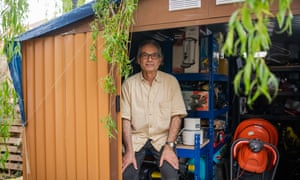
Stuffed with stuff ... Maurice Herson at Oxford’s library of things. Photograph: Alecsandra Raluca Dragoi/The Guardian

A “Library of things”, a concept that ties in closely with the ‘Repair Cafe’ ethos and aims to make communities more self sufficient

and, rather less cheerfully

One million animal, plant species face extinction – UN

Earth's eight millions species of plants and animals are dying off at an accelerated rate

Sombre reading, and very easy to ignore it because it’s so depressing.  Which is exactly why we all should be reading it.  And then doing something about it.


The links are on our ‘Media’ site.

IMG_3334 (1)

I normally enjoy writing about the allotments and all that goes on through the year, and why not?  After all, we’re all up there growing healthy vegetables, communing with nature and doing our best to help the environment, so what’s not to like?

Answer above.

And below.

IMG_3439

And again.

img_3438.jpg

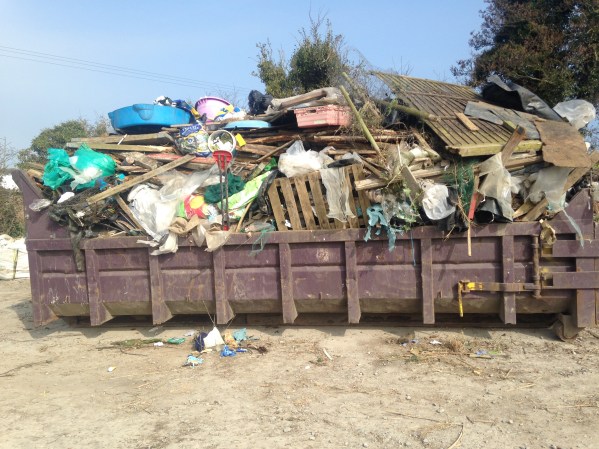
That first photo was taken on the 31st of March.

Fingal CC provide one of these skips twice a year, once in Spring;once in Autumn.  Up until now this has been sufficient, albeit barely.  But this year’s early skip was nowhere near up to the sheer volume of rubbish accumulated.

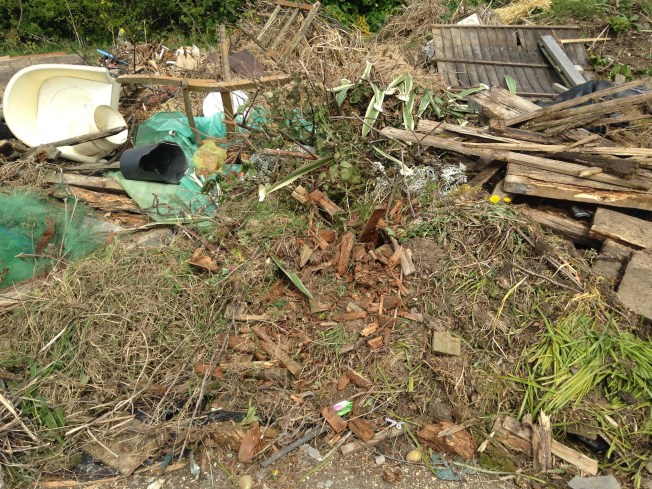
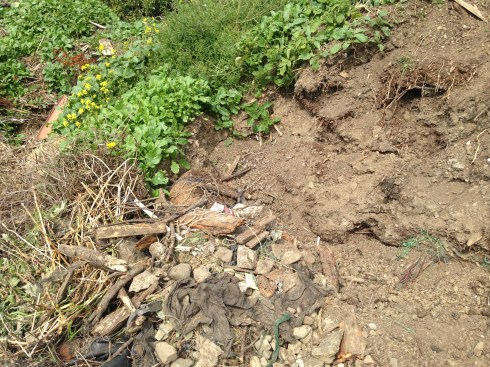
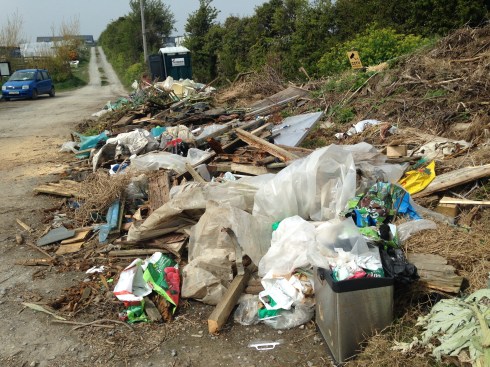
Photos 2 and 3 were taken a couple of days ago, and you’d never know that a skip had been filled and taken away barely three weeks since.

Actually, the skip didn’t get taken at all to start off with.  In an effort to get rid of as much waste as possible the volunteers overfilled it to a ridiculous extent.  Ever seen “Level load only” stencilled on the side of a skip?  As such that must be the most optimistic and ineffectual signage of all time, but this was taking it to the extreme.

This still didn’t stop latecomers turning up with even more rubbish, their only problem was trying to work out how to possibly get it up there.  Still they tried, and if it slipped off and onto the ground, so what?  They could at least walk away knowing that they’d done their bit.

So when the Fingal driver turned up to collect the next day he took one look, turned around and drove straight back out the gate.

There was nothing else he could have done.  If he’d have hitched up to that he’d have been pulled by the guards before he got a mile down the road.

So the next day the same volunteers had to take half the load off again and throw it to the ground.  The skip was taken.

That rubbish is still on the ground and is being added to daily.  We are back to pictures 2 and 3.

So what’s going on?  Where’s all this waste coming from all of a sudden?

I think I know the answer.

The allotments are nine years old.  They support an increasing number of polytunnels.  Polytunnel plastic has an average life expectancy of 10 years.  Up until now very few have needed replacing; now an ever increasing number each year must be recovered.  Recovering a polytunnel creates an awful amount of plastic waste.  Trust me, I know.

Look again at the photos.  How much of that is polytunnel plastic?

When a polytunnel cover is replaced it is not only the old plastic that has to be thrown out, there are a lot of offcuts from the new cover also and a large amount of waste to be disposed of..  This cannot be avoided.  What can be avoided is throwing out all the bulky doorframes still wrapped in said plastic; these should be stripped and segregated.  We’ll come back to that.

Don’t get me wrong.  I’m not against polytunnels; I have one myself.  I re-covered ours 18 months ago so it should be good, and I should be safe, for another eight years or so; but, yes, it produced a lot of waste at the time.  What I’m getting round to saying is that we have to rethink our attitudes to waste and start acting responsibly.

By now some of you have taken offence.

Good, you’re my kind of people.  You’re offended because you do care, you do try, and I’m lumping you in with the idiots (there is no other word) who don’t.  When I say “we” I mean the collective “we”, the collective “we” who are responsible for the godammed awful mess in the bottom car park.

The allotment committee have always dictated that only green waste be allowed to be left there.  They have steadfastly refused to segregate an area for non-green waste because they’re afraid that this would encourage some to bring rubbish from home.

They have a point.

Look again at photo 3.  What clown threw a plastic commode onto the pile?  I hope you’re reading this, whoever you are.  Ditto the person who disposed of their kid’s blue plastic paddling pool perched on top of the skip in photo 1.

(Actually, the thought occurs that I’ve just found a replacement word for “idiot”; in truth I’ve plenty more but unfortunately cannot print any of them here).

I feel strongly that if nothing else wood should be segregated.  My best estimate is that 40% by volume of that skip was wood.  Waste wood has a value; or at least a small value that can partially defray the cost of getting rid of it.  Some thrifty types pick through the pile for bits and pieces that they can reuse; one or two others take the best of the rest home for firewood.

And couldn’t we use it for the annual pig roast instead of importing yet more waste wood in the form of pallets.  All the while it is laced through the rest of the crap in the heap the answer is no.  But if it were put to one side?

Of course, allotment holders would have to comply and act sensibly.  A heap of old fence wire with a stake on the end of it does not constitute wood waste any more than aforementioned polytunnel doors covered in plastic do.  But if one can make the effort to assemble such things in the first place surely one can take the trouble to disassemble them when finished with?

The committee have also always said that everyone should take all their non green waste home with them.  I’m sorry, but I think this is a totally unrealistic expectation and is never going to happen.

How many people are going to bundle swathes of muddy old polytunnel plastic into their cars?  Ditto old fencing, rotting scaffold boards and wooden shed panels.  I’ll tell you the answer: as near to none as makes no difference.

Even if we segregate properly, and we should, we will need more than two skips a year.  The problem is that they cost money, and quite a bit of it.  Apparently a skip of the size in question is something in the order of €800 to €900.  Fingal won’t keep throwing us more skips just because we ask for them and the association simply doesn’t have the money.

Any income to the association is already allocated to grass cutting and maintaining the water supply etc.  there is nothing to spare.  But if the (paltry) annual membership fee of €10 was doubled to €20 an extra €1,900 would be generated.  And guess what?  It could pay for two more skips a year.

I’d be more than happy to fork out the extra cost of two pints of porter or three cappuccinos.  Would you?

Whatever the whatevers of it all, the present situation cannot continue, I think we are all agreed on that.  the electrification of the gate to restrict unwanted access will help.  There are various ideas being bandied about by the committee and it would be premature of me to talk about them here and now.  But in the meantime we can all do our bit.

IMG_3437 (1)


Firstly, the idiot who dumped this green waste on top of the (admittedly only semi segregated) plastic and wood waste should be shot, as should the people who don’t bother picking the plastic, bits of string etc out of their green waste.

I recently constructed a raised bed and filled it with soil/compost from the car park.  It was surprisingly nice looking stuff and I bet it makes an excellent growing medium without the need of anything else, but…

img_3435-1.jpg

…every spadeful contained string, plastic, plant labels, you name it, which had to be picked out.  Plastics and microplastics are invading every part of our lives, food supply and environment.  Here at Skerries allotments we seem to be doing our level best to make matters worse.

IMG_3436 (1)

April 2019

April can in many ways be a frustrating month; it’s supposed to be all about sunshine, sparkling showers and blossom bursting out on fruit trees.

And sometimes it is.

IMG_3413

But right now the sun has disappeared, temperatures have plummeted, the early foraging bees are nowhere to be seen and even the dandelions have shut down by folding their flowers tight.  A bitter easterly wind makes it feel twice as cold and we may as well be back in the depths of winter.  This sort of weather is allowed in March, we expect it; but mid April?  Come on!

In truth there is nothing unusual about any of this, it happens pretty much every year and we all have a jolly good moan as if it can’t possibly have happened ever before.  When the sun returns in a few days we’ll have forgotten all about it.  Meanwhile it’s too damned cold to be outside so I’m finally getting around to updating my blog.

So what’s happening?

Well, the rhubarb is looking pretty verdant and we’ve had a few feeds off it already with many more to come.

IMG_3416

There are two things I love about rhubarb.  The first is the taste, good old traditional rhubarb and custard is hard to beat.  (We must have forgotten to plant custard last year; we had to go out and buy that part).

The second thing I like about it is that it is so easy to grow; in fact it grows itself.  Just throw on some compost once a year, pick away all summer and tidy up the dead leaves in late autumn.  That’s it, nothing else to do.  It even smothers its own weeds as it grows.

Sown direct into the ground last October, the broad beans are in full flower accompanied by a row of early peas.  The latter grown in modules in the polytunnel and planted out a week ago.

IMG_3412

Winter garlic and onions are making good progress and Marion’s weeds, sorry, flowers, dotted around the pathways and encroaching on my vegetable beds brighten the place up.

IMG_3415

Things are busy in the polytunnel too, with seedlings in modules all growing ready to be planted out in their allotted positions with military timing and position on the appropriate calendar day.  (Which is probably the most ludicrous statement I or anyone else ever made on a gardening blog).

This year the whole of the allotments has gone tomato mad, with everyone rushing about swapping Heritage and other unusual varieties.  But Hey!  That’s what polytunnels are all about.  We have that many already that we’d need ten polytunnels to grow them all in, some serious culling will have to be done.

My favourite so far is called Mrs Ruckston’s Bush, or something like that.  Definitely have to make room for that one.

Rain forecast for tomorrow but it’s been mostly dry lately so everyone has been up turning the soil.

That’s another nice thing about this time of year, only the diehards are to be occasionally seen in the winter but once March and April come everyone else comes out of hibernation and old acquaintances are renewed and new friends made.

We ourselves have done very little digging this year and intend to do very little more.  We’re trying ‘No Dig’.

The principle behind this is that soil does not need to be dug for vegetables, indeed it can be all the better off for being left alone.  All the living organisms, including saprophytic fungi, which make it work are better undisturbed.  At the same time plants are quite happy to grow in firm soil (there is a difference between firm and compacted).  Also, every time you dig you stir up weed seeds; if you don’t dig you, er, don’t.

The idea is entirely new to us but it seems to make sense so we’re giving it a go.

The broad beans and peas mentioned above were planted in this way and I put in our spuds a couple of weeks ago.  All that was required was to pull up the sprouts that had overwintered there, rake the bed level again, and drop in the potatoes at the correct spacing to the depth of a trowel.  The bed was then covered with two inches of our own compost and that was that.  If necessary as the tubers form and if they’re likely to go green on exposure to sunlight, they get another inch of compost.

We’ll see how it turns out.

If it does go all pear shaped we’ll be blaming a certain Charles Dowding.  He has a small market garden in Somerset and an excellent series of tutorials on YouTube.  Have a look at this one for starters: https://www.youtube.com/watch?v=QVY4SJt4mzg   or this https://www.youtube.com/watch?v=zXO_j0vriwk


So that’s us halfway through April.  We’re really looking forward to the rest of the year and hope you are too.

Apologies folks but we had a small problem with this website.  All fixed now but not much went up for a while, including the Allotment Blog.

It’s back now and to be found by clicking the banner above.

All relevant comments and opinions are more than welcome.

On 24th March 2019, Sustainable Skerries held the first Skerries Repair Café.


Background

Repair Cafés have sprung up all over the world, and are operating in communities from Denmark to Australia. They were founded in response to the fact that too many items of daily life are not repaired anymore and have become disposable, often after short usage. The skills to fix things are in danger of being lost in the face of our convenience, built in obsolescence culture. We throw away too much, we should re-learn how to fix things. Repairing extends the life span of our possessions, reduces waste and saves money.

Repair Cafés endeavour to facilitate a transfer of skills. Members of the repair community are teaching others how to fix things. The emphasis is on the skills transfer, not on the repair only.

The first Skerries Repair Café

We decided to concentrate on clothes, as our obsession with fast fashion means that about 225,000 tones of textile waste are disposed of each year in Ireland alone.

On a sunny Sunday afternoon, ten workstations were set up in the Bus Bar, each volunteer laying out their materials and tools. Tea, coffee and homemade cakes were ready. Already, a lot of information exchange and lively chat was taking place. Come 3pm, a steady stream of people dropped in to get advice and/or see what was going on. The volunteers were kept busy showing people how to hem school trousers, mend old pyjamas, fix teddy bears, embellish a pair of jeans or upcycle a second hand dress. Everybody enjoyed the experience and many participants were asking when the next event would take place.

Thanks

We would like to sincerely thank all our volunteers who made this event happen, the Bus Bar who provided the venue and Friends of Autism & ADHD who donated a bag of clothes for our use.

Future Plans

Sustainable Skerries are planning to regularly hold such events, each one concentrating on a different skill. Please contact us at sustskerries@yahoo.ie and let us know what repair skills you would like to learn and what skills you would be willing to share.